






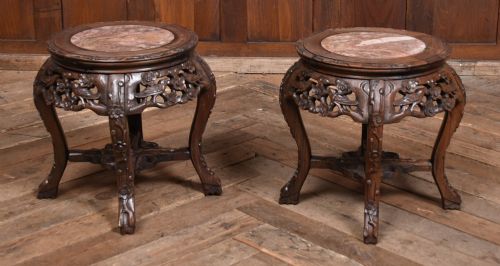
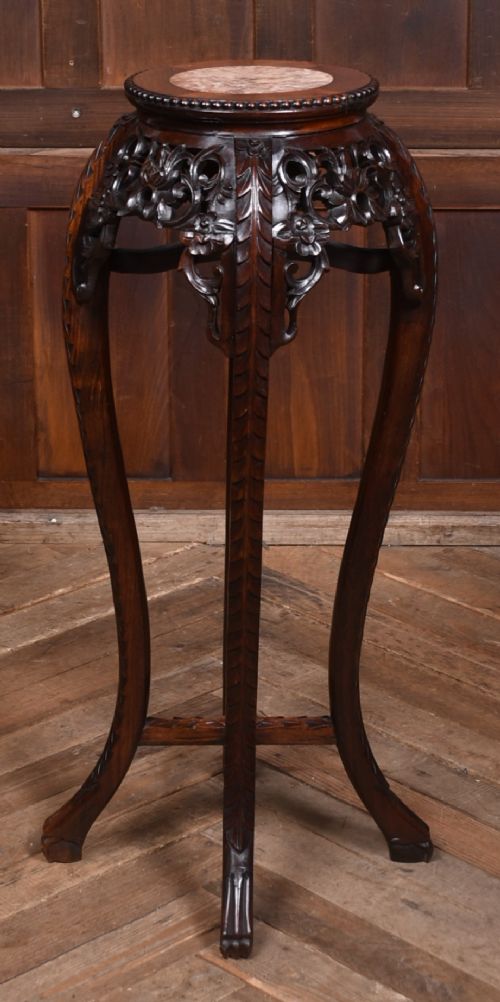


Rosewood Marble Stand
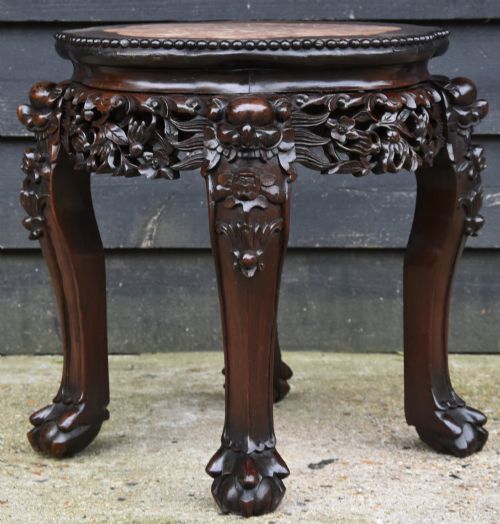
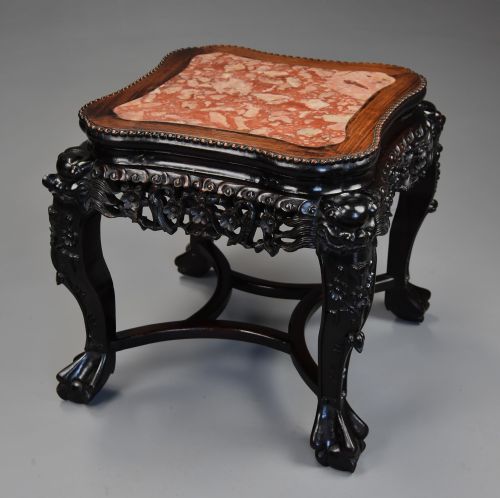
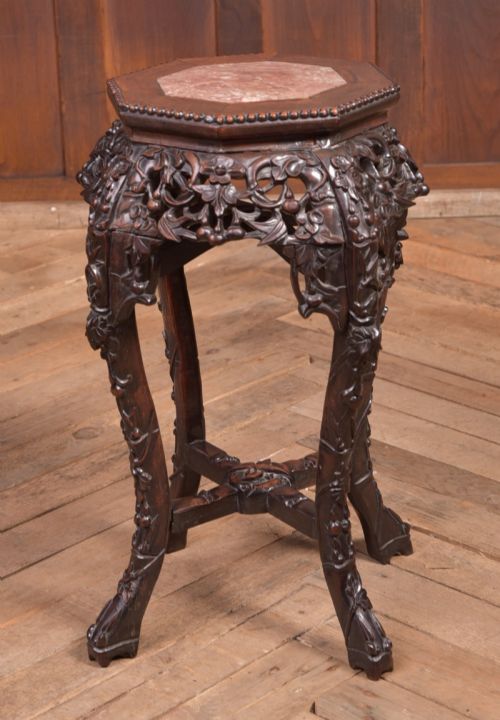
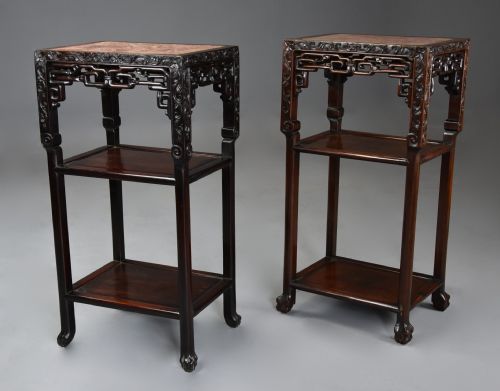
These rosewood marble stand examples combine heavy timber frames with inset stone surfaces to elevate plants and display urns.
Rosewood Marble Stand
A rosewood marble stand is primarily encountered as a Chinese export piece created to support heavy planters, urns, and vases in domestic interiors. Most options on this page date from the nineteenth century, spanning Victorian and late Qing Dynasty periods. These furnishings range from low occasional tables and side tables to tall pedestal stands and compact pot holders.
The physical design focuses on a sturdy circular, square, or rectangular frame intended to bear the considerable weight of stone and ceramic vessels. Makers shaped the dense timbers into waisted profiles, cabriole legs, or pierced aprons decorated with traditional carving. Buyers select these items to serve practical functions as lamp tables, plant holders, and freestanding display surfaces.
While many pieces originate from Chinese workshops utilising traditional hardwood traditions, some English and European variants also appear within the records. These domestic forms mirror the structural layout of heavy timber framing combined with inset stone slabs for water resistance. Both origins share a commitment to supporting indoor horticulture and ornamental display.
Materials and Technique
Construction relies heavily on dense tropical hardwoods including rosewood, padouk, hongmu, and related oriental timbers chosen for their structural strength. These heavy woods allow artisans to carve intricate floral and geometric motifs into aprons and legs without compromising the load-bearing capacity of the frame. Joinery is executed to lock the dense timber tightly around the central stone insert.
The inset surface utilises smooth marble or rouge marble, cut to fit snugly within a rebated wooden channel on the top of the stand. This cold stone provides a durable, water-resistant plateau designed to catch moisture from potted plants or support the base of heavy ceramic urns. Some variations incorporate mother-of-pearl inlay into the dark wood surface for decorative contrast.
Rosewood Marble Stand Retail Price Guide 2026
Typical asking prices for rosewood marble stand among the pieces listed under this phrase on Sellingantiques today, from the lower quarter to the upper quarter. They describe what is for sale here now, not the wider market.
Listings feature items spanning the Victorian, Edwardian, and Qing Dynasty periods, constructed from rosewood, padouk, and hongmu.
Judging the Standard
Quality in a rosewood marble stand is determined by the depth and crispness of the hand-carving across the wooden aprons and legs. Superior examples display sharply defined motifs and balanced proportions that integrate the heavy stone top seamlessly into the timber frame. Inferior variants show shallower, mechanical carving and less harmonious transitions between the wooden support and the inset marble.
The selection of the timber and the figure of the marble dictate the visual weight of the object. High-end pieces utilise heavily grained rosewood or rich hongmu paired with striking rouge or veined marble slabs. Poorer examples rely on plain, uniform timber and flat grey stone with little natural movement or contrast.
The Rosewood Marble Stand Glossary
- Jardiniere stand
- A tall or low piece designed specifically to hold a ceramic plant container indoors. These tables feature water-resistant stone tops to protect the wooden structure from damp soil.
- Hardwood
- A dense, heavy timber category encompassing rosewood, padouk, and hongmu used in traditional Chinese furniture construction. These woods provide the necessary strength to support thick marble inserts.
- Rouge marble
- A distinct variety of decorative stone featuring rich red, pink, and white veining. This colourful material provides a striking visual contrast against dark tropical timbers.
- Pedestal stand
- A raised structural support designed to elevate urns or vases to eye level within a room. They often feature narrow footprints and sturdy bases to prevent tipping.
- Mother-of-pearl inlay
- A decorative technique embedding shimmering shell fragments into carved recesses within the wood. This method creates floral or geometric patterns that catch the light.
Rosewood Marble Stand: Frequently Asked Questions
What were these stands used for originally?
These furnishings served as sturdy pedestals for heavy ceramic planters, bronze urns, and large vases inside domestic spaces. The stone top protected the wood from moisture.
Over time, owners also utilised them as lamp tables or occasional surfaces for displaying decorative objects in reception rooms.
Are these pieces stable enough for plants?
The dense hardwood frames and heavy stone inserts provide a naturally low centre of gravity for holding weighty ceramic pots. Their robust construction is engineered precisely for vertical loads.
Placing them on even flooring ensures they remain secure, though very tall variants benefit from placement away from high-traffic walkways.
How do I distinguish Chinese export styles?
Chinese export pieces often feature traditional woodworking joints, dense tropical timbers like padouk or hongmu, and deep hand-carved botanical motifs. The joinery frequently dispenses with metal nails.
Victorian European interpretations tend to use familiar domestic cabinet-making methods while adopting the popular oriental aesthetic of the period.