








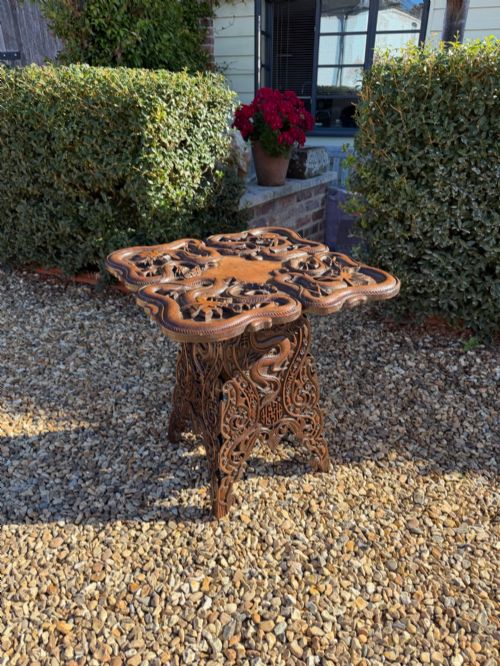
Oriental Plant Table
An oriental plant table brings focused height to a room, holding heavy pottery or bronze vessels upon solid wood and stone.
Oriental Plant Table
An oriental plant table functions as a raised surface designed specifically to elevate jardinieres, heavy vases, and decorative specimens within a room. Buyers searching this phrase encounter low tables, tall pedestals, and multi-tiered stands originating from nineteenth-century workshops and later revival periods.
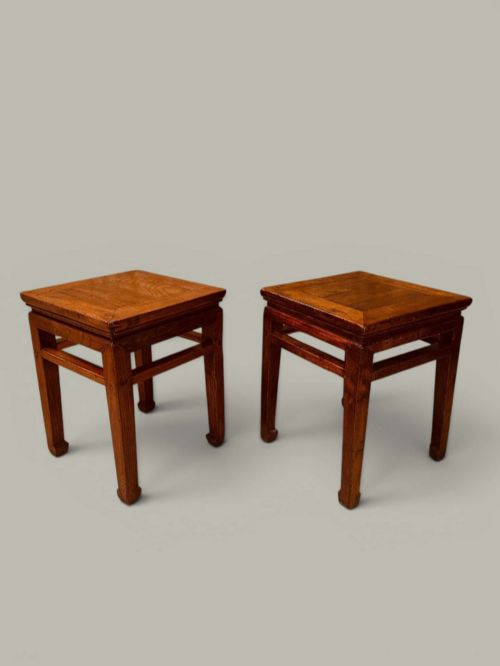
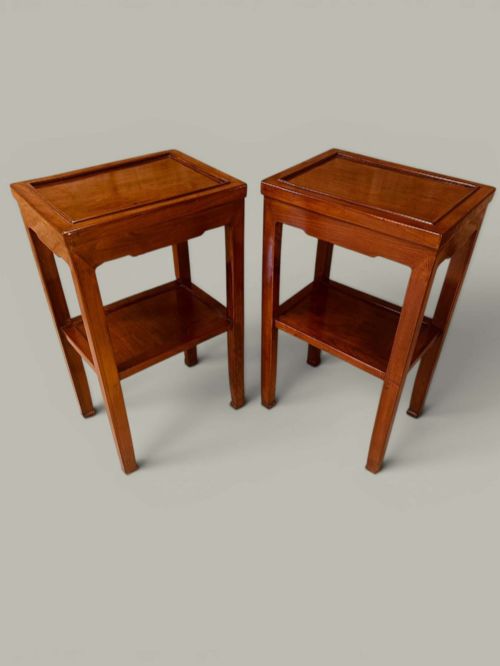
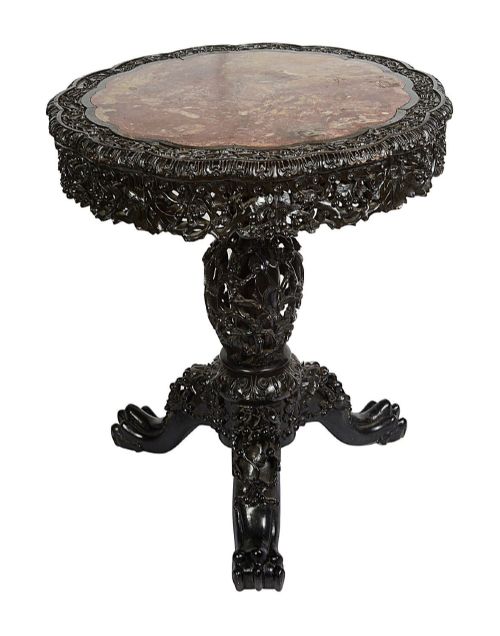
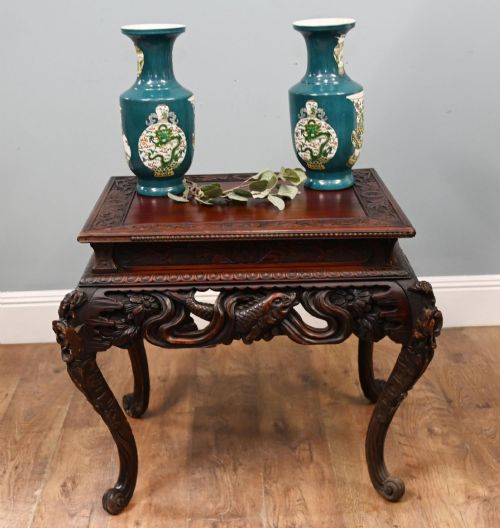
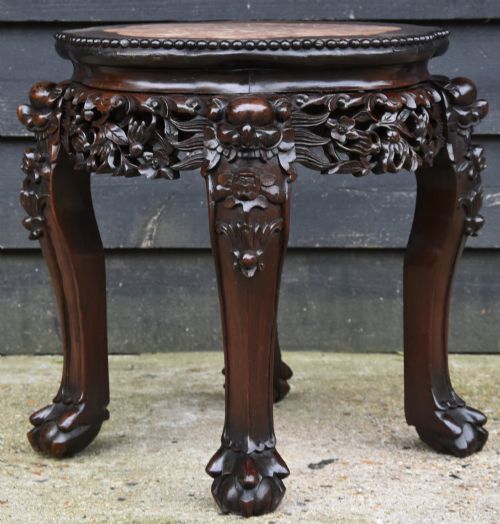
The dominant forms on this page include solid hardwood pot stands and marble-topped occasional tables originating from Chinese export traditions. These pieces often feature shaped aprons and carved frames intended to support heavy ceramic vessels without strain.
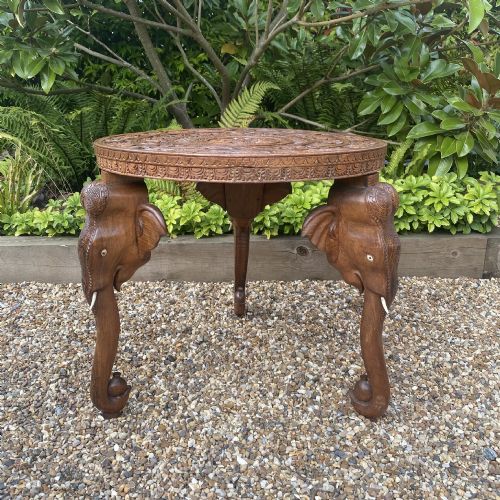
Makers produced these stands in diverse configurations, ranging from square low tables to tall columnar pedestal stands. Alongside traditional Chinese forms, domestic adaptations like Victorian bamboo occasional tables and Anglo-Indian bone-inlaid pieces appear frequently.
Materials and Construction
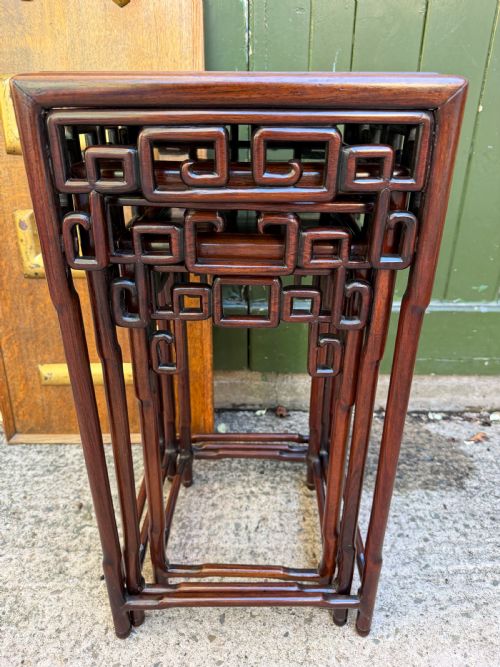
Cabinetmakers constructed these pieces primarily using dense Asian hardwoods such as rosewood, padouk, and huanghuali, joined with precise traditional framing techniques. Many examples incorporate inset panels of variegated rouge marble or quartz to provide a stable, cool surface for damp pots.
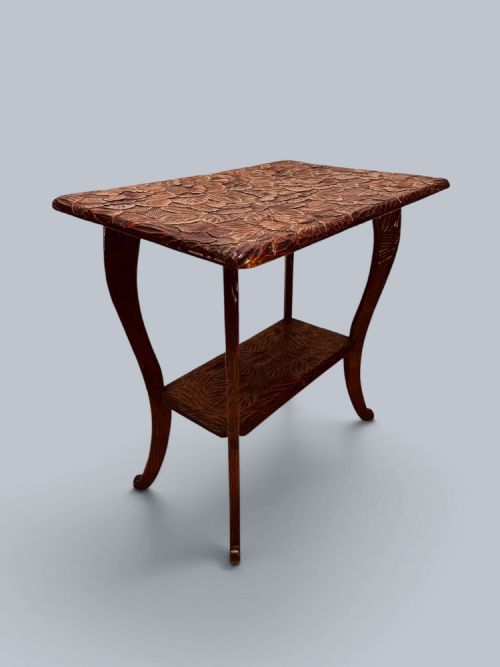
Surface decoration frequently involves intricate hand carving, mother-of-pearl inlay, and bone detailing set directly into the wood grain. Lacquered finishes and cloisonne elements also appear, adding colour and pattern to specific tables and side stands.
Oriental Plant Table Retail Price Guide 2026
Typical asking prices for oriental plant table among the pieces listed under this phrase on Sellingantiques today, from the lower quarter to the upper quarter. They describe what is for sale here now, not the wider market.
Object forms span plant stands, jardiniere stands, wine tables, and nested table sets.
Assessing Quality and Execution
Quality rests in the depth and crispness of the hand carving, where superior examples display undercut foliage and well-defined motifs rather than shallow surface scoring. The selection of the timber dictates overall visual strength, with dense grain patterns and matched wood sections separating standard pieces from finer ones.
The integration of inset marble or stone top panels demonstrates structural precision, as higher-grade tables fit these heavy inserts flush with the surrounding wooden frame. Heavier, more substantial framing timbers indicate a deliberate focus on stability and long-term durability under heavy loads.
Liberty & Co·Liberty of London·Gabriel Viardot
The Oriental Plant Table Glossary
- Jardiniere stand
- A tall or low table built specifically to hold a large ornamental flower pot. These stands usually feature stone or hardwood inserts to resist water damage.
- Hongmu
- A category of dense, dark Asian hardwoods prized for cabinetmaking during the Qing Dynasty. This heavy timber accommodates deep, intricate carving without splintering.
- Chinoiserie
- European artistic interpretation of Chinese and East Asian decorative motifs. This style gained popularity across various periods through lacquered finishes and painted scenes.
- Cloisonne
- Enamelling technique where metal wire forms small compartments on a surface before filling with coloured glass paste. It frequently decorates the tops or borders of exhibition tables.
Oriental Plant Table: Frequently Asked Questions
What is an oriental plant table used for?
These tables provide a sturdy, elevated platform designed to support heavy ceramic pots, bronze vessels, and floral displays inside domestic interiors.
By lifting heavy containers off the floor, the stands protect delicate flooring while showcasing the decorative form of the vessel placed upon them.
How do I identify a Qing Dynasty stand?
Qing Dynasty stands typically employ dense hardwoods like rosewood or padouk combined with traditional mortise-and-tenon joinery without metal fasteners.
Look for deep, hand-carved vegetal motifs, shaped aprons, and fitted inset marble tops designed to handle heavy ceramic jardinieres.
Can these tables support heavy objects?
Most of these tables were engineered specifically to bear the substantial weight of large ceramic planters filled with damp earth and heavy plants.
Solid hardwood frames and thick stone insert tops ensure the structure remains stable under heavy downward pressure.
What is an Anglo-Indian occasional table?
An Anglo-Indian occasional table combines British furniture forms with traditional Indian carving techniques and materials produced during the colonial period.
These pieces frequently feature intricate bone or brass inlay work set into dark hardwood frames in octagonal or circular shapes.