







Oriental Marble Top Pedestal
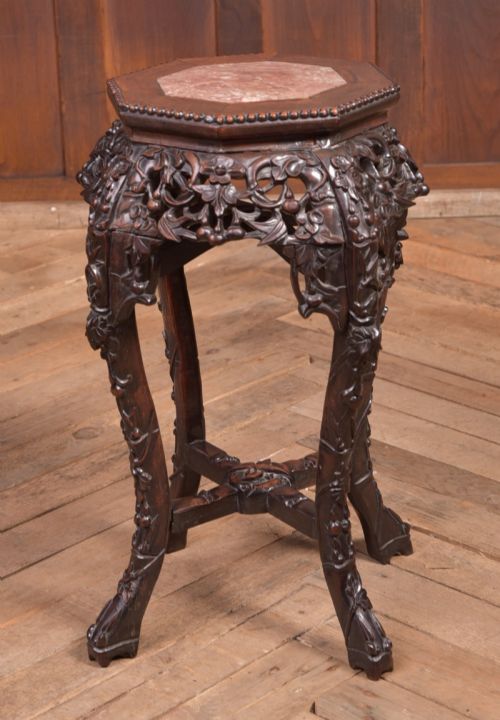
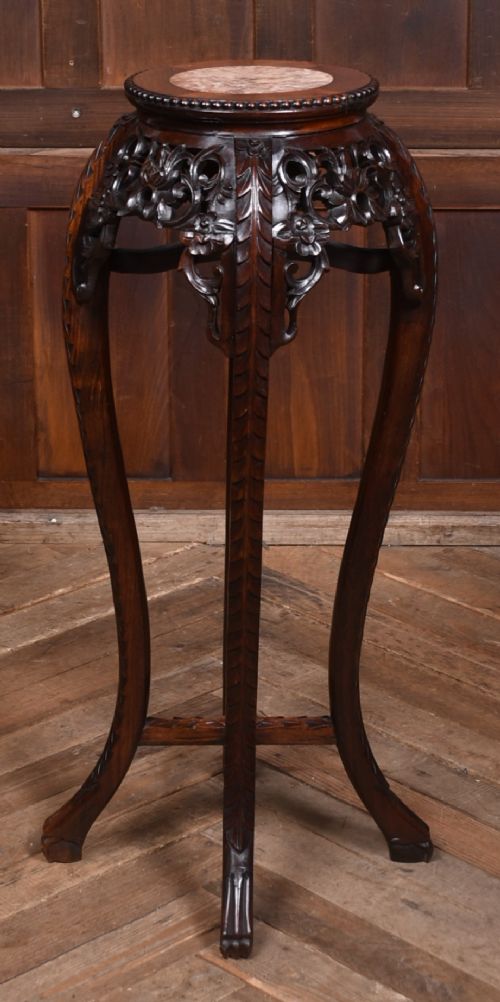
An oriental marble top pedestal brings dense hardwoods and cool stone together to elevate plants, urns and lamps in a room.
Oriental Marble Top Pedestal
When you search for an oriental marble top pedestal, you are looking at sturdy raised supports designed for display. These pieces function as plant stands, jardiniere stands, urn stands and occasional tables in domestic spaces.
The pieces appearing on this page originate predominantly from the nineteenth century through to the early twentieth century. They span Victorian, Edwardian and Meiji periods alongside Qing Dynasty and Chinese Export traditions.
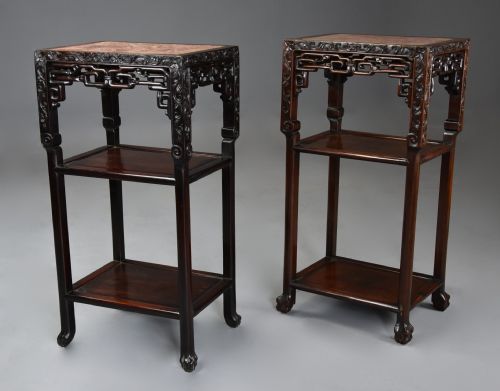
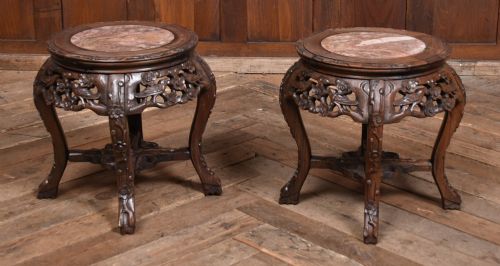
Forms vary from compact square and round pot stands to large freestanding centre tables and rectangular occasional furniture. Most examples combine carved timber frames with inset stone surfaces intended to withstand heavy pots.
How they were made
Carpenters constructed the frames from dense oriental hardwoods such as rosewood, padouk, hongmu and rootwood. Some workshops also utilised ebonised finishes on timber foundations.
Oriental Marble Top Pedestal Retail Price Guide 2026
Typical asking prices for oriental marble top pedestal among the pieces listed under this phrase on Sellingantiques today, from the lower quarter to the upper quarter. They describe what is for sale here now, not the wider market.
Makers occasionally utilised deep quartz instead of marble for an unusual translucent tabletop.
What varies in quality
Quality rests upon the density and weight of the timber selected by the maker. Heavy woods like padouk and rosewood offer superior structural integrity compared to lighter alternatives.
The depth and crispness of the hand-carving define the upper tier of production. Deeply undercut foliage and figures demonstrate skilled craftsmanship that simpler geometric surfaces lack.
The integration of the inset marble or quartz top matters greatly. Tightly fitted stone slabs with matched veining elevate the standing piece above examples with loose or plain inserts.
The Oriental Marble Top Pedestal Glossary
- Jardiniere stand
- A tall piece of furniture built to hold a heavy ceramic flower pot or plant container. These stands protect interior floors and elevate greenery to eye level.
- Padouk
- A heavy, durable tropical hardwood prized for its reddish-brown colour and dense grain. It provides a robust frame for carved display furniture.
- Hongmu
- A traditional Chinese term for dense red hardwoods used in fine cabinetmaking. The material takes a fine polish and supports intricate carving.
- Rouge marble
- A deep red or reddish-brown variety of ornamental stone with white or grey veining. It appears frequently as an inset top in nineteenth-century stands.
- Rootwood
- Timber sourced from the root burls of trees, valued for its gnarled, organic patterns. Artisans shape these sections into naturalistic occasional tables.
Oriental Marble Top Pedestal: Frequently Asked Questions
What is an oriental marble top pedestal used for?
These pieces serve primarily as elevated platforms for heavy plants, ceramic urns, bronze vessels and table lamps. Their sturdy construction supports heavy decorative objects safely.
In period interiors they act as focal points in corners, halls and bay windows where vertical display adds architectural interest to a room.
How do I date a Chinese hardwood stand?
Dating relies on observing construction methods, timber types and stylistic markers recorded across the nineteenth and early twentieth centuries. Pieces associated with the Qing Dynasty or Meiji period often display specific regional carving traditions.
Matching pairs and specific export styles help narrow down the decade of production when combined with timber patination and wear patterns.
Are marble top stands fragile?
The structural frames are built from dense hardwoods like rosewood and padouk, making them exceptionally heavy and stable. The main vulnerability lies in the inset marble or quartz panel if struck sharply.
Normal daily use with heavy ceramic planters or lamps poses no risk to the structural integrity of the timber or stone.