




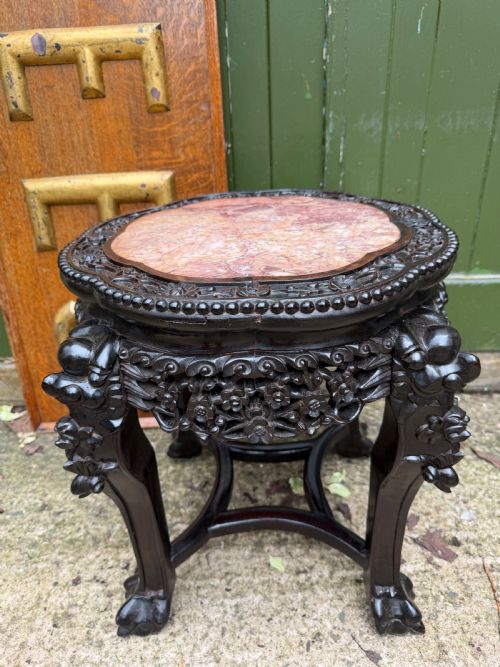


Marble Inset Side Table
A marble inset side table brings stone and timber together, offering a sturdy surface suited to lamps, plants or daily use.

Marble Inset Side Table
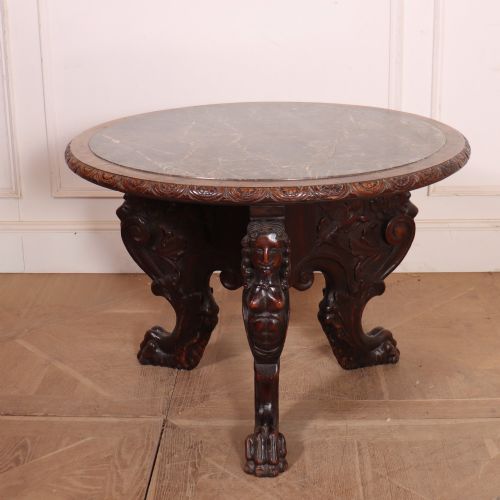
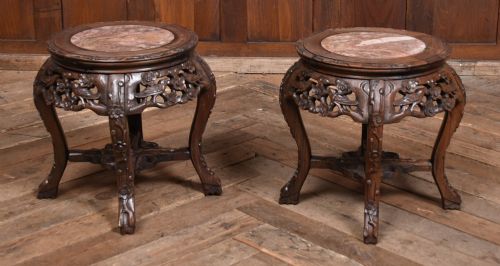
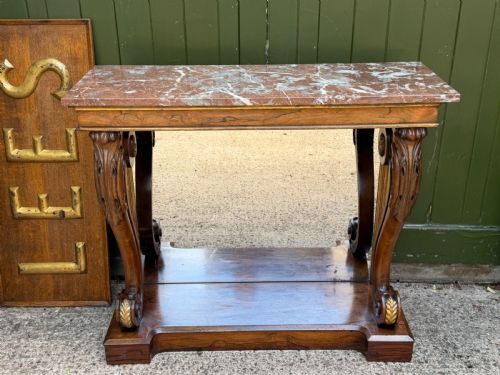
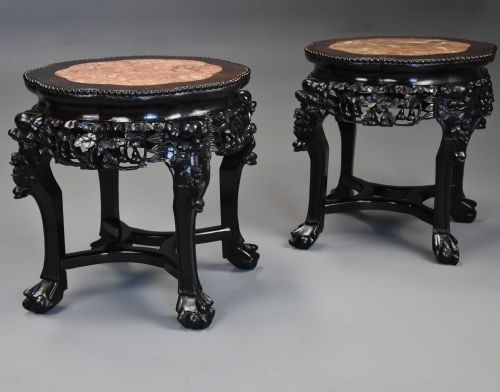
A marble inset side table combines a solid wooden frame with a smooth stone panel fitted into the top. Buyers seeking this phrase encounter various forms, from compact plant stands and low jardiniere supports to larger centre, console and occasional tables.
The selection ranges across the nineteenth century into the early twentieth century, spanning English, French and Chinese export craftsmanship. Chinese Qing Dynasty carved hardwood stands featuring rouge or variegated marble panels appear frequently alongside European occasional and lamp tables.

How they were made
Cabinetmakers utilised dense timbers such as rosewood, mahogany, oak, walnut and carved Chinese hardwoods like hongmu and padouk to support heavy stone panels. Frames frequently incorporate detailed hand carving, ebonised finishes, parcel-gilt details or brass mounts.
The marble inserts, often rouge or specimen varieties, were cut and polished to fit precisely into recessed wooden frames, relying on the weight of the stone and precise joinery to remain secure.
Marble Inset Side Table Retail Price Guide 2026
Typical asking prices for marble inset side table among the pieces listed under this phrase on Sellingantiques today, from the lower quarter to the upper quarter. They describe what is for sale here now, not the wider market.
Some nineteenth-century plant stands were built sturdy enough to survive heavy watering spills from enthusiastic Victorian ferns.
What varies in quality
The standard of carving and the selection of timber dictate the distinction between ordinary production and finer workshop output. Deeply undercut, crisp botanical or geometric carving on hardwood frames indicates superior labour.
The character and figuring of the inset marble panel, alongside the tightness of its fit within the wooden rebate, mark the distinction between standard utility items and more ambitious decorative furnishings.
The Marble Inset Side Table Glossary
- Hongmu
- A traditional Chinese term designating dense, hard timbers used for quality furniture. These dark woods take fine carved detail without splitting.
- Rouge marble
- A rich red ornamental limestone featuring white or grey veining. It provides a striking contrast against dark hardwoods and ebonised frames.
- Jardiniere stand
- A tall, small-surface table designed to hold a plant pot or flower bowl. They often feature inset stone tops to resist moisture damage from watering.
- Ebonised wood
- Timber treated with stain or chemical finishes to imitate ebony. This dark, uniform surface was popular in nineteenth-century decorative design.
- Parcel-gilt
- Woodwork decorated with partial gilding applied to specific carved details. It highlights particular motifs against a darker stained or polished ground.
Marble Inset Side Table: Frequently Asked Questions
What were marble inset side tables used for?
These tables served various practical functions in historic interiors, supporting lamps, heavy planters, vases and ornaments. The stone insert provided a durable, cool surface that resisted heat and moisture.
Smaller versions functioned as plant or urn stands in reception rooms, while larger rectangular or console forms served as centre tables and hall furniture.
How do I care for a marble top?
Clean the stone surface using a damp cloth and mild soap, avoiding acidic cleaning products that can etch polished marble. Use coasters or felt pads beneath heavy objects to prevent scratching.
Treat the wooden frame with appropriate furniture wax or polish according to the timber finish, keeping the piece away from direct heat sources.
How do I tell Chinese export pieces apart?
Chinese export furniture from the nineteenth century typically utilises dense Asian hardwoods like hongmu or padouk, featuring deep, intricate carving. Forms often include plant stands, low jardiniere supports and rectangular centre tables.
European examples more commonly employ mahogany, rosewood or walnut, often incorporating French Neoclassical or Victorian stylistic elements alongside the inset stone panel.
Are the marble inserts removable?
Most marble panels sit within a rebated wooden frame designed to hold the heavy stone securely in place. While many lift out for transport, they are heavy and fitted with tight tolerances.
Lifting or shifting the stone requires caution to avoid chipping the edges or straining the surrounding wooden frame.