

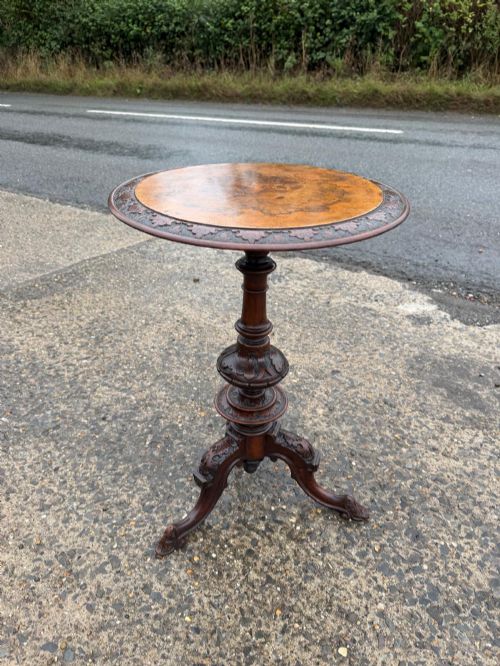
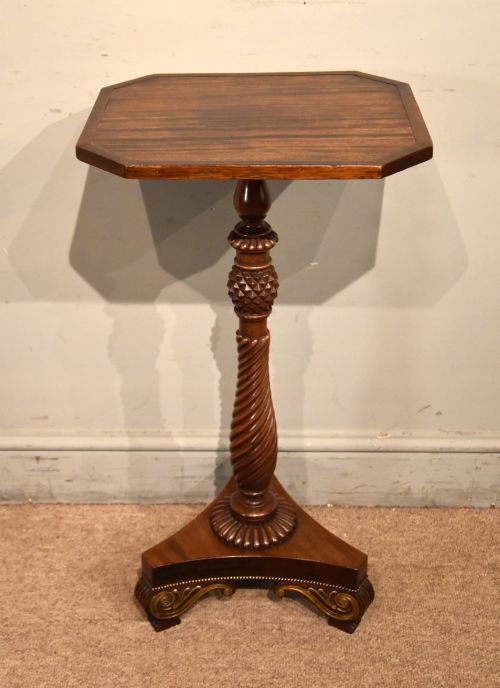
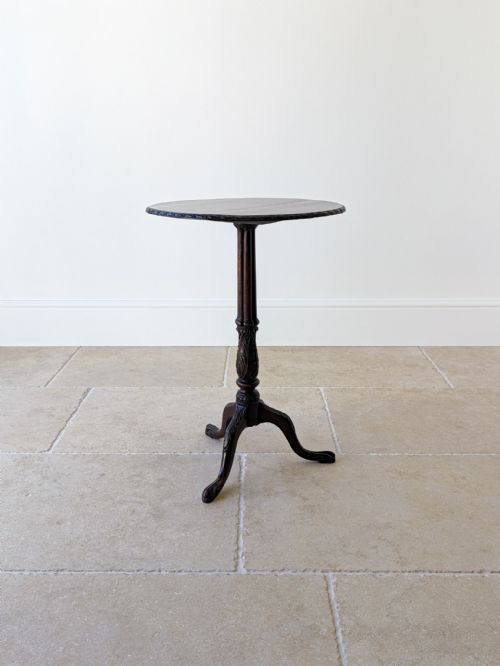
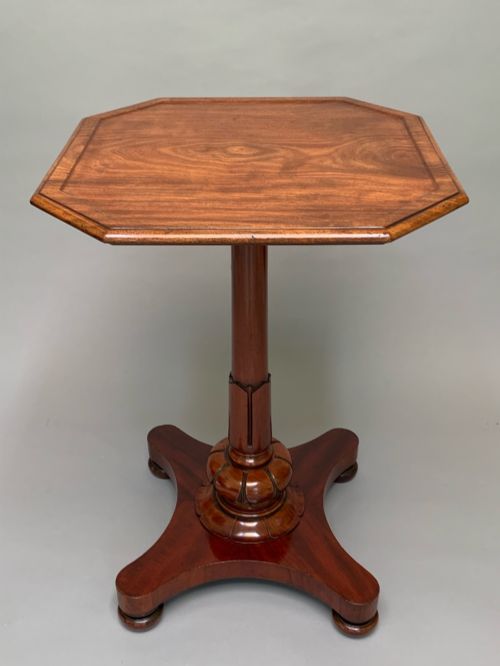
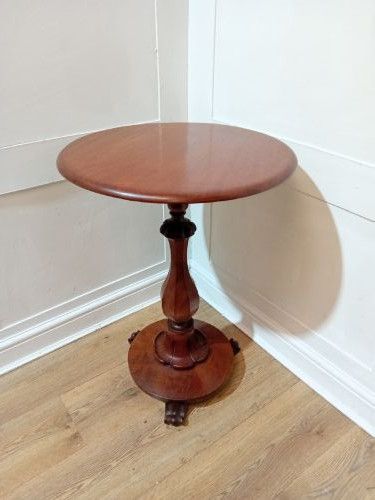
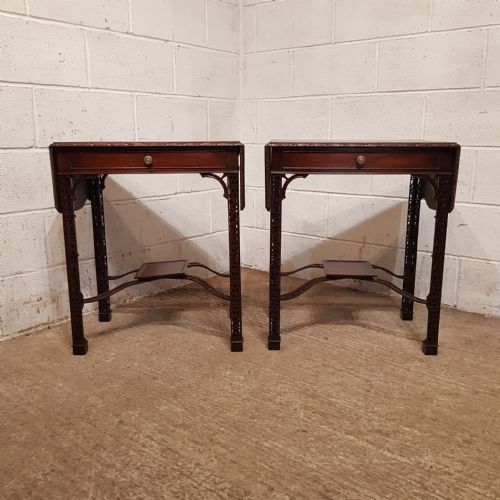
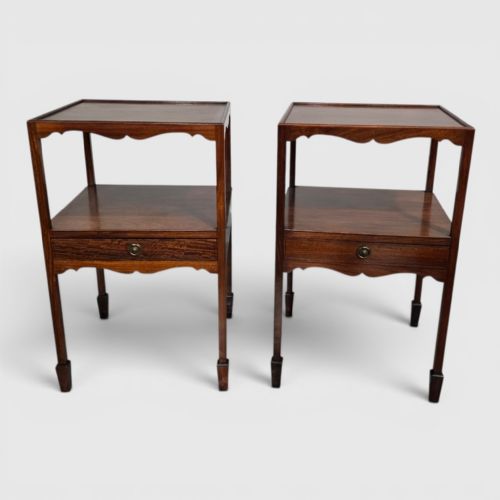
Carved Mahogany Lamp Table
A carved mahogany lamp table brings warmth and dependable weight to a corner, holding a reading light while grounding the room.
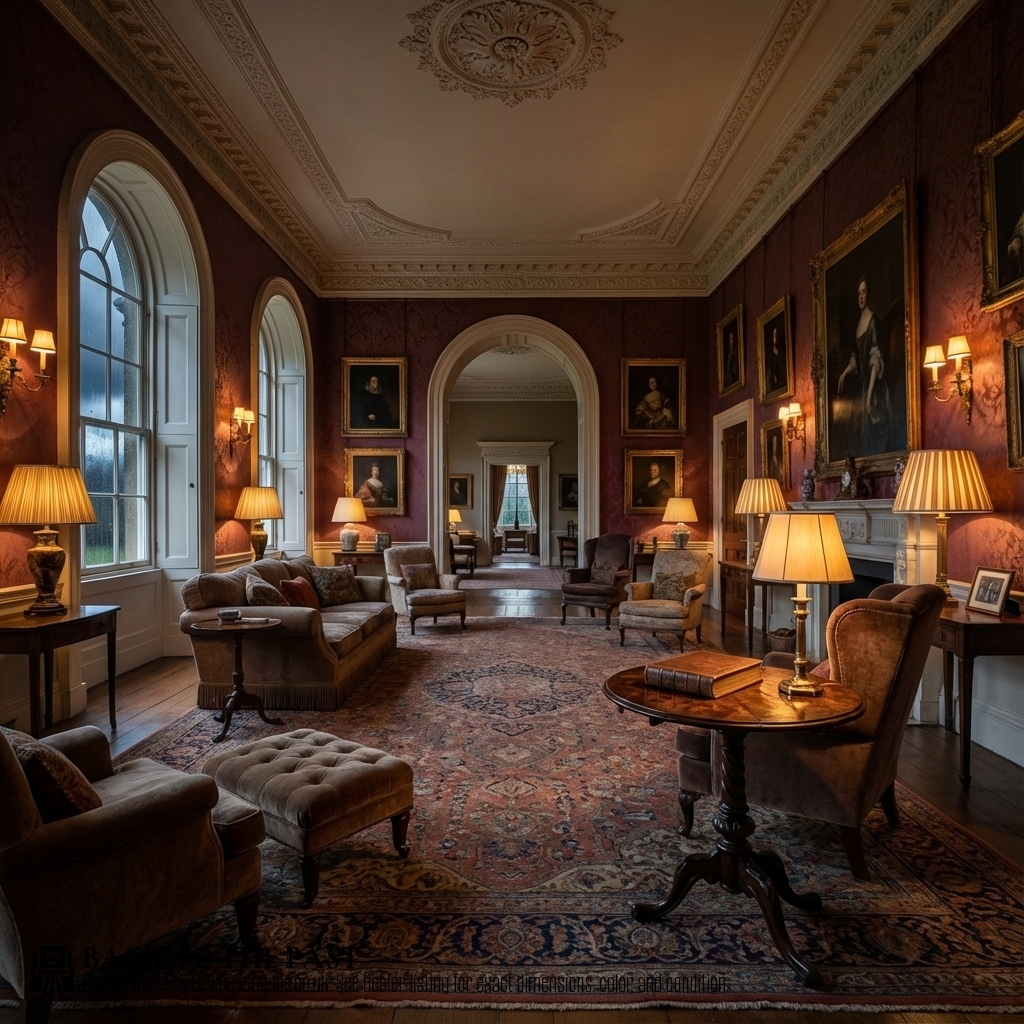
Carved Mahogany Lamp Table
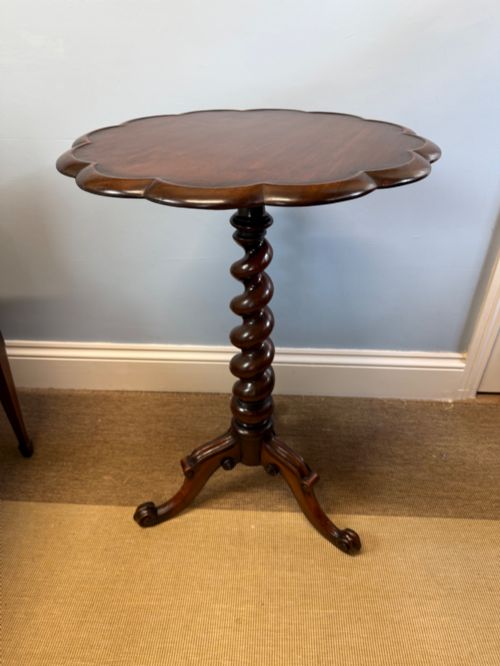
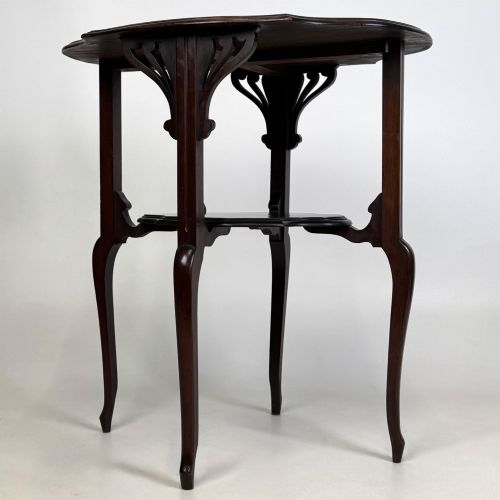
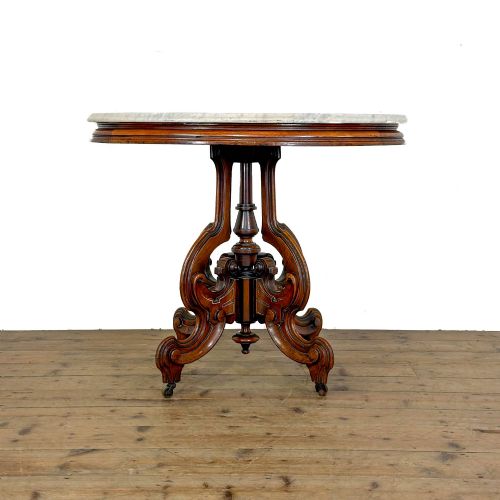
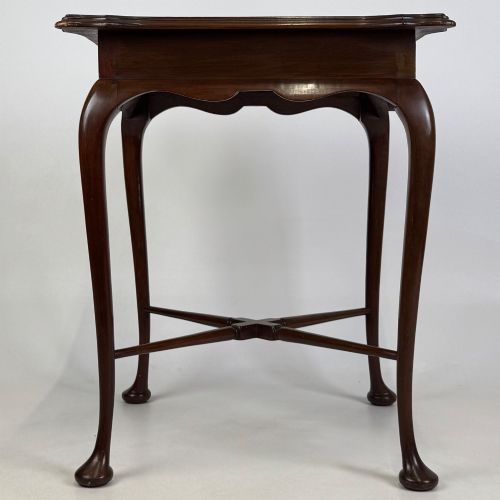
A carved mahogany lamp table is a sturdy, compact piece designed to hold a light or sit quietly beside a chair. When you search for a carved mahogany lamp table, you find pieces spanning the nineteenth century, the Victorian era, and the Edwardian period.
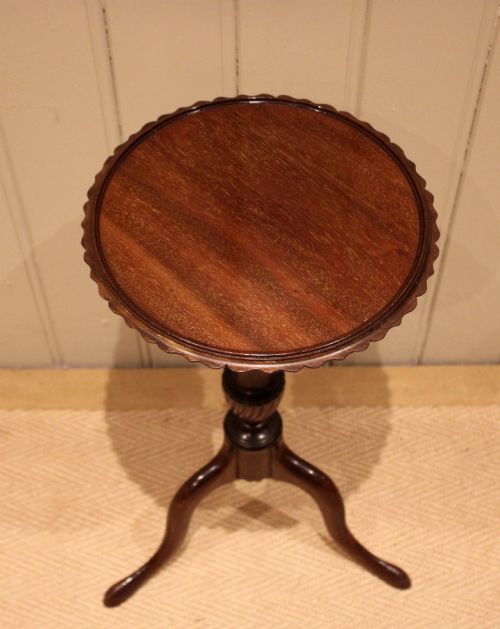
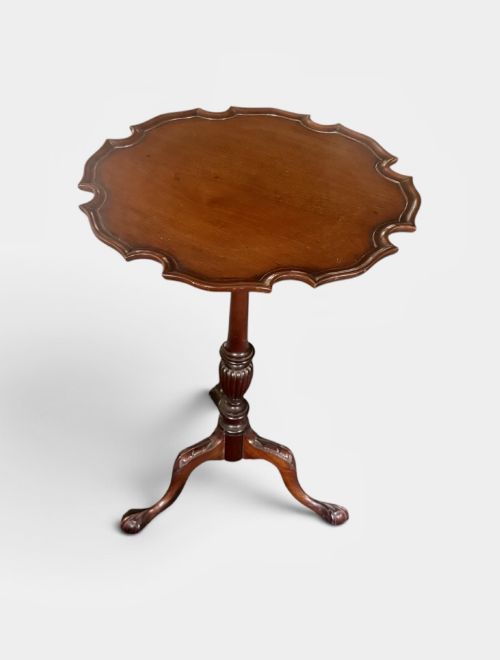
The form appears most frequently as a circular tripod table, a wine table, or a small occasional table. Many examples draw on earlier Georgian and Chippendale styles, reinterpreted by later makers with carved borders and pedestals.
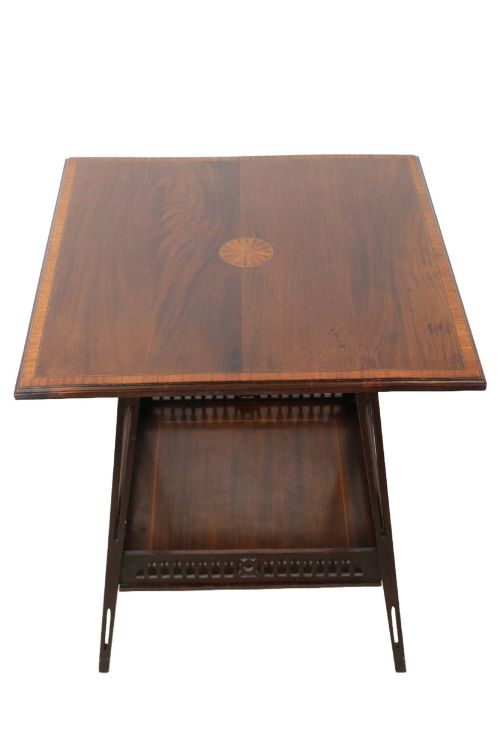
Makers adapted these small tables for various domestic uses, creating drop-leaf versions, two-tier designs, and tilt-top mechanisms. They function equally well as bedside stands or prominent corner pieces in a living room.
Materials and construction
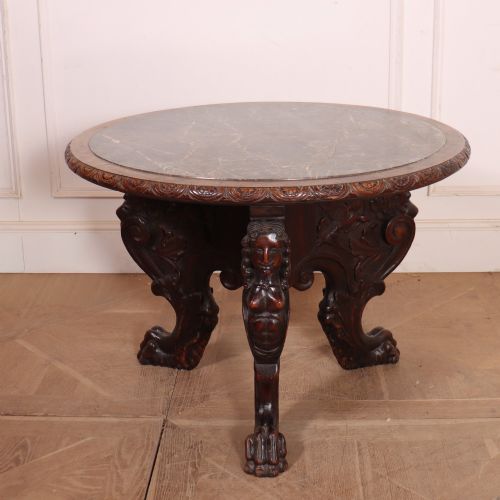
Makers relied heavily on solid mahogany and flame mahogany veneer, often pairing the rich timber with brass hardware, leather inserts, and subtle boxwood inlay. Some examples incorporate contrasting burr wood tops or marble surfaces.
Carving was applied to tripod legs, pedestals, and table rims, giving these compact objects a sculptural quality. Joinery techniques included turning, tilt-top mechanisms, and drop-leaf hinges that required precise carpentry.
Carved Mahogany Lamp Table Retail Price Guide 2026
Typical asking prices for carved mahogany lamp table among the pieces listed under this phrase on Sellingantiques today, from the lower quarter to the upper quarter. They describe what is for sale here now, not the wider market.
Listings feature pieces spanning the nineteenth and twentieth centuries, utilising mahogany, brass, marble, and leather across occasional, wine, and side table forms.
Distinctions in quality
Quality rests upon the crispness of the carved details and the selection of the timber, particularly where flame mahogany veneer or burr wood is utilised. Finer examples display balanced proportions on their tripod bases and smooth operation in their tilt-top mechanisms.
Weight and stability separate superior pieces from lighter, mass-produced alternatives. The execution of inlaid boxwood lines and the integration of brass fittings reveal the maker's hand.
Trevor Page & Co·Shapland and Petter·Waring & Gillow
The Carved Mahogany Lamp Table Glossary
- Tripod table
- A small stand supported by three carved legs radiating from a central pillar. This construction keeps the table stable on uneven floors.
- Tilt-top
- A mechanism allowing the tabletop to pivot vertically when not in use. It enabled tables to be stored flat against a wall.
- Flame mahogany veneer
- A thinly sliced section of mahogany showing a fiery, undulating grain pattern. It was applied to primary surfaces for visual impact.
- Pie crust rim
- A raised, decoratively carved tabletop edge shaped in undulating curves. It prevents small objects from rolling off.
Carved Mahogany Lamp Table: Frequently Asked Questions
What is a lamp table used for?
These tables were built to hold portable lighting, keeping illumination close to seating areas before electric wall sconces became common.
Today, they serve the exact same purpose beside armchairs or sofas while adding period character to a room.
How do I tell Victorian from Edwardian?
Victorian tables tend to feature heavier timbers, darker finishes, and robust turned pedestals with substantial carving. Edwardian pieces often appear lighter in scale, sometimes incorporating inlaid boxwood or delicate satinwood banding.
Looking at the construction underneath usually reveals the lighter hand of early twentieth-century workshops.
What is a tilt-top table?
A tilt-top table has a hinged mechanism beneath the surface that allows the top to fold flat against the central pillar.
This clever design meant the table could be tucked out of the way against a wall when not in use.
Are these tables sturdy enough for daily use?
Solid mahogany and traditional joinery give these small tables surprising strength and durability for everyday living.
Tripod bases distribute weight evenly, making them stable platforms for lamps, books, and cups.