







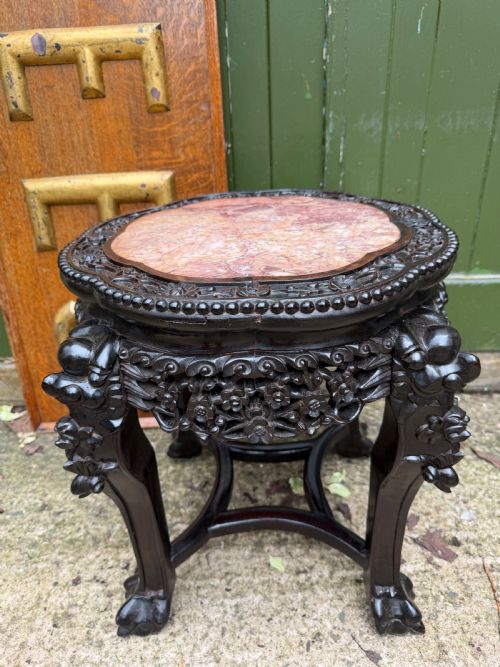


Pink Marble Plant Stand
A pink marble plant stand brings natural stone into a room, supporting pottery and lamps with substantial weight.
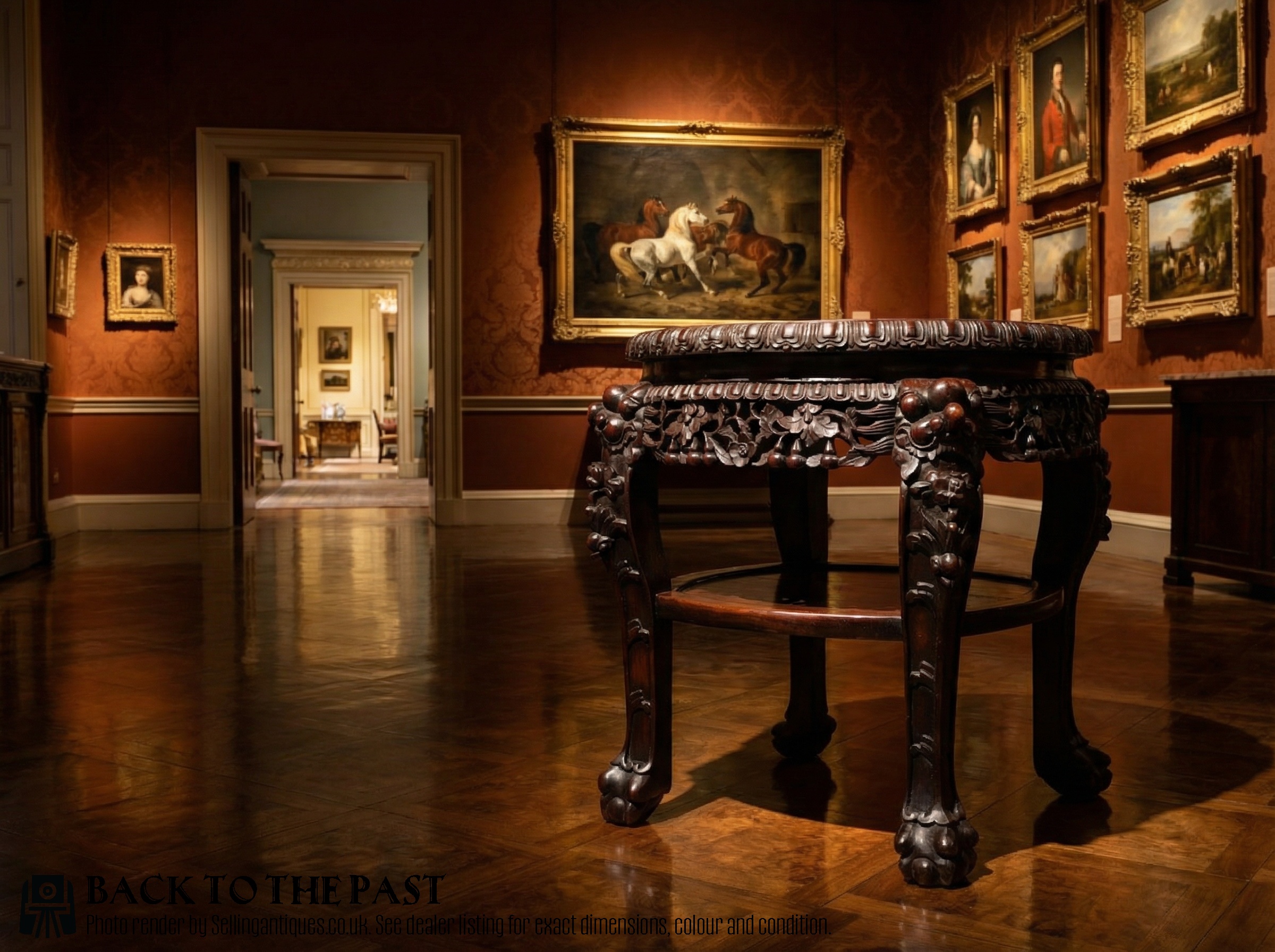
Pink Marble Plant Stand
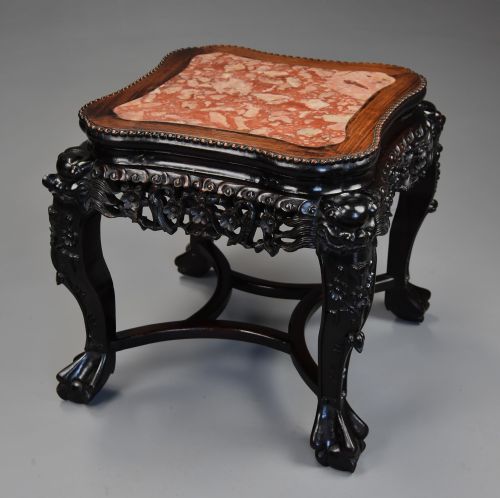
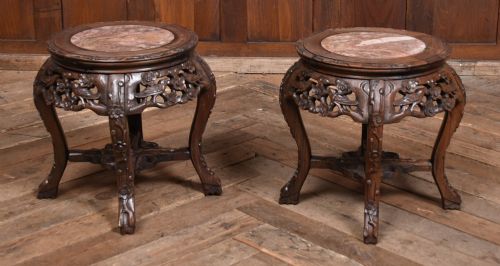
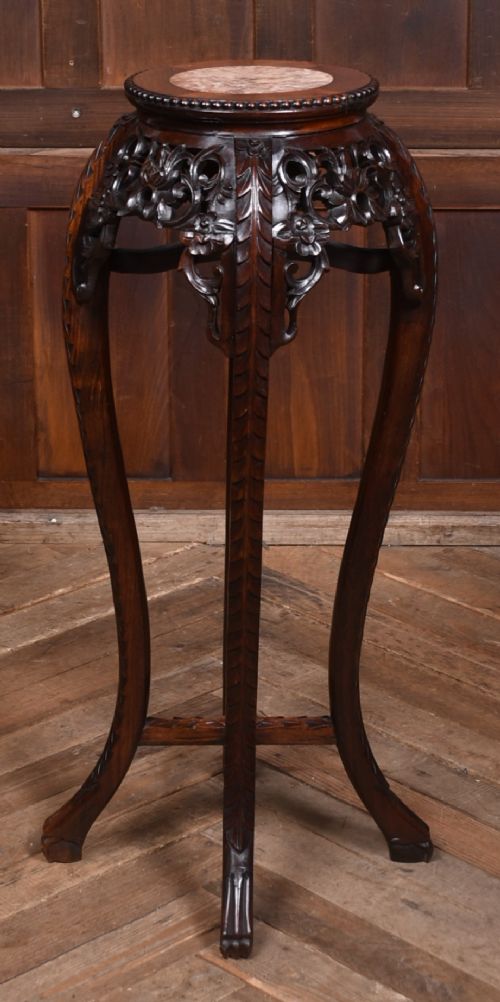
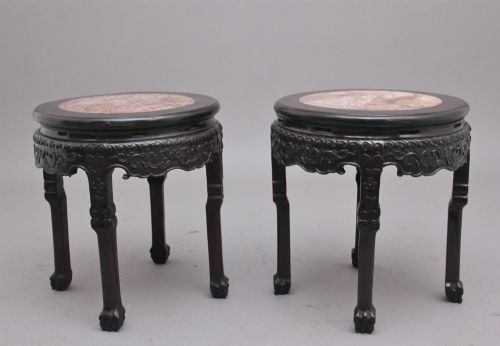
A pink marble plant stand is primarily represented here by Chinese carved hardwood pieces and occasional tables from the nineteenth century featuring inset variegated rouge marble tops. These items serve as functional surfaces for plants, urns, and vases, combining heavy timber frames with smooth stone surfaces.
The selections span various forms including low jardiniere stands, pedestal tables, and multi-tier side tables made during the Victorian era and the Qing Dynasty. Buyers will frequently encounter round or shaped marble panels fitted flush into carved wooden frames.
Originating largely from Chinese export traditions alongside occasional European interpretations, these furnishings bridge utility and decorative display. The stone insert provides a cool, moisture-resistant surface originally intended to accommodate heavy ceramic pots.
Quality and Craftsmanship Variations
The depth and crispness of the wood carving dictate the upper tier of quality, distinguishing deeply undercut floral and figurative motifs from shallower, simpler patterns. Timber selection also matters, with dense rosewood and well-figured hardwoods commanding greater appreciation than basic stained woods.
The integration of the marble insert defines another measure of refinement, where tight joints and richly figured pink or rouge stone indicate superior workshop standards. Stability in the frame and minimal movement in the timber joints further separate standard production from exceptional examples.
Pink Marble Plant Stand Retail Price Guide 2026
Typical asking prices for pink marble plant stand among the pieces listed under this phrase on Sellingantiques today, from the lower quarter to the upper quarter. They describe what is for sale here now, not the wider market.
Listings feature items spanning the 19th century through the early 20th century, including Victorian and Qing Dynasty examples.
The Pink Marble Plant Stand Glossary
- Hongmu
- A traditional Chinese term for dense, heavy hardwoods often utilised in fine furniture and plant stands.
- Jardiniere stand
- A tall or low decorative table specifically designed to hold a plant container or ceramic jardiniere.
- Rouge marble
- A deep red or pink decorative limestone featuring prominent contrasting veining, frequently utilised for furniture tops.
- Gueridon
- A small French occasional table, typically round, supported by one or more columns or figurative pedestals.
Pink Marble Plant Stand: Frequently Asked Questions
What is a pink marble plant stand used for?
These pieces function primarily as decorative pedestals for heavy ceramic planters, bronze urns, and table lamps. The stone top prevents water damage from potted greenery while offering a stable display surface.
They also serve as convenient side tables or occasional tables in reception rooms and hallways. Their compact footprint makes them suitable for corners and narrow wall spaces.
How do I care for the marble top?
Wipe the stone surface regularly with a soft, damp cloth to remove dust and prevent dirt accumulation. Avoid acidic cleaners or harsh chemicals that can etch or dull the polished finish of the pink marble.
Use protective pads beneath heavy pots or ceramic items to prevent scratching. Periodic gentle polishing maintains the natural sheen of the stone.
Are these stands sturdy enough for heavy pots?
The heavy hardwood frames and inset stone slabs are engineered to support substantial weight without flexing. They were specifically built to bear the load of large ceramic jardiniere pots filled with soil and plants.
Ensuring the stand rests on an even floor prevents wobbling. The dense timbers provide a secure centre of gravity for tall arrangements.
How do I distinguish Chinese export stands from European pieces?
Chinese export stands typically feature traditional hardwood construction, such as rosewood or hongmu, combined with deep relief carvings reflecting Qing Dynasty motifs. The joinery and timber choices align with Eastern cabinet-making traditions.
European examples in this selection often utilise ebonised hardwood or incorporate gilt bronze mounts in specific revival styles. These pieces follow Western furniture forms like the French gueridon.