

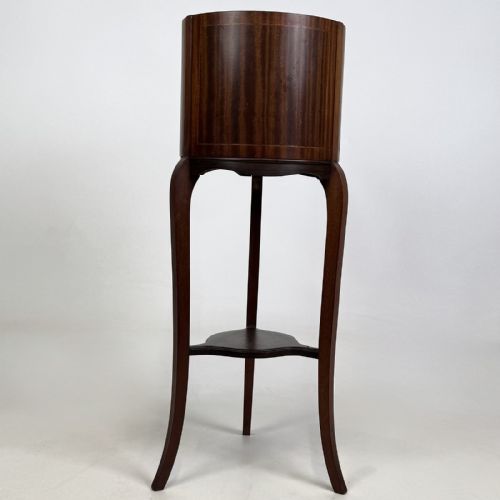
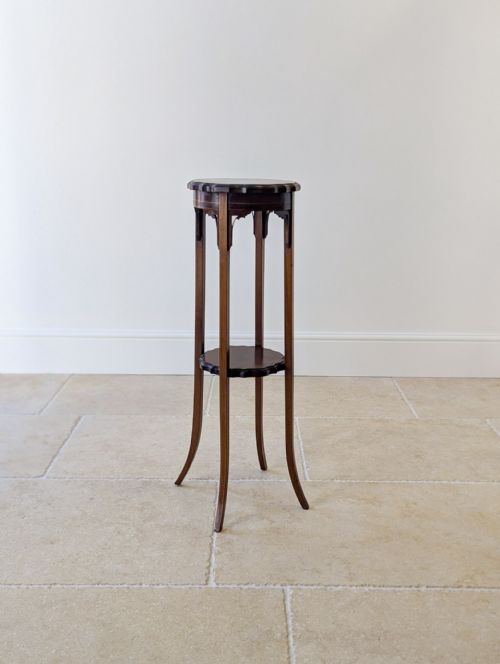
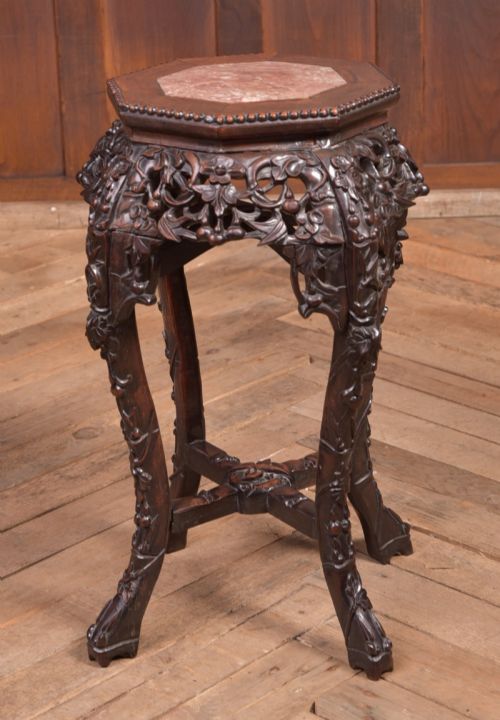
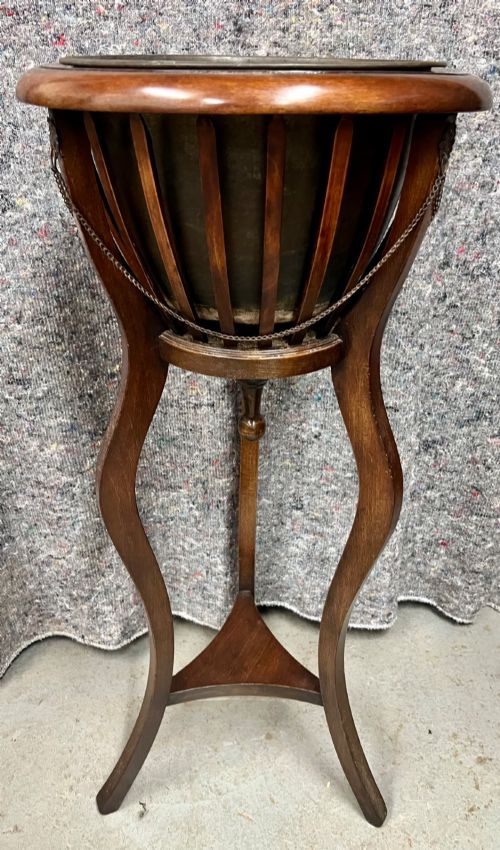



Dark Wood Jardiniere Stand
A dark wood jardiniere stand elevates your greenery, uniting functional botanical display with fine furniture craftsmanship from the nineteenth and early twentieth centuries.
Dark Wood Jardiniere Stand
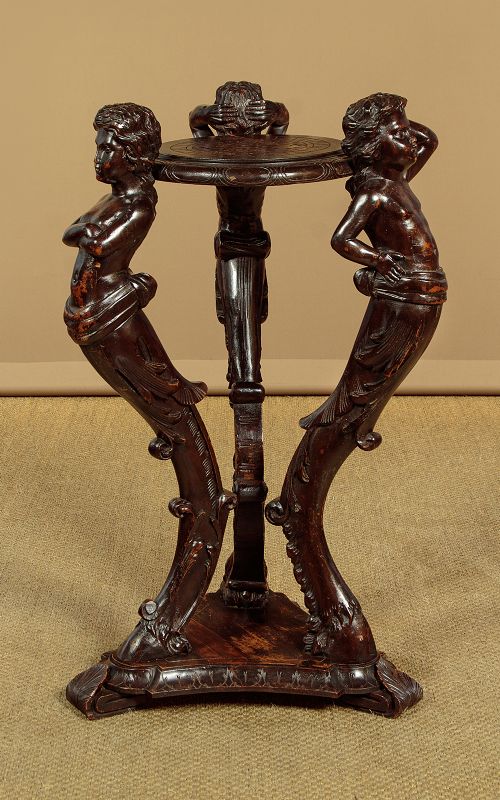
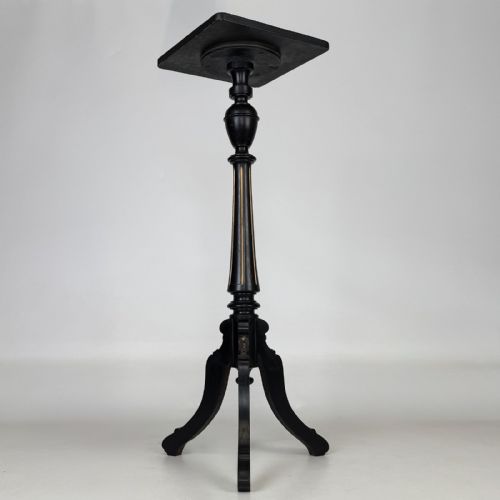
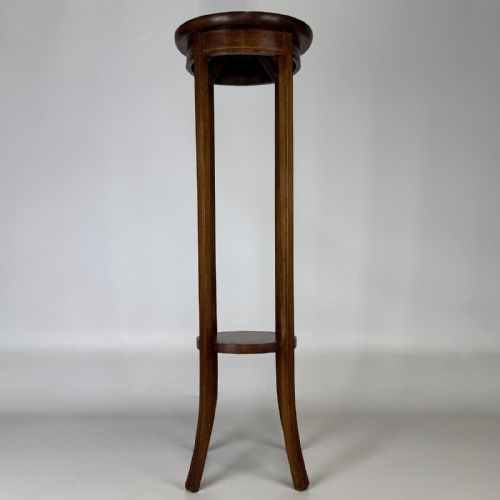
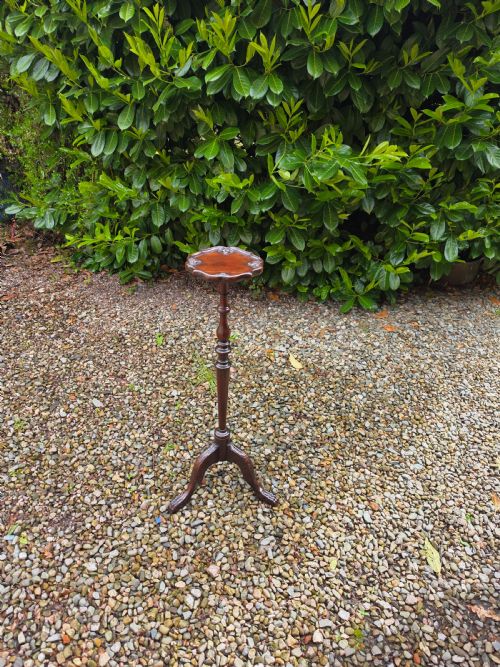
A dark wood jardiniere stand is a tall or low pedestal designed specifically to support potted plants, ferns, and floral urns within domestic interiors. When searching this phrase, buyers encounter pieces intended to display indoor foliage at a prominent height, lifting heavy ceramic and brass containers off the floor.
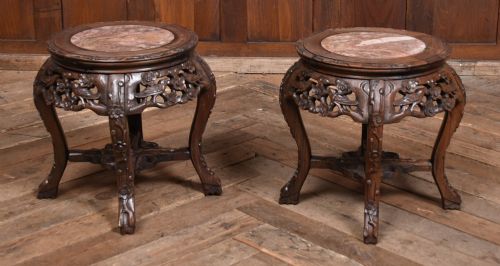
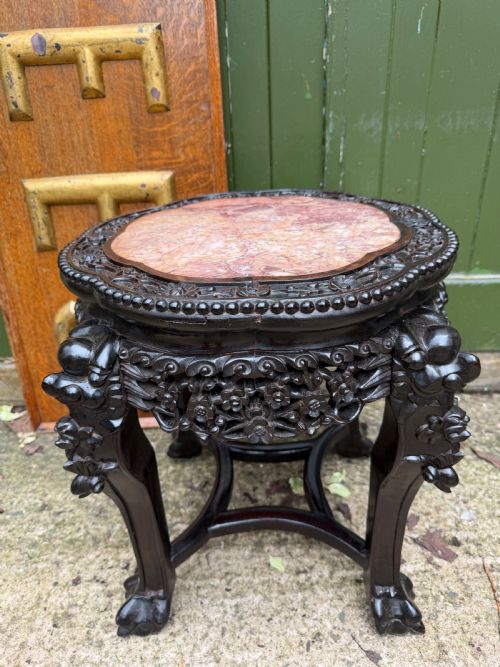
The versions met most frequently on this page span the Victorian, Edwardian, and Qing Dynasty periods. These range from British mahogany and rosewood pedestals to heavily carved Chinese hardwood and padouk tables featuring inset marble tops.
Forms vary from slender torchères and heart-shaped side tables to robust low stands and pedestals. Origin points divide between domestic British workshops producing Georgian and Edwardian revivals and Asian export makers utilising exotic hardwoods.
Materials and methods of construction
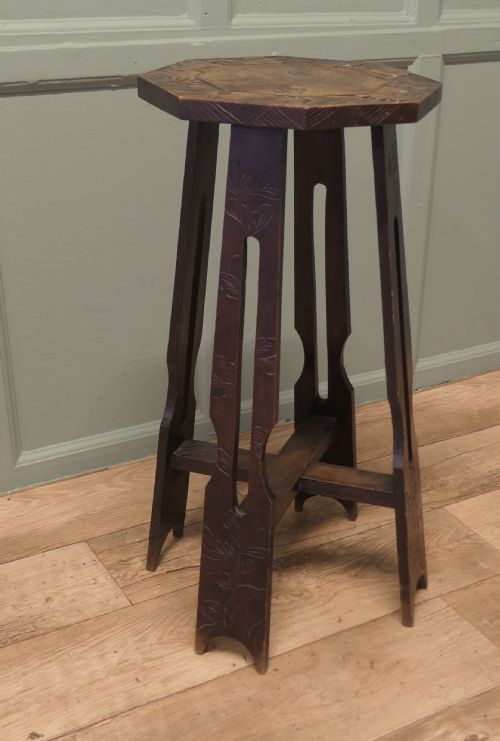
Makers constructed these stands using dense timbers such as mahogany, rosewood, padouk, and general hardwoods, often selecting ebonised finishes for specific aesthetic effects. Selected surfaces receive intricate hand-carving displaying floral motifs, scrolling legs, and pierced aprons.
Many Asian export pieces integrate inset variegated rouge or white marble tops to safely accommodate damp plant pots and prevent water damage to the underlying wood. British Edwardian examples frequently incorporate decorative inlay, brass mounts, and barley twist turnings.
Dark Wood Jardiniere Stand Retail Price Guide 2026
Typical asking prices for dark wood jardiniere stand among the pieces listed under this phrase on Sellingantiques today, from the lower quarter to the upper quarter. They describe what is for sale here now, not the wider market.
Listings feature items spanning the nineteenth century through the nineteen thirties, including Edwardian and Qing Dynasty periods.
Distinctions in quality
Quality rests upon the density and selection of the timber, distinguishing superior hardwoods like padouk and rosewood from standard commercial pine or mixed woods. Deep, crisp hand-carving executed with precision separates bespoke workshop items from simpler production pieces.
The integrity of inset marble panels, tight joinery at the joints of slender legs, and balanced weight distribution dictate the structural excellence of a stand. Original surface patination untouched by modern stripping preserves the historical character of the piece.
Liberty of London
The Dark Wood Jardiniere Stand Glossary
- Jardiniere
- An ornamental pot or container for holding flowers or plants, which sits atop these dedicated stands. The term derives from the French word for gardener.
- Torchere
- A tall, slender standing pedestal or lamp-holder originating in the seventeenth century. In this context, it functions to elevate plants or urns.
- Hongmu
- A Chinese term translating to red wood, used to describe dense, dark tropical hardwoods such as padouk and rosewood utilised in Qing Dynasty furniture.
- Padouk
- A heavy, durable reddish-brown tropical hardwood favoured by Asian and European makers for its rich colour and resistance to moisture.
- Inlay
- A decorative technique where contrasting materials such as lighter woods or metal are embedded into the primary surface of the furniture.
Dark Wood Jardiniere Stand: Frequently Asked Questions
What is a jardiniere stand used for?
These stands serve to elevate heavy plant pots, flower urns, and ceramic jardinieres to eye level within a room.
They allow interior foliage to catch more light while protecting floor surfaces from dampness and soil.
How do I identify a Chinese export stand?
Chinese export stands typically feature dense hardwoods like padouk or rosewood paired with inset marble tops.
They often display intricate Qing Dynasty hand-carvings and robust joinery designed for international transport.
Are marble top stands waterproof?
The stone inset resists water spills from watering plants far better than bare wood surfaces.
However, moisture can still seep into the surrounding wooden frame if water sits for extended periods.
How do I date an Edwardian plant stand?
Edwardian stands usually date between nineteen hundred and nineteen ten, constructed primarily from mahogany.
They frequently exhibit delicate string inlay, satinwood banding, or tapered legs characteristic of the period.