









Chinese Marble Top Table
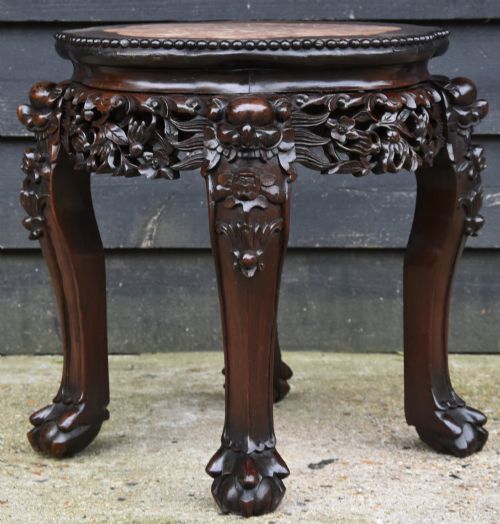
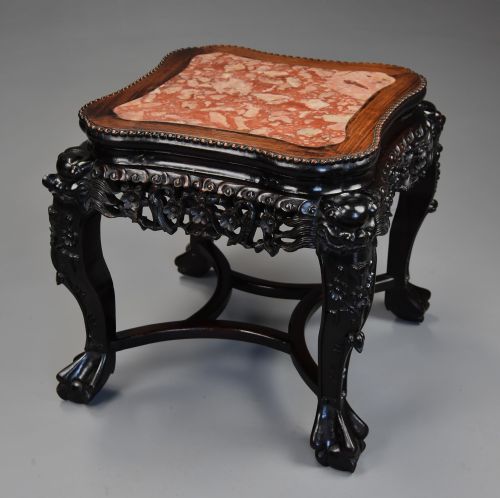
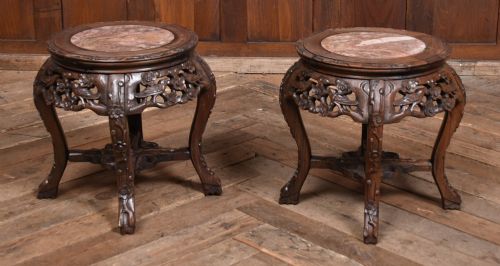
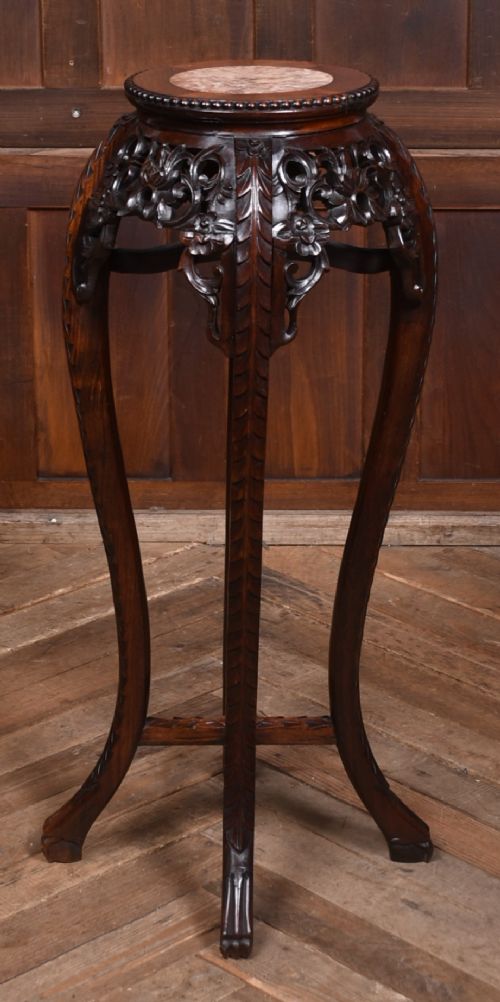
A chinese marble top table brings cool stone and dense timber together, offering a sturdy surface designed for plants, urns and lamps.
Chinese Marble Top Table
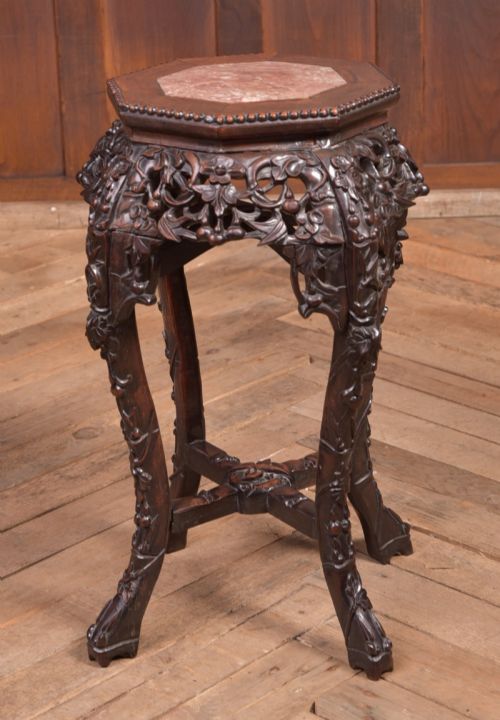
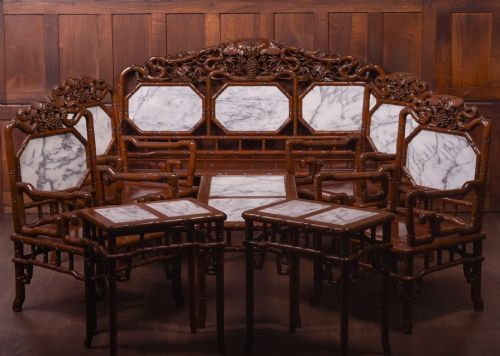
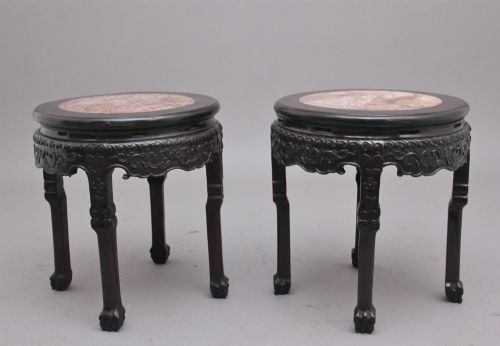
A chinese marble top table spans compact plant stands and low jardiniere supports up to larger console and parlour tables, reflecting traditional forms made for display. The records show these pieces appearing frequently in nineteenth century production, often associated with Qing Dynasty export work.
Buyers commonly encounter lower occasional tables and tall urn stands inset with circular or rectangular stone panels. Forms range from single tier tables to multi-tier stands and occasional tables equipped with mother of pearl inlay.
Origins trace largely to nineteenth century workshops producing goods for export, utilising durable timbers carved with botanical or geometric motifs. These items served functional roles in period interiors as lamp tables, coffee tables and display surfaces for heavy ceramic vessels.
How They Were Made
Construction relies on dense hardwoods such as rosewood, huanghuali, padouk and hongmu, selected for structural strength to support heavy stone inserts. Artisans joined frames using traditional joinery methods that accommodated the natural expansion and contraction of timber around rigid marble panels.
Surfaces feature intricate hand carving depicting floral designs, scrolling foliage and dragons, sometimes augmented with mother of pearl inlay set flush into the dark wood. The inset stone panels utilise white, grey or variegated rouge marble, fitted tightly into recessed rebates within the wooden framing.
Chinese Marble Top Table Retail Price Guide 2026
Typical asking prices for chinese marble top table among the pieces listed under this phrase on Sellingantiques today, from the lower quarter to the upper quarter. They describe what is for sale here now, not the wider market.
Some tables double as plant stands, ready to catch rogue watering splashes long before indoor foliage became a modern lifestyle trend.
What Varies In Quality
Quality rests upon the density and grain of the chosen hardwood alongside the crispness and depth of the hand carving. Pieces executed in heavy rosewood or huanghuali with deeply undercut relief work demonstrate superior craftsmanship compared to simpler ebonised or softer timber frames.
The selection and fit of the marble insert dictates the refinement of the piece, with variegated rouge marble or well-figured panels elevating the status of an urn stand or centre table. Construction solidity, particularly in multi-tier stands and heavy console tables, separates utilitarian items from finer examples.
The Chinese Marble Top Table Glossary
- Marble
- A metamorphic rock formed from limestone, cut into thin slabs and inset into table tops to provide a cool, smooth and heat-resistant surface.
- Hardwood
- Dense timber derived from broad-leaved deciduous trees, utilised in these tables for its strength and capacity to hold intricate carved details.
- Rosewood
- A heavy, durable timber with a rich grain, frequently employed in nineteenth century oriental tables and urn stands.
- Jardiniere stand
- A tall or low decorative support specifically built to hold heavy ceramic plant pots and floral containers.
- Hongmu
- A traditional Chinese category name for dense, red-toned hardwoods used in fine furniture production.
Chinese Marble Top Table: Frequently Asked Questions
What were chinese marble top tables used for?
These tables served primarily as sturdy display surfaces for heavy decorative objects, including porcelain urns, lamps, jardiniere pots and bronze vessels.
Their cool stone tops provided practical protection against moisture from plants and heat from oil lamps in nineteenth century parlours.
How do I identify a Qing Dynasty table?
Identification relies on observing traditional construction methods, dense native hardwoods like rosewood or huanghuali, and characteristic hand-carved floral or geometric motifs.
Many examples from this period also display distinct export forms such as low plant stands and multi-tier occasional tables.
Are the marble inserts removable?
The marble panels are typically fitted securely into recessed grooves within the wooden frame, held firmly in place by the surrounding structure.
While they can sometimes be lifted out for cleaning or transport, they are designed to remain stationary during everyday use.
How do I care for the wood and marble?
Maintain the timber frame using a soft, dry cloth and occasional light applications of appropriate furniture wax to preserve the finish.
Clean the marble insert gently with a damp cloth, avoiding acidic substances that can etch or dull the polished stone surface.