









Chinese Carved Side Table
A Chinese carved side table brings dense timber, pierced aprons, and marble or glass panels into a room.
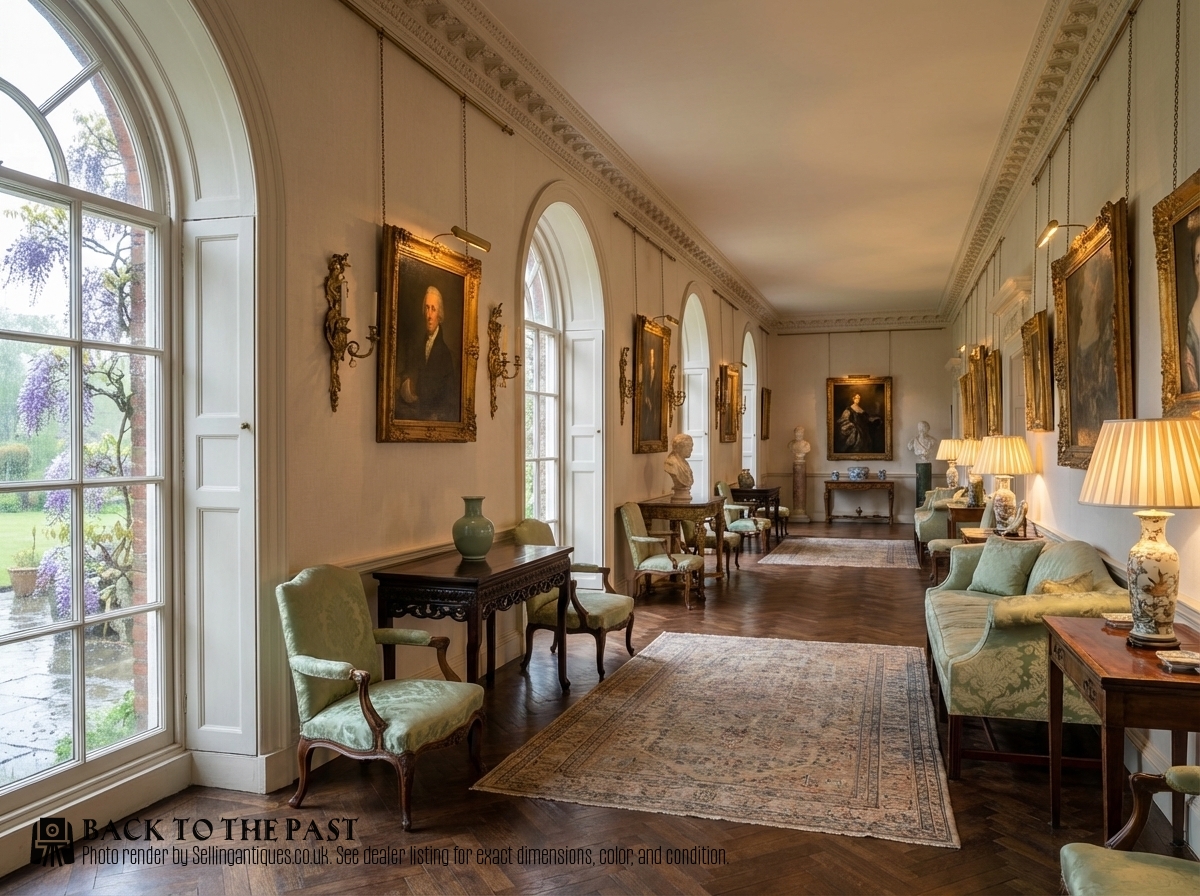
Chinese Carved Side Table
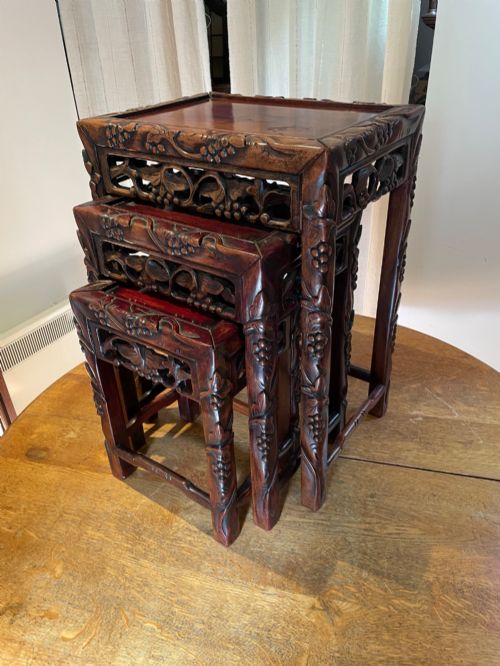
A chinese carved side table encompasses low tables, altar forms, nests, and plant stands produced across the nineteenth and early twentieth centuries. These works emerge from traditions spanning the Qing Dynasty through Chinese Export production for Western interiors.
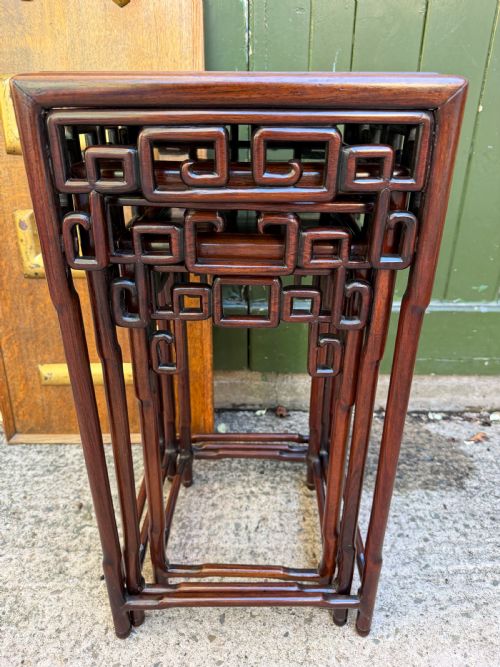
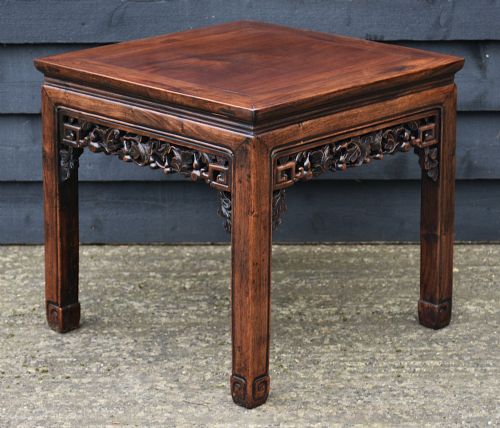
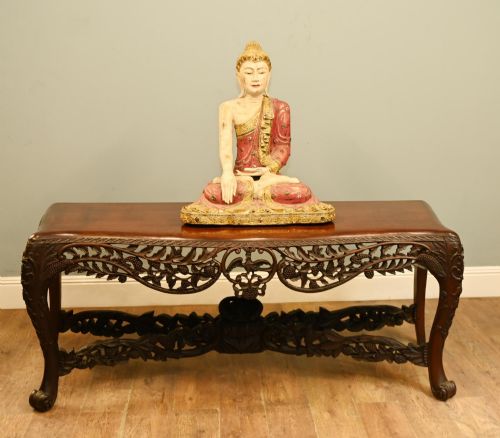
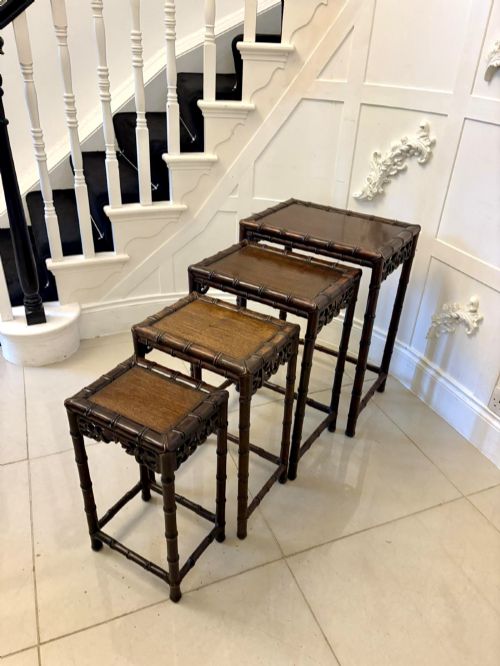
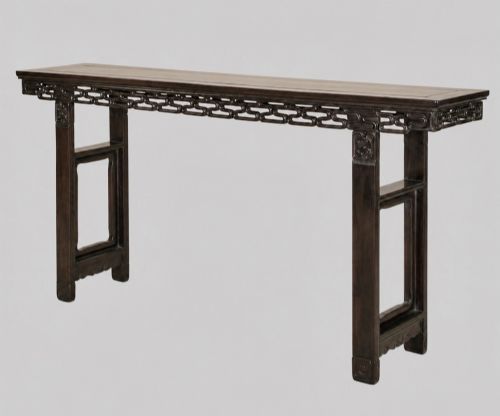
Buyers meet dense timber frames featuring deep relief carving, inset marble panels, and structured supports. Forms range from compact square low tables to elongated altar tables and nested sets designed for flexible placement.
How they were made
Joinery relies on dense timbers including rosewood, hongmu, padouk, elm, and huanghuali, chosen for structural stability and rich grain. Carpenters formed intricate frames without metal fasteners, employing interlocking joints that accommodated timber movement.
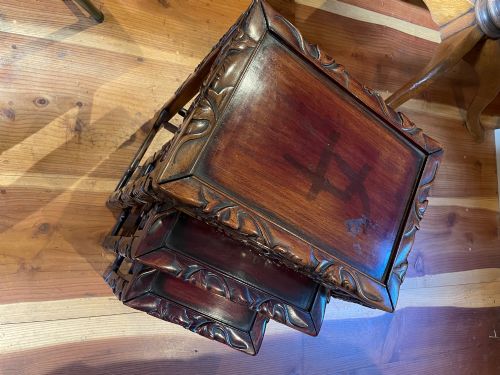
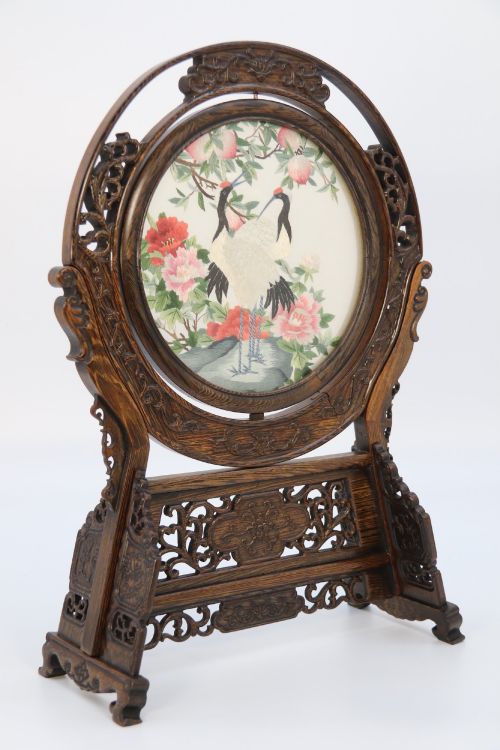
Carvers applied manual chisel work to create pierced foliate aprons, figures, and geometric borders. Surfaces often incorporate inset panels of rouge marble, burr wood, mother of pearl inlay, or glass.
Chinese Carved Side Table Retail Price Guide 2026
Typical asking prices for chinese carved side table among the pieces listed under this phrase on Sellingantiques today, from the lower quarter to the upper quarter. They describe what is for sale here now, not the wider market.
Listings feature nineteenth and early twentieth century items produced in rosewood, elm, marble, and glass.
What varies in quality
Depth and crispness of hand carving separate proficient workshop production from routine commercial output. Sharp undercutting and defined motifs indicate skilled labour, whereas soft edges suggest hurried workshop execution.
Selection of timber grain and the integrity of stone or wood panel inserts determine overall visual weight. Matched timber sets and unblemished marble panels elevate the execution of a piece.
The Chinese Carved Side Table Glossary
- Hongmu
- A dense tropical hardwood favoured in Chinese furniture making for its deep reddish tone and heavy weight. It translates literally to red wood.
- Altar table
- An elevated rectangular table with upturned flange ends, historically used for display in domestic halls. These pieces feature substantial carved aprons and straight legs.
- Nesting tables
- A set of graduated tables designed to fit neatly beneath one another when not in use. They provide flexible surface space in living areas.
- Jardiniere stand
- A tall, compact pedestal table constructed to hold heavy plant pots or floral arrangements. They often incorporate inset marble tops to resist moisture.
Chinese Carved Side Table: Frequently Asked Questions
How were Chinese side tables used historically?
These tables served practical and ceremonial roles within domestic interiors, holding decorative objects, lamps, or scholar items. Taller altar forms occupied central spaces in halls, while smaller stands sat beside seating.
Compact variants functioned as portable surfaces for tea or writing, adapting easily to different rooms as household needs shifted.
What woods should I expect to find?
Construction primarily utilises dense Asian hardwoods such as rosewood, hongmu, padouk, and elm. These timbers provided the structural strength required for intricate pierced carving.
Some examples incorporate contrasting burr wood panels, mother of pearl inlay, or inset marble tops to provide textural variety across the surface.
How do I distinguish nineteenth century examples?
Nineteenth century pieces display traditional joinery methods, deep manual chisel work, and patinated timber surfaces acquired through age. Construction details reveal hand-finished components rather than mass-produced uniformity.
Matching the stylistic markers of the Qing Dynasty helps establish the manufacturing period alongside material characteristics.
How do I care for a marble top?
Marble inserts require gentle cleaning with a soft, damp cloth to remove dust without harming the polished stone surface. Avoid harsh chemical cleaners that can etch the mineral structure.
Maintaining stable room humidity protects both the stone panel and the surrounding hardwood frame from shrinking or cracking.