

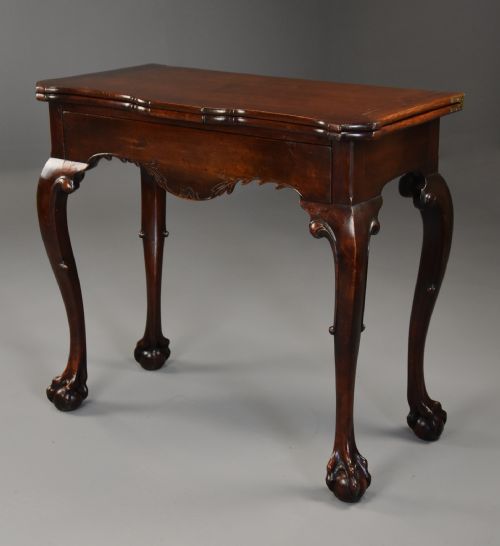

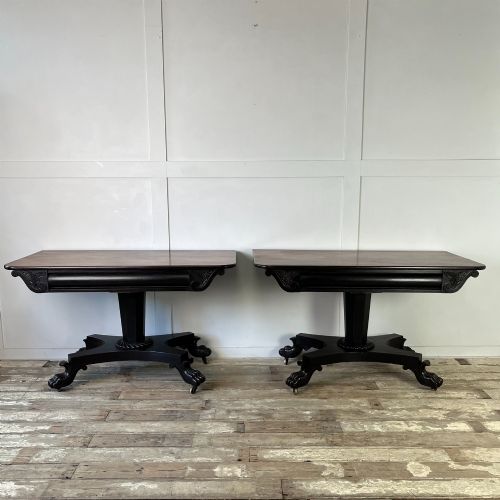

Black Carved Side Table
These black carved side tables bring dark wood, heavy relief work and diverse regional forms into domestic spaces.

Black Carved Side Table
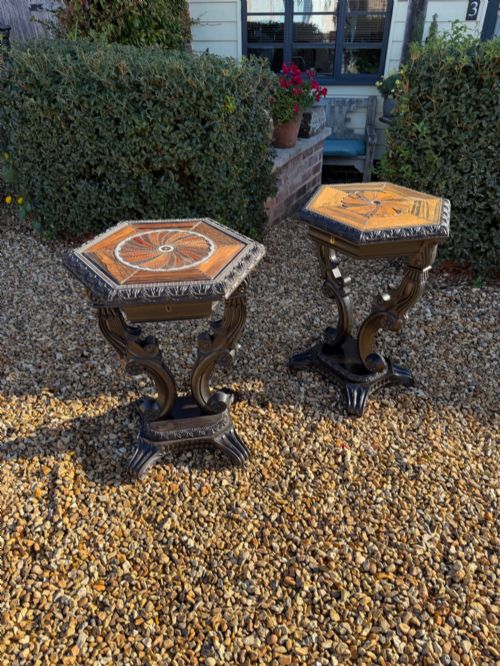
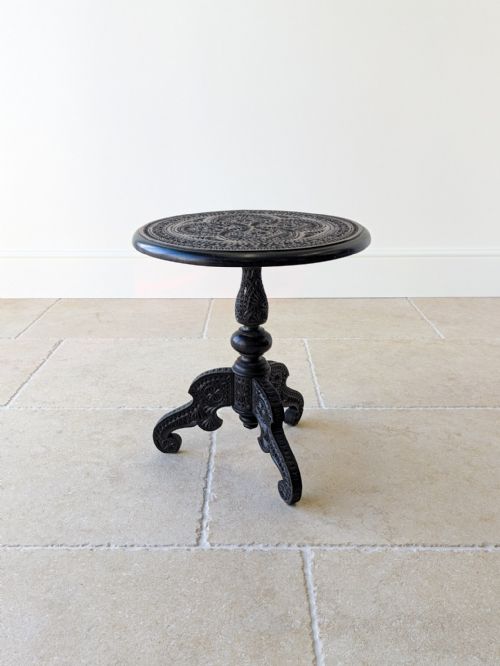
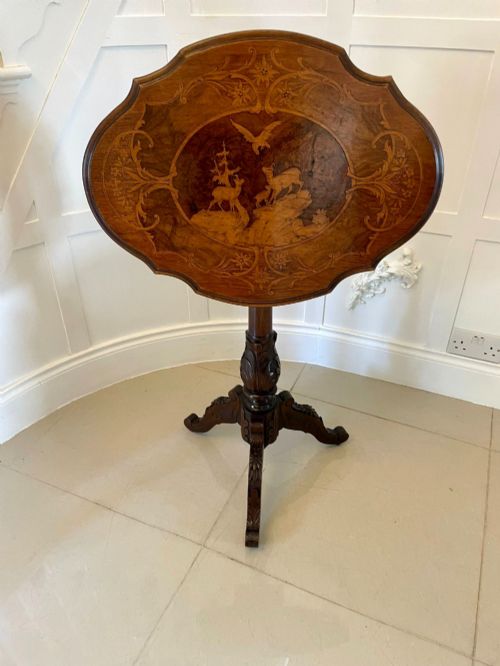
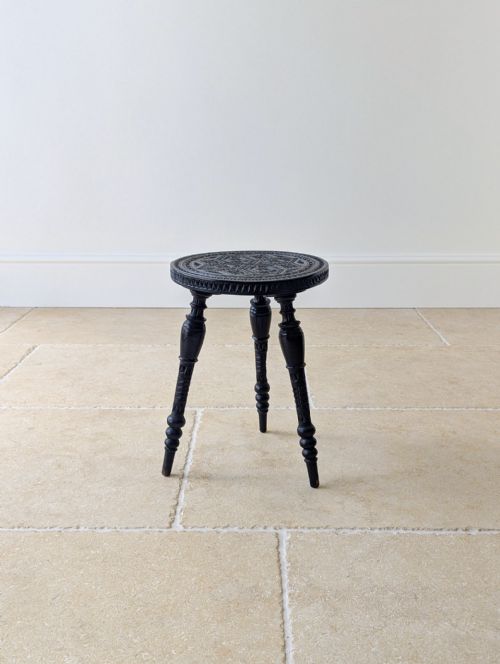
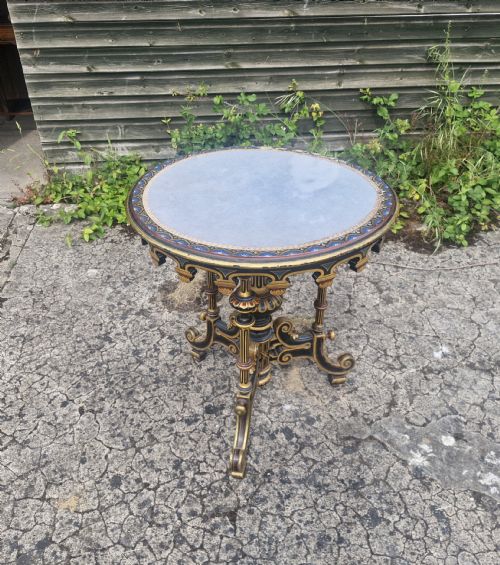
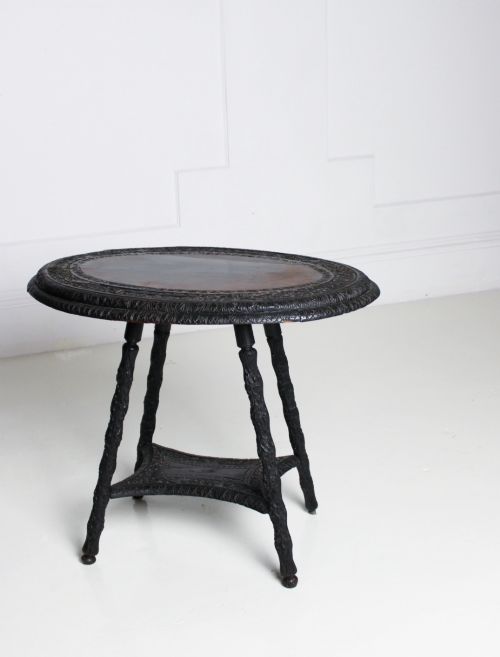
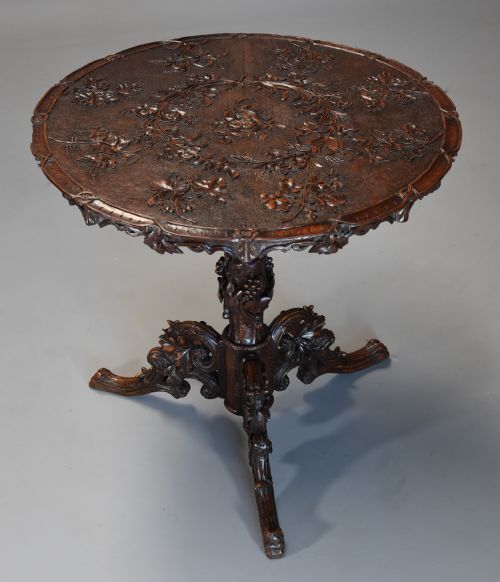
A black carved side table gathers varied historical forms, from Victorian ebonised occasional pieces to Anglo-Indian and Black Forest productions. Buyers seek these tables for their dark surfaces and deep surface decoration.
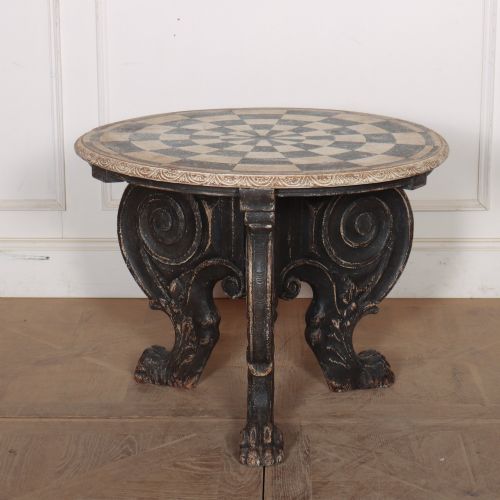
The selection ranges across nineteenth and early twentieth century periods, taking the shape of occasional tables, plant stands, console tables and small centre tables. Ebonised wood, hardwood and painted pine dominate the physical evidence.
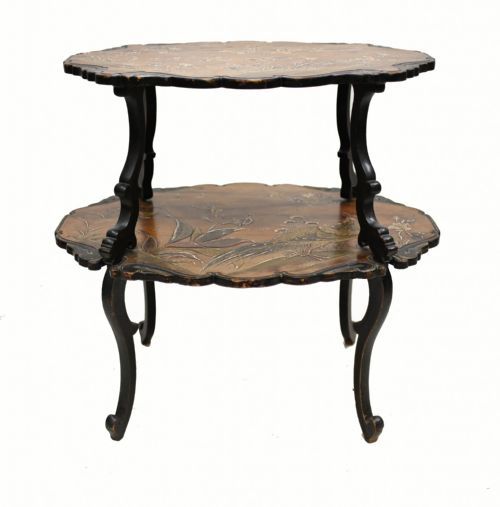
Regional styles span British Victorian adaptations, European alpine carving, and Oriental lacquerwork. Each piece demonstrates how makers applied dark finishes and carved relief to small-scale furniture.
How they were made
Makers utilised solid timbers including oak, walnut, mahogany and linden wood, applying ebonised finishes, black lacquer or dark paint to achieve a uniform sombre tone. Carving techniques range from chip carving and chip-carved geometric patterns to deep figurative relief depicting animals and foliage.
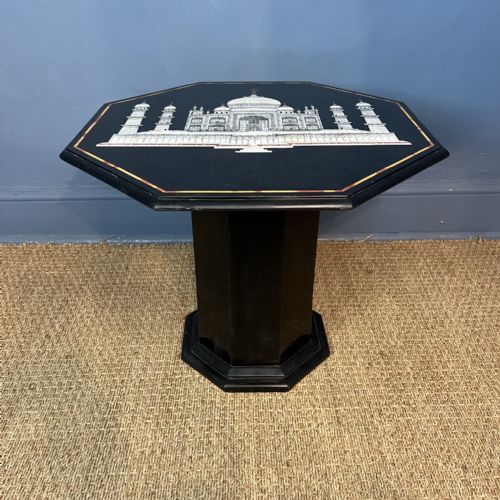
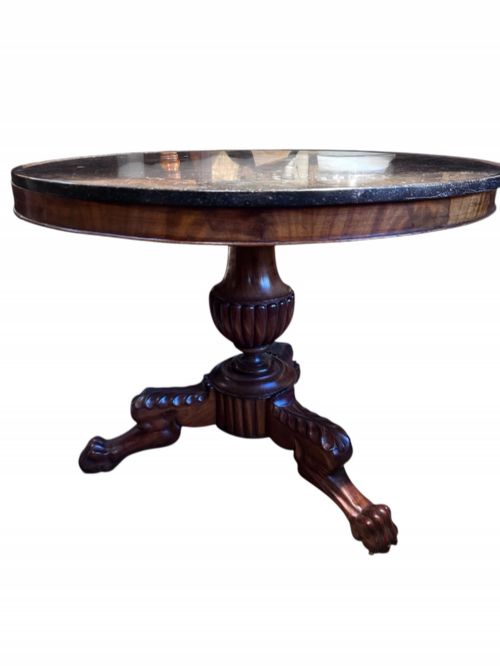
Surfaces frequently incorporate contrasting elements such as marble tops, inlaid stone, brass details or burr walnut panels. Construction methods combine traditional joinery with applied ornamentation suited to regional workshops from Europe to Asia.
Black Carved Side Table Retail Price Guide 2026
Typical asking prices for black carved side table among the pieces listed under this phrase on Sellingantiques today, from the lower quarter to the upper quarter. They describe what is for sale here now, not the wider market.
Materials across these listings include ebonised wood, hardwood, marble, walnut, brass, oak and paint.
What varies in quality
Quality rests in the crispness of the chisel work and the depth of the carving. Deeply undercut linden wood figures or sharp chip carving demand greater technical skill than shallow surface scoring.
Material selection divides standard utilitarian items from finer productions. The integration of solid ebony, high-grade marbles, intricate marquetry or signed maker attributions elevates a piece above basic painted softwood.
Maple and Co·Liberty of London·Lamb of Manchester·KRIEGER of Paris
The Black Carved Side Table Glossary
- Ebonised
- Wood treated with stain, dye or polish to imitate genuine ebony. This dark finish was popular during the Victorian and Aesthetic Movement periods.
- Chip carving
- A method of removing small chips from a wooden surface with knives or chisels to create geometric patterns. It appears frequently on nineteenth-century occasional tables.
- Black Forest
- A regional style of wood carving originating in Switzerland and Germany. Pieces in this tradition often depict bears, dogs and natural forest elements in linden wood.
- Pietra dura
- An inlay technique using cut and fitted polished coloured stones to create pictures. It appears on mid-nineteenth-century tables.
- Japanning
- A European imitation of East Asian lacquerwork involving layered varnishes and heat curing. It creates a dark, glossy decorative surface.
Black Carved Side Table: Frequently Asked Questions
How do I clean a carved dark table?
Dust intricate carvings gently with a soft dry brush to prevent dirt accumulation in recessed areas. Avoid harsh chemical cleaners that strip dark finishes or modern waxes that leave sticky build-up.
Maintain the timber with traditional furniture polish applied sparingly on a soft cloth. Keep wooden tables away from direct heat sources to prevent timber splitting.
Where should I place a plant stand?
Plant stands and small occasional tables suit corners, hallways or beside seating where floor space is limited. Their sturdy tops support lamps, ceramics or indoor plants.
Ensure heavy marble-topped or stone-inlaid stands rest on level flooring. Protect the surface from moisture if using pots without saucers.
How do I identify a Black Forest table?
Look for figurative animal carvings such as bears or hounds integrated into the structural supports or base. These pieces are typically carved from linden wood.
Examine the carving style for naturalistic detailing and deep relief work typical of nineteenth-century Swiss and German workshops.
What is an ebonised finish?
Ebonising is a chemical or staining process applied to lighter woods like beech, mahogany or fruitwood to turn them completely black. This technique mimics expensive exotic ebony.
Check for areas where wear reveals the lighter timber underneath. This finish defines many Victorian and Aesthetic Movement tables.