



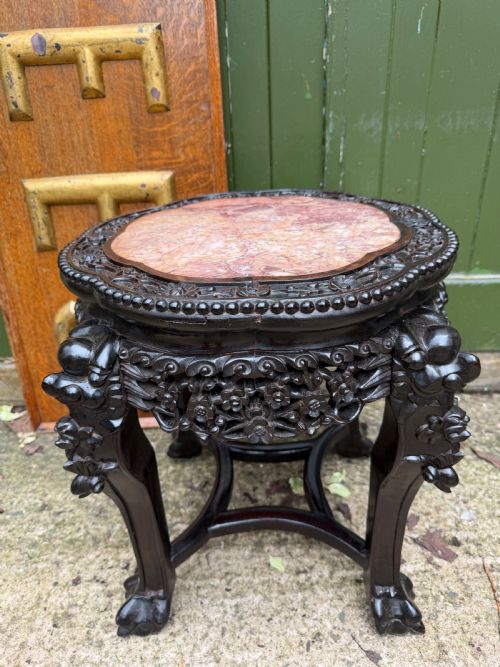


Chinese Marble Inset Table
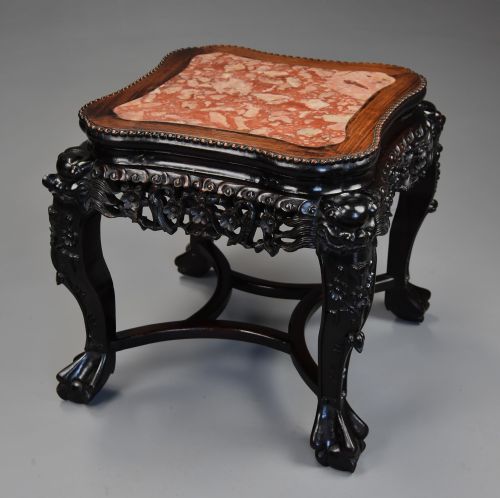
A Chinese marble inset table brings dense, carved timber and cool stone together in forms ranging from tall plant stands to low centre tables.

Chinese Marble Inset Table
A chinese marble inset table combines heavy tropical hardwoods with a smooth stone panel fitted flush into the surface. The selection spans the nineteenth and early twentieth centuries, drawing heavily upon Qing Dynasty aesthetics and export trade production.
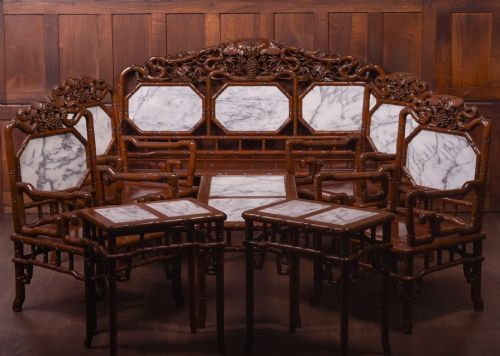
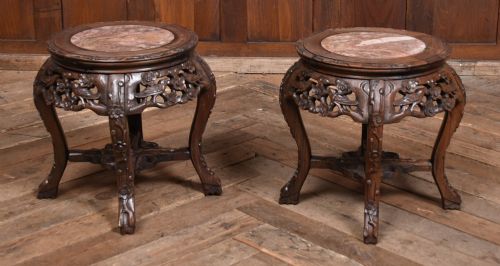
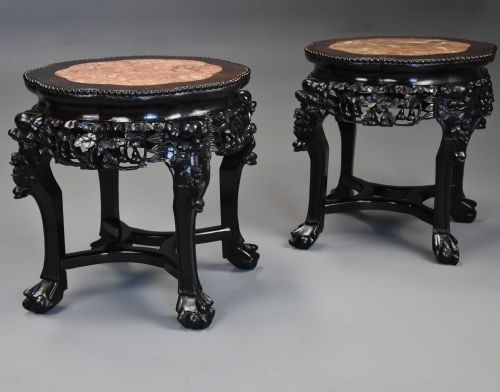
Buyers will encounter multiple formats on this page, dominated by plant stands, jardiniere supports, and low occasional tables alongside larger centre and coffee tables. Many emerge in matched pairs, reflecting the traditional interiors they originally inhabited.
The regional origins and stylistic idioms bridge domestic Qing workshops and nineteenth-century export production for Western markets. These pieces served practical roles supporting heavy porcelain urns, lamps, and decorative objects while displaying intricate carving.
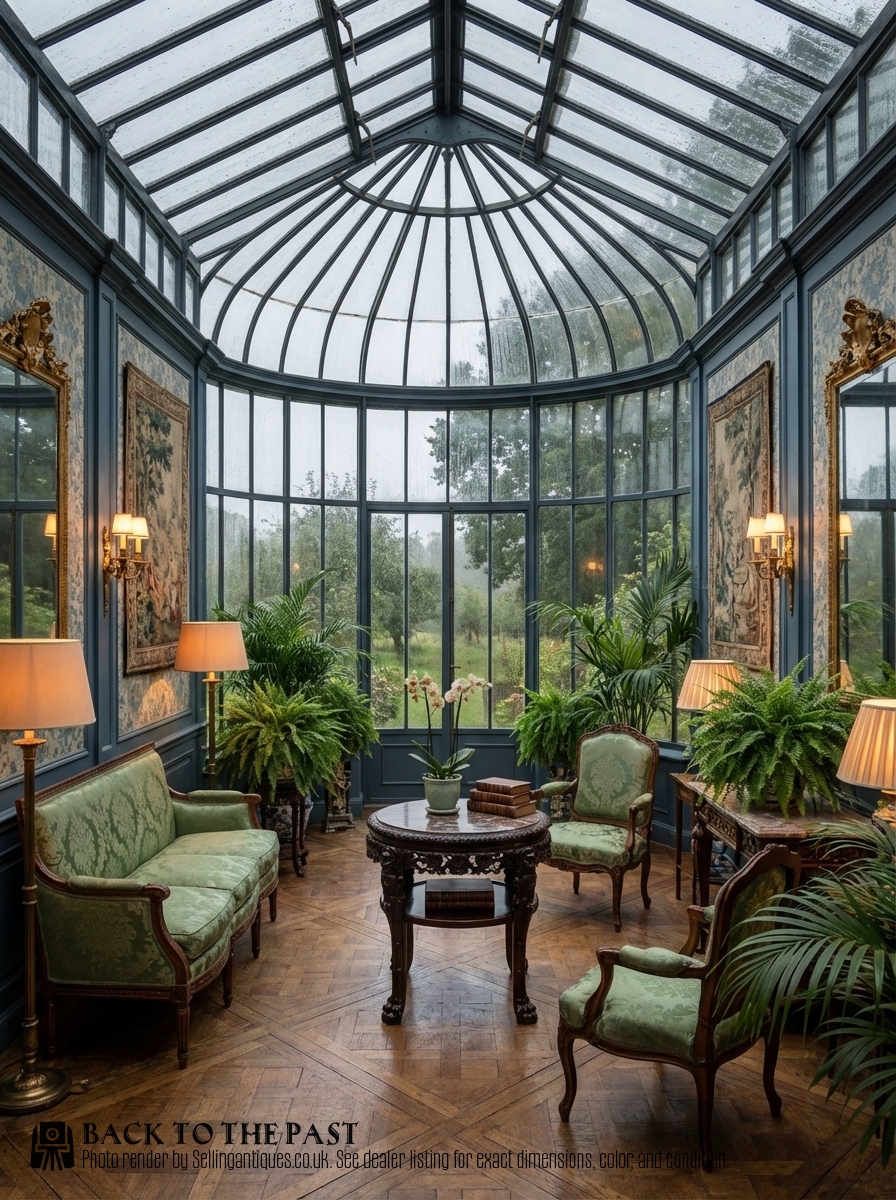
Materials and Technique
Makers utilised dense timbers including rosewood, hongmu, padouk, and ebonised hardwood, selected for their weight and capacity to hold deep, undercut relief carvings. These woods provide a stable, dark framework that contrasts sharply against the pale or variegated tones of the stone inset.
The marble panels, frequently featuring rouge or neutral veining, were meticulously cut and fitted into rebated channels within the wooden frame. Joinery relies on traditional interlocking techniques that accommodate the differing expansion rates of timber and stone without adhesive.
Chinese Marble Inset Table Retail Price Guide 2026
Typical asking prices for chinese marble inset table among the pieces listed under this phrase on Sellingantiques today, from the lower quarter to the upper quarter. They describe what is for sale here now, not the wider market.
Barrel-form plant stands offer a delightfully plump silhouette that manages to look stout and surprisingly nimble all at once.
Evaluating Craftsmanship
Quality rests upon the crispness and depth of the carved foliage, dragons, or geometric motifs across the hardwood frame. Superior examples display three-dimensional undercut work executed by skilled hands rather than shallow, mechanical stamping.
The integration of the marble insert dictates the refinement of the piece, with finer panels sitting perfectly flush and matching the internal rebate without gaps. The choice of dense rosewood or hongmu over softer painted timbers likewise elevates the enduring integrity of the furniture.
The Chinese Marble Inset Table Glossary
- Hongmu
- A dense, dark red-brown tropical hardwood favoured in traditional Chinese furniture making. It possesses natural oils that give it a subtle sheen when polished.
- Padouk
- A heavy, durable timber ranging from bright red to deep brown, frequently utilised in nineteenth-century stands. It accepts intricate carving without splintering.
- Jardiniere stand
- A tall or low occasional table specifically designed to hold heavy plant pots or floral arrangements. They often feature circular or multi-lobed marble tops to resist moisture.
- Rouge marble
- A decorative limestone inset characterised by rich red and burgundy tones with distinct veining. It provides a striking contrast against dark carved hardwoods.
Chinese Marble Inset Table: Frequently Asked Questions
What were Chinese marble inset tables used for?
These tables served primarily as sturdy platforms for heavy decorative items, including large ceramic planters, bronze urns, and table lamps. Their moisture-resistant stone surfaces protected the surrounding timber from water damage associated with live plants.
Larger variations functioned as centre tables or parlour furniture within formal reception rooms. Their dual construction of timber and stone allowed them to handle substantial weight while maintaining an ornate visual presence.
How do I style a marble inset table today?
A tall plant stand works well in an empty corner to elevate trailing greenery, ceramics, or sculptural objects. Their compact footprints make them versatile additions beside seating or in narrow hallways.
Low tables and coffee variants suit contemporary living spaces as focal points holding books or decorative trays. The cool stone surface provides a practical, wipe-clean centrepiece that anchors mixed interior schemes.
How can I tell the period of these tables?
Dating relies on the style of the carving, the choice of timber, and the construction methods visible underneath. Nineteenth-century examples often display deeper, hand-chiselled relief work in dense rosewood or hongmu.
Later pieces from the early twentieth century or Republic period can exhibit slightly lighter construction and more stylised decorative motifs. Examining the underside reveals tool marks and joinery wear that help establish age.
Are the marble inserts removable?
The marble panels are typically fitted snugly into rebated channels within the wooden frame during construction. While they are technically held in place by gravity and the surrounding joinery, they are designed to remain flush and fixed.
Removing them is generally unnecessary and can risk chipping the edges of the stone or the surrounding hardwood lip. Cleaning should be done in situ with appropriate care for both materials.