








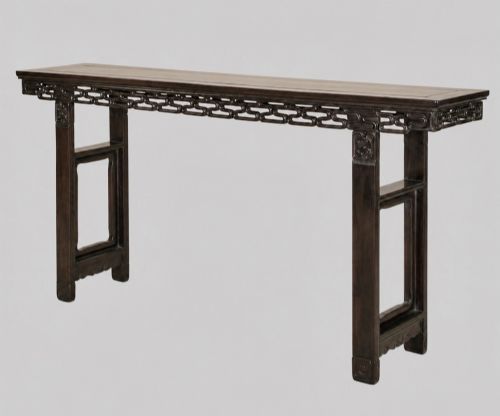
Chinese Hardwood Side Table
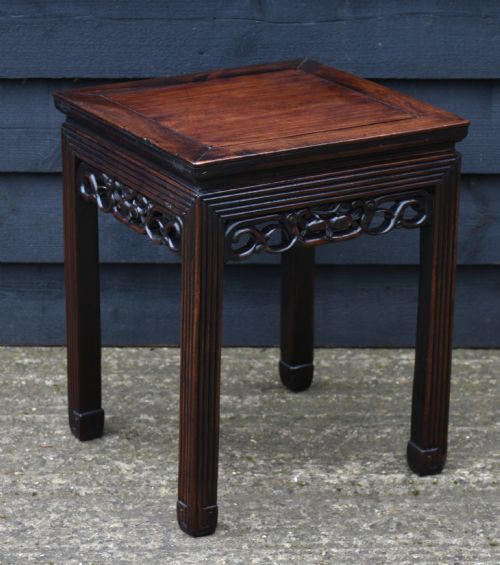
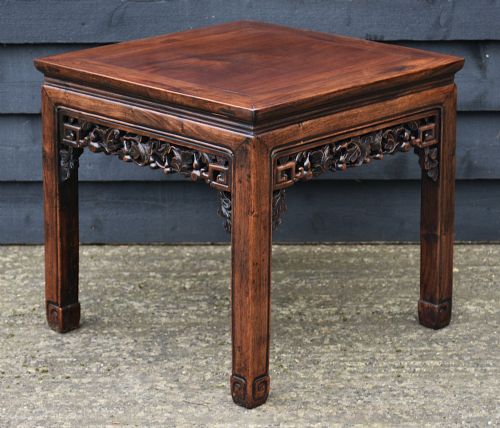
A Chinese hardwood side table brings dense timber grain, inset marble panels and low-relief carving into an interior from the Qing Dynasty and Victorian eras.
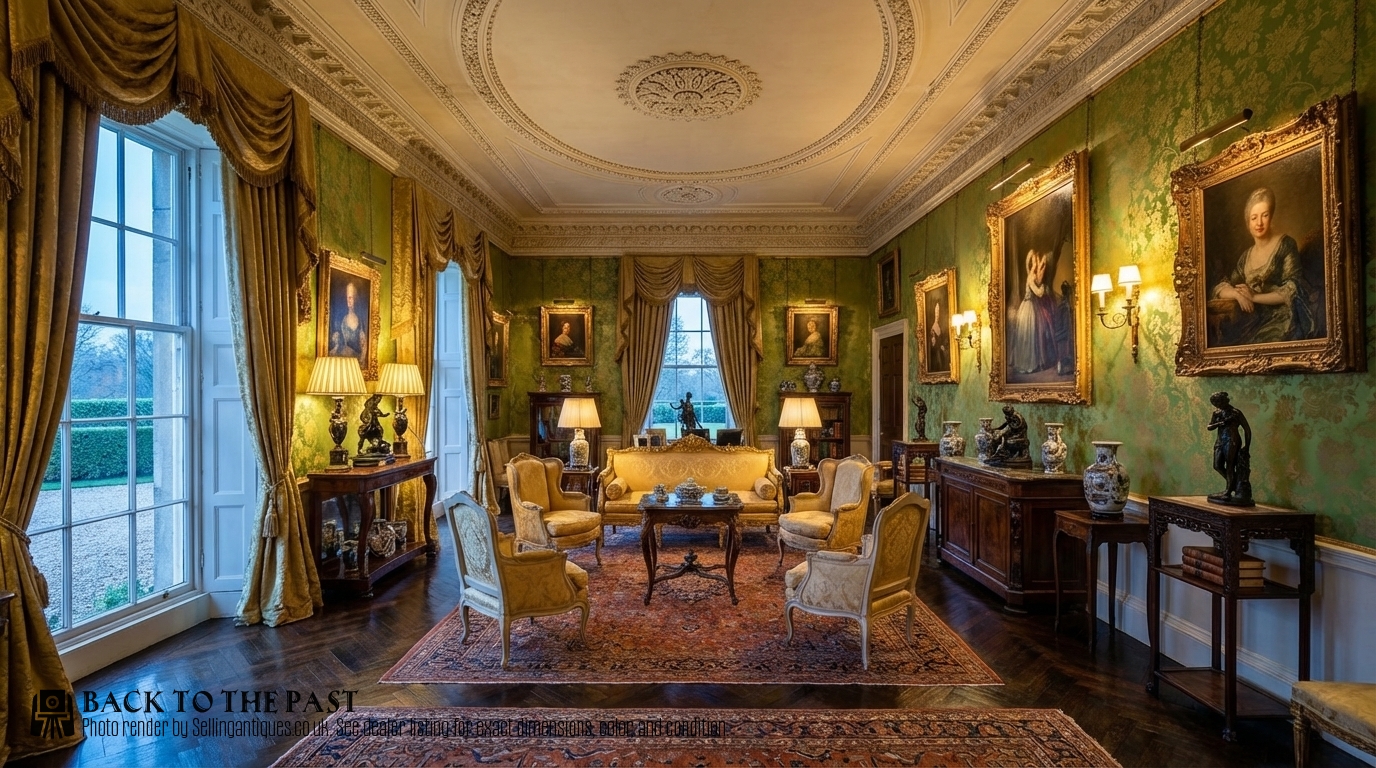
Chinese Hardwood Side Table
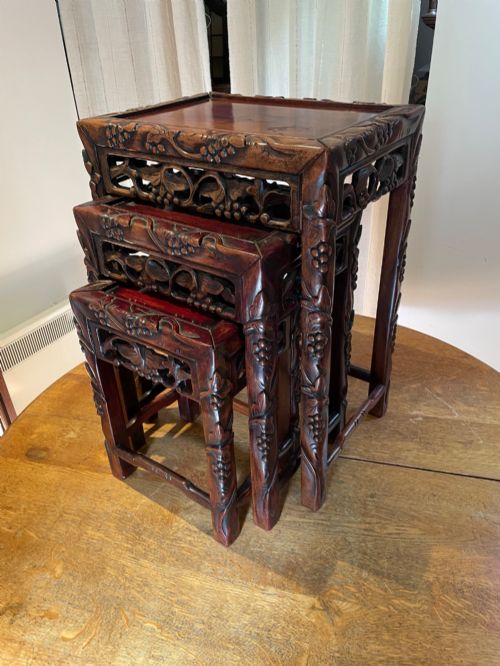
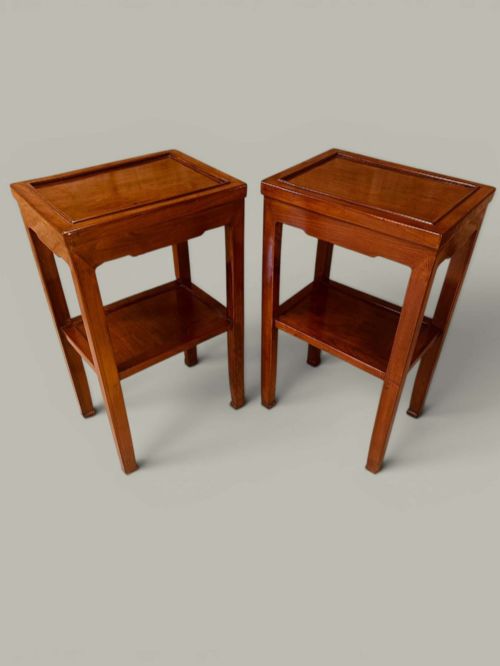
A chinese hardwood side table appears in forms ranging from low square tea tables and rectangular altar tables to multi-tiered nests and tall plant stands. The pieces recorded here span the eighteenth, nineteenth and early twentieth centuries, reflecting traditional craftsmanship through the late Qing period and Victorian era.
Buyers most frequently encounter nineteenth-century examples fashioned as jardiniere stands, pedestal tables, and nested sets. These items function equally as occasional surfaces, display stands for porcelain or flora, and low seating or stool alternatives.
Originating largely from Chinese workshops, the selection also includes export and Chinoiserie interpretations designed for Western interiors. The surviving forms demonstrate a distinct utility in domestic spaces, maintaining compact footprints alongside robust timber construction.
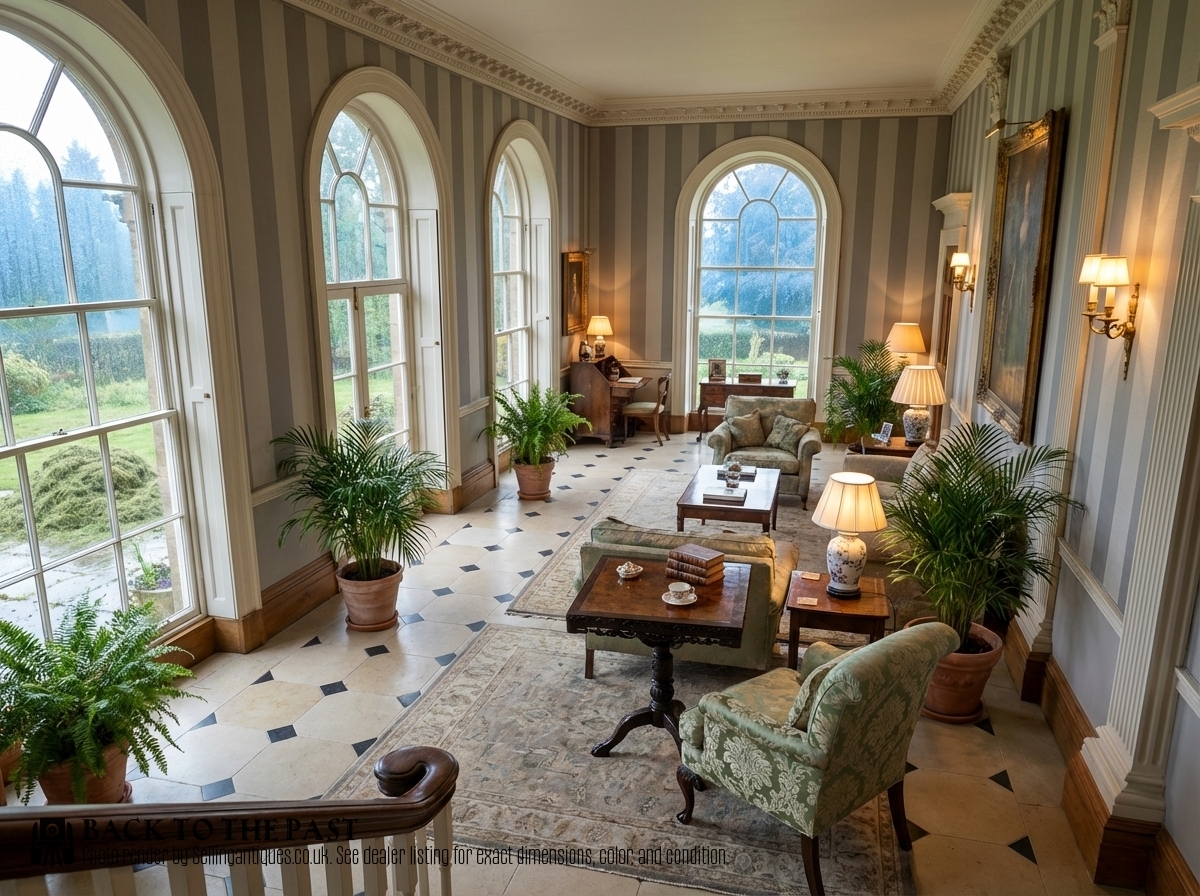
How they were made
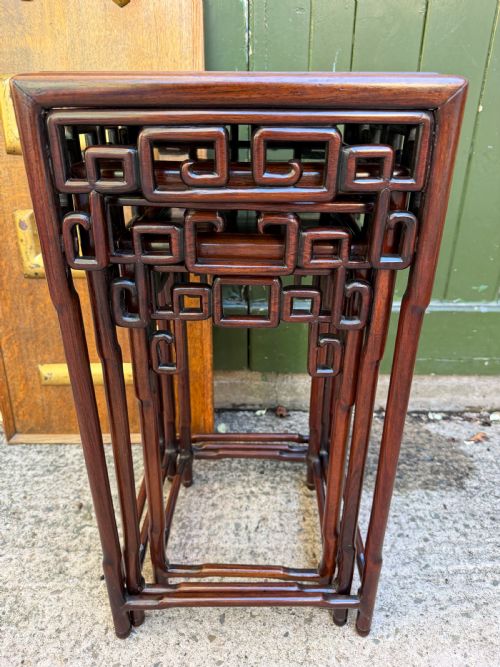
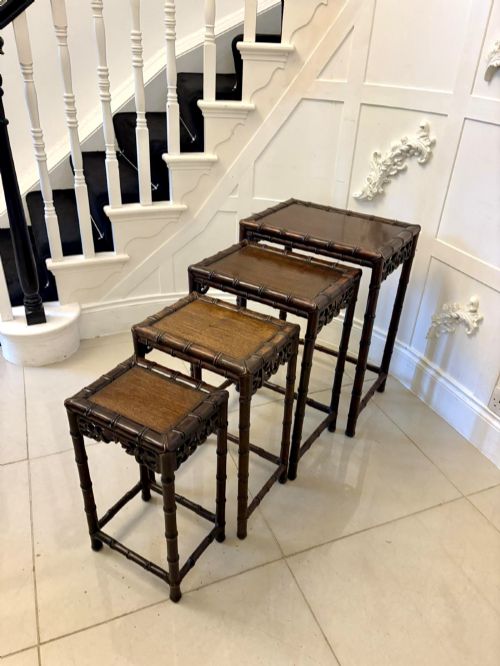
Cabinetmakers utilised dense exotic timbers including rosewood, hongmu, padouk, elm, and huanghuali for structural integrity and rich natural colour. These heavy woods allowed for precise joinery without nails, supporting intricate pierced carving and turned or bamboo-style framing.
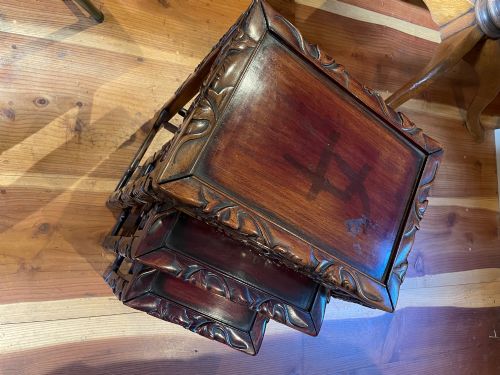
Many surfaces incorporate inset panels of variegated rouge marble, burr wood, mother of pearl inlay, or reverse-painted glass. These contrasting materials sit flush within the timber frames, providing durable display areas resistant to heat and moisture.
Chinese Hardwood Side Table Retail Price Guide 2026
Typical asking prices for chinese hardwood side table among the pieces listed under this phrase on Sellingantiques today, from the lower quarter to the upper quarter. They describe what is for sale here now, not the wider market.
Recorded forms extend beyond standard side tables to include rotating display stands, folding coffee tables, and nested sets of four.
What varies in quality
The standard of a chinese hardwood side table rests upon the depth and crispness of its hand-carving and the quality of the timber grain. Superior examples display dense, figured rosewood or hongmu with tight, seamless joinery that accommodates wood movement naturally.
Subtleties in the marble inserts, such as well-matched natural veining and secure seating within the rebate, separate finer workshop production from standard utility pieces. The weight and stability of the frame further indicate the original tier of manufacture.
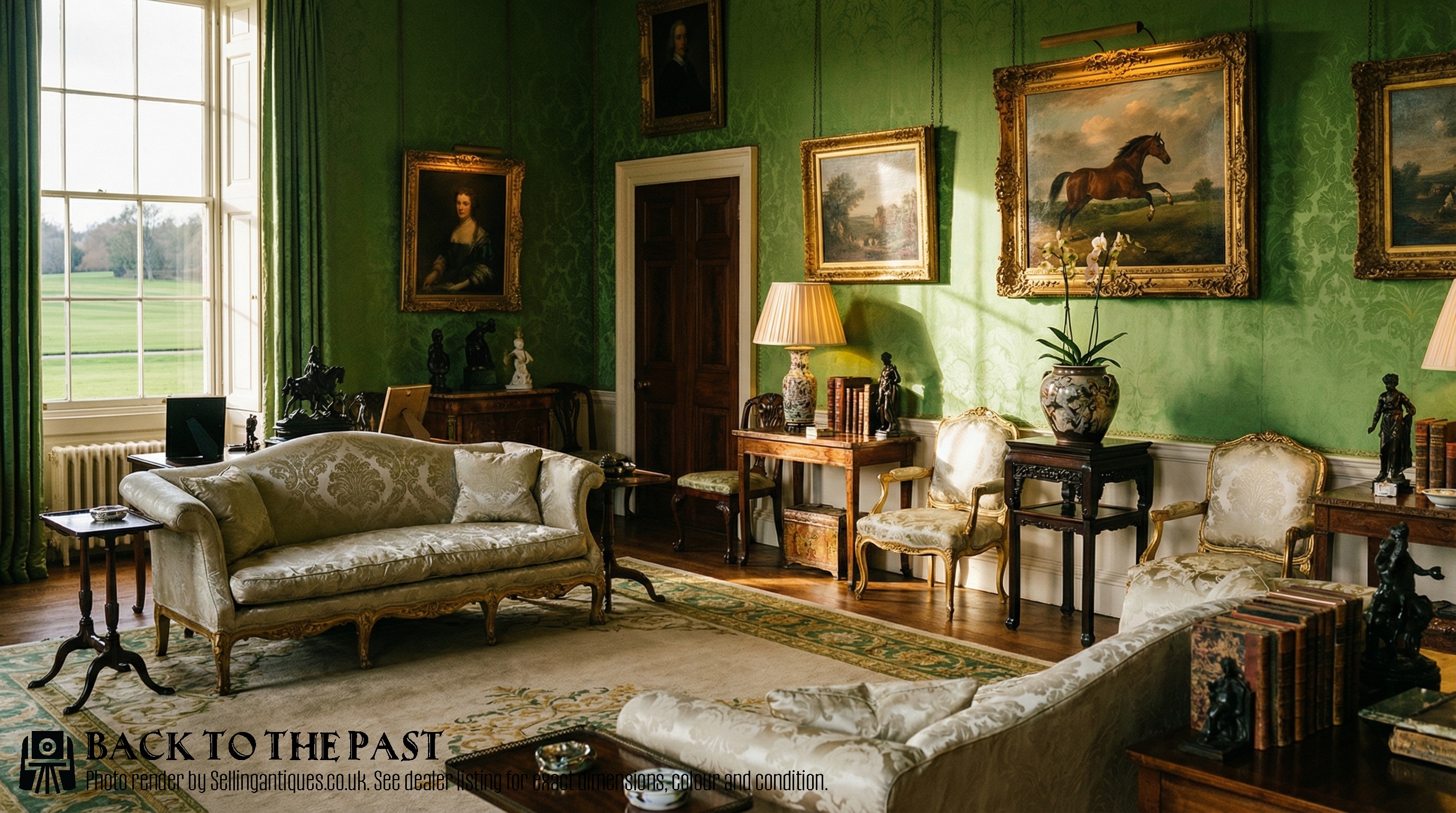
The Chinese Hardwood Side Table Glossary
- Hongmu
- A dense, heavy Chinese hardwood prized for its dark red or purple hue and fine grain. It forms the primary structure of many Qing dynasty tables and stands.
- Jardiniere stand
- A tall or low occasional table designed specifically to hold ceramic plant pots or flower bowls. These often feature inset marble panels to protect the wood from moisture.
- Nest of tables
- A graduated set of rectangular or square tables designed to slide neatly beneath one another. They appear frequently in nineteenth-century hardwood productions.
- Altar table
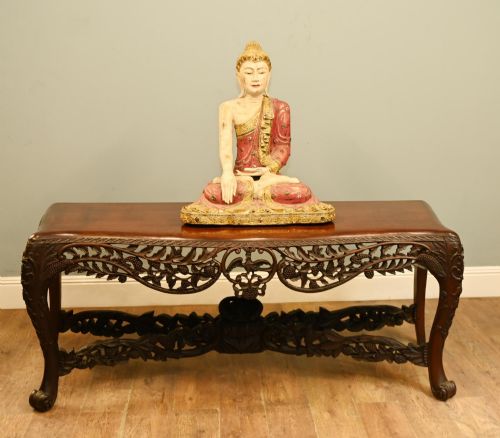
- A long, narrow rectangular table featuring upturned flange ends or carved aprons. Originally used for ceremonial purposes, these serve effectively as narrow side tables in modern spaces.
Chinese Hardwood Side Table: Frequently Asked Questions
How do I use a chinese hardwood side table at home?
These tables adapt readily to modern interiors as lamp surfaces, bedside tables, or display ledges for ceramics and bronze objects. Their sturdy timber construction and compact proportions make them useful in hallways or beside seating.
The taller plant stands and jardiniere tables function well in corners or empty alcoves to display trailing foliage. Meanwhile, nests of tables provide flexible surface area that packs away neatly when not in use.
What is the difference between a side table and a plant stand?
Plant stands and jardiniere tables generally feature taller, narrower proportions with square or circular tops designed to elevate a single object. Side tables offer broader rectangular surfaces suited for holding books, lamps, and daily items.
Despite their original designated uses, nineteenth-century workshops often built these forms with identical carving styles and inset marble tops. Consequently, many survive with interchangeable domestic functions today.
Are these tables waterproof?
While many examples feature inset marble or glass panels that resist spills and moisture from plant pots, the surrounding hardwood frames remain sensitive to standing water. Timber surfaces require prompt wiping to prevent water marks on the polished finish.
Regular polishing with appropriate wax helps maintain the moisture barrier on the exposed rosewood or padouk. The marble sections simply need a damp cloth for routine cleaning.