


Giltwood Pier Table
A giltwood pier table brings classical grandeur to a room, standing flat against the wall beneath a mirror.

Giltwood Pier Table
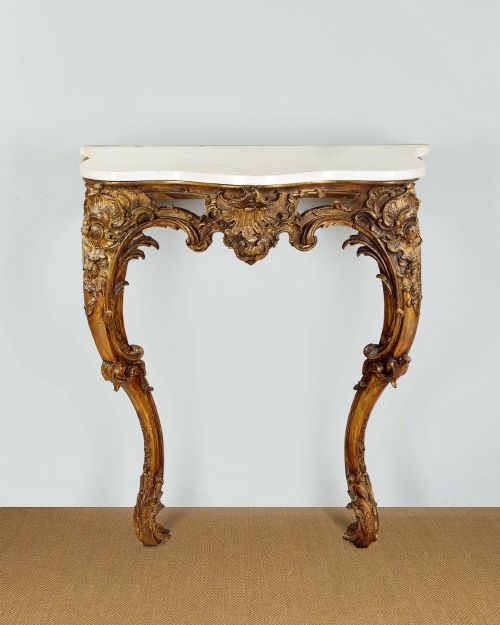
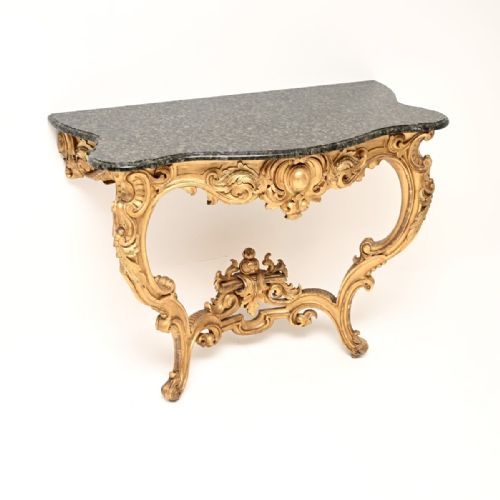
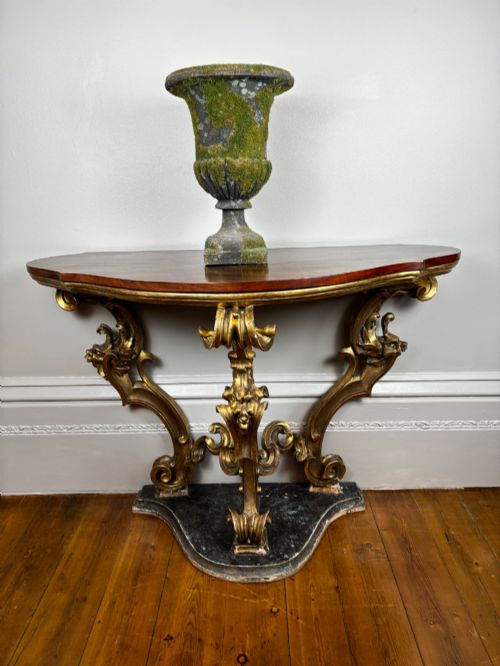
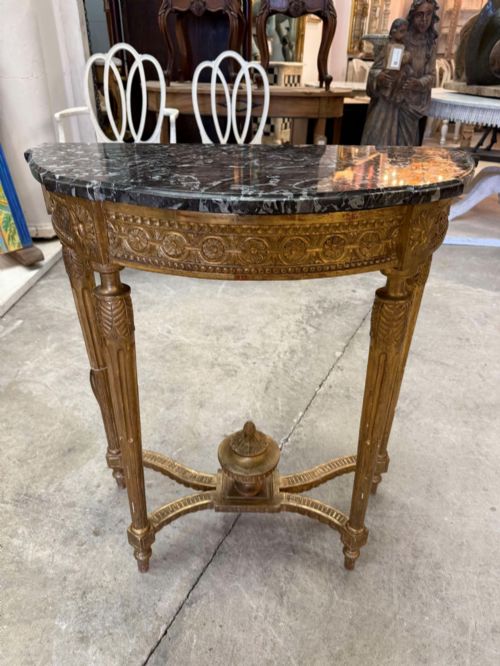
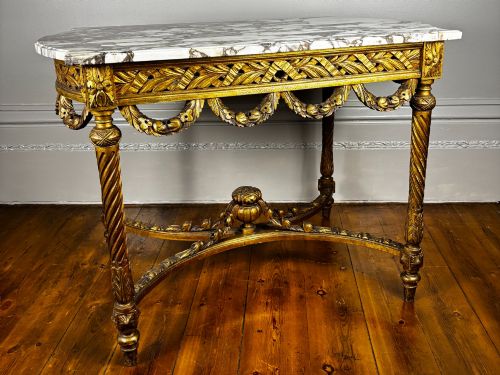
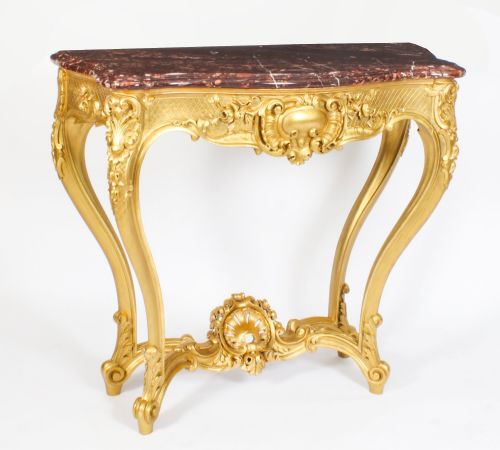
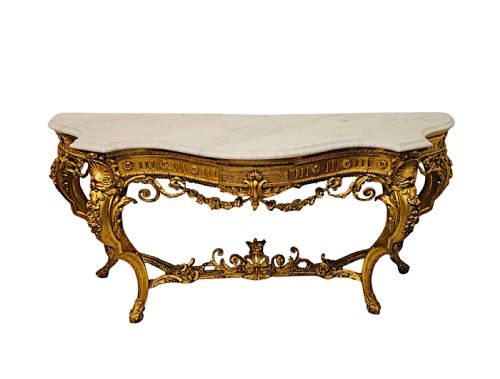
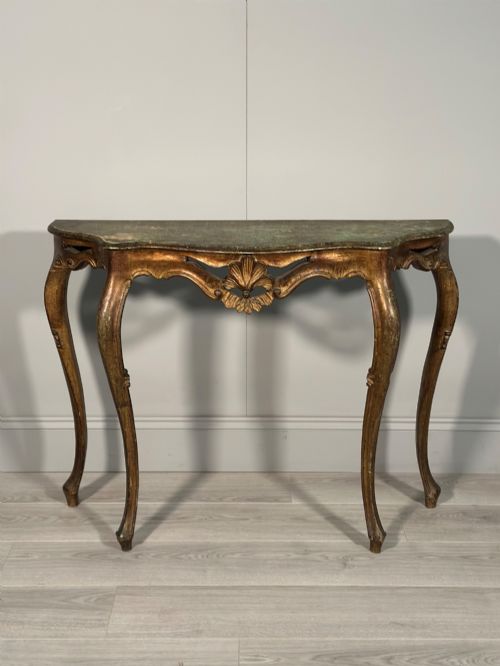
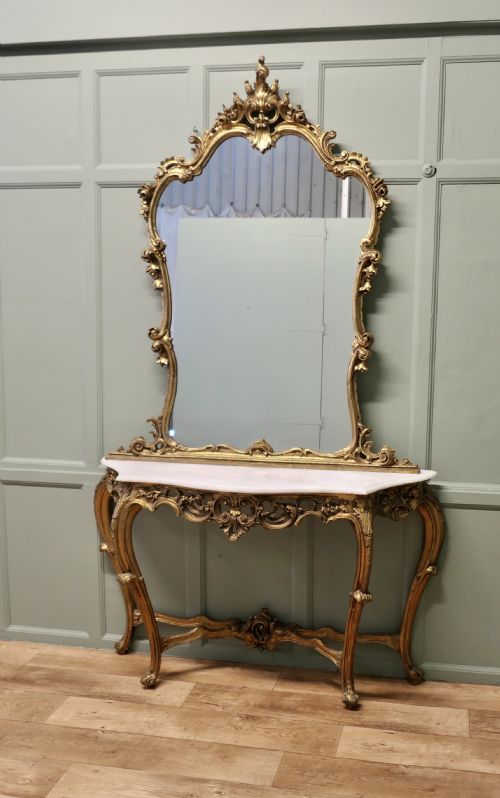
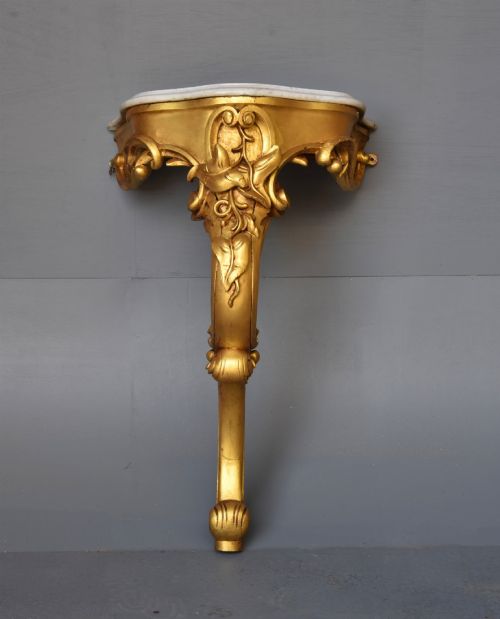
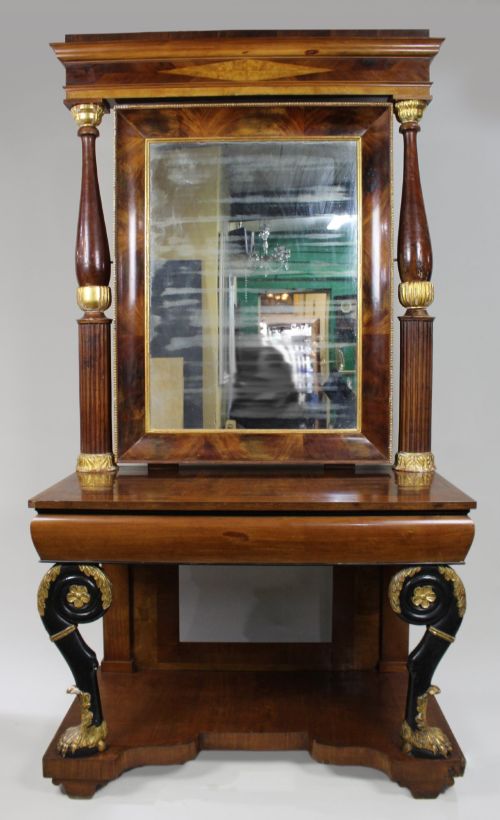
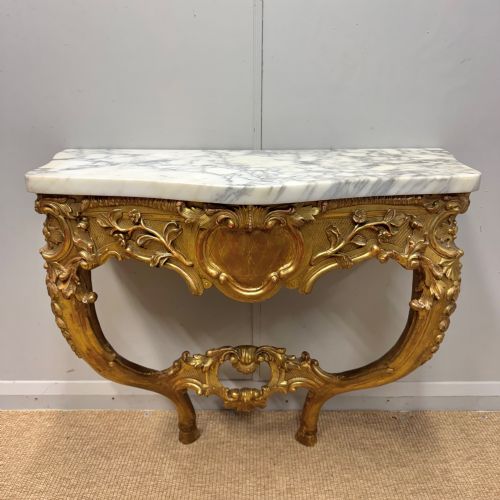
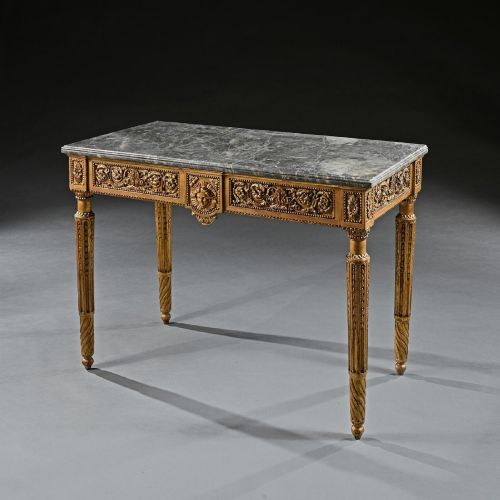
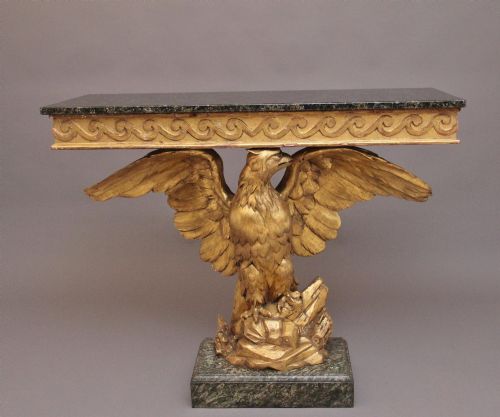
A giltwood pier table is an ornamental console designed to sit against the wall between windows, frequently paired with a matching mirror above. The pieces gathered here span from the late eighteenth century through the nineteenth century and into the early twentieth century, showing both French and Italian influences. Forms range from serpentine front consoles to demi-lune tables and paired monumental designs with lion's paw supports.
Most examples encountered on this page date from the nineteenth century, drawing heavily on French Rococo and Louis XV revival styles. Buyers also discover eighteenth-century Italian pieces alongside Regency and early twentieth-century interpretations. These tables frequently incorporate marble tops in shades of breccia, rouge, and figured breche d'alep.
Materials and construction
Carved wood and gesso form the foundational structure, prepared meticulously to receive layers of gold leaf or paint. Artisans apply thin sheets of gold leaf over bole to create the brilliant reflective surfaces characteristic of giltwood furniture.
Heavy stone slabs, particularly marble, are shaped to fit the serpentine or rectilinear wooden bases, secured to support the substantial weight. Mirror glass, sometimes integrated into associated trumeau frames, completes the traditional composition of these wall-anchored pieces.
Giltwood Pier Table Retail Price Guide 2026
Typical asking prices for giltwood pier table among the pieces listed under this phrase on Sellingantiques today, from the lower quarter to the upper quarter. They describe what is for sale here now, not the wider market.
Several tables arrive with fierce lion's paw feet, bravely holding up centuries of heavy stone without ever taking a step.
Assessing quality and execution
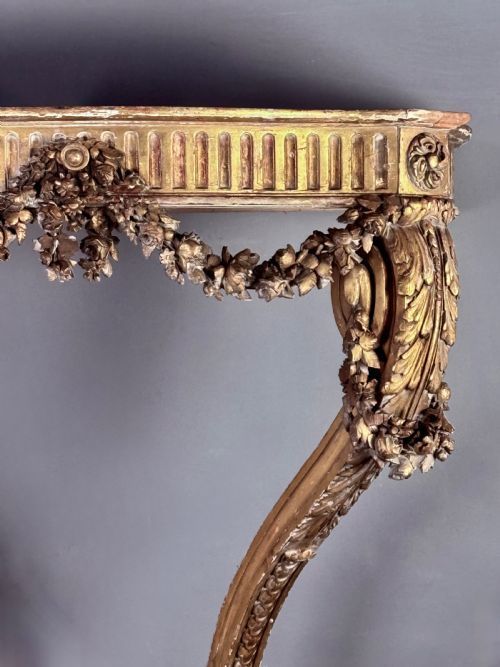
Depth and crispness of the wood carving distinguish superior examples, particularly where acanthus leaves, scrollwork, and figurative elements meet the frame. Finer execution shows sharp undercut details rather than soft, moulded gesso smoothing over plain timber.
The choice and thickness of the marble top, along with the purity of the gilding technique, separate workshop standards. Original mercury mirror glass and intact historical gilding reflect a higher tier of preservation and craftsmanship.
Felix-Alfred Ternisien
The Giltwood Pier Table Glossary
- Giltwood
- Wood that has been coated with gold leaf. This finish provides the characteristic metallic sheen seen across antique frames and tables.
- Console table
- A table supported by wall brackets or console legs rather than four independent vertical posts. These pieces are designed specifically to stand flush against a wall.
- Pier table
- A low table positioned against the wall space between two windows, typically situated beneath a pier mirror. The form developed to maximise light reflection in formal domestic interiors.
- Breccia marble
- A composite stone made of broken rock fragments embedded in a fine-grained matrix. It provides richly patterned multicoloured surfaces frequently utilised for luxury table tops.
- Rococo revival
- A nineteenth-century design movement that reinterpreted the asymmetrical scrolls and shell motifs of the eighteenth-century French Louis XV style. This aesthetic dominates many of the gilded tables from the Victorian period.
Giltwood Pier Table: Frequently Asked Questions
What is a pier table used for?
A pier table serves as an architectural anchor in a principal room, designed to stand flat against the wall between two windows. Historically, it held decorative objects like porcelain vases or clocks beneath a matching wall mirror.
Today, these tables function as striking sideboards in entrance halls or formal reception spaces. Their shallow depth allows them to sit neatly in narrow passages without obstructing movement.
How do I identify French and Italian styles?
French designs on this page often display asymmetrical Louis XV curves, delicate floral carving, and serpentine outlines. They emphasise ornate movement and theatrical grace.
Italian pieces frequently lean towards bolder neoclassical symmetry, structural gravitas, and deep carving such as lion's paw supports. The choice of marble and the weight of the timber frame often point toward these regional distinctions.
Are marble tops original to these tables?
Many tables retain their heavy fitted marble slabs, which were quarried to measure and dropped into the wooden frame. Breccia and figured marble varieties are typical of the eighteenth and nineteenth centuries.
Replacement tops do occur due to the fragile nature of stone over centuries of use. Examining the fit against the gesso rebate helps determine whether the marble has stayed with the base since manufacture.
How do I care for antique giltwood?
Giltwood requires protection from direct sunlight and excessive moisture to prevent the gesso and gold leaf from lifting. Dusting should be done very gently with a dry, soft brush rather than a cloth that might catch on carved edges.
Avoiding chemical polishes is essential because they strip the delicate metallic surface. Stable indoor humidity keeps the underlying timber from expanding and cracking the historic finish.