


Rococo Revival Console Table
A rococo revival console table brings exuberant 19th-century curves, carved woodwork and marble into a modern room.
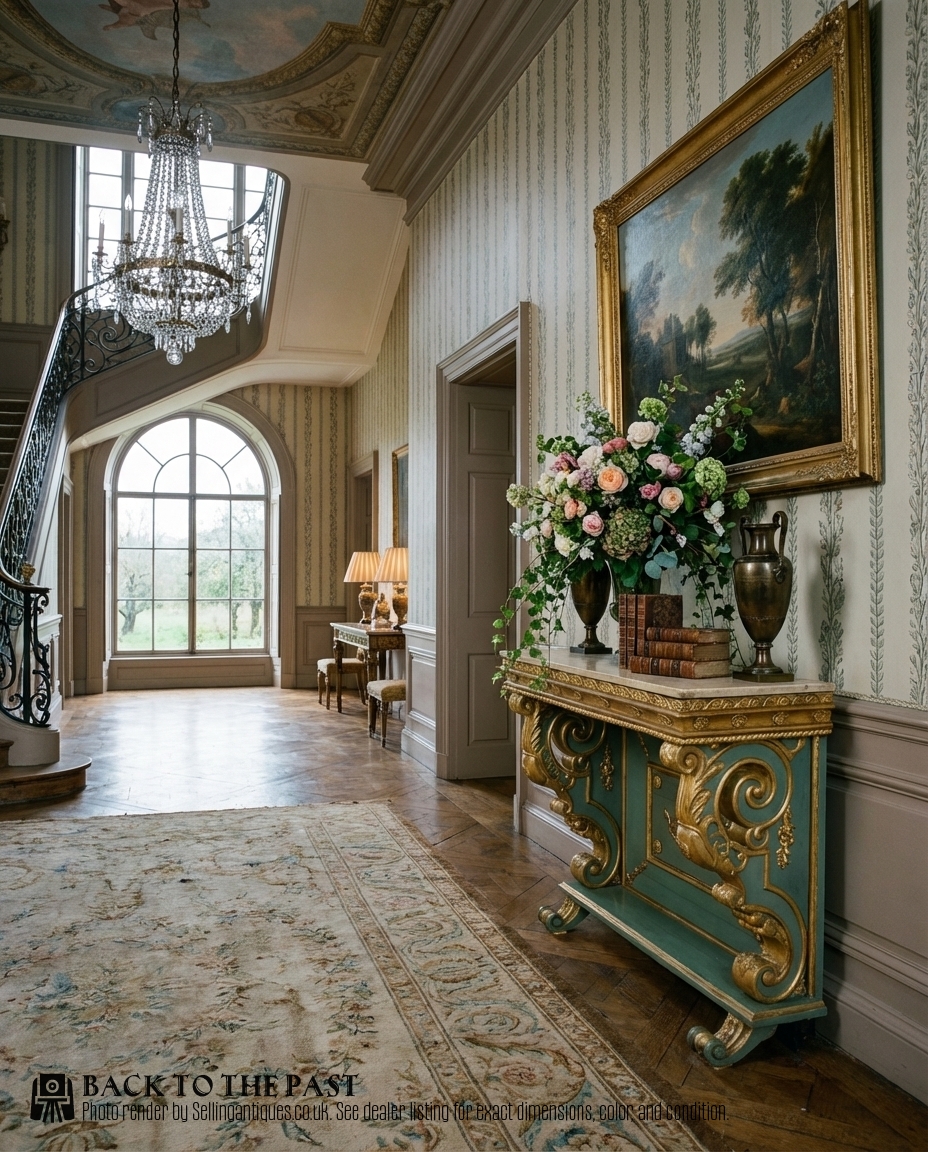
Rococo Revival Console Table
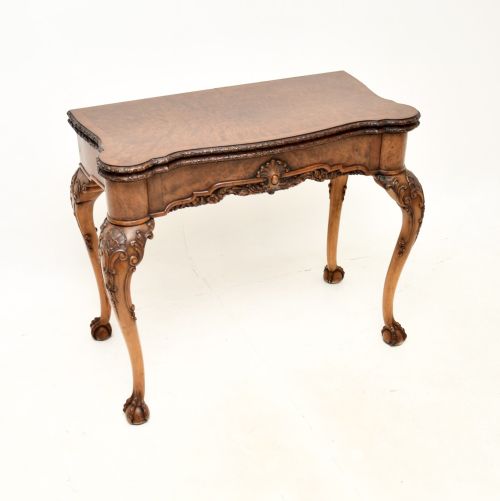
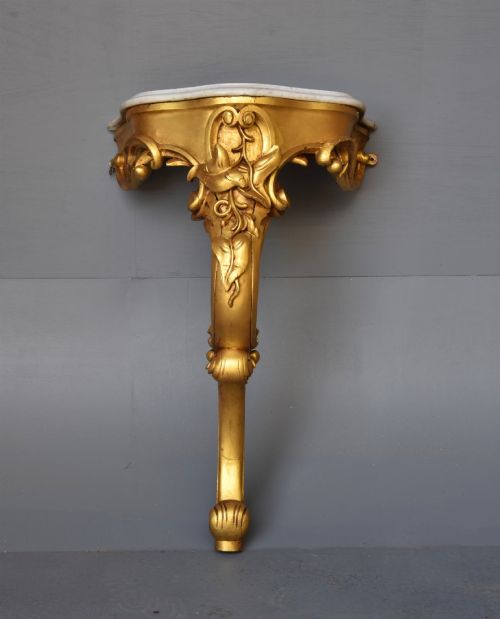
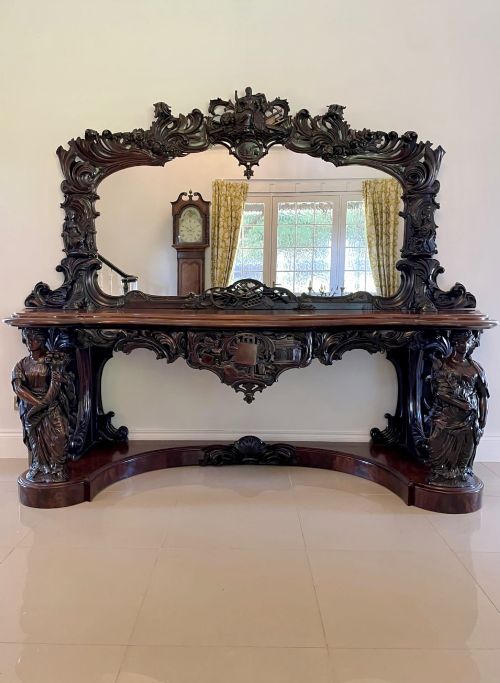
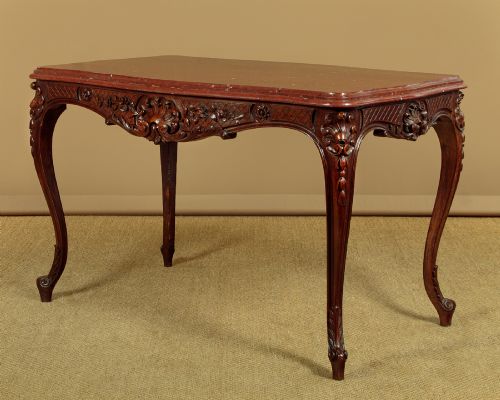
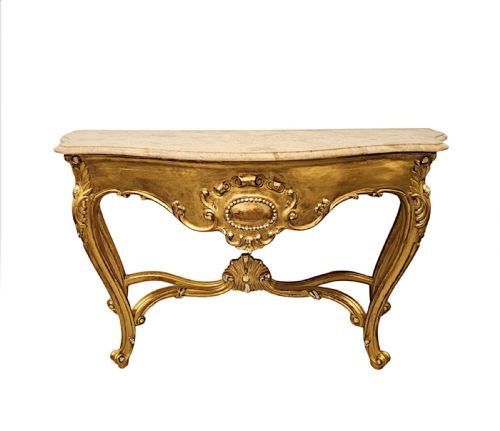
A rococo revival console table combines the serpentine lines and asymmetrical ornamentation of the 18th century with the heavier timbers and marbles typical of the Victorian period. These tables frequently appear with shaped tops of white or rouge marble, supported by heavily carved cabriole legs.
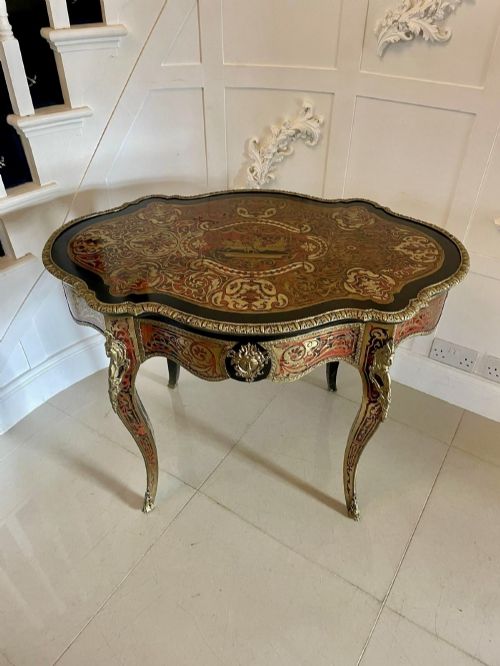
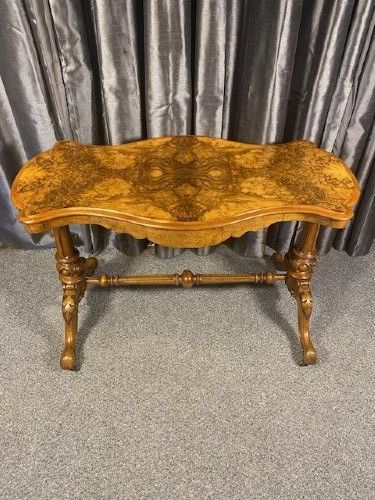
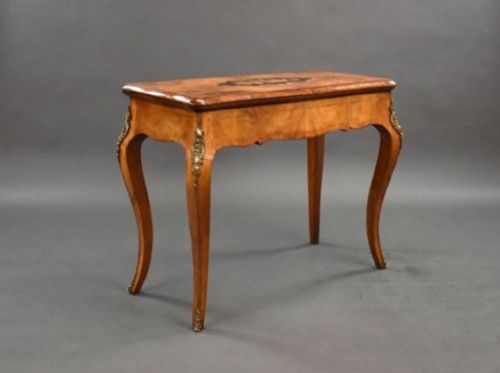
Makers produced these pieces in various configurations, including side tables, pier tables, and convertible card or tea tables. Walnut, burr walnut, and giltwood dominate the selection, often enriched with marquetry inlay or ormolu mounts.
How They Were Made
Cabinetmakers constructed the carcases from dense timbers such as walnut, mahogany, and rosewood, frequently applying burr walnut veneers to create striking grain patterns across the top. Giltwood frames relied on carved softwood foundations coated in gesso and gold leaf.
Heavy marble slabs, including breccia varieties, were shaped to follow the serpentine contours of the wooden bases. Ormolu mounts and brass details were cast and chased separately before being fixed to the timber structures.
Rococo Revival Console Table Retail Price Guide 2026
Typical asking prices for rococo revival console table among the pieces listed under this phrase on Sellingantiques today, from the lower quarter to the upper quarter. They describe what is for sale here now, not the wider market.
Some Victorian card tables hide secret compartments for counters beneath their twisting wooden tops.
What Varies in Quality
The crispness of the hand-carved foliage and scrollwork dictates the initial tier of quality, distinguishing deeply undercut woodwork from softer, mechanically rounded moulding. Timber selection also separates standard production from exhibition pieces, particularly in the choice of richly figured burr veneers and intricate marquetry.
The integration of the marble top into the wooden framework reveals the standard of manufacture, alongside the weight and chasing of any ormolu mounts. Finer examples retain balanced proportions across serpentine aprons and sturdy cabriole legs.
Maple and Co·Edwards and Roberts·Holland and Son
The Rococo Revival Console Table Glossary
- Console table
- A table designed to stand against a wall, frequently secured to it with brackets.
- Cabriole leg
- A furniture leg that curves out and then in, mimicking animal limbs in the rococo style.
- Ormolu
- Gilt bronze ornamentation applied to furniture, popular in French and English luxury pieces.
- Marquetry
- Decorative patterns formed by fitting contrasting pieces of veneer into a wooden background.
- Serpentine
- A curved line or edge that waves inward and outward, typical of mid-19th-century table tops.
Rococo Revival Console Table: Frequently Asked Questions
Where should a console table go?
These tables suit hallways, reception rooms, and dining spaces where a shallow depth allows placement against a blank wall.
Pairs often flank a fireplace or anchor a large mirror hung directly above the marble surface.
Can these tables hold heavy objects?
Solid timber frameworks and substantial marble tops provide considerable weight and stability for daily display.
Original wall brackets should be utilised if the piece feels top-heavy or lacks a floor-resting stretcher.
How do I clean marble tops?
Warm water and a soft cloth remove dust without damaging the polished stone surface.
Avoid acidic cleaners and harsh chemical agents that etch or dull historic marble.
What is the difference between a console and a card table?
Console tables remain fixed against walls as permanent decorative or display furniture.
Card tables feature folding or rotating tops that conceal a baize-lined playing surface underneath.