


Serpentine Marble Top Table
A serpentine marble top table brings dynamic curves and cool stone into a room, offering a sculptural surface for any hallway or reception space.
What they are
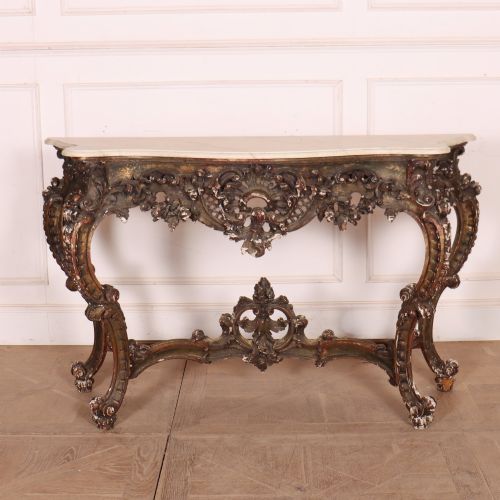
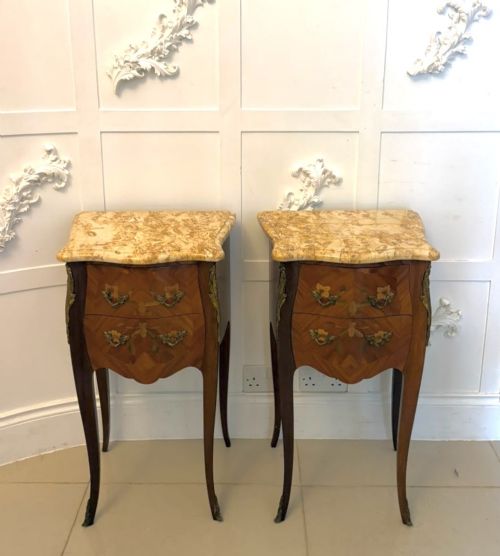
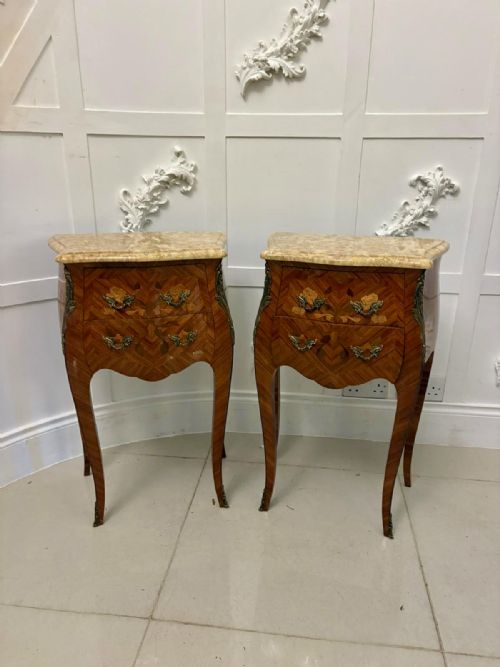
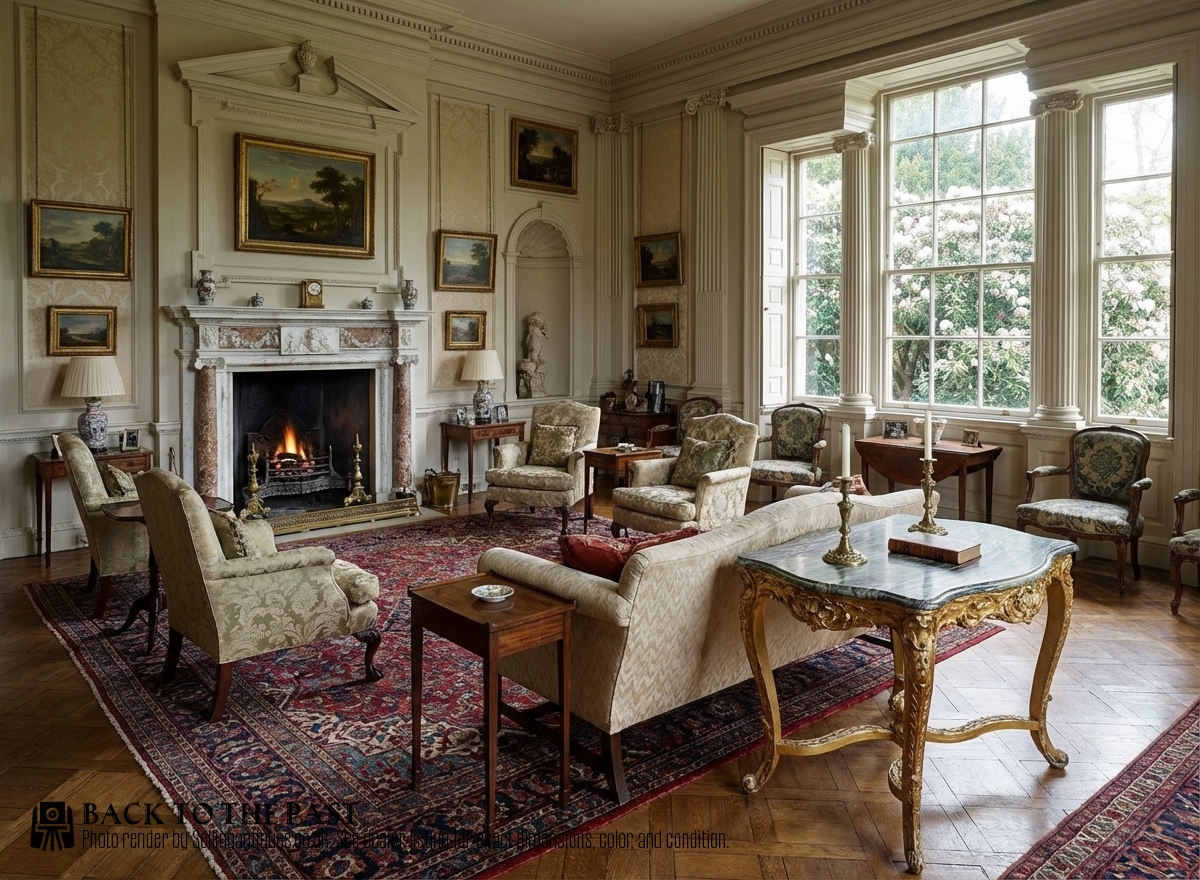
A serpentine marble top table is defined by its curving, wave-like front edge and solid stone surface, taking the form of console tables, side tables, hall tables, and bedside tables. The selection ranges from compact bedside examples to grand console tables designed to sit against a wall.
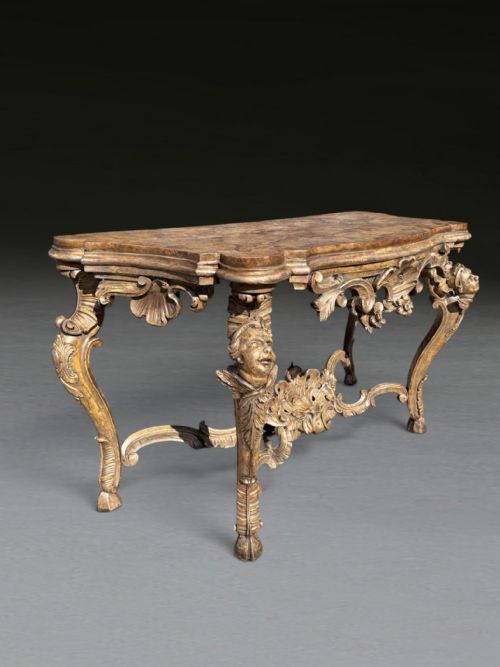
Continental pieces dominate the selection, with French Rococo and Rococo Revival designs appearing alongside Italian and English interpretations. These tables span from the eighteenth century through the nineteenth century and into the early twentieth century.
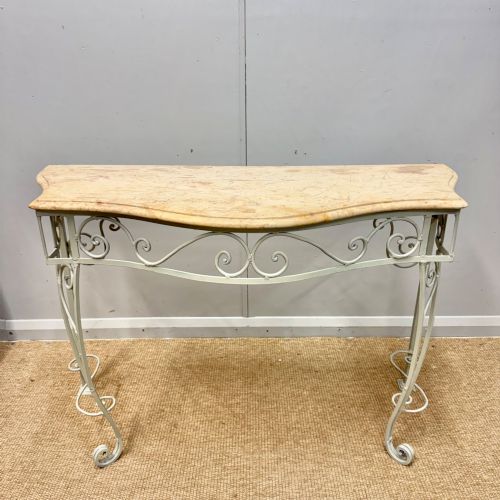
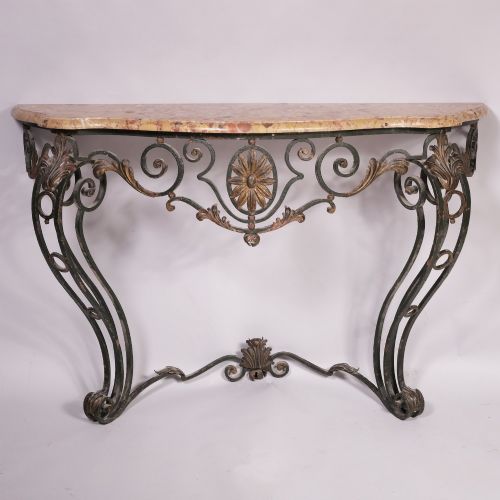
Makers utilised various timbers and metals for the frames beneath the heavy stone slabs. Walnut, mahogany, oak, rosewood, ebonised wood, wrought iron, and carved giltwood provide the structural support for the distinctive marble tops.
How they were made
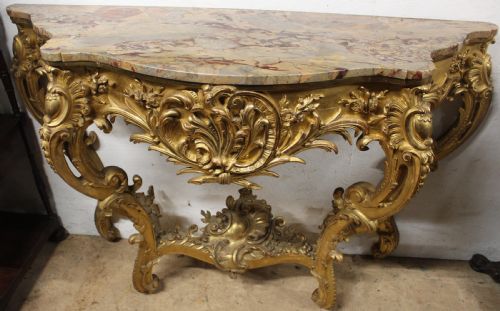
Carpenters and cabinetmakers shaped dense hardwoods like walnut, oak, mahogany, and rosewood to follow the complex curves of the serpentine stone. Frames frequently feature carved giltwood and gesso detailing, showing intricate floral or scroll motifs characteristic of Rococo styling.
The heavy marble tops, including varieties such as carrara, were laboriously hand-cut and polished to match the precise undulating contours of the wooden bases. Wrought iron variants demonstrate blacksmithing techniques, while painted examples display layered decorative finishes applied directly to the timber.
Retail Price Guide 2026
Typical UK retail prices for serpentine marble top table, calculated from the Sellingantiques database of over a million retail prices indexed since 2003. This retail price guide relies exclusively on Sellingantiques data; no external sources or auction records are used, so the figures do not describe the wider market.
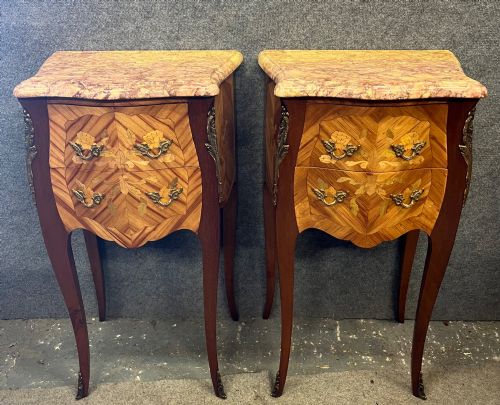
Some tables double as bedside companions, proving that even eighteenth-century bedrooms demanded a touch of serpentine drama.
What varies in quality
Quality rests in the precision of the carved woodwork and the harmonious relationship between the serpentine stone and its base. Finer examples display deep, crisp carving in the giltwood or timber, whereas simpler pieces rely on plain or painted surfaces.
The thickness and figuring of the marble slab significantly influence the overall character of the piece. Superior tables feature stone with rich natural veining that follows the complex curves without awkward joints or mismatched sections.
The Serpentine Marble Top Table Glossary
- Serpentine
- A curved shape resembling a snake, featuring a convex centre flanked by concave ends. This contour requires precise woodworking and stone-cutting skills.
- Console table
- A table designed to stand against a wall, frequently secured to it for stability. They often feature elaborate front legs while the rear relies on wall fixings.
- Giltwood
- Timber coated with gold leaf or a gold-coloured metallic finish. It reflects light and highlights carved decorative details.
- Carrara
- A type of white or blue-grey marble quarried in the city of Carrara in Italy. It is prized for its fine grain and subtle veining.
- Rococo Revival
- A nineteenth-century design movement reviving the asymmetric curves and ornamental flourishes of the mid-eighteenth century. It heavily influences many of these tables.
Frequently Asked Questions
Where should I place a console table?
These tables suit hallways, entryways, or reception rooms where their curved fronts can be fully appreciated. Because many historical examples were designed to stand against a wall, they occupy relatively little floor space.
Paring them with a mirror or placing them beneath a window allows the polished marble surface and carved frame to catch the light.
How do I care for the marble top?
Marble is a porous stone that reacts to acidic substances like wine, citrus, or vinegar. Cleaning requires only a damp cloth and mild, neutral soap.
Avoiding harsh chemical cleaners preserves the historic polish of the stone over decades of daily use.
Are these tables sturdy?
The weight of the marble slab naturally anchors the piece to its base. Console tables from earlier periods were frequently designed to anchor against a wall for absolute stability.
Checking the joints of the wooden or iron frame ensures the structure safely supports the heavy stone top.
How can I tell the age of the table?
Dating relies on examining the construction methods of the timber frame, tool marks, and stylistic indicators such as Rococo carvings. Eighteenth-century pieces typically show hand-cut joinery and aged patination on the wood.
Nineteenth-century and later revivals often incorporate machine-sawn elements or different adhesive techniques beneath the stone.