



French Wrought Iron Table
A French wrought iron table brings a robust architectural character to a room, combining industrial strength with refined scrollwork.

Forms and periods of the french wrought iron table
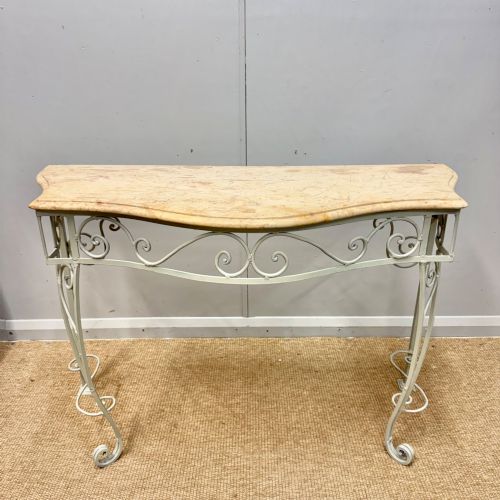
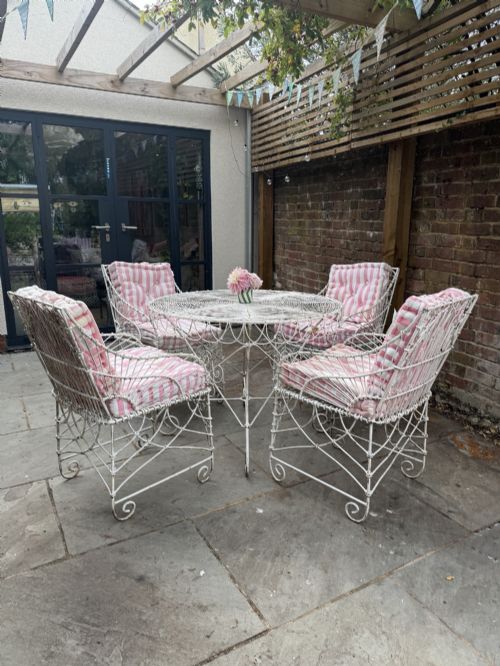
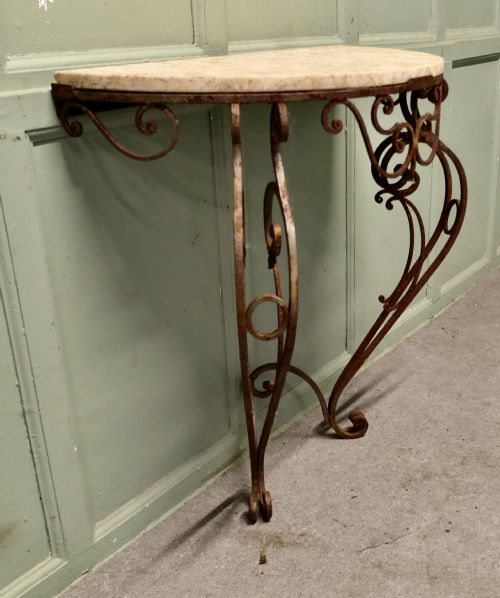
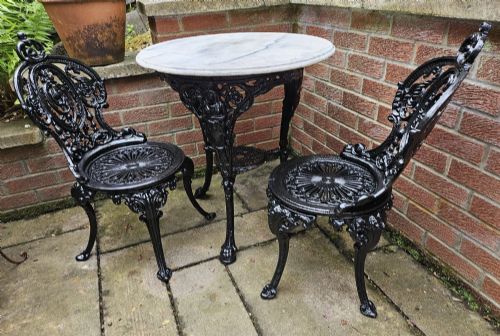
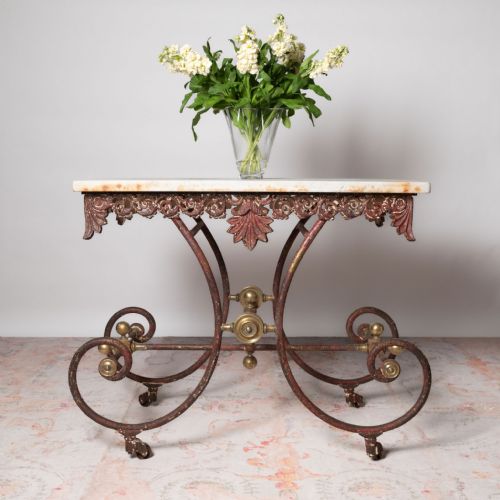
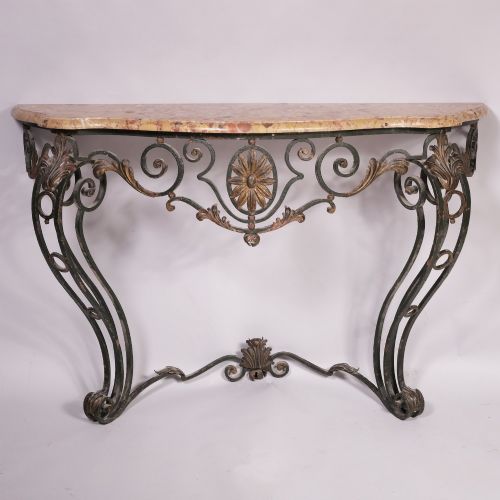
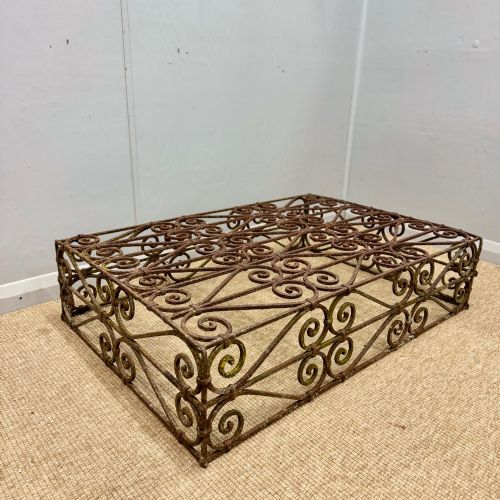
A French wrought iron table appears across several distinct architectural forms, most commonly as console tables, coffee tables, and garden tables. Console and hall tables frequently feature heavy stone tops, while garden and bistro examples offer lighter outdoor utility.
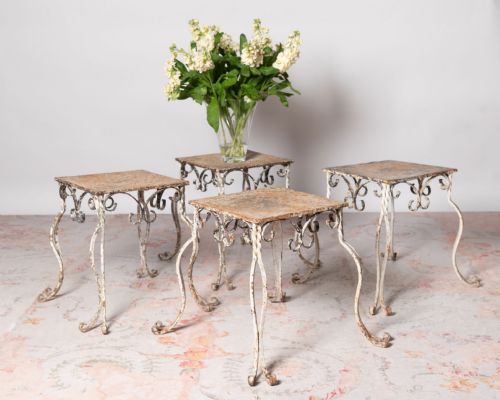
The pieces span the nineteenth century through the early twentieth century, including productions from nineteen hundred, nineteen twenty, and nineteen thirty. Styles range from rustic provincial designs to formal chateau pieces and geometric Art Deco expressions.
Materials and construction
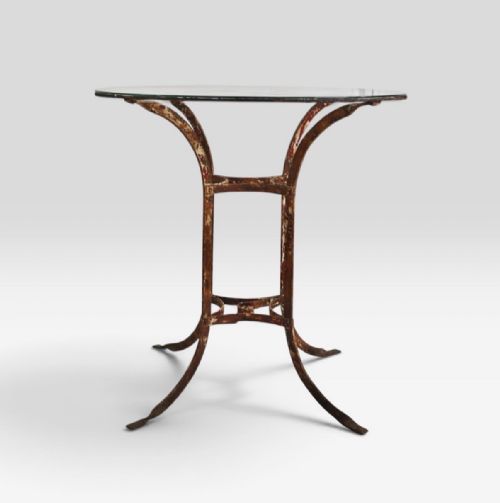
Makers shaped hot metal over an anvil, utilising wrought iron and cast iron alongside structural elements in brass and bronze tole mounts. Frames support heavy inset surfaces made from white marble, black marble, slate, glass, and mirror glass.
Surfaces often retain original painted finishes or patinated patinas. Tables pair the durable forged metal skeleton with tailored stone slabs, secured neatly into the iron frames.
Retail Price Guide 2026
Typical UK retail prices for french wrought iron table, calculated from the Sellingantiques database of over a million retail prices indexed since 2003. This retail price guide relies exclusively on Sellingantiques data; no external sources or auction records are used, so the figures do not describe the wider market.
The archive records pieces spanning the nineteenth century alongside nineteen twenty and nineteen thirty productions.
Assessing quality in forged metal furniture
Quality rests in the precision of the forging and the weight of the materials. Hand-hammered scrollwork displays purposeful variation, whereas inferior pieces rely on rigid, mass-produced uniformity.
The selection of the inset top defines the upper tier of the range. Thick slabs of marked marble, specialist patisserie stone, or original bevelled mirror glass elevate the status of the console or coffee table above standard timber or simple glass inserts.
Muller Freres·Degué
The French Wrought Iron Table Glossary
- Wrought iron
- A tough, malleable form of iron suitable for forging into decorative scrolls and structural frames. Blacksmiths work this metal while heated to shape complex curves.
- Console table
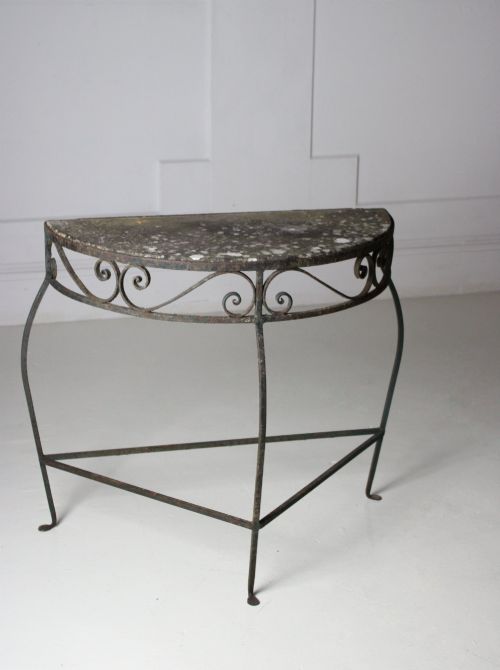
- A wall-mounted or freestanding narrow table designed for hallways and living spaces. These pieces typically carry heavy marble or slate tops.
- Demi-lune
- A half-moon shape characteristic of certain console tables. This profile allows the furniture to sit flush against a wall.
- Tole
- Painted or enamelled sheet metal used for decorative mounts and accents. Artisans employ this technique to add colourful detail to ironwork.
Frequently Asked Questions
Where should I place a console table?
A console table sits naturally in a hallway or against a living room wall where floor space is limited. Its narrow profile provides a sturdy surface for lamps and decorative objects without blocking movement.
Because many examples feature heavy marble or slate tops, positioning them against a solid wall ensures stability and proper visual balance.
How do I clean a marble top?
Wipe the marble surface regularly with a soft damp cloth and mild neutral soap. Avoid abrasive cleaners or acidic liquids that can etch the polished stone.
Dry the surface completely after cleaning to maintain the natural sheen of the marble inset within the iron frame.
Can these tables be used outdoors?
Garden and bistro tables are built to withstand outdoor conditions, utilising durable iron frames. Original painted finishes help protect the metal from weathering.
Indoor console and coffee tables, particularly those with mirror glass or polished marble tops, are best kept inside away from moisture.
How do I identify an Art Deco piece?
Art Deco examples dating from the nineteen thirties favor geometric lines and streamlined forms over ornate nineteenth century floral scrolls. These tables often incorporate simpler structural silhouettes.
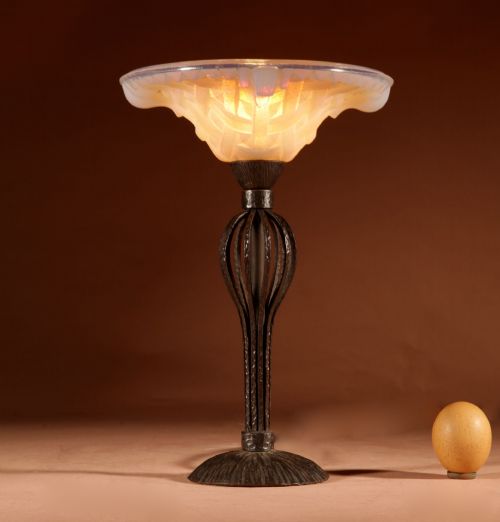
The aesthetic shifts toward modern industrial materials, sometimes pairing stark ironwork with specialised glass or lamp components.