
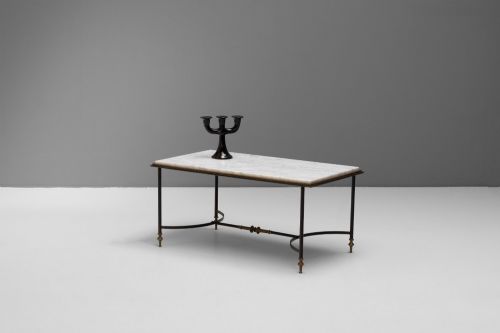

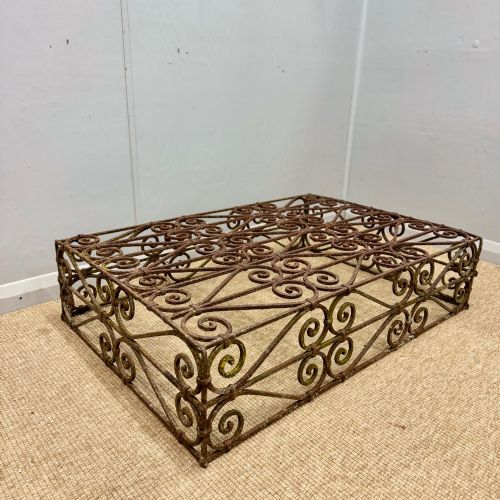


Wrought Iron Coffee Table
A wrought iron coffee table brings solid metalwork and heavy stone or glass into a room, offering durability and distinct period character.
Materials and construction methods
Frames are formed from forged iron and wrought iron, worked hot by hand to create scrollwork, strapp work, and structural trestle supports. Metal components often join through traditional riveting and banding rather than modern machine welding.
Tops utilise heavy materials including white and black marble, original vitrolite glass, mirror glass, oak, and ceramic tile bedded in mortar. These heavy tops rest directly upon the iron base, held in place by their own considerable weight.
Factors determining quality
Quality rests in the hand-forged detail of the ironwork, where fluid scrolls and clean joints show the maker's skill. Simple structural bars differ markedly from complex strapp work and integrated brass elements.
The choice and execution of the top material define the piece, from thick slabs of natural marble to specialised Art Deco vitrolite glass. Original glass inserts and undamaged stone surfaces elevate the standard of the piece significantly.
Wrought Iron Coffee Table Retail Price Guide 2026
Typical asking prices for wrought iron coffee table among the pieces listed under this phrase on Sellingantiques today, from the lower quarter to the upper quarter. They describe what is for sale here now, not the wider market.
French provincial, Art Deco, and Mediterranean revival represent the primary design styles found in the collection.
The Wrought Iron Coffee Table Glossary
- Wrought iron
- Iron that has been heated and worked with tools by a blacksmith, producing a fibrous structure with high resistance to fatigue. This material bends rather than snaps under heavy pressure.
- Vitrolite
- An opaque pigmented structural glass popular during the Art Deco period. It provides a glossy, hard-wearing surface for table tops.
- Strapp work
- Decorative metalwork composed of flat bands or straps of iron riveted or joined together. It forms intricate geometric or scrolling patterns on the base.
- Trestle table
- A table supported by two or more trestles, consisting of a horizontal beam supported by pairs of sloping legs. This construction offers robust stability for heavy stone tops.
- French Provincial
- A style originating from the rural provinces of France, noted for restrained curves, practical utility, and rustic elegance. It values solid construction over excessive ornamentation.
Wrought Iron Coffee Table: Frequently Asked Questions
Are these tables heavy to move?
Yes, many examples combine solid iron frames with thick marble or glass tops, creating substantial weight that keeps the table firmly planted on the floor.
This weight demands care when positioning the piece on delicate flooring or moving it between rooms.
Can garden tables be used indoors?
Wrought iron garden tables frequently transition to indoor living spaces, offering robust construction and patinated metal surfaces that suit domestic interiors.
Their weather-resistant origins mean the frames handle everyday indoor use with ease, provided the top materials match the room's function.
How do I date an iron table?
Dating relies on stylistic clues like Art Deco geometry or French provincial scrollwork, alongside construction methods such as hand-forged joints and the presence of original glass or marble.
Twentieth-century pieces often feature cleaner lines and vitrolite tops, while nineteenth-century versions show heavier blacksmithing techniques.
How should I clean marble tops?
Marble surfaces require gentle wiping with a damp cloth and mild soap to protect the stone from staining and acid etching.
Avoiding harsh chemical cleaners preserves the natural polish and age-related patina of the marble.