


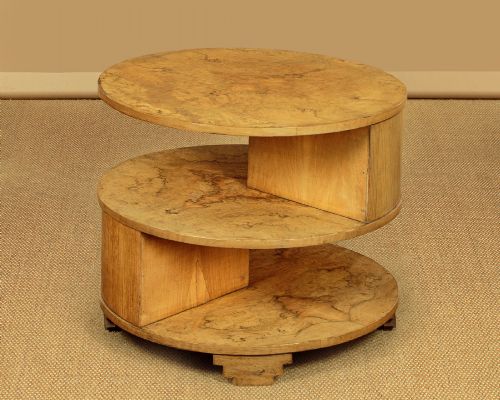

Vintage Round Coffee Table
A vintage round coffee table anchors a room with organic curves, bringing walnut, marble and brass together in pieces spanning the Victorian era to the mid-century.
Vintage Round Coffee Table
A vintage round coffee table brings circular symmetry to a seating arrangement, offering a compact surface for everyday use. When searching for this form, buyers encounter pieces ranging from Victorian and Edwardian iterations to robust Art Deco designs from nineteen thirty.
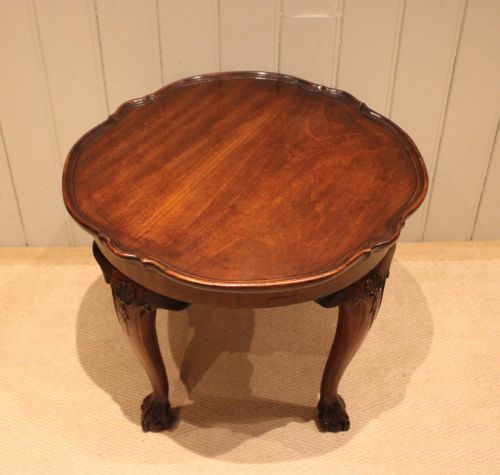
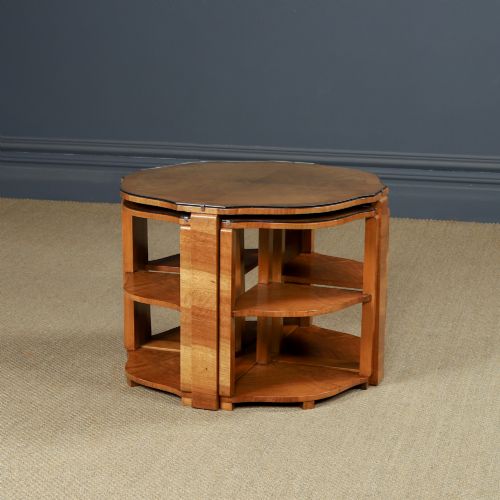
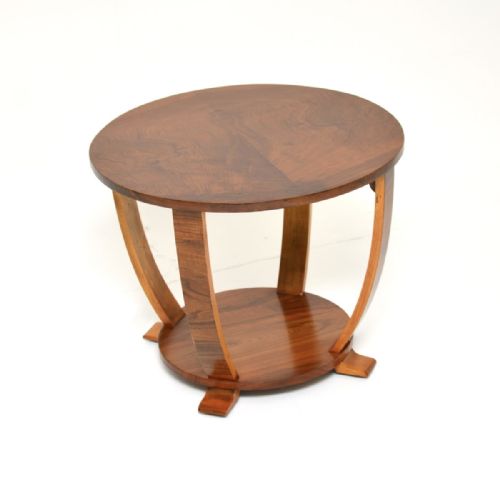
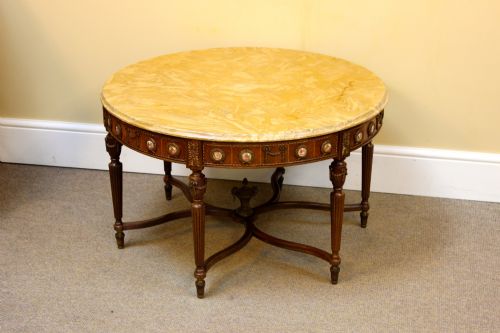
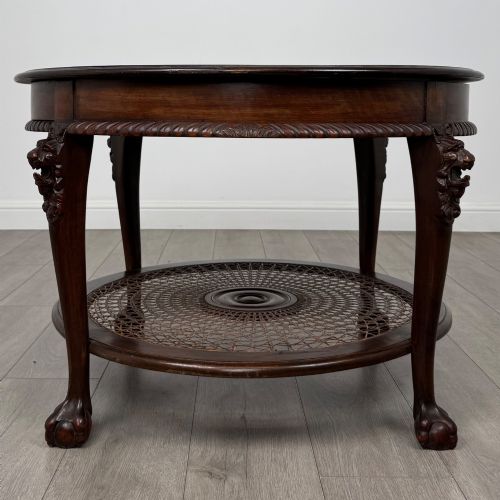
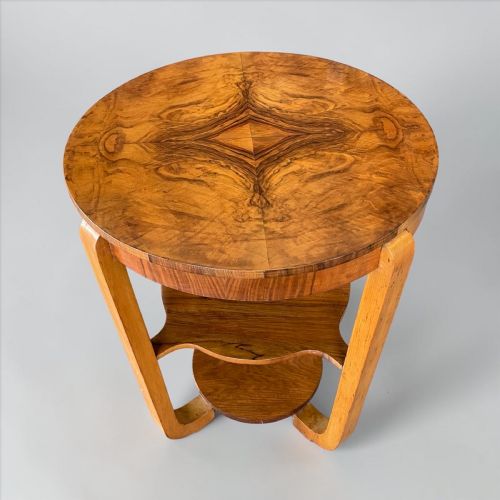
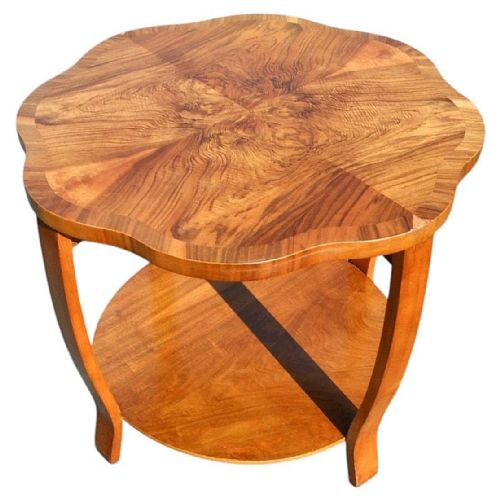
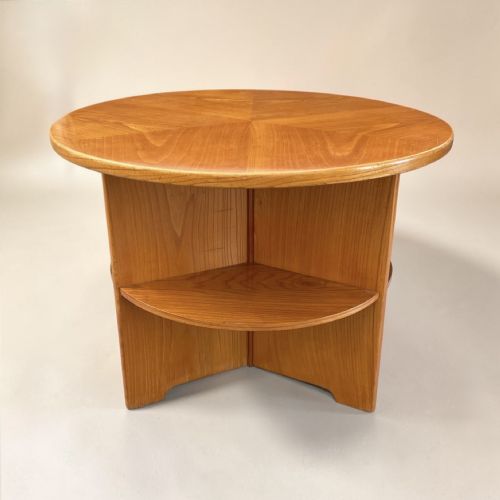
The selection here draws primarily upon early twentieth-century production, particularly nineteen-twenties and nineteen-thirties examples. Art Deco pieces in figured walnut or burr walnut appear alongside marble-topped French café tables and mahogany occasional tables adapted for low seating.
Makers and designers of the period experimented with circular formats across various revivalist styles, including Chippendale, Queen Anne and Jacobean motifs. These tables often function as low centre tables, nests of tables or occasional surfaces adapted from earlier side table heights.
How they were made
Cabinet makers utilised dense native and exotic timbers, laying striking veneers like burr walnut, birds eye maple and rosewood over stable secondary woods. Figured grains were chosen specifically for table tops to create symmetrical patterns radiating from the centre.
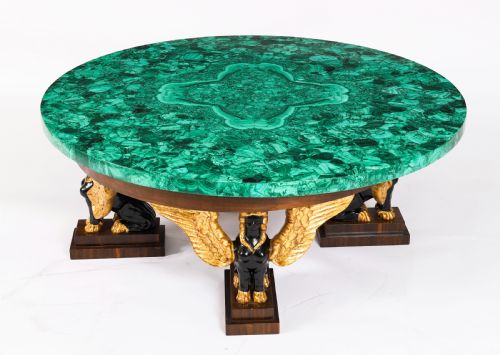
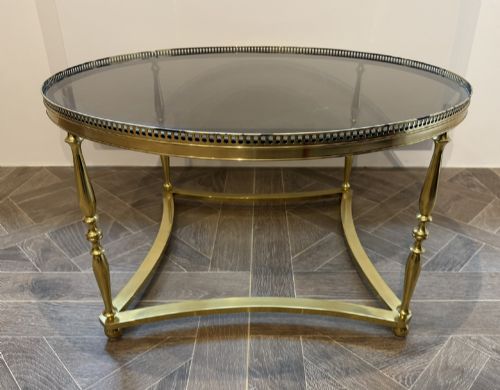
Surface materials extend beyond timber into decorative stone and metal, incorporating inset marble slabs, patinated brass, giltwood and cast bronze mounts. Joinery techniques combined traditional frame and panel construction with the curved veneering methods characteristic of the nineteen-thirties.
Vintage Round Coffee Table Retail Price Guide 2026
Typical asking prices for vintage round coffee table among the pieces listed under this phrase on Sellingantiques today, from the lower quarter to the upper quarter. They describe what is for sale here now, not the wider market.
One piece incorporates a terrestrial globe into its design, offering a literal spin on the domestic coffee table.
What varies in quality
Quality rests in the selection of the timber veneer and the precision of its matching across the circular top. Superior examples display continuous, book-matched grain patterns that enhance the geometry of the round form.
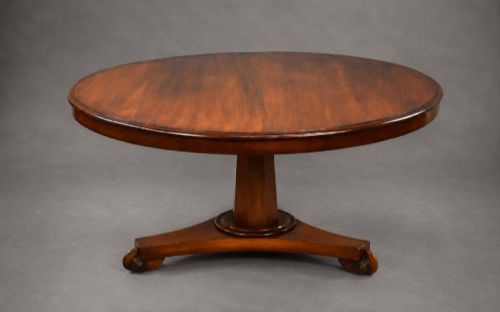
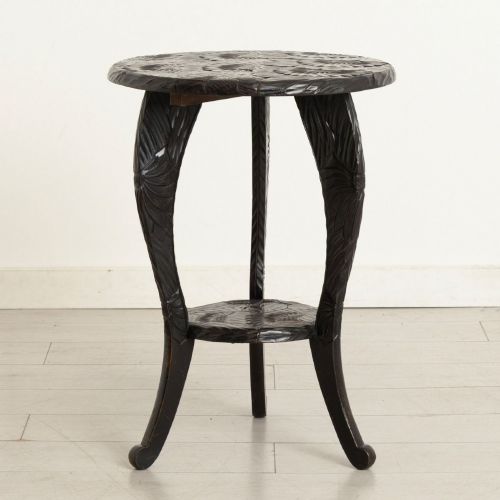
Construction integrity distinguishes workshop output, particularly in the stability of pedestal bases, the weight of marble tops and the crispness of hand-carved details on walnut or mahogany frames.
Liberty of London
The Vintage Round Coffee Table Glossary
- Burr walnut
- A prized timber harvested from the wart-like growths on walnut trees, yielding swirling, knotty grain patterns. It was heavily utilised for high-end Art Deco table tops.
- Marble top
- A solid stone surface set into the timber frame of a table, offering a cool, durable finish. These appear frequently on French café and occasional tables.
- Art Deco
- A design movement of the nineteen-twenties and nineteen-thirties favouring sleek geometric lines and luxurious materials. Tables from this period often feature stepped pedestals and figured veneers.
- Occasional table
- A small, movable table designed for a specific, intermittent use rather than heavy daily service. Many round coffee tables originated as pieces of this type.
- Veneer
- A thin slice of decorative wood applied over a structural base timber to provide a figured surface. Figured walnut and maple veneers define the visual appeal of many listed pieces.
Vintage Round Coffee Table: Frequently Asked Questions
How do I style a round table?
A round surface breaks the linear rigidity of standard sofas and rectangular rooms, creating a natural focal point. Layer books, small ceramics and trays to balance the circular geometry without cluttering the wood or marble top.
Allow enough clearance around the perimeter for easy movement. Pairing the table with curved seating enhances the overall flow of the interior.
Are these tables solid wood?
Many vintage tables combine a stable structural timber frame with decorative veneers on the surface. Figured walnut and burr walnut are typically applied as fine sheets over secondary woods to display complex grain patterns.
Solid timbers such as mahogany, yew wood and oak also appear, particularly in earlier Victorian and Edwardian examples. Construction methods vary according to the period and the workshop responsible.
How do I clean marble tops?
Wipe the stone surface with a soft, damp cloth and a neutral cleaner formulated specifically for natural stone. Avoid acidic substances like vinegar or lemon juice, which etch polished marble.
Dry the surface thoroughly after cleaning to prevent water spots. Periodic sealing helps protect the porous stone from stains.
What is an occasional table?
An occasional table is a small, portable piece designed to serve a specific function when needed. In historical interiors, these pieces were moved around rooms to hold lamps, drinks or books.
Today, many of these sturdy occasional and side tables function well as low coffee tables. Their compact proportions suit smaller reception spaces and intimate seating groups.