

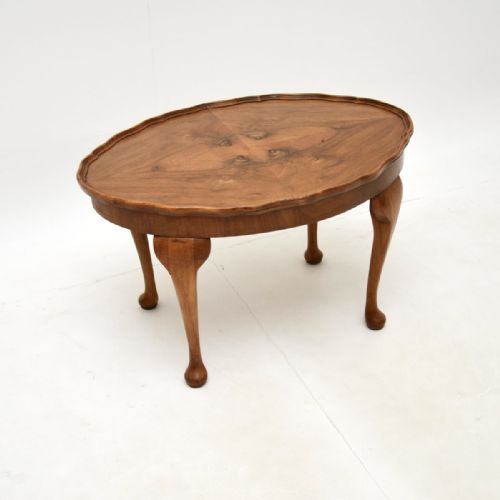


Pie Crust Coffee Table
A pie crust coffee table brings a raised, scalloped edge to a low table, combining period revival forms with practical sitting-room surfaces.
Pie Crust Coffee Table
The pieces on this page span the early decades of the twentieth century, specifically the 1920s and 1930s, alongside Edwardian examples. Revival aesthetics dominate, drawing heavily on Queen Anne style, Georgian revival, and Chippendale style vocabularies.
Makers adapted older tea table forms into coffee tables, retaining the characteristic scalloped edge. Buyers find standalone round tables as well as nests of tables and occasional table variants.
Distinguishing quality in construction and timber
The choice of wood grain marks a clear distinction between standard and finer examples, with heavily figured burr walnut and flame mahogany commanding attention. The depth and crispness of the carved edge detail also indicate the level of craftsmanship involved.
Structural integrity rests on the joinery of the top to the underframe and the stability of the legs. Finer tables display seamless veneer application and balanced proportions in the scalloping of the top rim.
Pie Crust Coffee Table Retail Price Guide 2026
Typical asking prices for pie crust coffee table among the pieces listed under this phrase on Sellingantiques today, from the lower quarter to the upper quarter. They describe what is for sale here now, not the wider market.
Before they held coffee cups, these raised edges supposedly kept rolling tea spoons from hitting the floor during polite domestic disputes.
The Pie Crust Coffee Table Glossary
- Pie crust edge
- A raised, carved, and scalloped border resembling the crust of a pie. This decorative moulding runs around the perimeter of the circular or shaped top.
- Burr walnut
- A specialised wood veneer taken from the growth excrescences on walnut trees. It yields complex, swirling grain patterns highly valued in cabinet making.
- Queen Anne style
- A design movement characterised by curved lines, cabriole legs, and pad feet. Tables in this style often incorporate walnut timbers and subtle shell motifs.
- Figured walnut
- Timber exhibiting attractive, natural grain distortions that create light-reflecting patterns. Craftsmen select these boards for prominent display on table tops.
- Cabriole leg
- A furniture leg that curves out and then in, resembling the leg of an animal. This form appears frequently on the revival tables listed here.
Pie Crust Coffee Table: Frequently Asked Questions
What is a pie crust coffee table?
A pie crust coffee table is a low table featuring a decorative, raised, and scalloped wooden edge. These pieces adapt traditional tea table designs into domestic furniture suited for modern seating arrangements.
They appear primarily in revival styles from the early twentieth century, utilising walnut and mahogany timbers.
How do I date a pie crust coffee table?
Dating relies on examining the timber, construction methods, and stylistic revival markers present in the piece. Most examples on this page date from the 1920s and 1930s, reflecting Edwardian and interwar manufacturing periods.
Cabinet makers of these decades frequently revived Queen Anne and Georgian aesthetics, applying figured veneers to solid wood frames.
Are these tables solid walnut?
Construction varies between solid timbers and veneered surfaces applied over a secondary wood base. Many pieces utilise figured walnut veneer or burr walnut veneer to showcase decorative grain patterns across the circular top.
Solid mahogany and walnut also appear, particularly in the carved edges and structural legs.
How do I care for a walnut coffee table?
Maintenance involves dusting with a soft cloth and avoiding excessive moisture or direct sunlight that can fade walnut veneers. Periodic application of appropriate furniture wax helps protect the finish without building up heavy residues.
Careful placement away from heat sources prevents timber movement and cracking in older veneer work.