

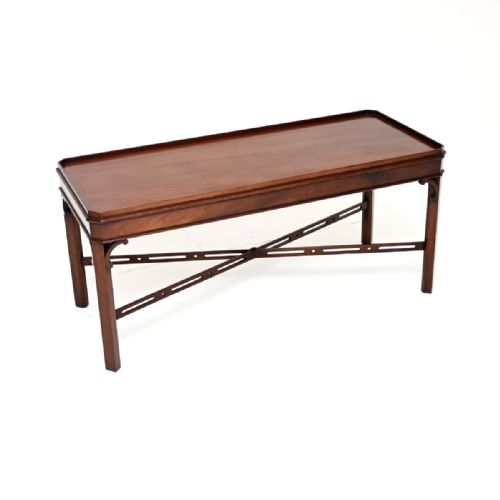
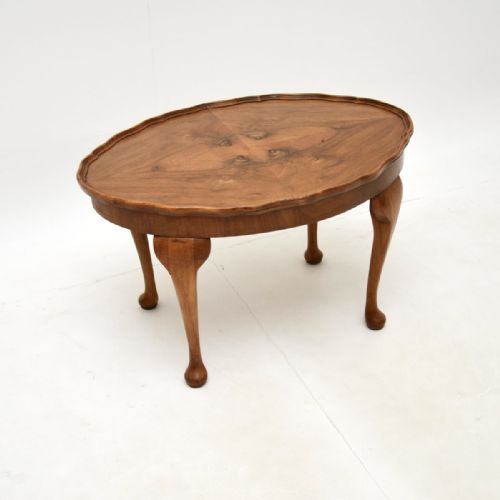
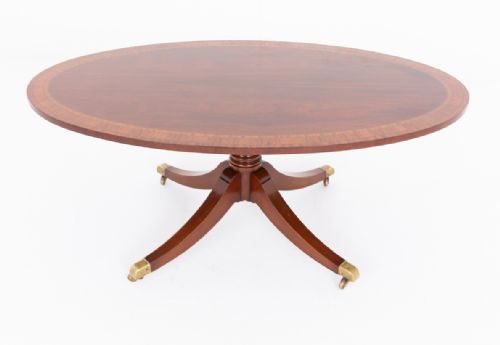


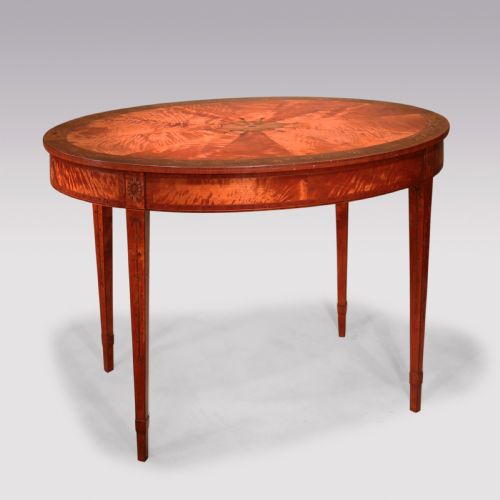


Georgian Revival Coffee Table
These georgian revival coffee table examples bring period lines into domestic spaces without the fragility of true eighteenth-century originals.
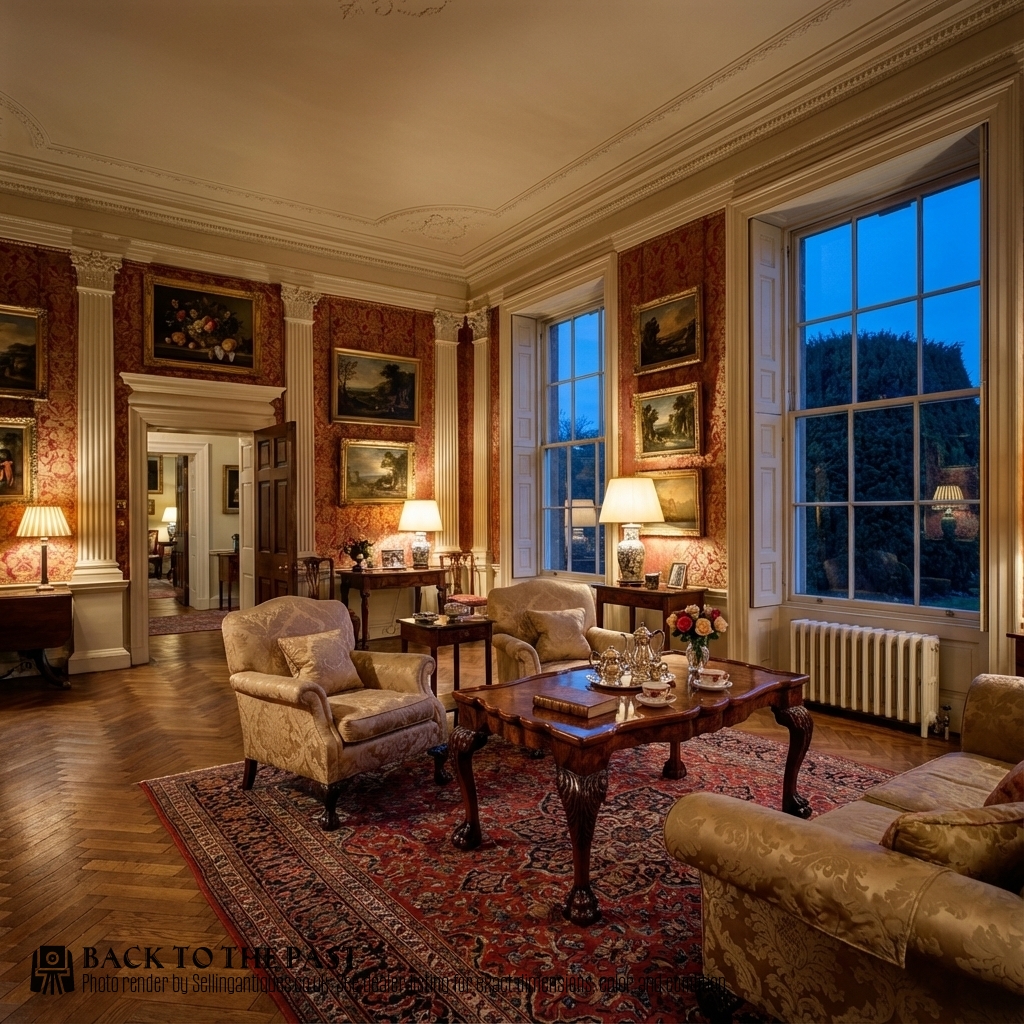
Georgian Revival Coffee Table
A georgian revival coffee table draws on earlier eighteenth-century aesthetics, reinterpreting traditional forms for twentieth-century living rooms. Buyers searching this phrase encounter low coffee tables alongside occasional pieces, nests of tables, and centre tables adapted from earlier designs.
The pieces on this page span several decades, originating from the late nineteenth century through to the 1930s. Alongside explicit georgian revival pieces, one finds examples styled after the Regency, Queen Anne, and Sheraton periods.
Forms vary from oval and rectangular coffee tables to nests of four tables and tray tables on stands. Walnut and mahogany predominate, often featuring decorative elements such as pie crust edges and satinwood inlay.
How they were made
Cabinetmakers utilised dense timbers such as mahogany and walnut, frequently selecting figured and burr veneers for table tops to create rich grain patterns. Inlaid decoration in satinwood and boxwood was carefully fitted into contrasting wood backgrounds.
Structural elements involved traditional joinery, while decorative edges like pie crust borders required precise hand carving. Brass hardware and fittings appeared on specific forms such as tray tables and occasional pieces.
Georgian Revival Coffee Table Retail Price Guide 2026
Typical asking prices for georgian revival coffee table among the pieces listed under this phrase on Sellingantiques today, from the lower quarter to the upper quarter. They describe what is for sale here now, not the wider market.
Several tables retain clever nesting arrangements designed to disappear completely when floor space is required.
What varies in quality
Quality rests upon the selection of timber and the precision of decorative work. Tables featuring highly figured walnut or intricate marquetry satinwood inlay sit at the upper end of the range, displaying superior visual depth.
The execution of carved details, such as pie crust rims, distinguishes finer examples from simpler production. Proportion and the crispness of revival styling determine how successfully a piece references its eighteenth-century precedents.
The Georgian Revival Coffee Table Glossary
- Pie crust edge
- A raised, decoratively carved rim around a tabletop, typically shaped with alternating curves. This technique draws on eighteenth-century cabinetmaking styles.
- Marquetry
- The art of applying decorative pieces of veneer to a structure to form intricate designs. Craftsmen use various tinted woods to create pictures or geometric patterns.
- Quarteretto tables
- A set of four occasional tables designed to nest together when not in use. They became particularly popular during the Edwardian period.
- Satinwood
- A durable, yellowish-wood timber prized for its lustrous sheen and smooth grain. It frequently serves as an inlay material on darker woods like mahogany.
- Butlers tray
- A rectangular wooden tray with hinged or fixed sides, originally designed for carrying tableware. On these tables, it sits upon a folding or fixed stand.
Georgian Revival Coffee Table: Frequently Asked Questions
What is a georgian revival coffee table?
A georgian revival coffee table is a piece of furniture made in the late nineteenth or early twentieth century that copies eighteenth-century styles. These pieces adapt earlier dining or occasional forms into low tables suitable for twentieth-century seating.
They combine historical aesthetics with the domestic requirements of later periods, often utilising traditional timbers like mahogany and walnut.
How do I date these tables?
Dating relies upon construction methods, timber choices, and stylistic markers recorded in the piece. Pieces often date from the Edwardian era through to the 1930s, reflecting revival tastes of those decades.
Examination of secondary woods and interior framing helps separate early revival pieces from later manufacturing.
Are nest of tables part of this group?
Yes, nests of tables appear frequently alongside standard coffee tables in these listings. Edwardian quartetto sets provide multiple surfaces that tuck neatly beneath one another.
They share the same revival styling and timber vocabulary as the single tables.
How should I care for walnut and mahogany?
Maintaining these timbers involves keeping them away from direct heat sources and strong sunlight which can fade veneers. Regular dusting with a dry, soft cloth preserves the finish.
Occasional application of appropriate wax polish helps nourish the wood surface without building up excessive residue.