


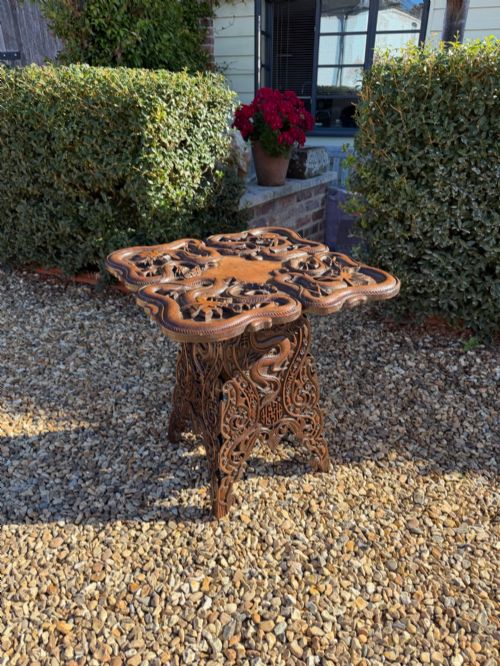
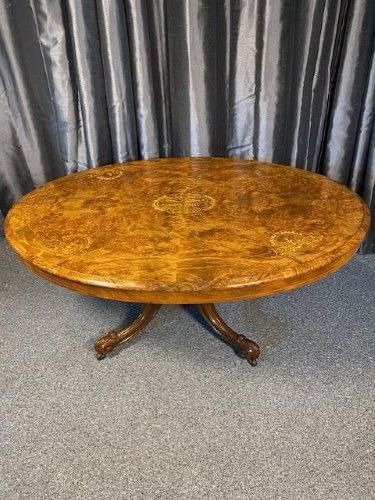
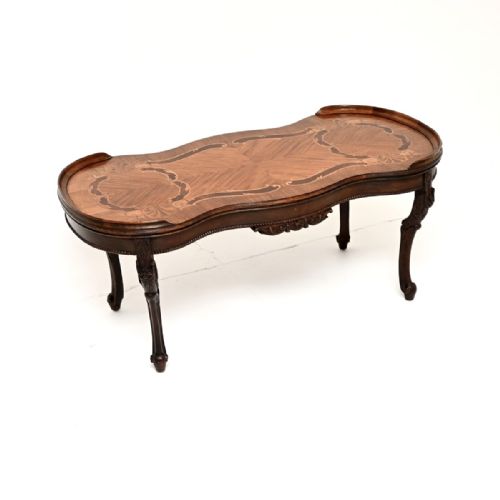
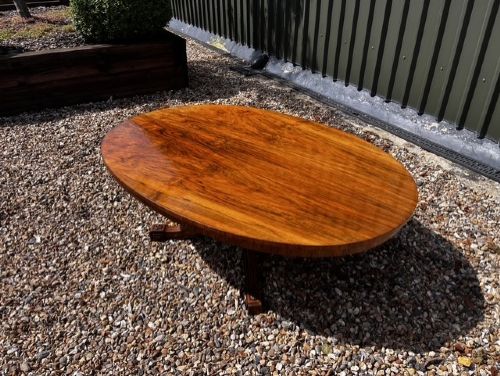

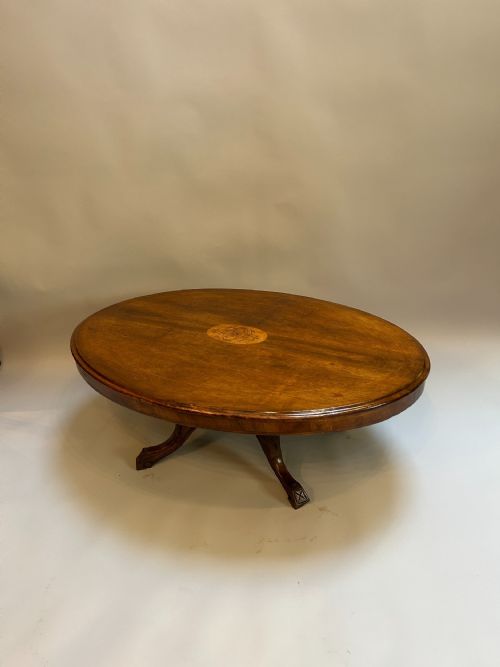
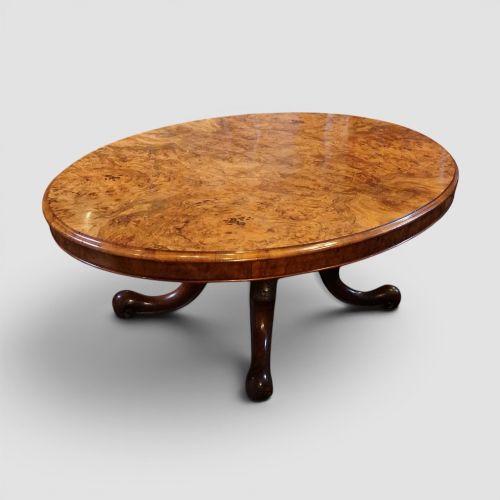
Carved Walnut Coffee Table
A carved walnut coffee table brings rich timber figure and confident historical design straight to the centre of a room.
Carved Walnut Coffee Table
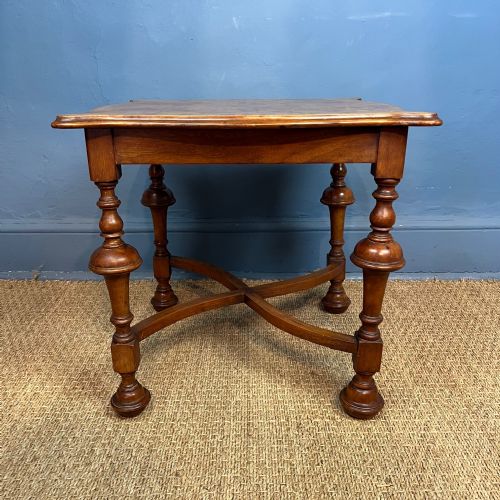
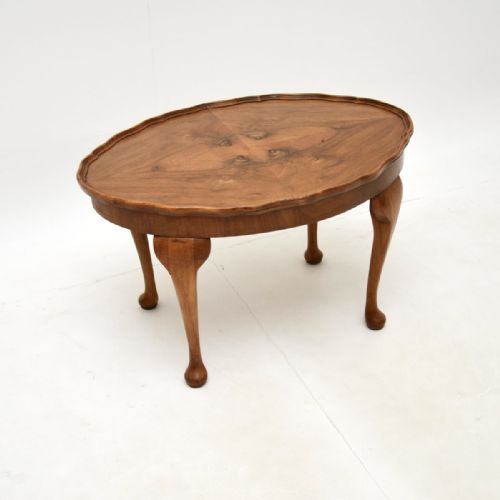
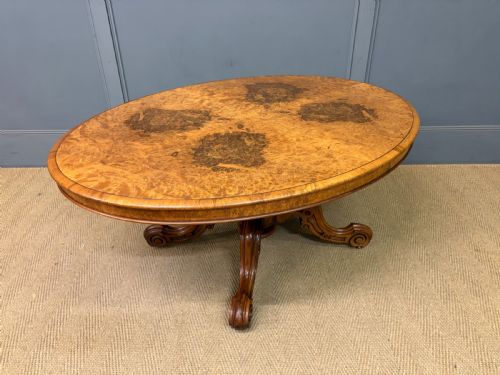
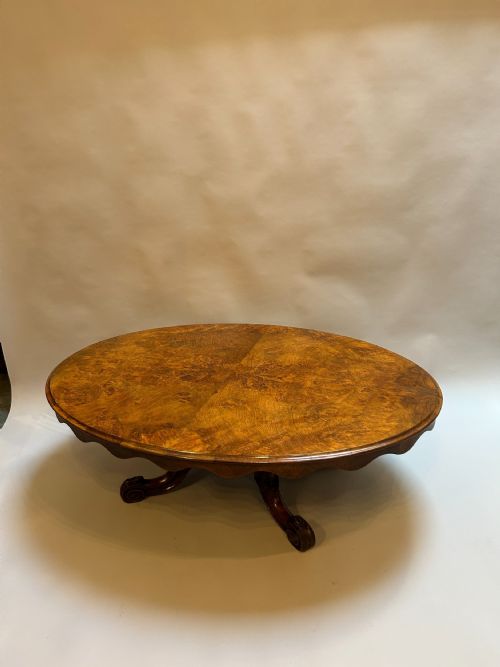
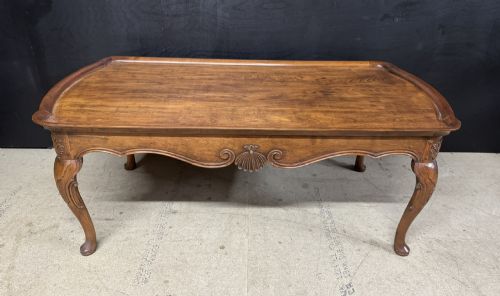
A carved walnut coffee table brings together warm timber tones and decorative historical forms, serving as a functional focal point in a reception room. When searching for a carved walnut coffee table, a buyer meets pieces ranging from substantial nineteenth-century Victorian designs to lighter twentieth-century revivals.
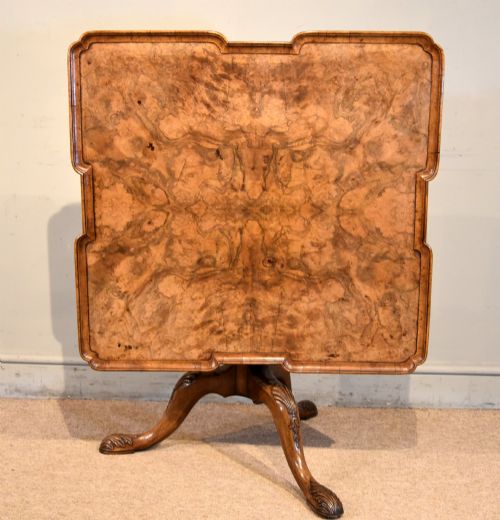
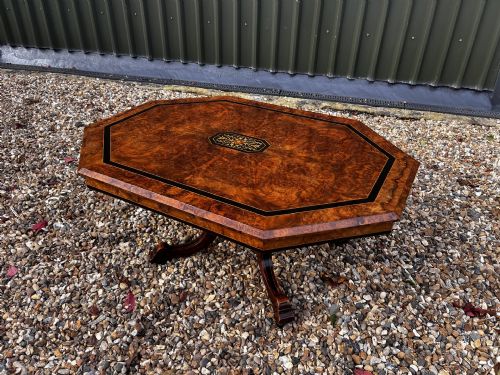
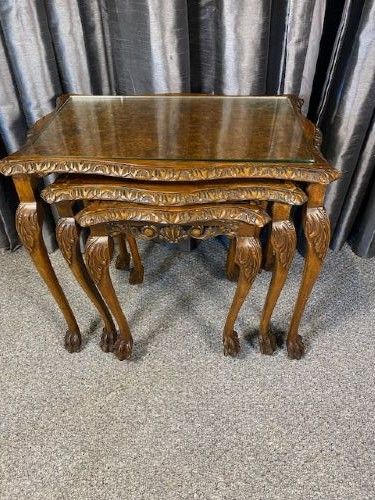
The selection includes low cocktail pieces, adapted wine tables, and nests, drawing on styles such as Queen Anne, French provincial, and Edwardian. Victorian examples in burr walnut dominate the options, often featuring inlaid marquetry, turned supports, and shaped pie crust edges.
Makers and workshops across England, France, and Italy contributed to this lineage, utilising rich timbers to create both formal centre tables and intimate occasional pieces. Buyers encounter various formats, from glass-topped rectangular frames to circular occasional tables resting on carved pedestals.
How they were made
Craftsmen utilised solid walnut and figured burr veneers applied to stable secondary timbers, creating rich surface patterns through careful book-matching. Surfaces often display intricate marquetry in boxwood and other contrasting woods, alongside hand-carved details on the legs and borders.
Joinery techniques included traditional mortise and tenon frames for stability, whilst specialised treatments such as ebonising, bleaching, or French polishing brought out the depth of the grain. Selected pieces integrate materials like marble inserts, brass mounts, and hand-dyed leather upholstery.
Carved Walnut Coffee Table Retail Price Guide 2026
Typical asking prices for carved walnut coffee table among the pieces listed under this phrase on Sellingantiques today, from the lower quarter to the upper quarter. They describe what is for sale here now, not the wider market.
Materials recorded on this page include figured burr walnut, ebonised wood, boxwood inlay, marble, and hand-dyed leather.
What varies in quality
The distinction between standard examples and superior pieces rests on the choice of timber and the precision of the cabinet work. Tables featuring dense, highly figured burr walnut veneers and intricate hand-cut marquetry inlay stand apart from simpler iterations.
Construction details dictate longevity and refinement, particularly the crispness of the hand-carved mouldings and the seamless integration of added elements like inset glass or marble tops. Workshops of notable renown applied rigorous standards to internal framing and finish, elevating the piece beyond ordinary utility.
Holland & Sons·Maple
The Carved Walnut Coffee Table Glossary
- Burr walnut
- A veneer taken from the growth wart of a walnut tree, prized for its swirling, highly figured grain patterns. It provides a dramatic decorative surface on Victorian and revival tabletops.
- Marquetry
- The art of applying small pieces of veneer to a structure to form decorative patterns or pictures. Craftsmen used contrasting woods like boxwood to create floral or geometric motifs.
- Pie crust edge
- A raised, decoratively carved perimeter shaped in undulating curves resembling pastry on a pie. This stylistic flourish appears frequently on eighteenth-century and later circular tables.
- Occasional table
- A small, versatile table designed for specific, intermittent use rather than permanent placement. These forms adapt easily to modern living spaces as coffee tables.
- Ebonised wood
- Timber treated with a chemical stain or finish to imitate ebony. This dark, uniform treatment highlights gilt or brass mounts on nineteenth-century pieces.
Carved Walnut Coffee Table: Frequently Asked Questions
How do I style a carved walnut coffee table?
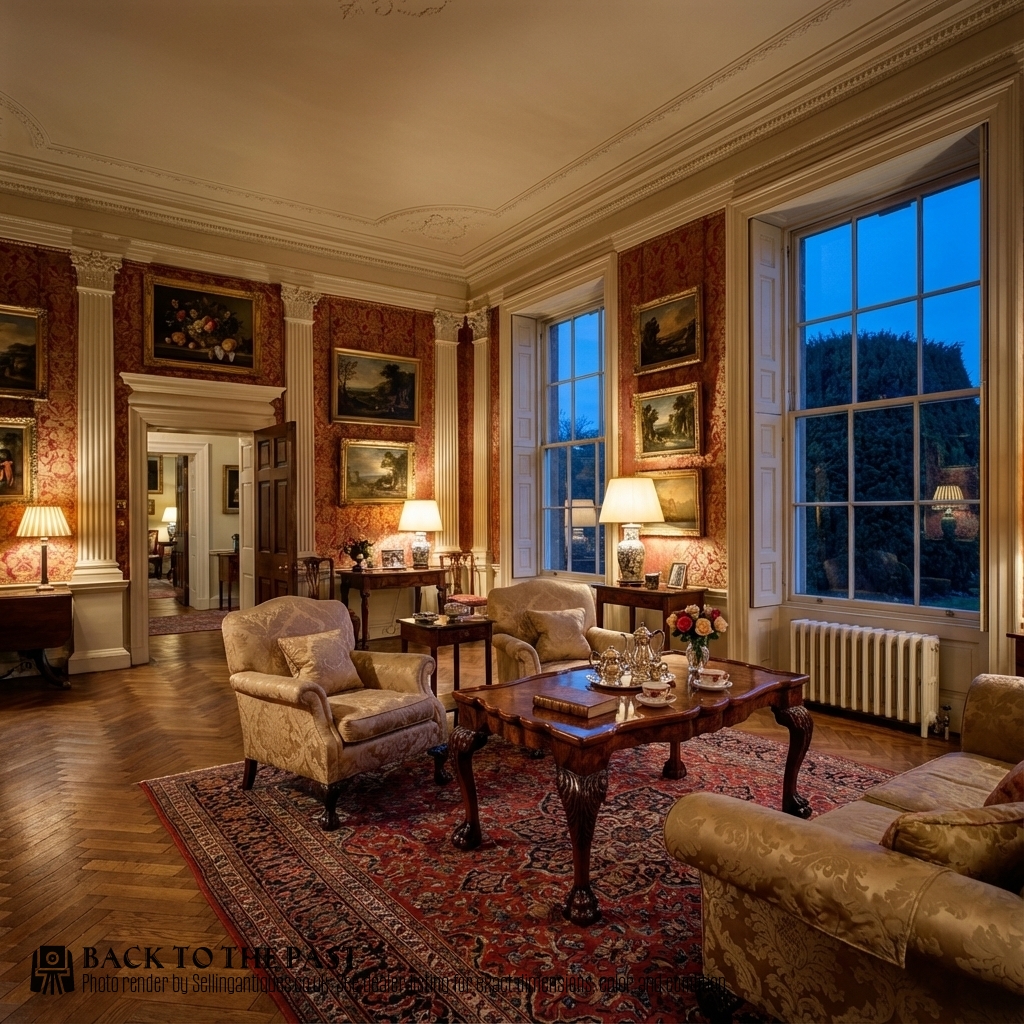
Pair the rich wood tones with neutral upholstery and simple accessories to let the timber figure take focus. The warm brown hues complement both traditional leather seating and contemporary textiles.
Allow enough space around the table for movement, treating the piece as a natural anchor for the centre of the room. Low profiles work well with low sofas, whilst tray-topped versions offer easy portability for serving.
Are these tables sturdy enough for daily use?
Traditional construction methods ensure solid frames that handle everyday placement of books and cups. Walnut remains a durable hardwood well-suited to domestic life.
Protect polished surfaces from excessive moisture and heat by using coasters. Regular waxing maintains the sheen of the timber without building up residue.
How can I tell a Victorian table from a later revival?
Examine the timber preparation and secondary woods used beneath the veneers. Nineteenth-century examples often exhibit hand-cut components and traditional beeswax finishes.
Revival pieces from the early twentieth century frequently adopt Queen Anne or French styles with machine-finished internal framing. Glass-topped frames and specific labelling often point toward the nineteen-twenties and thirties.
What is the difference between a centre table and a coffee table?
Centre tables were originally built taller to stand in the middle of a Victorian room, displaying ornaments or lamps. Many lower coffee tables available today started life as taller occasional or wine tables that were subsequently lowered.
Proportions define how they function in modern settings. True coffee tables sit lower to the floor, whereas adapted occasional pieces retain distinct pedestal or leg heights.