



Victorian Butler Tray
When you search for a victorian butler tray, you find portable serving pieces designed for carrying tea or drinks from the kitchen to the parlour.
Victorian Butler Tray
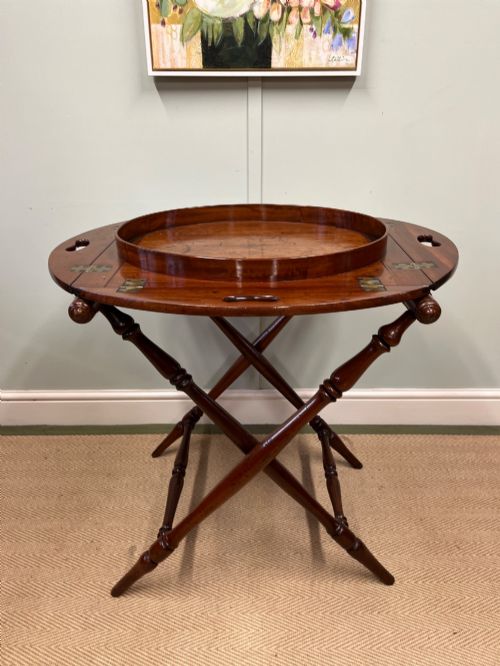
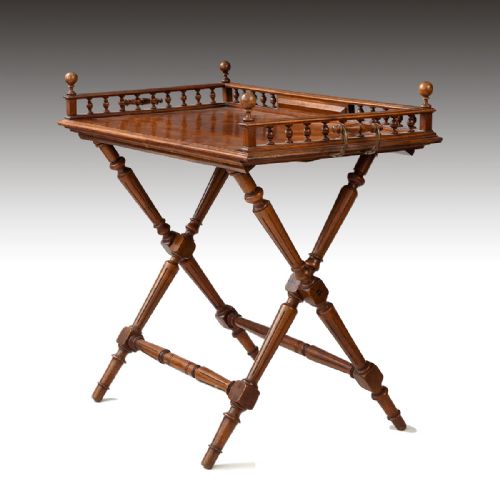
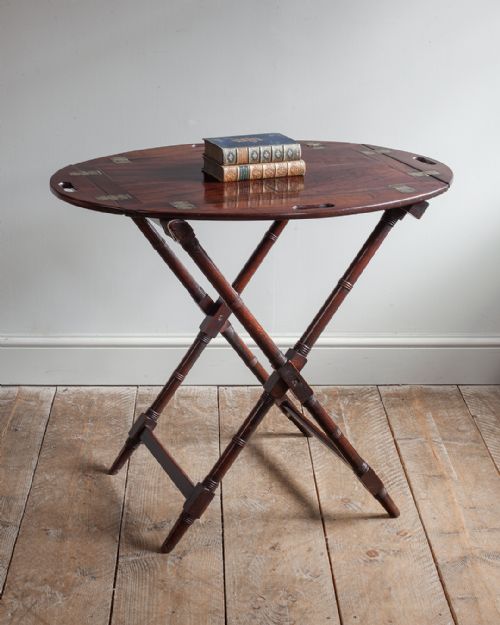
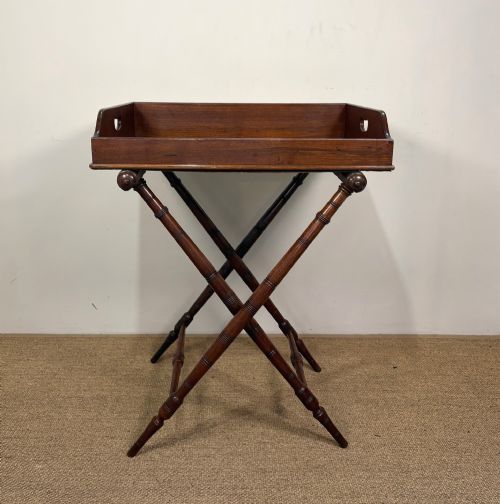
A victorian butler tray typically comprises a removable timber tray paired with a folding X-frame stand, serving as a versatile piece for domestic service. Most examples encountered on this page date from the nineteenth century, reflecting the domestic habits of the Victorian era.
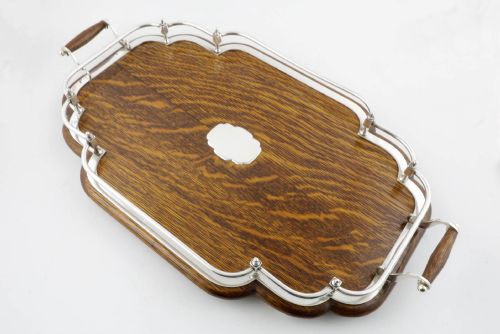
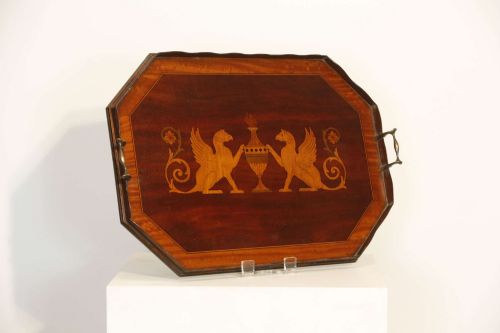
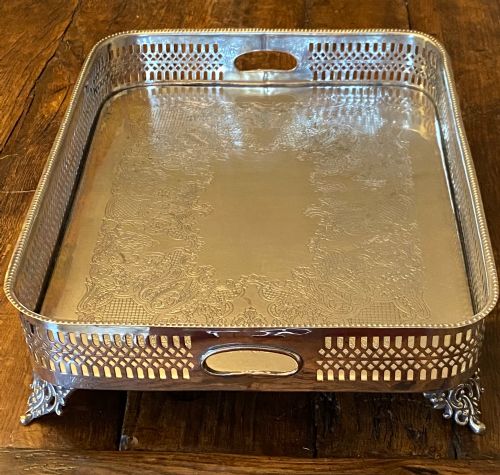
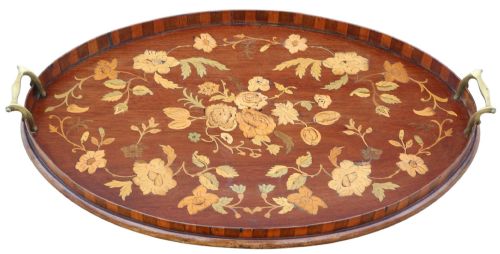
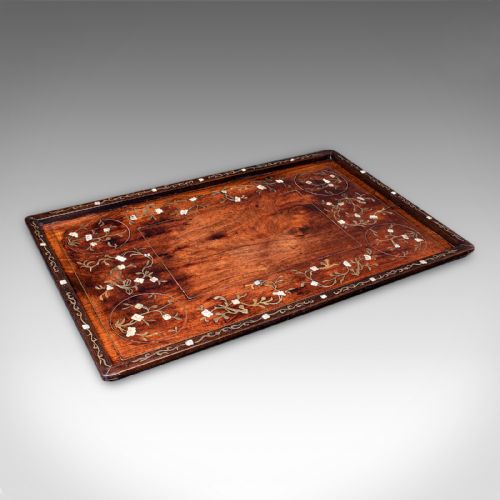
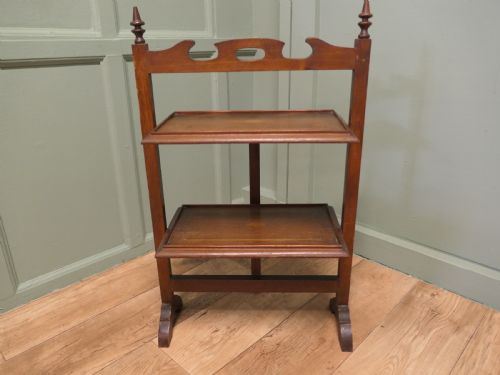
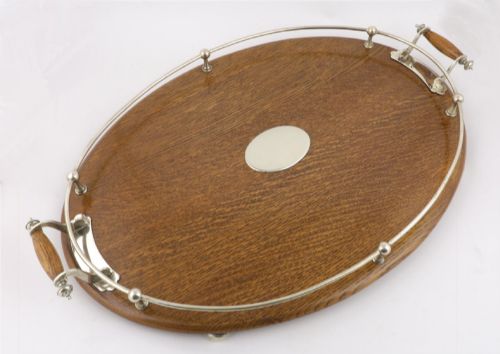
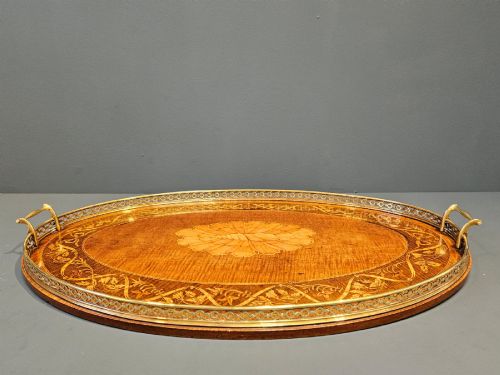
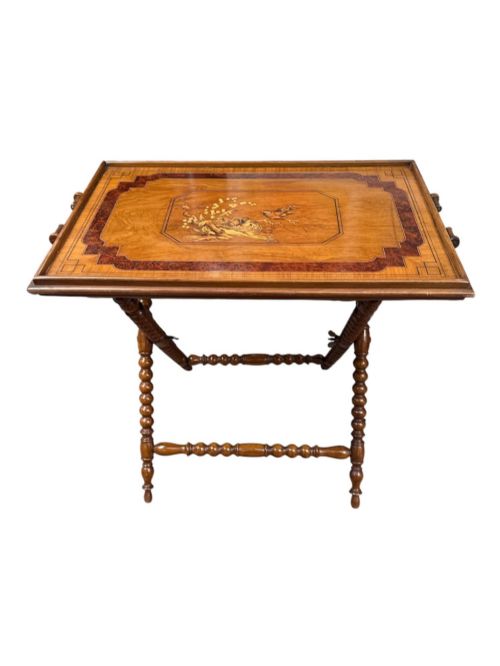
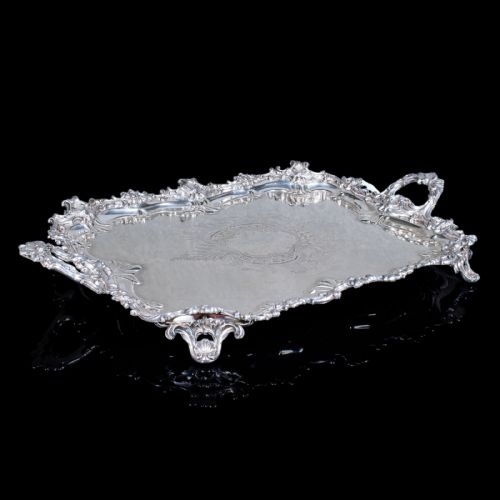
The form spans simple rectangular oak or mahogany carriers to elaborate models finished with marquetry inlay or paired with silver plate. Many items operate as dual-purpose furniture, functioning as standalone platters or mounted upon dedicated folding stands to create an occasional table.
Regional variations and stylistic revivals emerge within the selection, including Anglo-Indian teak versions, Sorrento ware marquetry, and Gothic revival oak pieces. These functional items transitioned from the working pantry to the reception rooms as portable hospitality gained popularity.
How They Were Made
Cabinetmakers utilised dense timbers such as mahogany, oak, walnut, and teak, often employing solid boards for the tray bases to withstand heavy daily use. Folding stands required precise joinery, utilising hinges and cross-braced frames that allowed the support to collapse flat when not in use.
Decorative techniques varied widely, incorporating satinwood marquetry, brass handles, carved motifs, and hand-painted Chinoiserie designs on ebonised papier-mâché. Metal elements such as silver plating and brass fittings provided durable edges and secure grip handles for transit.
Victorian Butler Tray Retail Price Guide 2026
Typical asking prices for victorian butler tray among the pieces listed under this phrase on Sellingantiques today, from the lower quarter to the upper quarter. They describe what is for sale here now, not the wider market.
What Varies in Quality
The distinction between standard utility items and superior pieces rests on the choice of timber, the crispness of any hand-carved detail, and the complexity of the inlay work. Finer examples display meticulous grain matching, high-grade brass hardware, and tightly fitted joints on both the tray and the supporting stand.
Originality heavily influences the standing of a piece, particularly whether the tray retains its matching folding stand from the period of manufacture. Alterations, mismatched stands, or replaced hardware alter the integrity of the object, whereas retained original surfaces and patination elevate the piece.
Edwards and Roberts·Elkington and Co
The Victorian Butler Tray Glossary
- Butler tray
- A portable wooden serving tray, often featuring hinged or shaped sides, designed to lift off its support stand for easy clearing.
- Tray stand
- A folding X-frame wooden support engineered to hold a removable serving tray at table height.
- Marquetry
- Decorative veneer work forming pictorial or geometric patterns using various tinted woods and shell.
- Papier-mâché
- A composite material made from paper pulp or layers of paper reinforced with glue, moulded and ebonised for decorative trays.
- Gallery edge
- A raised border around the perimeter of a tray designed to prevent glassware and decanters from sliding off during transit.
Victorian Butler Tray: Frequently Asked Questions
How were butler trays originally used?
Domestic staff utilised these trays to transport tea services, meals, and drinks from the kitchens to the dining rooms or sitting rooms. Once delivered, the tray often rested on a folding stand to serve as a temporary side table.
After use, the staff cleared the refreshments and folded the stand away to save space in the busy Victorian household.
Are the trays fixed to their stands?
Most traditional versions feature a removable tray that simply lifts off the folding X-frame stand without any mechanical fixings. This design allowed servants to carry the tray independently before mounting it onto the support in the room.
Buyers should examine whether a piece is an assembled marriage of parts or an original matching pair.
What woods were commonly used?
Mahogany and oak dominate the surviving examples, prized for their strength and durability during daily service. Walnut, satinwood, and exotic imported timbers like teak also appear on finer or regionally distinct models.
Papier-mâché examples offered a lighter, highly decorative alternative finished with black lacquer and painted or inlaid ornamentation.
How do I care for a wooden tray?
Regular dusting with a dry cloth keeps the timber surface clean without damaging the historic polish or wax. Avoid placing hot items or wet glassware directly onto antique wood surfaces to prevent water rings and heat marks.
Applying a suitable furniture wax periodically helps maintain the moisture and sheen of the original finish.