


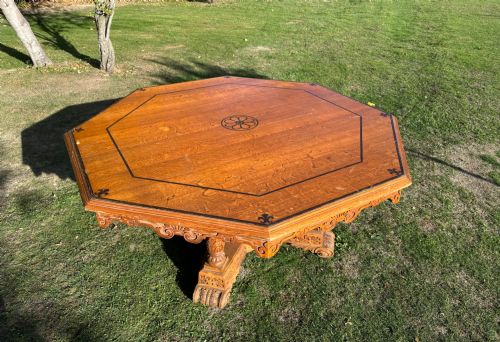

Gothic Revival Table
When you search for a gothic revival table, you are looking at heavy oak timbers, pointed arches, and deep carved tracery built to summon medieval halls into Victorian rooms.
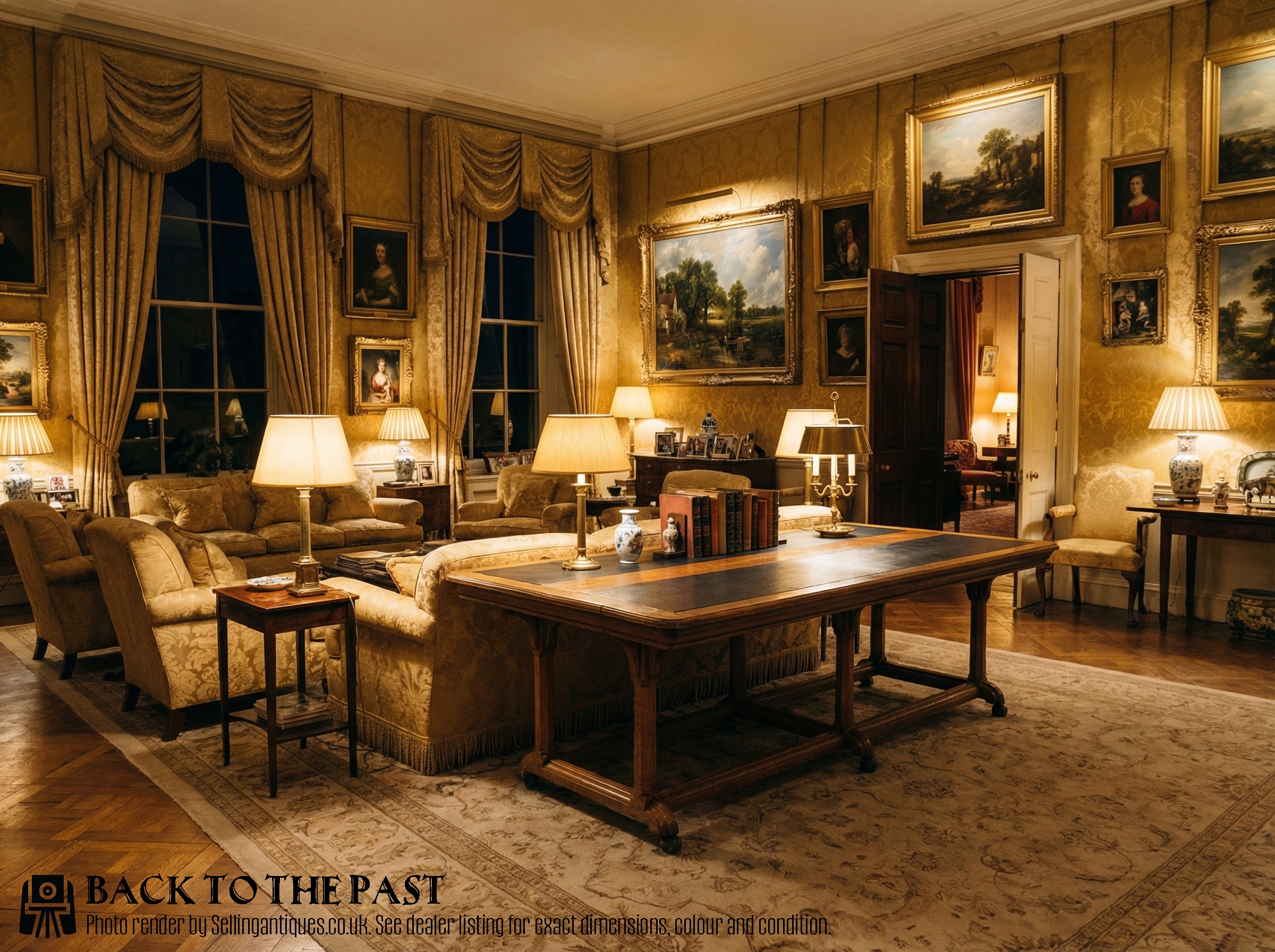
Gothic Revival Table
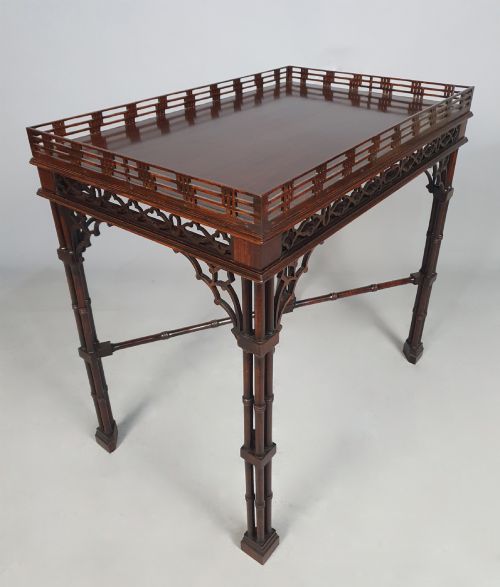
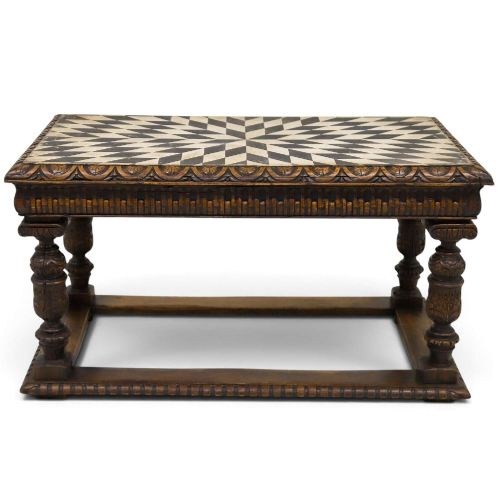
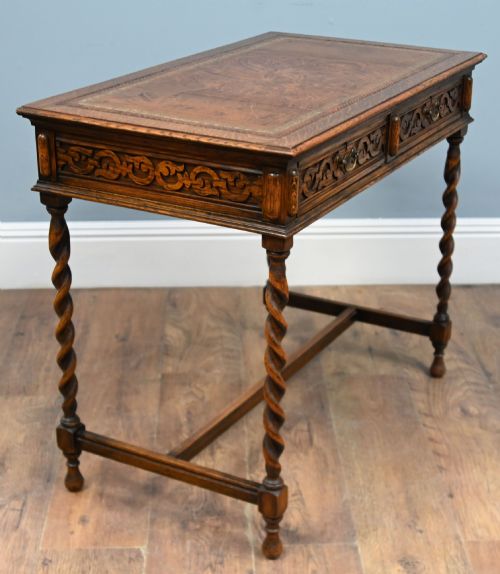
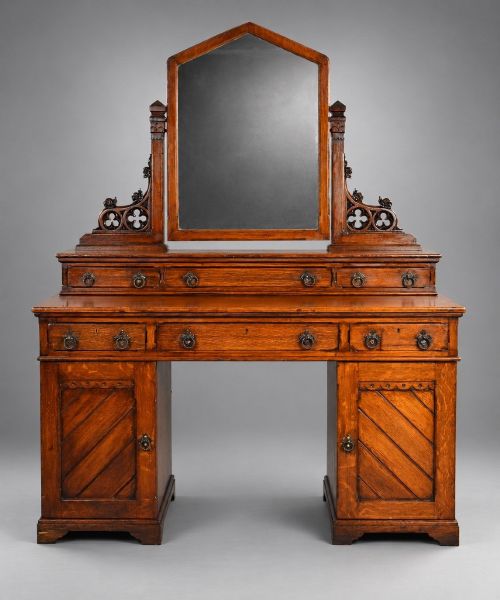
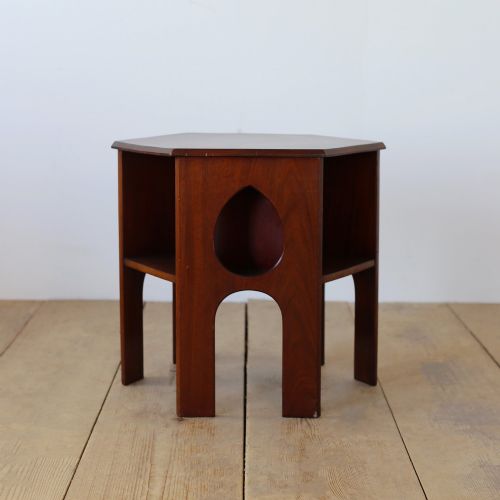
A gothic revival table draws on medieval architecture, translating stone motifs into timber furniture with pointed arches, trefoils, and chamfered edges.
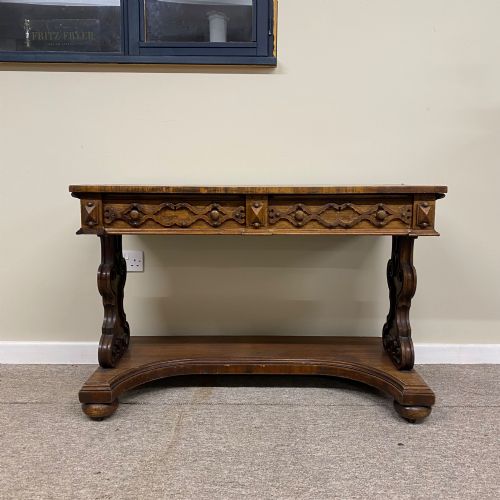
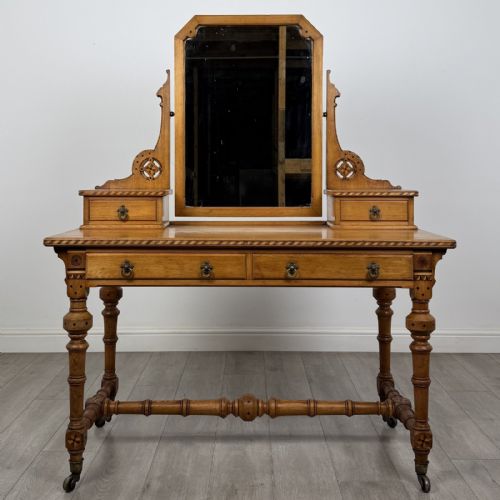
The most common version met on this page is the Victorian oak side table or library centre table, often fitted with drawers and carved linenfold or tracery panels.
Makers adapted these medieval forms for domestic use across the nineteenth century, producing everything from compact occasional tables to heavy chapel altar tables.
How They Were Made
Cabinetmakers relied heavily on solid oak, alongside alternative timbers like pitch pine, walnut, and occasional rosewood or mahogany.
Decoration depended on deep hand-carving to render quatrefoils, blind arcading, and cusped arches directly into the structural wood.
Secondary materials such as brass handles, leather writing inserts, and iron brackets completed the construction of functional desks and library tables.
Gothic Revival Table Retail Price Guide 2026
Typical asking prices for gothic revival table among the pieces listed under this phrase on Sellingantiques today, from the lower quarter to the upper quarter. They describe what is for sale here now, not the wider market.
Listings span the nineteenth and twentieth centuries, incorporating oak, brass, iron, and leather across forms from side tables to altar tables.
What Varies in Quality
Quality rests on the crispness of the timber carving and whether the architectural details are integrated into the structure rather than merely applied.
Heavier stock timber and well-figured oak distinguish substantial library and centre tables from lighter occasional pieces.
Proportion and the restraint of the ecclesiastical ornament dictate whether a piece reads as a considered architectural revival or heavy-handed furniture.
Arthur Simpson of Kendal·Edwards and Roberts·W Williamson and Sons·George Wadham·Barber and North·Winterhalder·George Orpwood
The Gothic Revival Table Glossary
- Linenfold
- A style of wood carving that mimics folded parchment or linen, frequently seen on panelled table bases and cupboards.
- Trefoil
- A graphic ornament composed of three overlapping rings or lobes, commonly found pierced through gallery rails and table stretchers.
- Quatrefoil
- A four-lobed decorative motif derived from gothic stonework, often pierced into brackets or carved into drawer fronts.
- Chamfer
- A symmetrical sloping surface cut at the edge of a square timber leg or stretcher, lightening the heavy appearance of gothic frames.
- Tracery
- Openwork or decorative intersecting ribbing in window patterns, translated by cabinetmakers into carved friezes and door panels.
Gothic Revival Table: Frequently Asked Questions
What is a gothic revival table?
A gothic revival table is a nineteenth-century piece of furniture that applies medieval architectural elements, such as pointed arches and linenfold carving, to domestic forms like side tables and desks.
These pieces reflect the Victorian and Edwardian fascination with gothic design, utilising solid timbers to create durable tables for libraries, halls, and reception rooms.
How were library tables used?
Library tables served as central workspaces for reading, writing, and sorting documents, often featuring inset leather surfaces and drawers for stationery storage.
Their sturdy construction allowed them to stand free in the middle of a room rather than against a wall, accommodating multiple users in public schools and large homes.
Are these tables made of solid oak?
Many tables from this period utilise solid English or Scottish oak, which suited the heavy structural demands of medieval architectural styling.
Cabinetmakers also worked in alternative woods such as pitch pine, walnut, and rosewood depending on the specific regional workshop and the date of manufacture.
How do I date a gothic revival table?
Dating relies on observing the combination of primary materials, secondary woods, and stylistic shifts between early nineteenth-century interpretations and later Arts and Crafts or Edwardian adaptations.
Maker marks, construction joints, and recorded periods help narrow the decade of production from the 1820s through to the 1930s.