





Gothic Revival Console Table
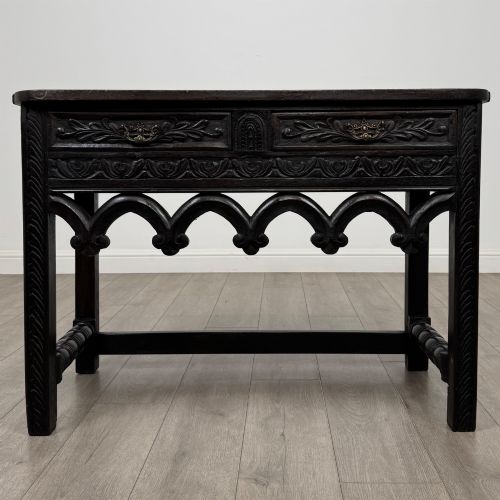
A gothic revival console table brings serious architectural presence to a hallway or reception room.
What they are
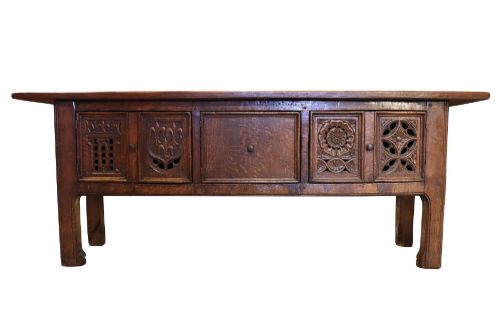
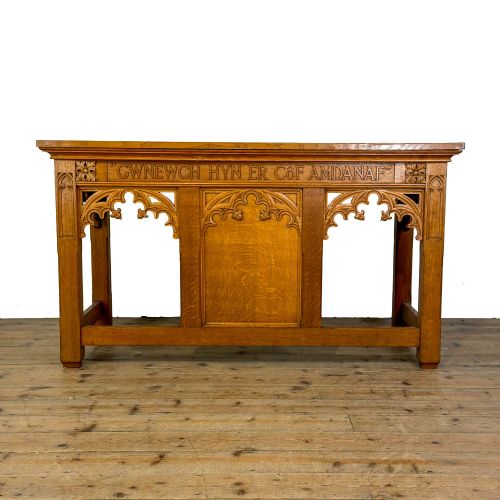
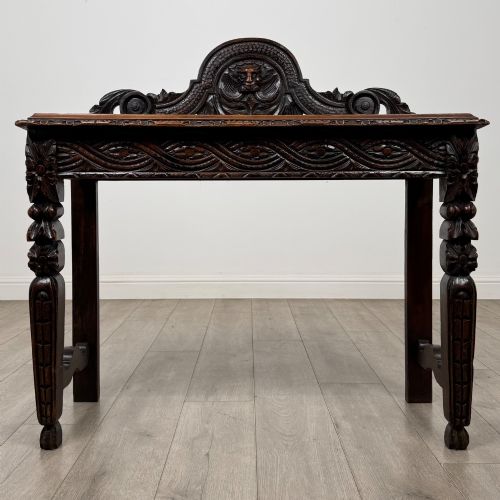
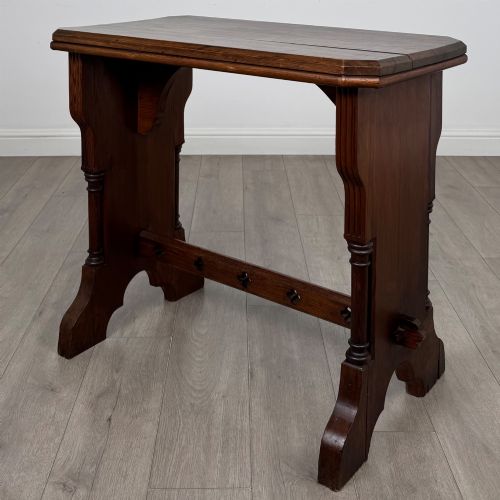
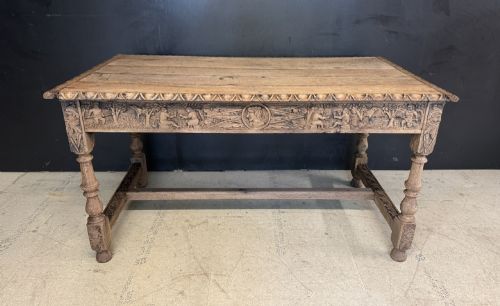
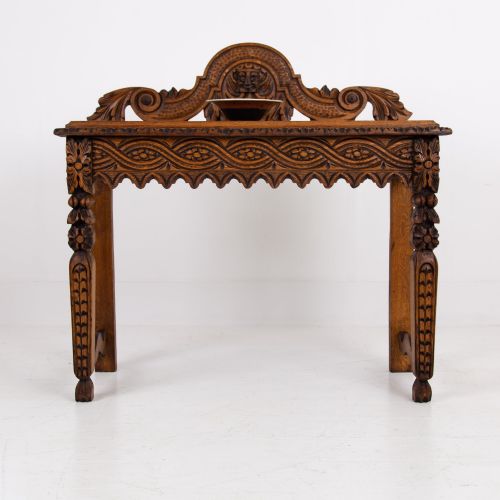
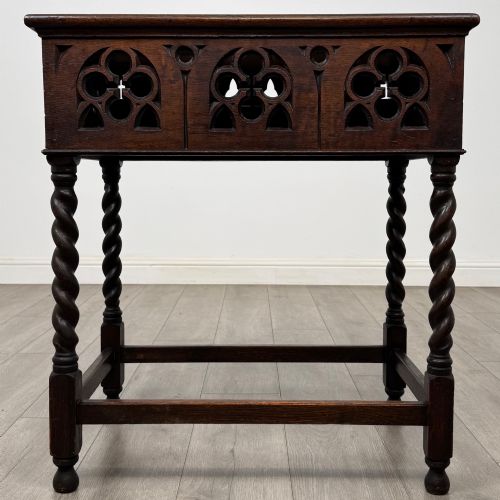
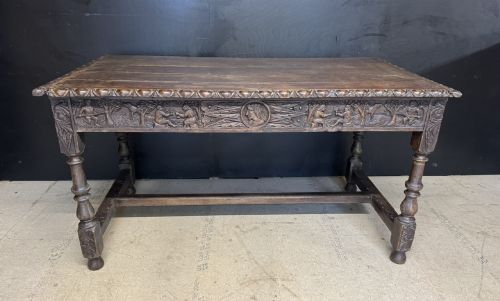
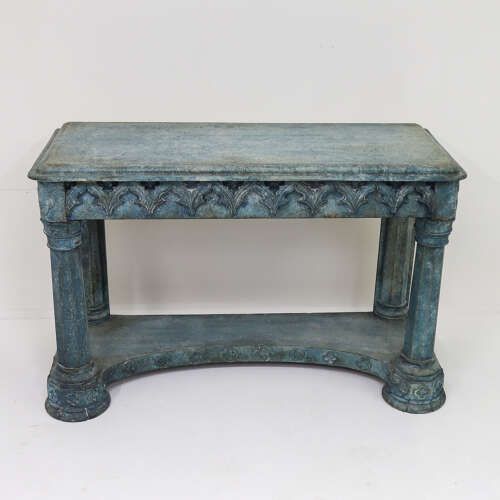
When you search for a gothic revival console table, you are looking at substantial wall-mounted or freestanding furniture produced during the nineteenth century. These pieces draw directly on medieval ecclesiastical and architectural motifs, translating stone pointed arches and tracery into domestic woodwork.
The versions you are most likely to meet on this page span the Victorian and William IV eras, appearing as console tables, serving tables, and hall tables. They serve as striking focal points in entranceways and principal rooms.
Most examples found here date from the nineteenth century around eighteen hundred and sixty up to nineteen hundred. They bridge the gap between heavy antique utility and dramatic decorative statement.
How they were made
Cabinetmakers constructed these tables primarily in solid oak and mahogany, with occasional examples in painted wood or featuring marble inserts. These hardwearing timbers provided the necessary structural integrity for elaborate carving.
Craftsmen utilised traditional joinery techniques to support heavy tabletops and intricate underframes. The surfaces display the natural grain of the timber, sometimes enhanced through paint or polish applied by hand.
Retail Price Guide 2026
Typical UK retail prices for gothic revival console table, calculated from the Sellingantiques database of over a million retail prices indexed since 2003. This retail price guide relies exclusively on Sellingantiques data; no external sources or auction records are used, so the figures do not describe the wider market.
One nineteenth-century server hides its heavy oak frame beneath a coat of paint, keeping its medieval ambitions secret from casual visitors.
What varies in quality
The division between standard and superior pieces rests on the depth and ambition of the architectural carving. Deeply undercut tracery and crisp linenfold panels distinguish the finest examples from simpler, flat-cut surfaces.
Timber selection dictates the overall character, with dense, figured mahogany and well-figured oak sitting at the upper end of the scale. The weight of the timber and the solidity of the joints determine how well the piece stands over centuries.
The Gothic Revival Console Table Glossary
- Console table
- A table designed to stand against a wall, frequently secured to the wall surface for stability. These pieces function well in narrow spaces like hallways and landings.
- Serving table
- A large side table traditionally used in dining spaces for laying out food and silverware. In nineteenth-century interiors, they often shared heavy architectural styling with console tables.
- Hall table
- A narrow piece placed in an entrance hall for incoming post and keys. They mirror the proportions and materials of larger console tables.
- Gothic Revival
- A nineteenth-century design movement inspired by medieval architecture, featuring pointed arches, trefoils, and heavy structural timbers. This style dominated church building and filtered into domestic furniture.
- William IV
- A British design period spanning the early nineteenth century that favoured robust proportions and classical or medieval revival detailing. Furniture from this era displays particularly heavy timber construction.
Frequently Asked Questions
Where should I place a gothic revival console table?
These tables suit narrow entrance halls, long corridors, and formal reception rooms where their architectural lines can stand clear of clutter. Their shallow depth allows them to anchor a wall space without blocking foot traffic.
Pair them with a heavy mirror or a pair of candlesticks to balance the strong vertical emphasis of the carved woodwork.
How do I care for nineteenth-century oak furniture?
Keep nineteenth-century oak away from direct heat sources and dramatic humidity swings to prevent the timber from splitting. Feed the wood occasionally with a traditional beeswax to maintain the natural sheen.
Avoid modern silicone sprays, which build up over time and dull the grain of antique timber.
What is the difference between a console table and a hall table?
A console table often relies on wall brackets or legs for support, historically designed to sit flush against masonry. A hall table stands independently on four or more legs and serves a similar domestic function in an entryway.
In nineteenth-century design, the terms overlap considerably depending on the specific proportions of the piece.
How can I date a nineteenth-century gothic revival table?
Dating relies on examining the construction marks, timber preparation, and the specific interpretation of gothic motifs. Pieces from around eighteen sixty often display sharper, more deliberate architectural carving than later Victorian iterations.
Tool marks on the underside and the condition of the timber joints help confirm the nineteenth-century origin.