
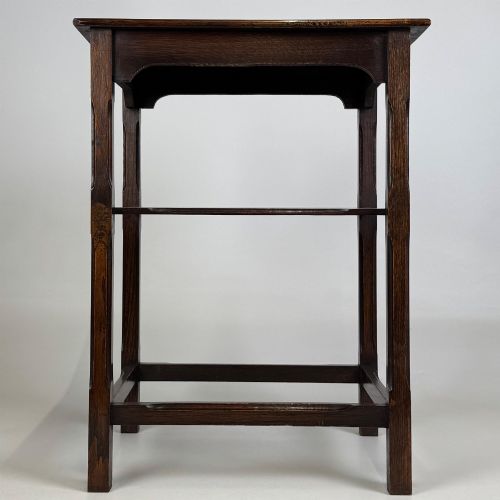

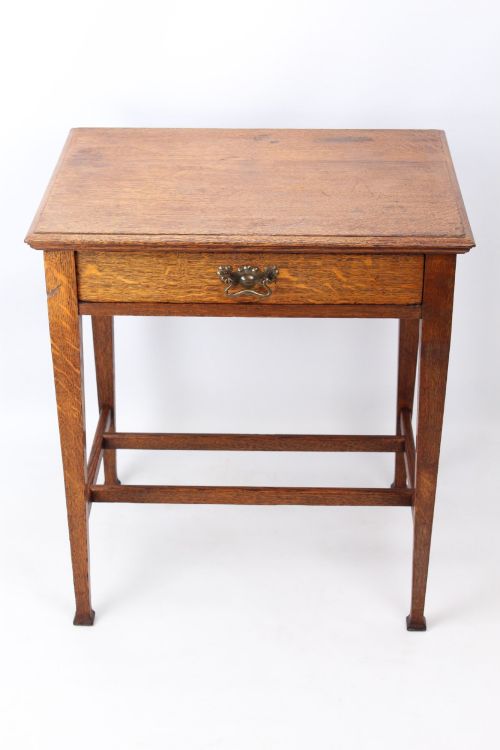
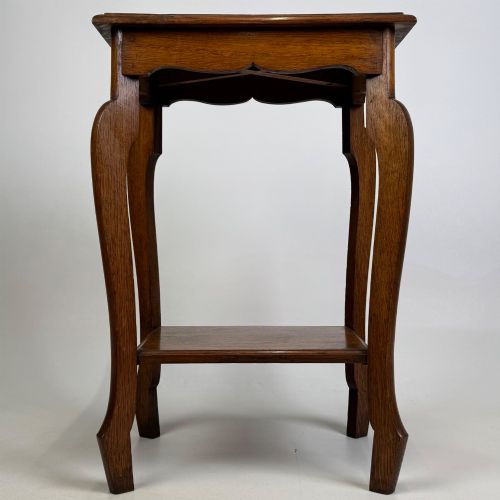
Edwardian Oak Hall Table
An edwardian oak hall table is a compact, sturdy piece designed for narrow entryways, offering practical surface space and distinct period character.
Defining the edwardian oak hall table
When you search for an edwardian oak hall table, you are looking at utilitarian hallway furniture produced during the early twentieth century alongside Victorian and later revivals. These pieces function primarily as console or side tables designed to sit flush against a wall in a passage or landing.
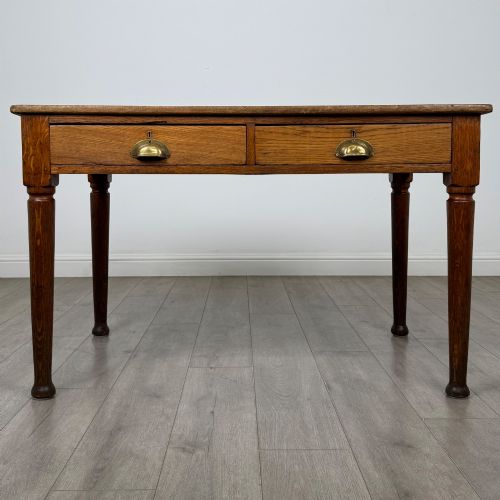
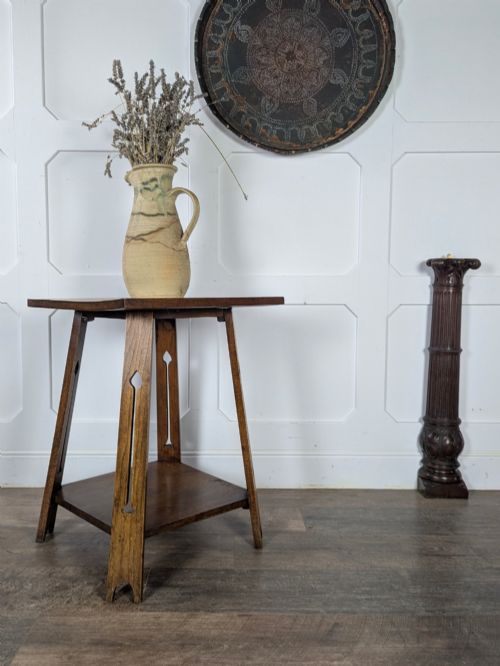
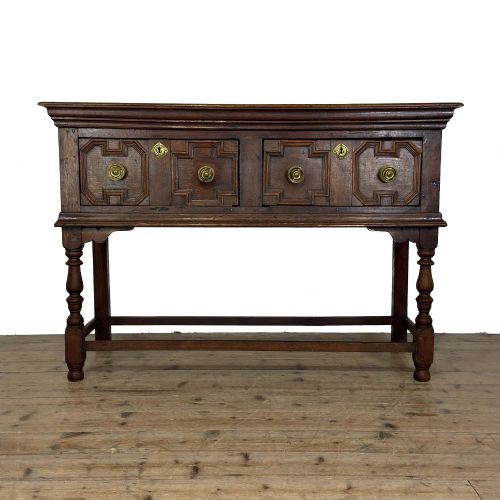
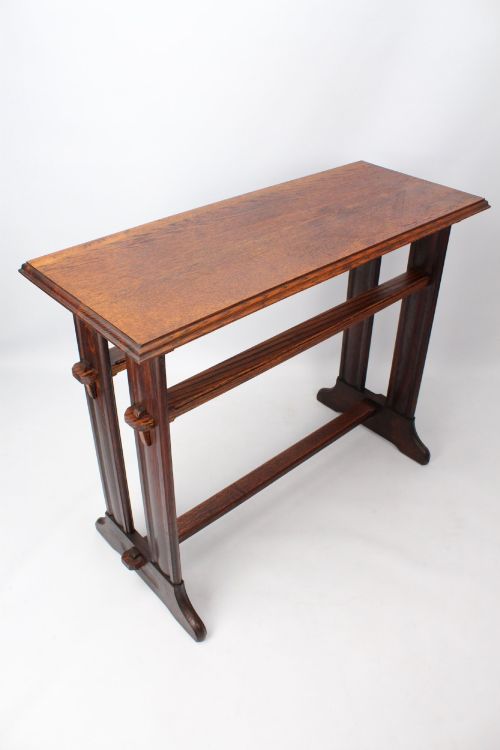
The most common versions on this page take the form of demi-lune shapes, simple two-drawer configurations, and compact rectangular formats. They bridge the gap between heavy Victorian proportions and lighter Arts & Crafts sensibilities.
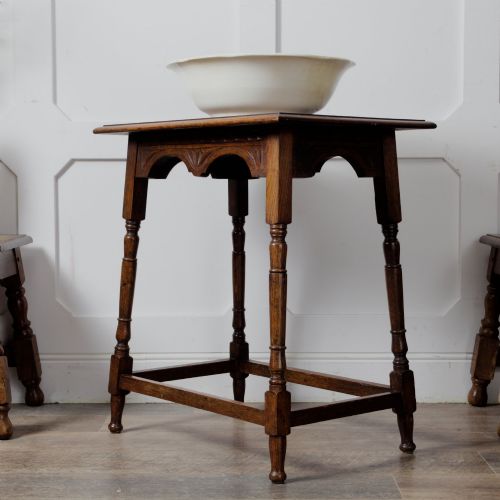
Originating predominantly from British workshops, these tables utilise native timbers suited to daily domestic traffic. Collectors find them in various stylistic interpretations, ranging from plain functional forms to those with carved details or tiered galleries.
Materials and construction
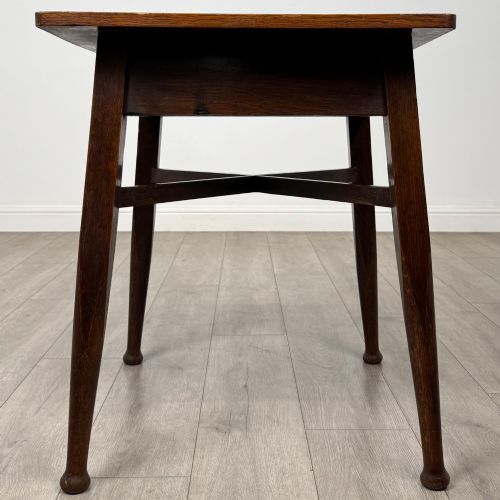
The primary material across these examples is solid oak, occasionally selected as figured oak to highlight natural grain patterns on the top surface. Workshops built these tables to withstand hallway use, combining robust timber framing with functional drawers where specified.
Metal hardware such as brass handles and pulls frequently complement the timber, adding utilitarian contrast to the wood. Construction techniques rely on traditional joinery methods suited to domestic furniture of the period.
Retail Price Guide 2026
Typical UK retail prices for edwardian oak hall table, calculated from the Sellingantiques database of over a million retail prices indexed since 2003. This retail price guide relies exclusively on Sellingantiques data; no external sources or auction records are used, so the figures do not describe the wider market.
A two-tier gallery table lets you misplace your keys on two different levels simultaneously.
Assessing quality
Quality in these tables rests upon the selection of timber and the sophistication of the design rather than mere age. Pieces featuring figured oak veneers or articulated grain show a higher level of material ambition than plain utility boards.
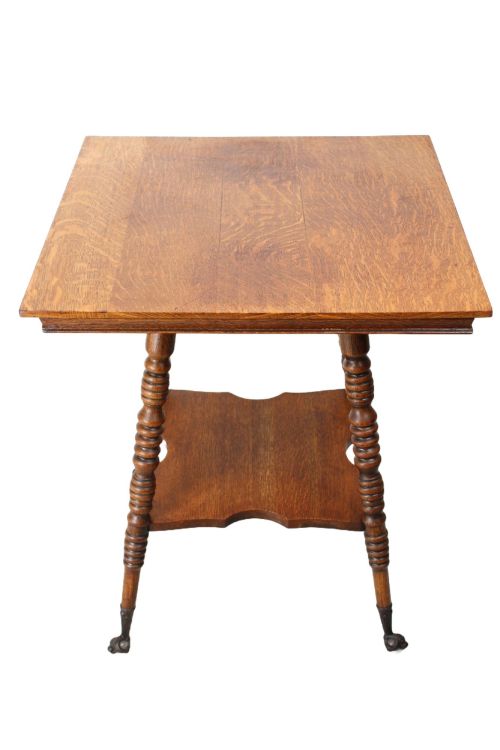
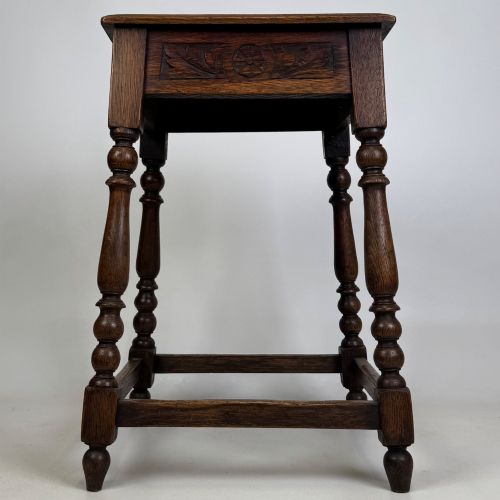
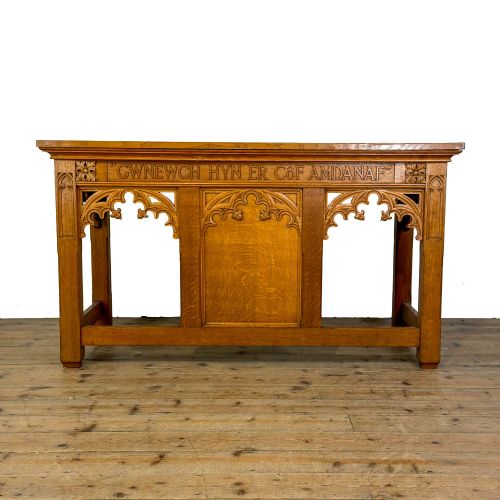
Detailing separates standard production from finer work. The inclusion of decorative carving, two-tier gallery structures, or shaped demi-lune tops demonstrates greater craftsmanship than simple rectangular forms.
The Edwardian Oak Hall Table Glossary
- Demi-lune
- A half-moon shape designed to sit flat against a wall, saving valuable floor space in narrow hallways. This curved silhouette is particularly common in Edwardian examples.
- Console table
- A table supported against a wall by console brackets or legs, functioning as a surface for decorative items or letters in an entrance hall. These tables are shallower than standard dining furniture.
- Gallery
- A raised wooden rail or tier running around the edge of a table surface, serving to keep objects from sliding off. In Arts & Crafts pieces, this feature adds vertical interest.
- Bobbin leg
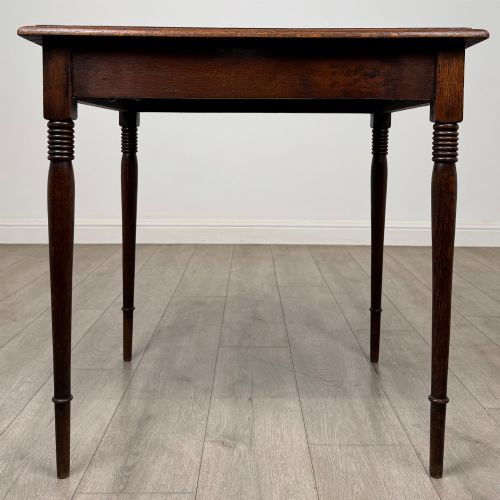
- A turned furniture leg shaped to resemble a string of bobbins or spools, popular during nineteenth-century revival periods. It introduces distinct textural rhythm to the base.
Frequently Asked Questions
How do I identify an Edwardian piece?
Edwardian furniture typically displays lighter proportions and simpler lines than heavy Victorian pieces. These items often incorporate Arts & Crafts influences or subtle carved details.
Checking the wood selection, such as figured oak, helps place a table within this early twentieth-century window.
Where should I place my table?
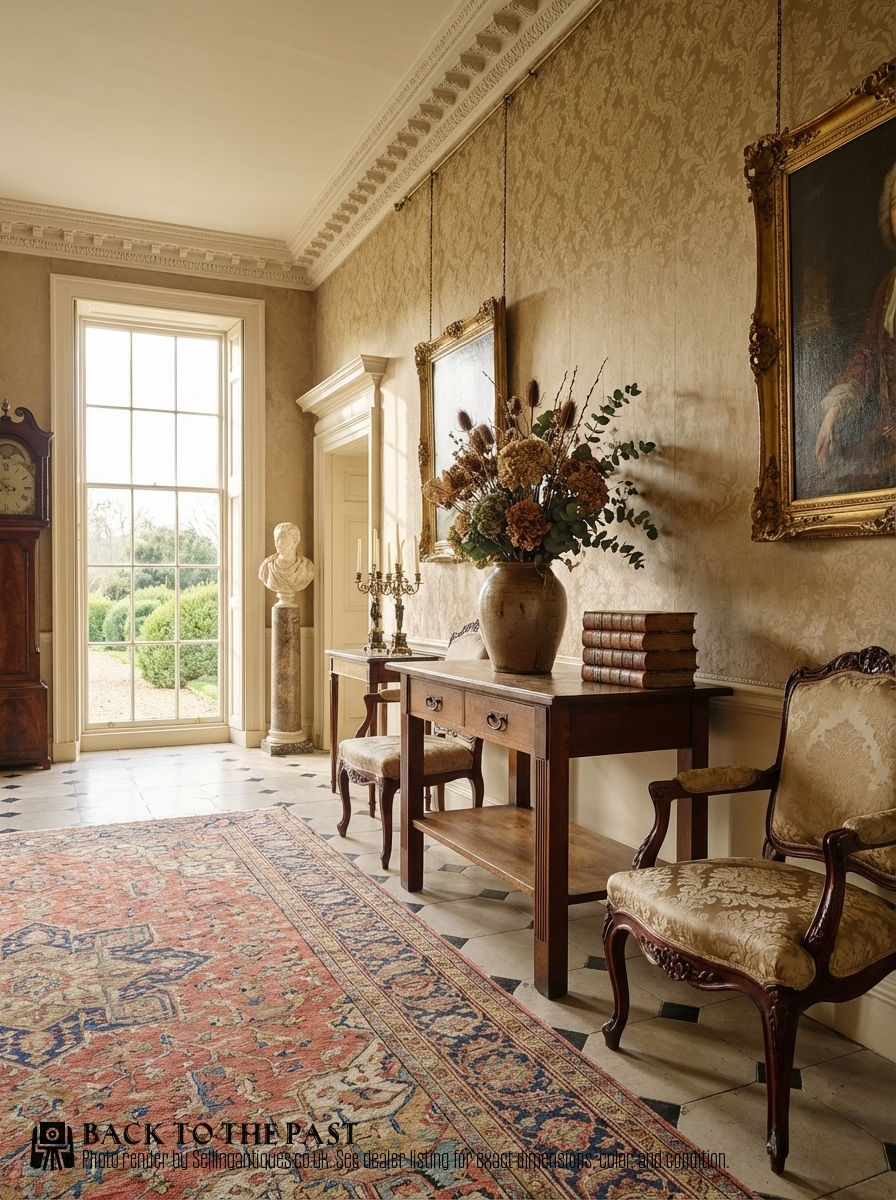
These tables find their natural home in hallways, landings, and narrow corridors. Their shallow depth ensures they do not block walking routes.
Pairing the surface with a mirror creates a functional focal point near an entrance.
What styles appear alongside Edwardian?
Listings frequently feature Victorian, Arts & Crafts, and Jacobean Revival aesthetics. These overlap due to the persistence of earlier manufacturing traditions into the twentieth century.
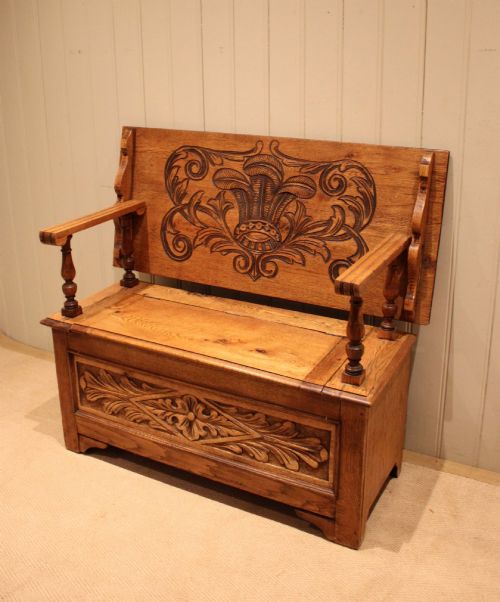
Revival styles often incorporate turned legs, bobbin details, or carved panels.