


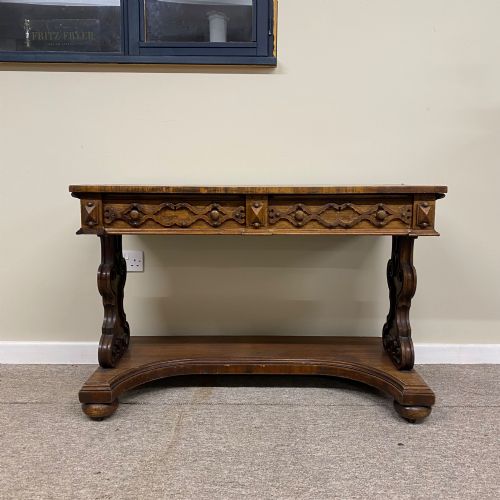
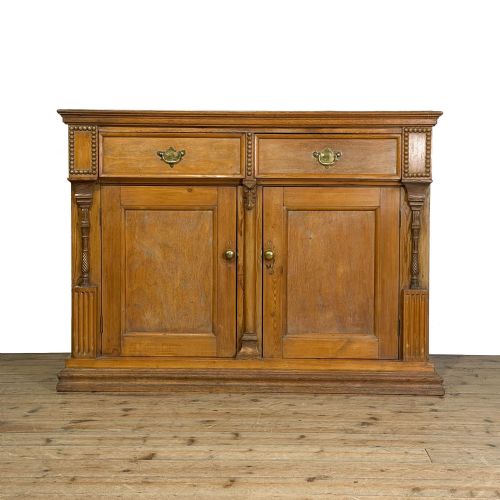
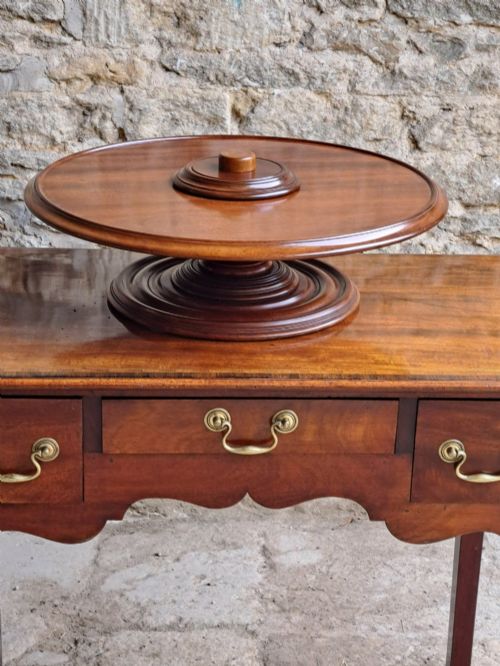
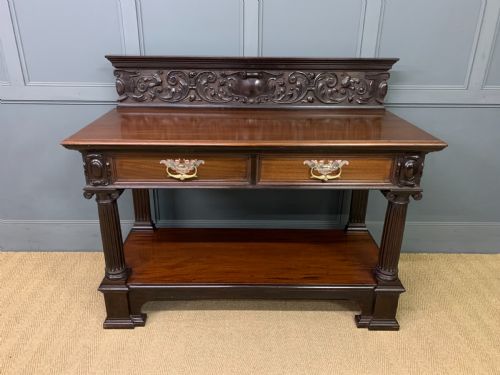

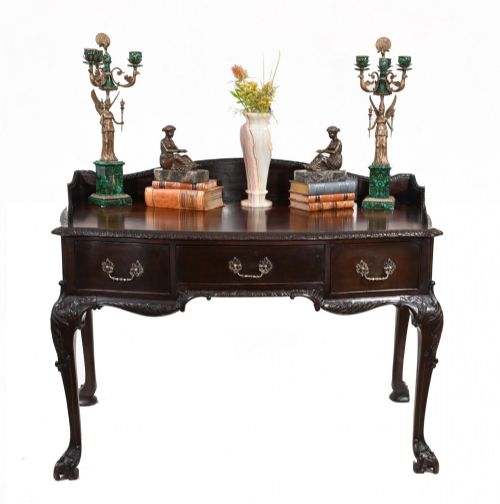
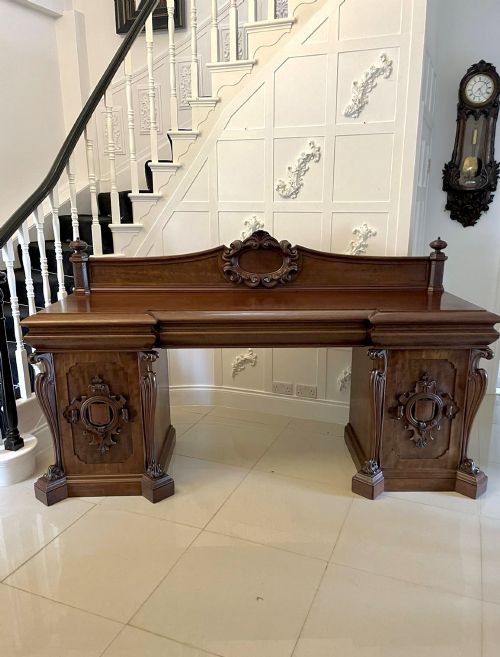
Victorian Carved Server
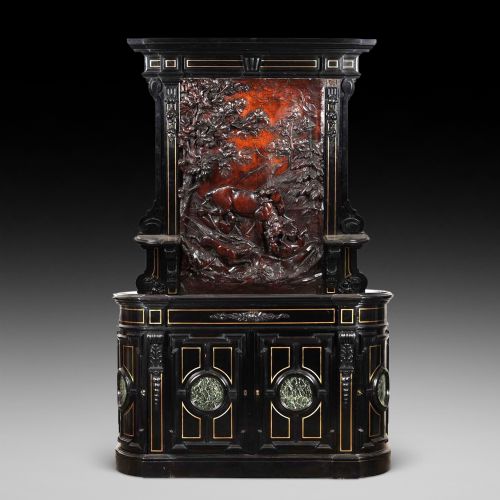
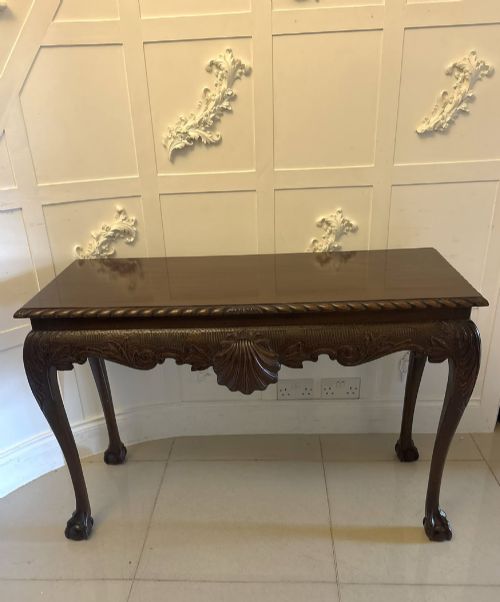
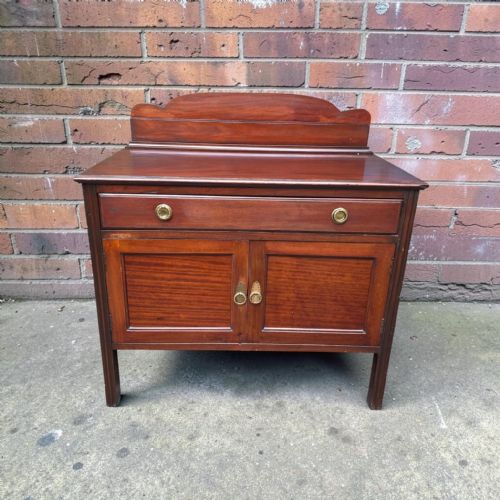
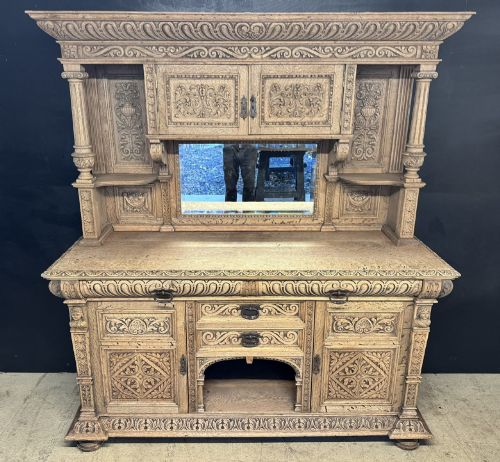
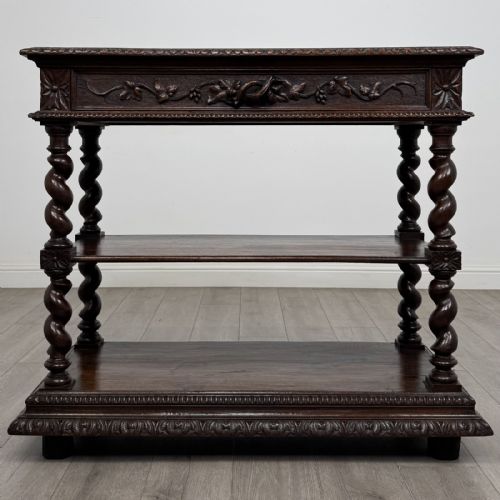
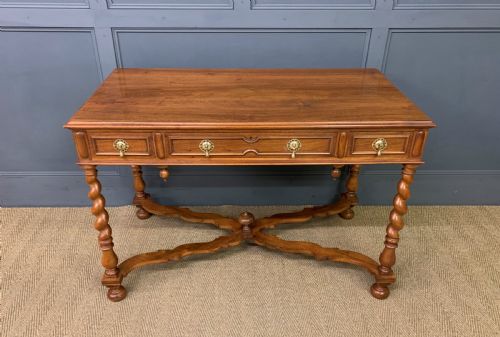
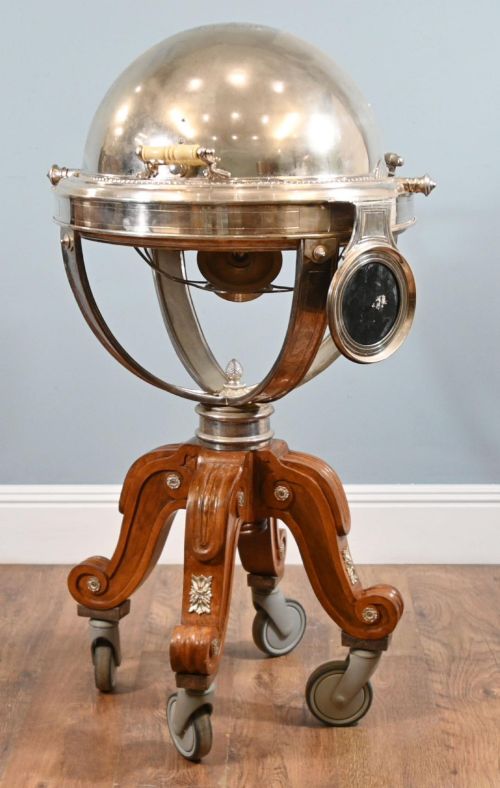
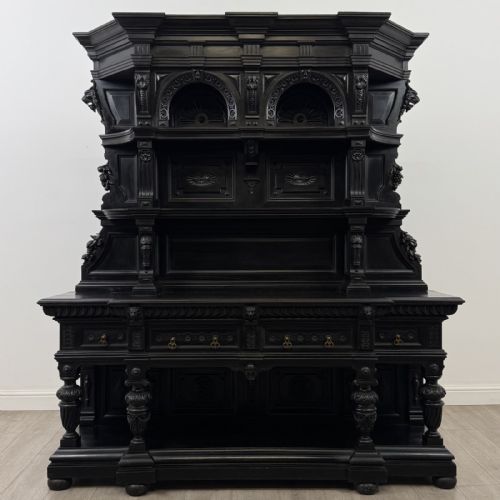
When you seek a victorian carved server, you are looking at substantial timber furniture designed for dining room service and display.
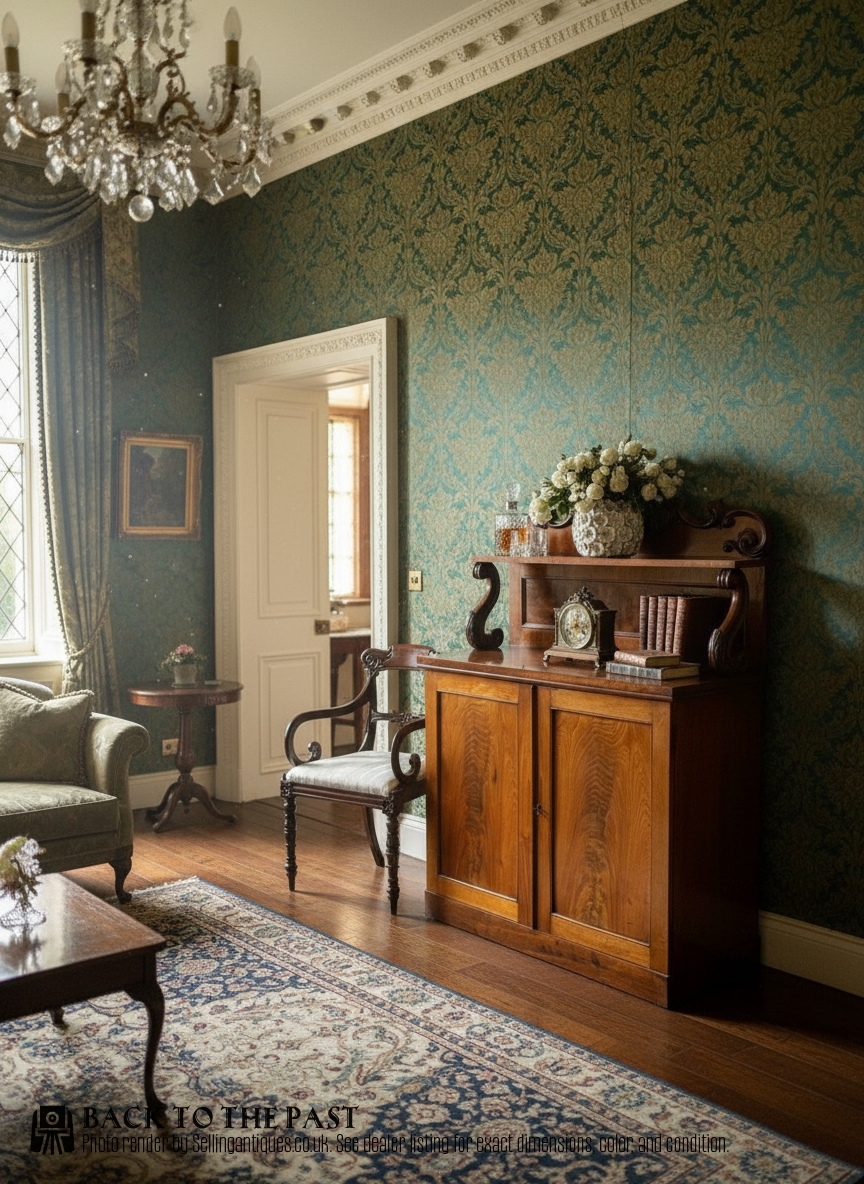
Victorian Carved Server
A victorian carved server typically manifests as a sideboard, buffet, credenza, or chiffonier originating from the nineteenth century. These pieces serve primarily for storing dining utensils and presenting food or silver during meals.
The versions most commonly met on this page span the Victorian period, often incorporating related nineteenth-century styles such as Gothic Revival, Renaissance Revival, and Jacobean Revival.
Makers constructed these serving pieces to anchor the dining room, combining functional storage cupboards and drawers with decorative carved panels and occasionally raised mirror backs.
Materials and construction methods
Cabinetmakers utilised solid timbers such as oak, mahogany, walnut, and pollard oak, frequently applying flame mahogany veneer to primary display surfaces. These substantial woods provided the structural integrity necessary for heavy carving and daily dining room use.
Secondary elements incorporated brass hardware, glass panels, iron fixings, and occasionally inset marble tops to provide contrast and durability. Carving was executed by hand directly into the timber, defining the Gothic, Renaissance, and Jacobean motifs characteristic of the era.
Victorian Carved Server Retail Price Guide 2026
Typical asking prices for victorian carved server among the pieces listed under this phrase on Sellingantiques today, from the lower quarter to the upper quarter. They describe what is for sale here now, not the wider market.
Listings span multiple nineteenth-century styles, incorporating oak, mahogany, walnut, brass, glass, iron, and flame mahogany veneer.
Distinctions in craftsmanship and design
The standard of a victorian carved server rests upon the depth and precision of the timber carving and the selection of figured veneers. Superior examples display crisp, undercut botanical or architectural motifs rather than shallow, mechanical stamping.
Timber selection equally determines value, with dense pollard oak, burr walnut, and figured mahogany marking out pieces intended for high-status interiors. Construction details such as drawer dovetails and the integration of mirror backs further separate standard utility pieces from exceptional commissions.
The Victorian Carved Server Glossary
- Credenza
- A serving cabinet or sideboard, frequently featuring a mirror back and enclosed cupboards, used for displaying silver and porcelain.
- Chiffonier
- A compact Victorian sideboard or serving piece, usually incorporating small drawers and lower storage enclosed by panelled doors.
- Pollard oak
- Timber taken from trees that have been pollarded, producing a highly decorative, mottled grain highly prized by nineteenth-century cabinetmakers.
- Serpentine
- A curved front shape following a concave-convex-concave line, seen on finer Victorian sideboards and servers.
Victorian Carved Server: Frequently Asked Questions
Where were these servers used?
These serving pieces belonged primarily in the dining room or large hallway of nineteenth-century homes. Families utilised them to store cutlery, linens, and serving dishes.
During meals, the top surface acted as a staging area for joint meat service, heavy silver, and glassware before guests took their seats.
How do I clean the carved timber?
Dust the intricate carved recesses regularly using a soft, dry brush to prevent dirt accumulation in the grain. Avoid modern liquid polishes containing silicone, which build up on antique wood over time.
Apply a traditional beeswax sparingly to nourish the oak, mahogany, or walnut, buffing gently with a clean cloth to maintain a natural lustre.
Are mirror backs original to these pieces?
Many Victorian sideboards and servers incorporate mirror backs as an integral part of their original nineteenth-century design. These mirrors helped reflect candlelight and brighten dark dining rooms.
When examining a piece, check that the frame moulding matching the timber of the base surrounds the mirror glass securely.
How do I distinguish Gothic Revival from standard Victorian?
Gothic Revival servers display distinct architectural motifs drawn from medieval church design, including pointed arches, quatrefoils, and heavy linenfold panelling. Standard Victorian pieces often favour simpler classical scrolls, fruit carvings, or Renaissance Revival strapwork.
The choice of timber also leans heavily toward solid oak in Gothic Revival works.