

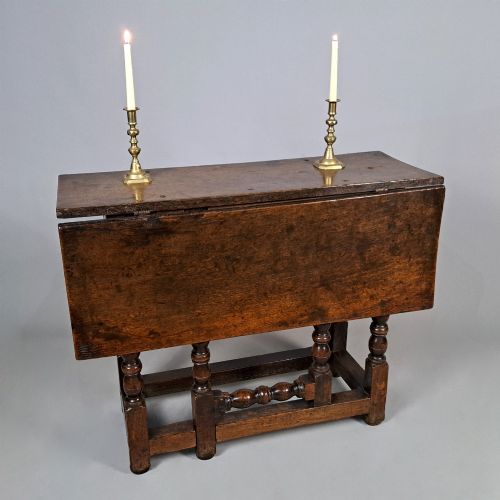
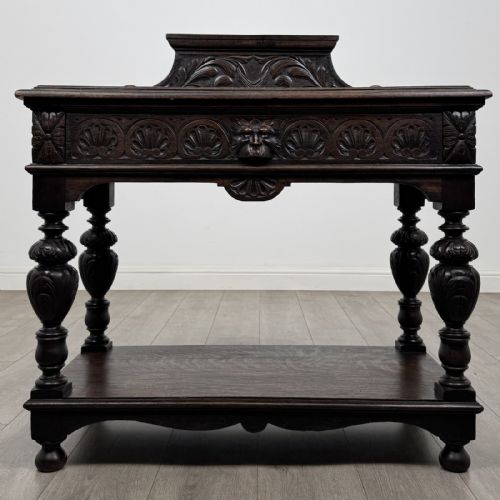
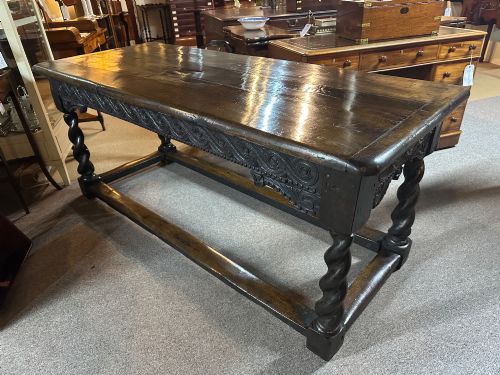
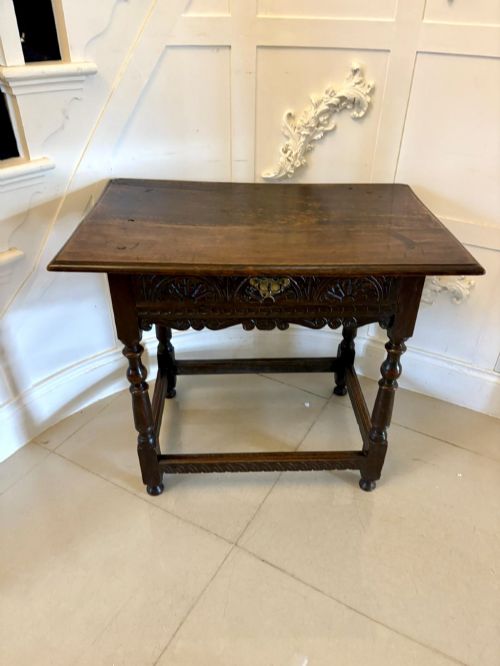
Carved Oak Console
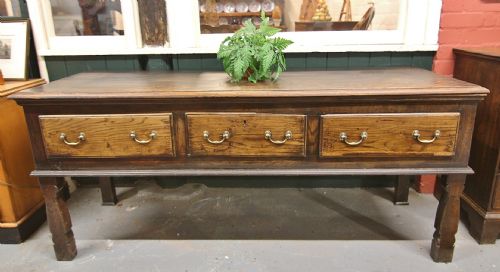
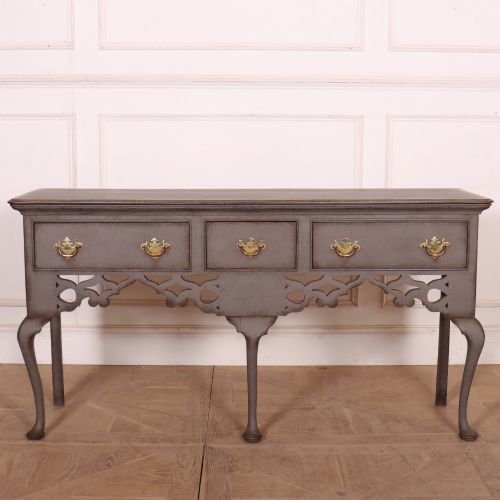
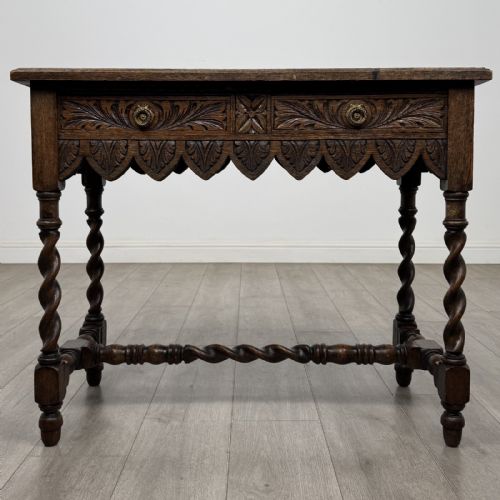
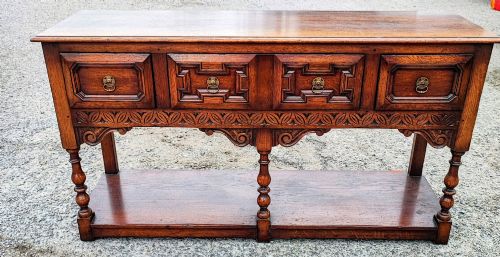
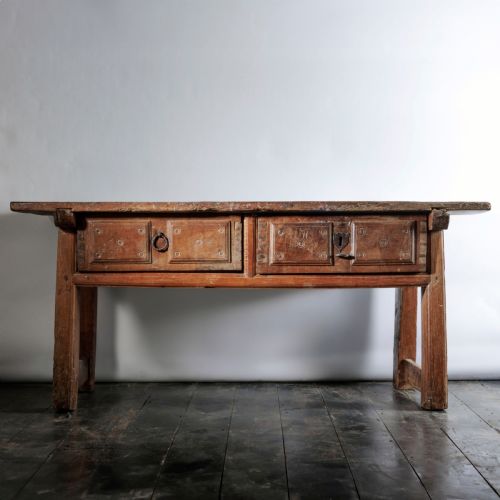
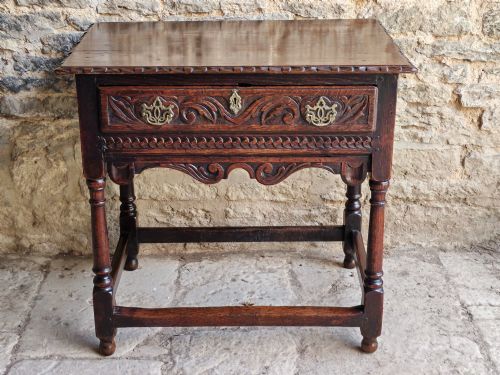
A carved oak console brings solid presence and deep-relief detail to a hallway, drawing the eye with substantial timber and historic character.
Carved Oak Console
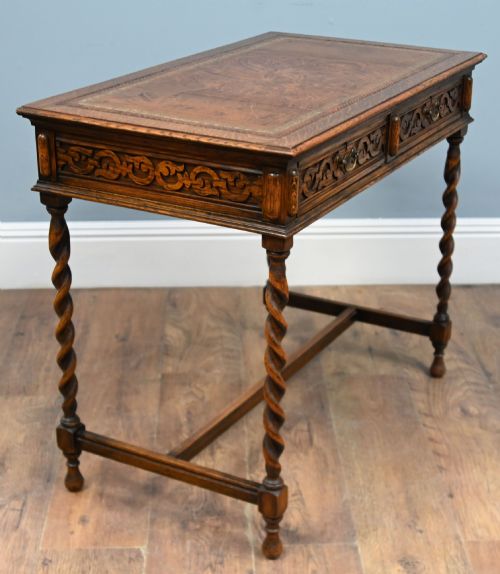
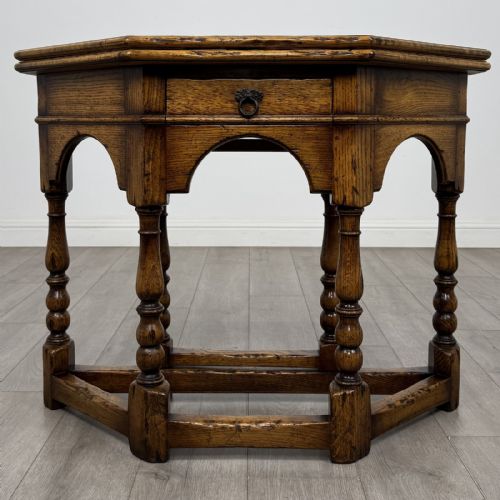
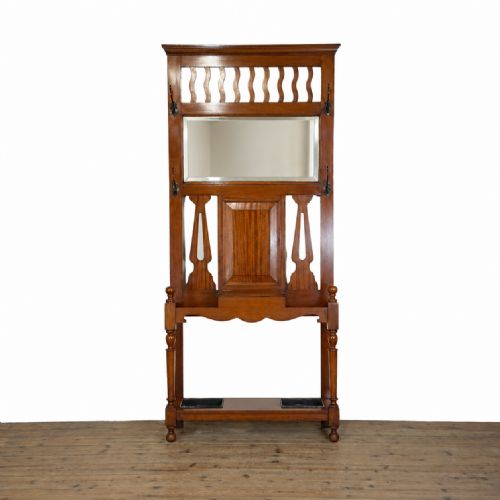
When you search for a carved oak console, you encounter substantial side and hallway tables spanning the seventeenth century through to the interwar period of the twentieth century. These pieces serve primarily as functional surfaces in narrow spaces, designed to stand against walls with decorative timber framing.
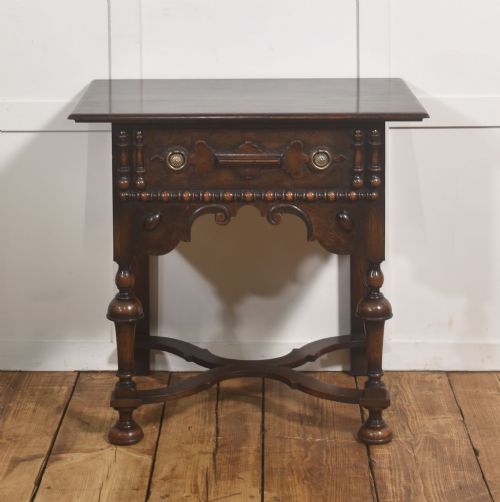
The versions most commonly met on this page date from the Victorian era and the subsequent revival periods of the early twentieth century. Alongside standard console tables, the inventory incorporates related forms such as lowboys, credence tables, altar tables, and serving tables.
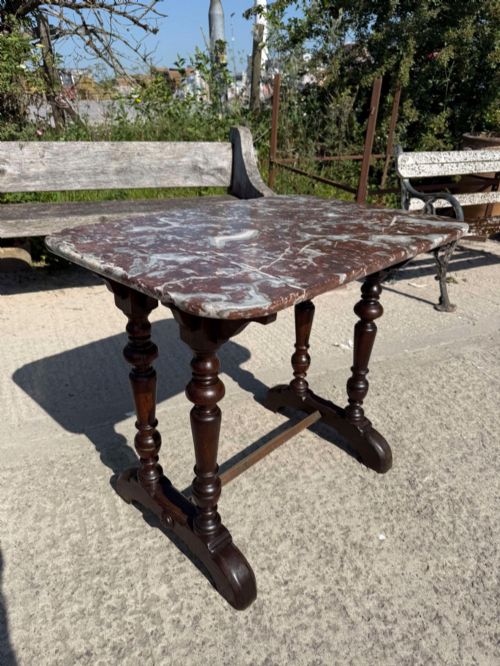
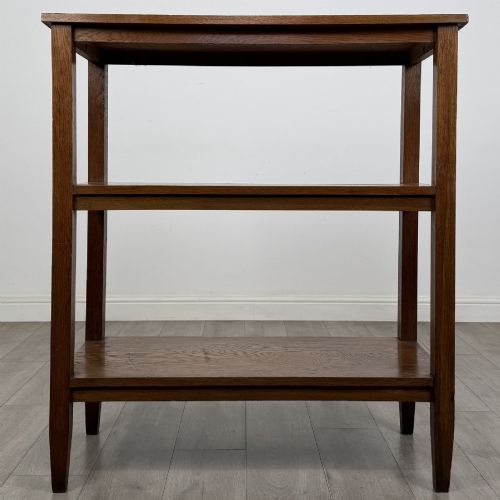
Origins stretch across British, French, Dutch, Irish, and Scottish workshops, showing regional variations in timber selection and decorative motifs. Some examples include integrated drawers, tiers, or contrasting inserts such as granite tops.
Materials and Construction
Makers built these tables primarily using solid oak, chosen for its durability, dense grain, and ability to hold crisp chisel work. Secondary materials such as brass fittings and inset granite slabs appear on specific continental and nineteenth-century iterations.
Carpenters relied on traditional joinery methods to frame the heavy timber, securing tabletops and legs with pegged mortise and tenon joints. Carvers worked directly into the seasoned oak to produce deep relief patterns, foliage, and figurative masks.
Carved Oak Console Retail Price Guide 2026
Typical asking prices for carved oak console among the pieces listed under this phrase on Sellingantiques today, from the lower quarter to the upper quarter. They describe what is for sale here now, not the wider market.
Listings span periods from the 17th century through to the 1930s, utilising oak, brass, and granite.
Assessing Quality and Execution
The distinction between standard utility furniture and top-tier work rests entirely on the depth, sharpness, and ambition of the carving. Master carvers rendered motifs such as green man masks, grapevines, and Gothic tracery with three-dimensional vigor, whereas lesser pieces display shallow, mechanical stamping.
Proportion and structural integrity also separate grades, as superior examples maintain balanced proportions across heavy serpentine or three-tier frames without relying on excessive modern reinforcement. The choice of timber grain and the crispness of edge mouldings further distinguish workshop output.
Beresford & Hicks London
The Carved Oak Console Glossary
- Console table
- A table designed to stand against a wall, often supported by brackets or console legs rather than four standard vertical posts.
- Green man
- A sculptural architectural ornament depicting a human face disgorged from foliage, frequently carved into Victorian oak furniture.
- Credence table
- A sturdy wooden side table historically used in ecclesiastical settings or domestic dining rooms for holding vessels.
- Lowboy
- A small seventeenth or eighteenth-century dressing or side table featuring one or more rows of drawers beneath the main surface.
- Gothic revival
- An architectural and decorative style drawing inspiration from medieval forms, characterised by pointed arches, tracery, and heavy mouldings.
Carved Oak Console: Frequently Asked Questions
Where should I place a carved oak console?
These tables suit narrow entrance halls, living rooms, and landings where their shallow depth allows them to sit flush against a wall.
Pair them with a matching wall mirror or a small table lamp to create a functional focal point upon entry.
How do I date a carved oak console?
Dating relies on examining the construction joints, tool marks, and stylistic motifs carved into the timber.
Seventeenth-century pieces show pegged joinery and hand- cleft panels, while Victorian and later revival pieces exhibit heavier, machine-assisted framing alongside period-specific historical revivals.
Can these consoles support heavy items?
Solid oak construction provides immense structural strength, making these tables suitable for holding heavy lamps, books, and decorative ceramics.
Console tables secured directly to the wall offer additional stability for daily use.
What is the difference between a console and a lowboy?
A console table is primarily designed to stand against a wall as a decorative surface or server, sometimes lacking traditional front legs.
A lowboy is a dedicated low table featuring drawers built into the frieze beneath the top surface.