

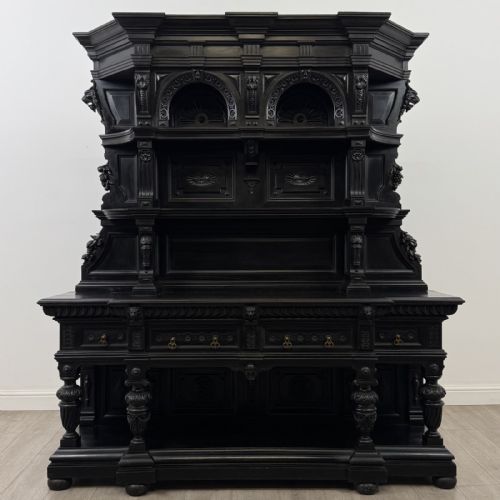
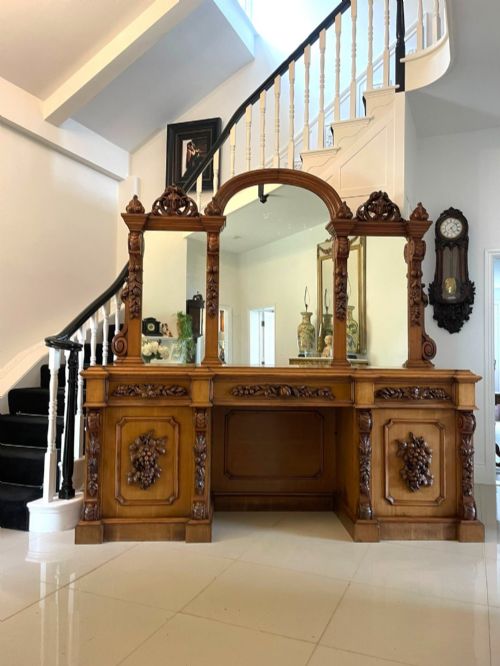
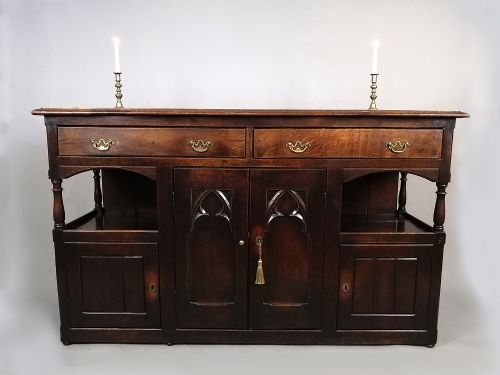
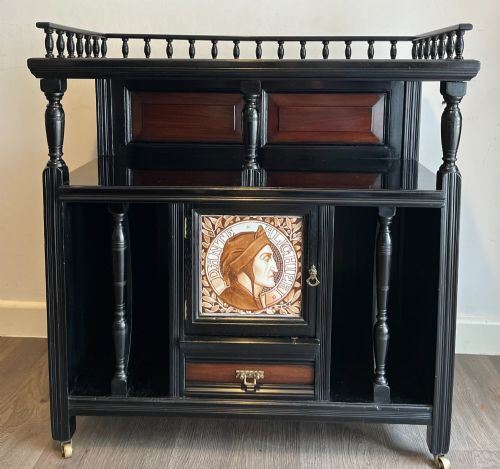
Gothic Revival Sideboard
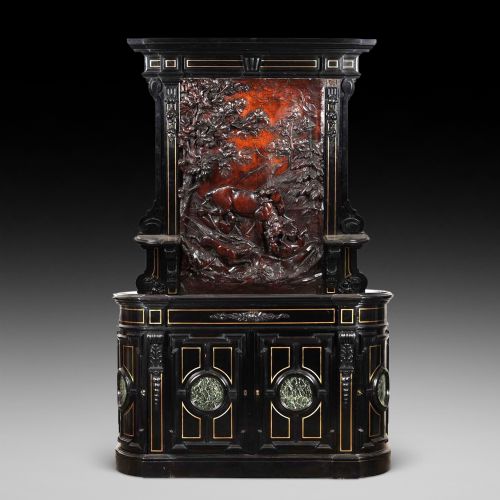
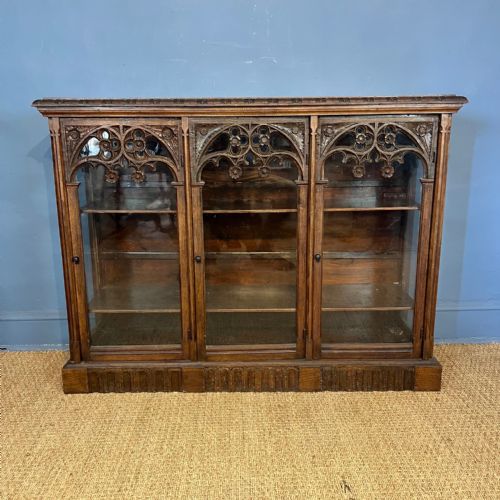
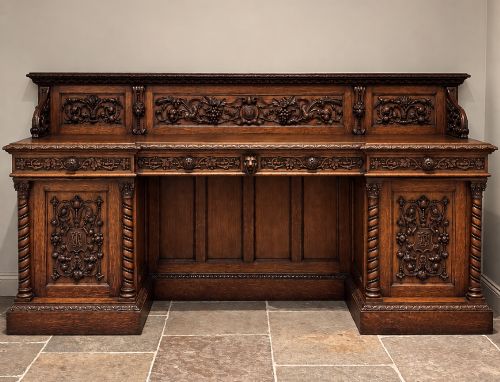
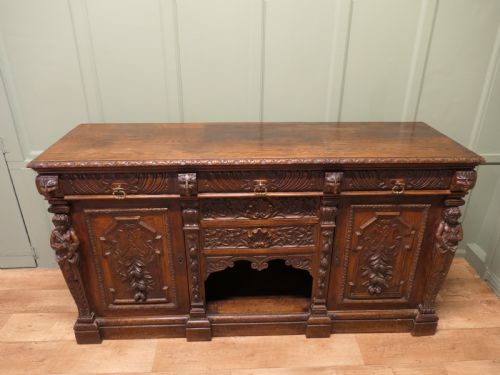
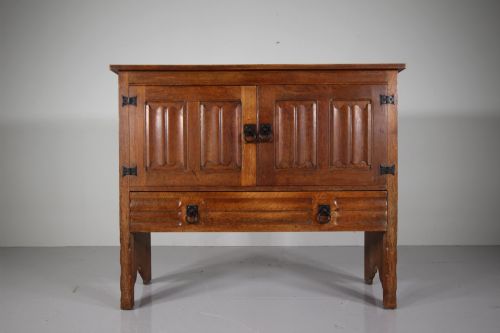
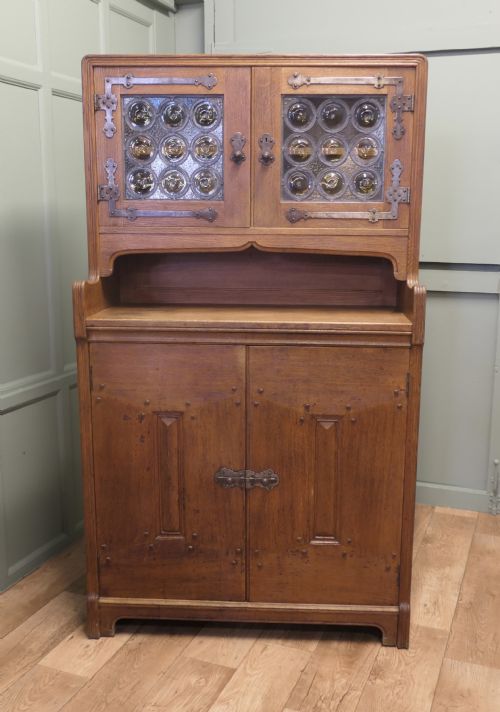
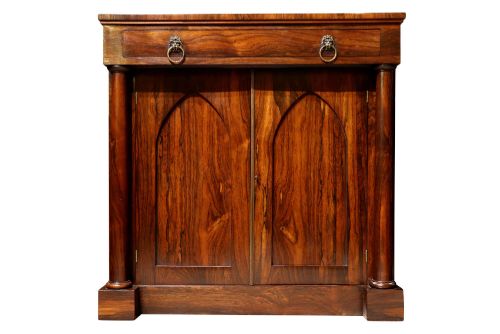
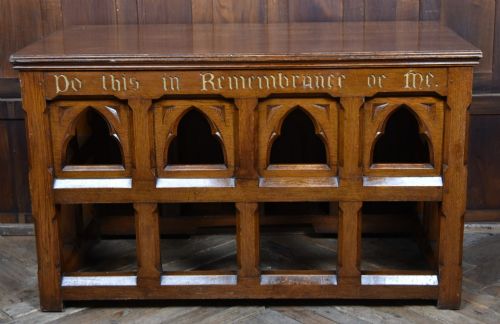
These heavy timbers and pointed arches are what you mean by a gothic revival sideboard, built for dining rooms that wanted a serious architectural presence.
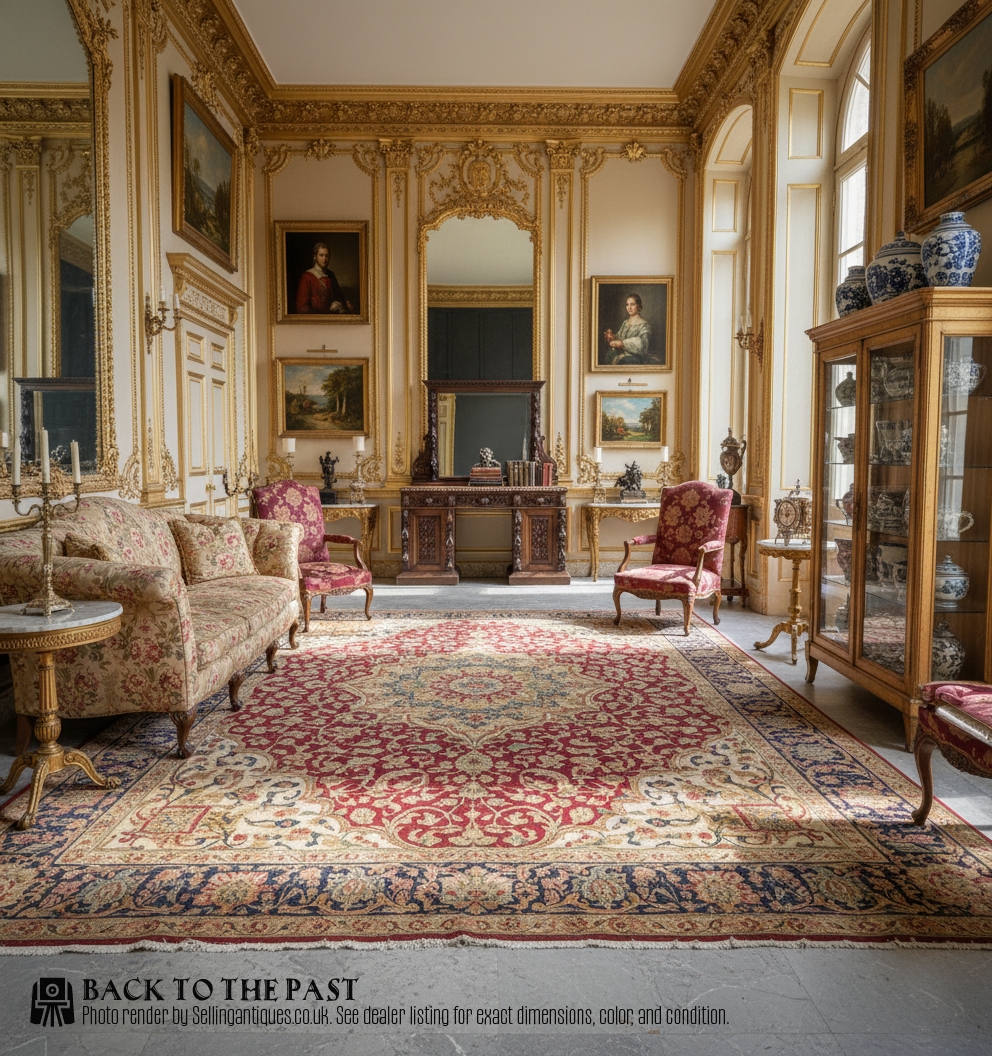
Gothic Revival Sideboard
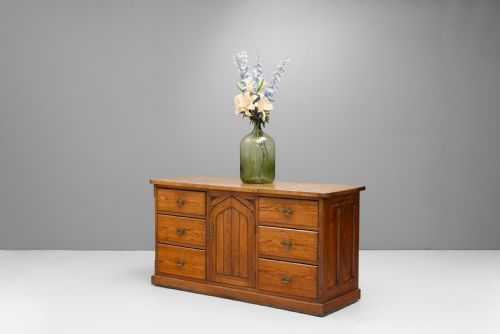
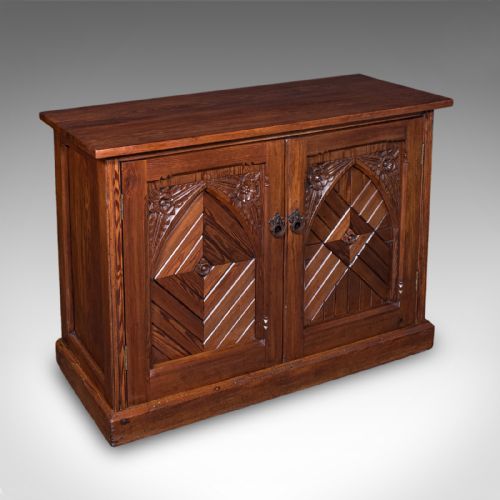
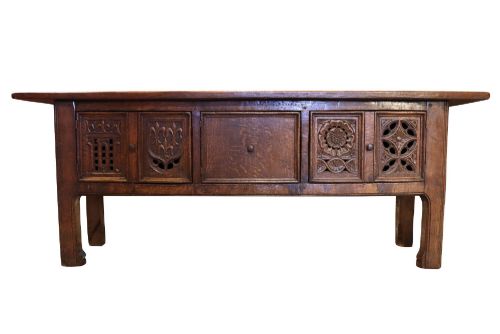
When you search for a gothic revival sideboard, you encounter large storage furniture built across the nineteenth century and into the twentieth, drawing heavily on medieval architectural motifs. The pieces range from substantial mirror-backed sideboards and dresser bases to smaller cupboards and cabinets, with oak serving as the dominant timber alongside walnut, mahogany, and rosewood. These items frequently incorporate stylistic elements such as pointed arches, linenfold panelling, and carved Green Man masks.
The specimens met on this page lean heavily toward Victorian production, though examples stretch from the Regency period through to Edwardian and later twentieth-century interpretations. Makers and designers sometimes channel specific aesthetic movements, including Arts and Crafts and the Pre-Raphaelite style, or reference early historical aesthetics like Tudor and Jacobean revivals. Origin points span English, Scottish, and French workshops, each bringing distinct regional carving traditions to the heavy formal cabinetry.
How they were made
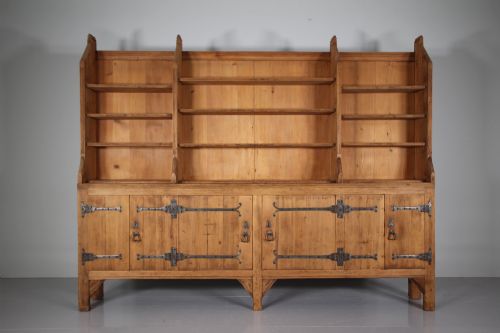
Construction relies primarily on solid oak, selected for its strength and ability to take deep, sculptural chisel work. Secondary timbers and alternative hardwoods like walnut, mahogany, rosewood, and pine appear in specific pieces, complemented by hardware cast from brass and iron. Stained and leaded glass often forms the panels of upper doors and bookcases, introducing coloured light into the dense timber constructions.
Joinery methods depend on heavy framing and panel construction to support the considerable weight of carved doors, projecting cornices, and mirror backs. Carvers executed intricate details by hand directly onto the structural wood, including tracery, linenfold motifs, and figural reliefs. Wax and polish finishes were applied to protect the grain while accentuating the dark, rich tones characteristic of the style.
Gothic Revival Sideboard Retail Price Guide 2026
Typical asking prices for gothic revival sideboard among the pieces listed under this phrase on Sellingantiques today, from the lower quarter to the upper quarter. They describe what is for sale here now, not the wider market.
Listings feature oak predominantly as the primary timber, alongside walnut, mahogany, and rosewood across the nineteenth and twentieth centuries.
What varies in quality
The distinction between ordinary utility cupboards and exceptional furniture rests upon the ambition and execution of the carving. Superior examples display crisp, deeply undercut relief work on figures and foliage rather than shallow, mechanical stamping. The choice of timber also dictates the tier, with figured golden oak or dense walnut marking out pieces commissioned from notable retail houses.
Structural integrity and proportion separate standard vernacular pieces from masterworks designed for specific domestic interiors. Finer pieces maintain balanced proportions despite their bulk, utilising architectural elements like slender uprights and well-integrated mirror backs that complement the base rather than overwhelm it. The integration of quality subsidiary materials, such as heavy brass hinges and stained glass panels, further elevates the standing of individual pieces.
Liberty·Leonard Wyburd·John Moyr Smith
The Gothic Revival Sideboard Glossary
- Green Man
- A sculptural motif depicting a human face emerging from or entwined with foliage, symbolising rebirth. It appears frequently as a central carved flourish on drawer fronts and cupboard doors.
- Linenfold
- A style of wood carving that imitates vertical folds of fabric, commonly used on fifteenth-century panels and revived in later cabinetry. It gives flat wooden surfaces a textured, textile-like appearance.
- Chiffonier
- A low sideboard or cabinet equipped with drawers and shelves, developed during the nineteenth century. These pieces often feature glazed or panelled doors beneath a serving surface.
- Strawberry Hill Gothic
- An early, whimsical phase of Gothic revival architecture and furniture design inspired by Horace Walpole's villa. It predates the heavy Victorian interpretation and utilises lighter, more playful tracery.
- Creedence Cabinet
- A medieval-style side table or cupboard originally used for holding food or communion vessels before testing. In later revival periods, it translates into compact, heavily panelled cupboards with hinged doors.
Gothic Revival Sideboard: Frequently Asked Questions
Where did these sideboards stand?
These heavy items traditionally occupied the dining room, placed against a principal wall to serve food and display silver or ceramics. They acted as functional storage for table linen and heavy tableware while establishing the room's formal architectural tone.
In modern settings, they perform a similar role in large living spaces or hallways, offering substantial interior capacity alongside a commanding visual presence.
How do I spot Victorian pieces?
Victorian examples generally show heavier proportions, deep relief carving, and darker finishes applied to solid oak or walnut. Look for structural elements like mirror backs, heavy brass hardware, and architectural details drawn directly from medieval stone buildings.
Earlier pieces from the Regency era tend to be more restrained in their use of Gothic motifs, while twentieth-century revivals often incorporate lighter oak and simpler hardware.
Can I use one in a kitchen?
These substantial cabinets suit large kitchen or pantry spaces well, functioning as traditional dressers for crockery, glassware, and dry goods. Their deep shelving and robust construction handle heavy daily use without difficulty.
Ensure the room has adequate space to accommodate the considerable depth and height of these architectural sideboards before placement.
What is linenfold panelling?
Linenfold panelling is a carved wooden relief that imitates folded fabric, creating a textured surface across cupboard doors and side panels. It forms a key decorative element in pieces referencing early Tudor and medieval styles.
On quality items, the folds appear crisp and deeply undercut, whereas mass-produced later versions look flat and mechanical.