
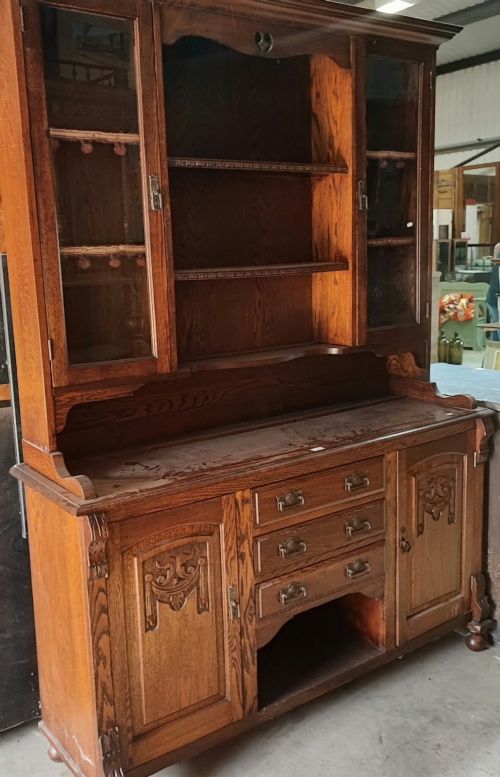
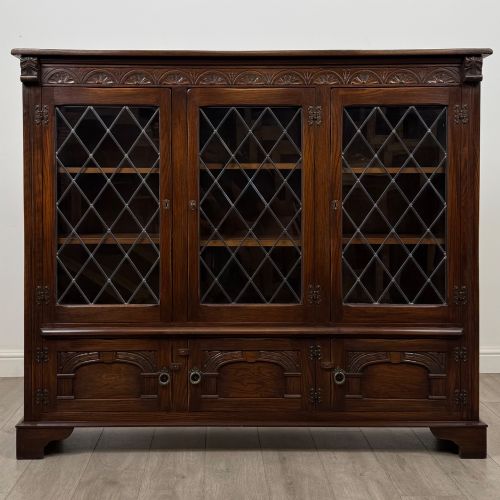
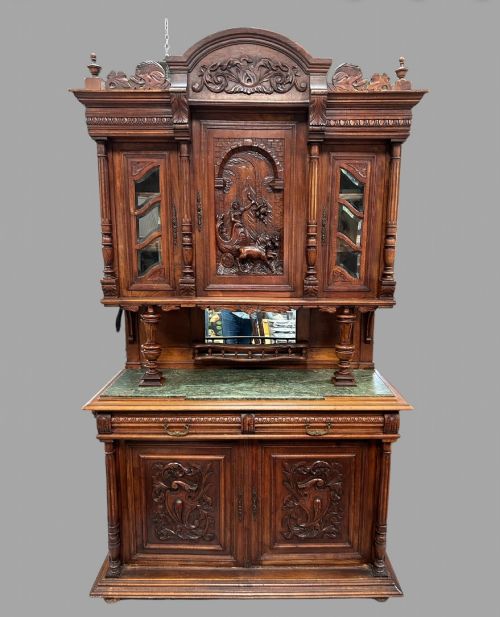
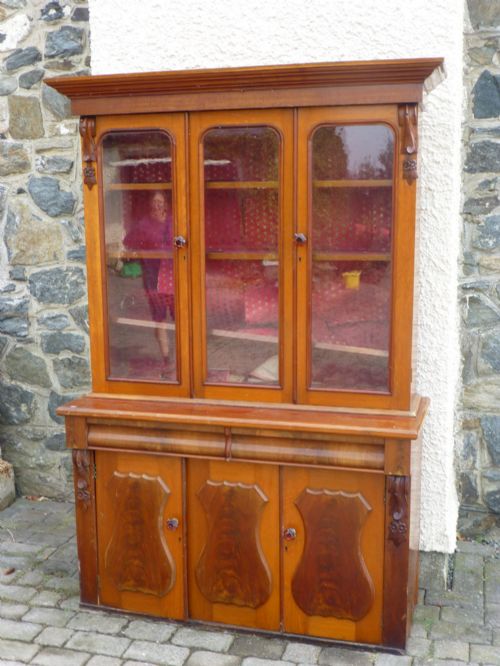
Carved Oak Display Dresser
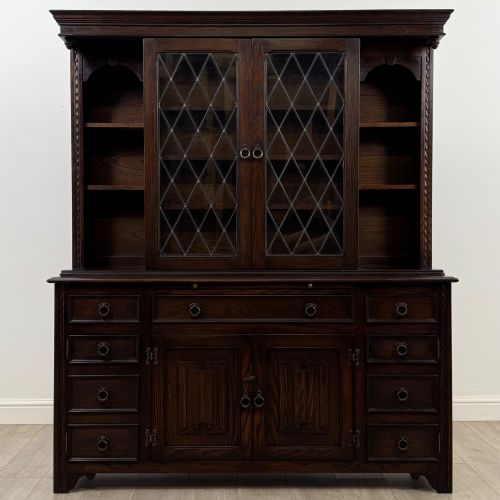
A carved oak display dresser brings together substantial timber and glazed shelving to anchor a dining room or kitchen.
Carved Oak Display Dresser
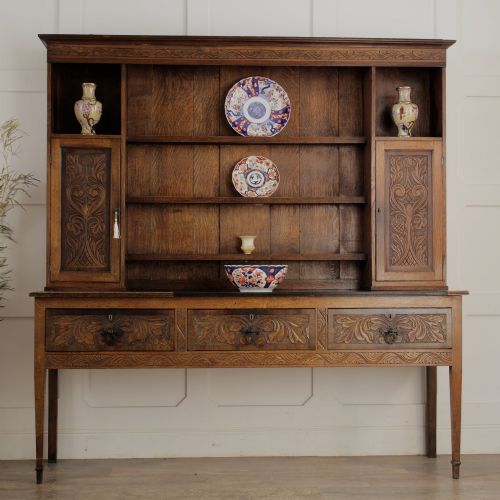
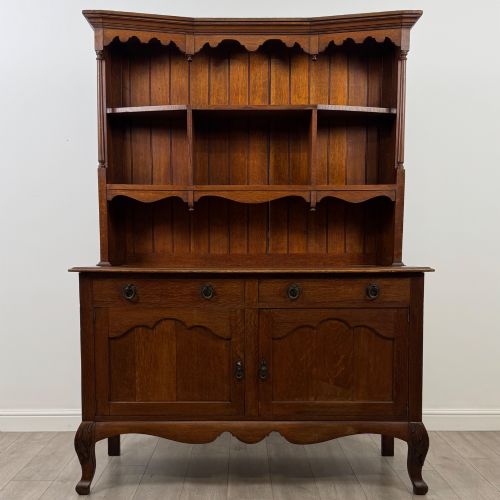
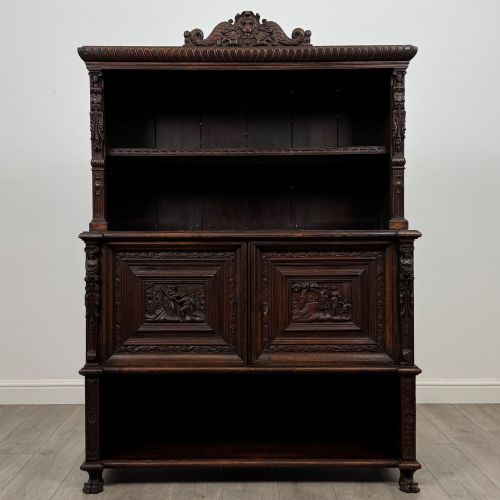
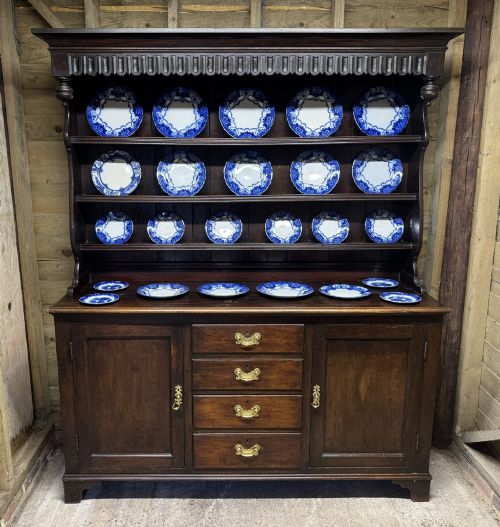
A carved oak display dresser combines a lower storage base of cupboards or drawers with an upper section for plate display, rooted primarily in 18th-century country traditions and 19th-century revival styles. These pieces span centuries of domestic craft, appearing as regional Welsh forms, English country kitchen furniture, and revival interpretations carrying heavy carved detail.
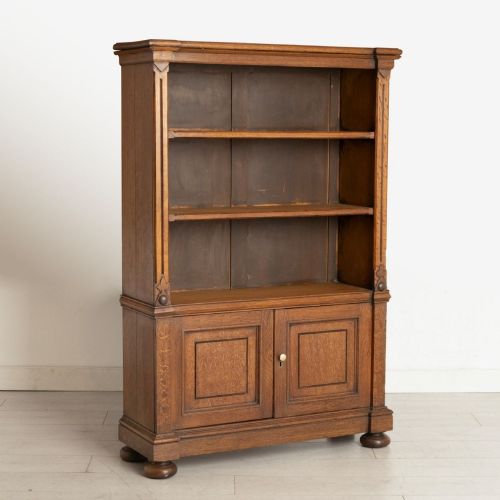
The domestic layout typically pairs timber shelving or glazed cabinet doors above with panelled doors below, serving both display and functional storage roles. Pieces on this page trace lineages from simple country workshops through to elaborate Victorian and Edwardian interpretations.
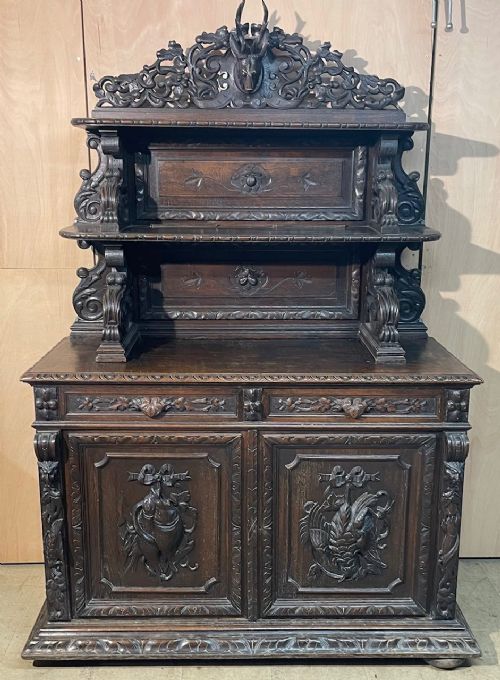
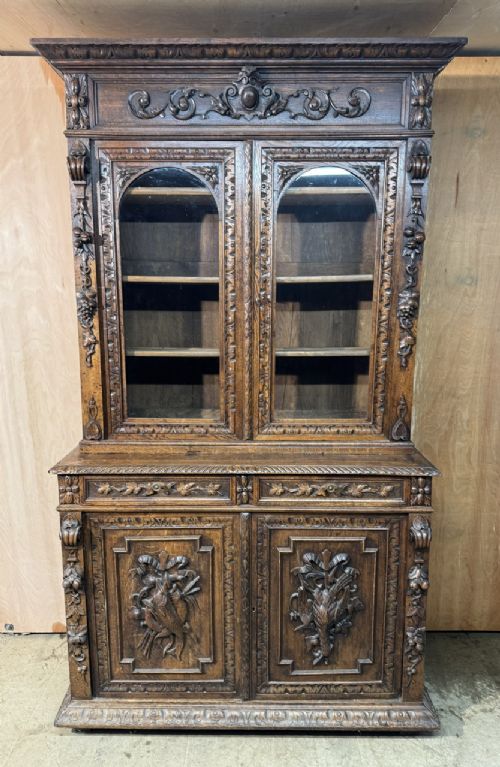
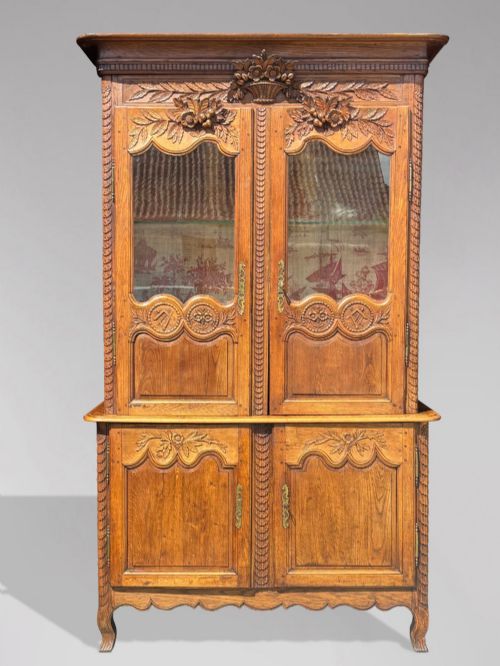
Jacobean Revival, Gothic Revival, and Arts and Crafts aesthetics dominate the carved output, alongside straightforward vernacular pieces from Georgian and Victorian periods. Buyers encounter regional variants including Welsh dressers alongside continental French provincial buffets and cabinets.
Materials and construction
Solid timber forms the primary structure, predominantly oak supplemented by secondary woods like pine for internal elements and occasionally mahogany details. Joinery relies on traditional pegged mortise and tenon frames for the main carcase, supporting heavy display tops and plate racks.
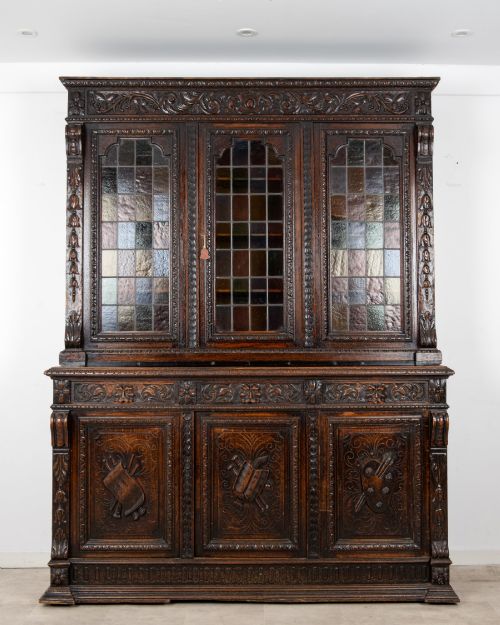
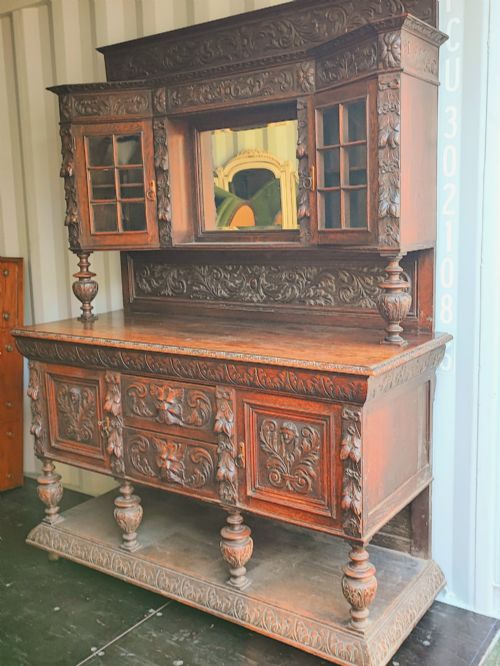
Glazing takes the form of clear, stained, or leaded glass set within timber doors to protect contents while maintaining visibility. Brass and iron hardware, including hinges, drop handles, and escutcheons, secure doors and drawers alongside integrated mirror panels in specific display cabinets.
Listings feature oak dressers spanning from the 17th century through to 1930, encompassing Gothic Revival, Arts and Crafts, and regional country styles.
The spectrum of quality
The depth and crispness of relief carving separate standard production pieces from exceptional items, particularly where motifs such as Green Man faces or intricate foliage are executed by hand rather than stamped mechanically. Timber selection also dictates the hierarchy, with figured tiger oak or dense golden oak displaying superior grain pattern and stable natural ageing.
Construction integrity defines the upper tier, visible in the snugness of drawer dovetails, the weight of brass or iron furniture, and the retention of original glass and backboards. Proportion and balance between the heavy base and the lighter display superstructure determine the visual success of each piece.
Heals of London·John Moyr Smith
The Carved Oak Display Dresser Glossary
- Welsh dresser
- A traditional kitchen or dining furniture form featuring an open plate rack or glazed cabinet mounted above a base of drawers and cupboards.
- Buffet deux corps
- A large two-piece cabinet originating in France, stacking an upper display or storage section directly upon a lower sideboard base.
- Leadlight
- Glass panes held together within a network of lead cames, frequently seen on cabinet doors from the Victorian and Edwardian periods.
- Green Man
- A sculptural architectural ornament depicting a human face emerging from or entwined with foliage, often carved into Victorian oak furniture.
- Plate rack
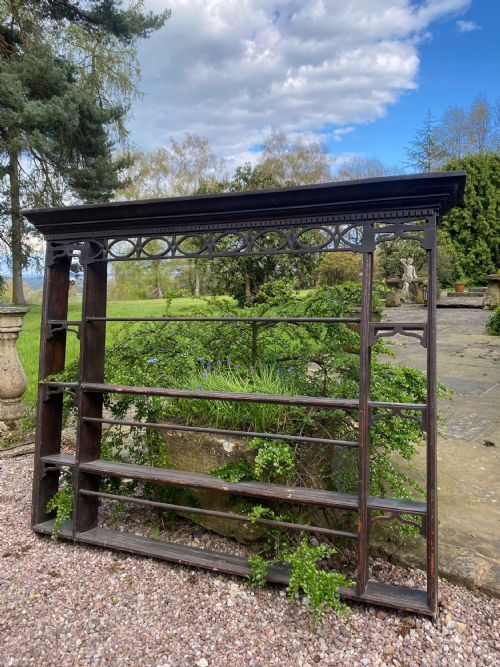
- An open set of wooden shelves incorporating narrow grooves or timber bars designed to hold ceramic plates upright for display.
Carved Oak Display Dresser: Frequently Asked Questions
How do I care for antique oak furniture?
Maintain a stable room temperature away from direct heat sources to prevent the solid timber from splitting or warping over time. Apply a traditional beeswax polish occasionally to nourish the grain without building up a sticky residue.
Dust regularly with a soft, dry cloth to protect the carved surfaces and any applied mouldings from abrasive particles.
Can these dressers be separated into two parts?
Most large dressers and display cabinets are constructed as two separate sections, comprising a heavy lower base and an upper rack or glazed bookcase. This modular build facilitates transport and manoeuvrability through doorways during relocation.
Securing brackets usually anchor the top portion safely to the lower sideboard once positioned in the room.
What is the difference between a Welsh dresser and a sideboard?
A traditional Welsh dresser incorporates an upper display tier of shelves or a plate rack permanently integrated with or mounted to the lower storage base. A sideboard consists solely of the low-level cabinet structure featuring drawers and cupboards without upper display shelving.
Both forms utilise solid oak construction but serve distinct display requirements in domestic interiors.
How do I identify a revival style on an oak dresser?
Revival pieces draw heavily upon historical motifs, such as Jacobean geometric moulding, Gothic pointed arches, or Renaissance relief carving applied to late 19th-century carcases. Examining the interior timber, backboards, and fastener types helps distinguish these interpretive works from original early period furniture.
Craftsmen during the Victorian and Edwardian eras frequently combined these historicist decorative elements with contemporary functional hardware.