
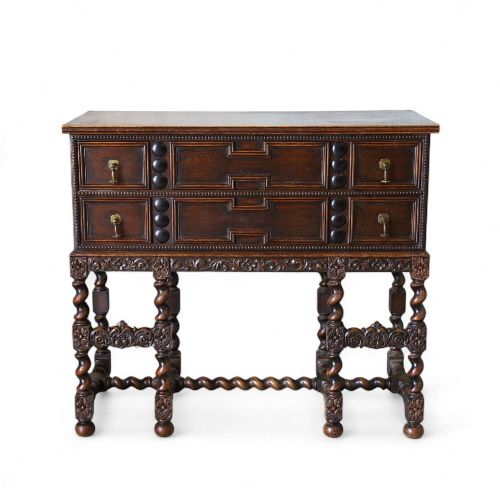

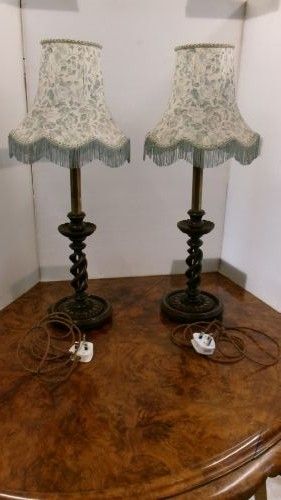


Barley Twist Oak Sideboard
These heavy, timber-framed pieces bring substantial presence to a room, uniting functional storage with the characteristic turned supports of a barley twist oak sideboard.
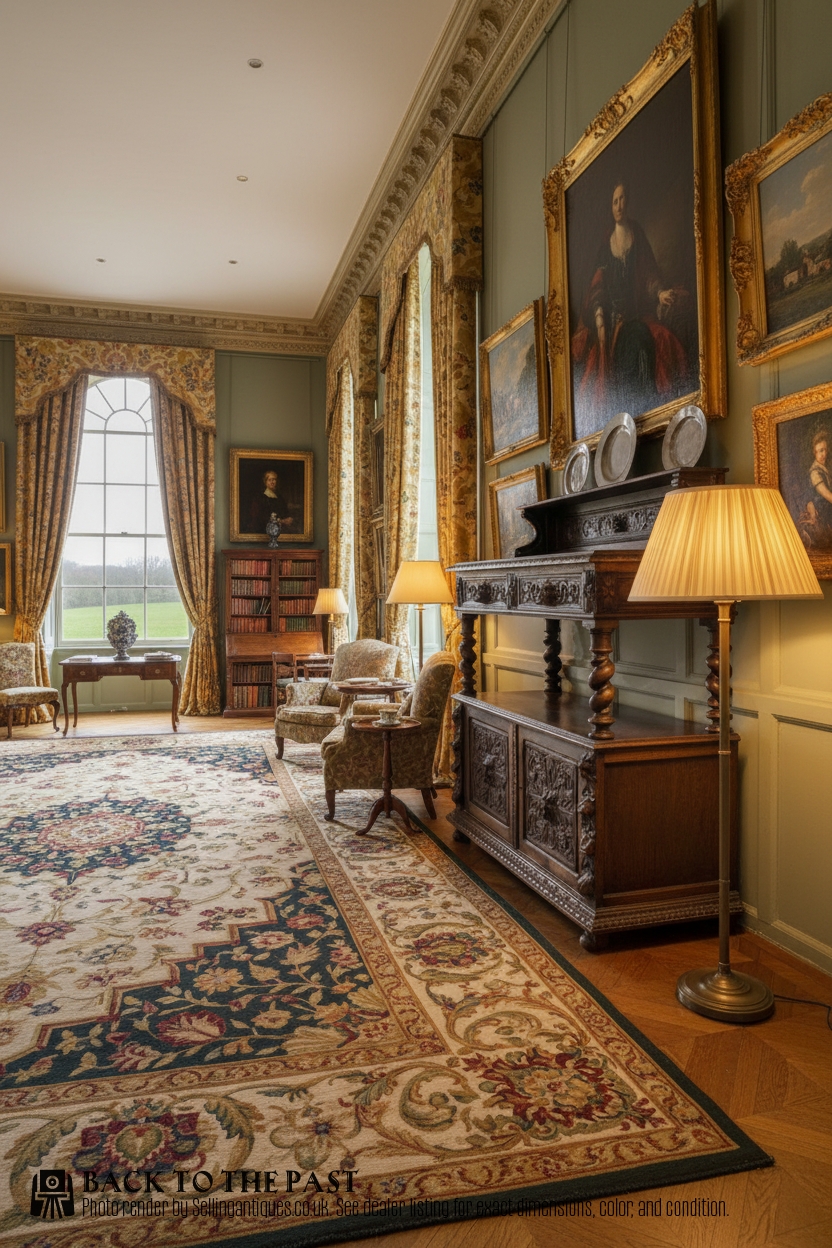
Barley Twist Oak Sideboard
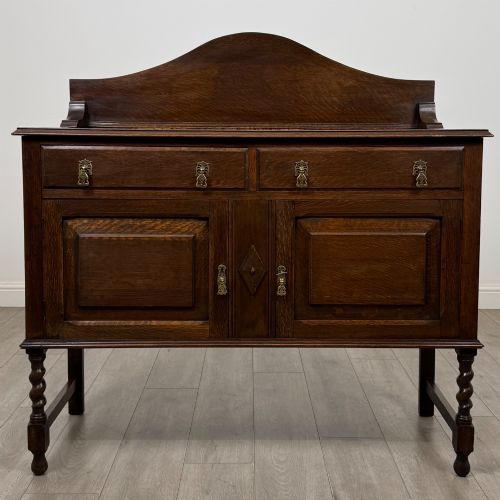
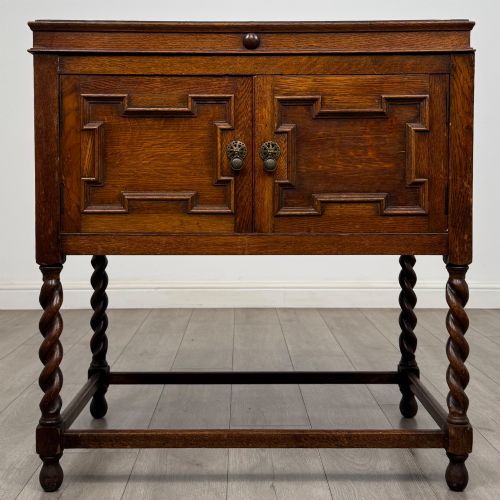
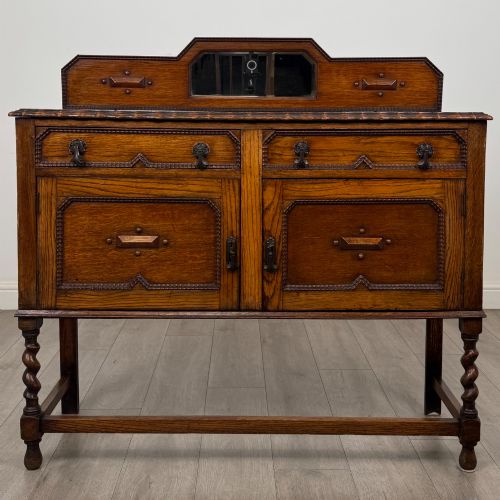
A barley twist oak sideboard combines solid timber construction with prominent turned leg supports, appearing across Victorian, Edwardian, and 1930s periods. The listings show forms ranging from standard sideboards and mirrorback designs to cabinets on stands and dressers.
Buyers most frequently encounter Edwardian and 20th-century examples alongside Victorian pieces dated from the mid-nineteenth century onwards. These versions utilise the dense grain and rich tones of oak to anchor dining and living spaces.
Materials and construction
Makers built these pieces primarily from solid oak, incorporating brass hardware, glass panels, and occasional metal accents. Some examples also feature decorative fabric and fringe details.
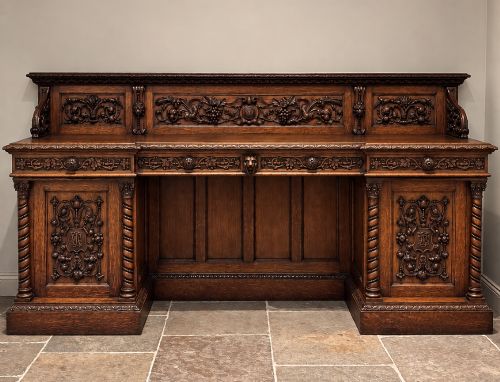
The characteristic structural elements rely on hand and machine turning to create the spiral twist supports, paired with carved panels showing Jacobean, Carolean, and Flemish Renaissance revival motifs.
Revival styles represented include Jacobean, Carolean, Flemish Renaissance, and Victorian Gothic variations applied to sideboards and dressers.
Assessing quality and craftsmanship
Quality separates through the depth and crispness of the carving on panels and supports, distinguishing deeply undercut figural or floral work from shallow stamping. The precision of the lathe work on the barley twist legs also indicates the skill of the maker.
The choice of oak timber itself dictates the visual weight of the piece, with select golden oak boards and balanced grain patterns setting superior examples apart from standard utility furniture.
The Barley Twist Oak Sideboard Glossary
- Barley twist
- A decorative turning technique resembling a spiralling rope or column, used extensively on the legs and supports of these cabinets.
- Jacobean Revival
- A style popular in the nineteenth and twentieth centuries that mimics seventeenth-century English furniture through heavy mouldings and geometric panels.
- Mirrorback
- A superstructure incorporating a mirror above the main sideboard surface, frequently seen on Edwardian and Victorian iterations.
- Carolean Revival
- A design movement referencing the ornate carved woodwork and spiral turnings associated with the reign of Charles II.
- Flemish Renaissance Revival
- A decorative approach featuring bold relief carving, lion masks, and architectural flourishes derived from northern European traditions.
Barley Twist Oak Sideboard: Frequently Asked Questions
What periods do these sideboards come from?
The pieces span from the mid-nineteenth century through the Edwardian era up to the 1930s. Victorian and Edwardian examples appear most frequently in the current selection.
Earlier nineteenth-century items often display deeper relief carving, while twentieth-century versions lean towards streamlined Edwardian formats and 1930s revival styles.
How do I identify a barley twist?
A barley twist is a spiral turning on a wooden post or leg that resembles the twist of a barley stalk or a rope. It forms the primary structural and decorative support on these pieces.
Master turners cut these spirals by hand or with specialised lathes, creating the characteristic rhythmic cadence found on the vertical uprights.
What is a mirrorback sideboard?
A mirrorback sideboard incorporates an upright wooden frame holding a mirror attached to the rear of the main counter surface. This feature gained popularity during the Victorian and Edwardian periods.
The mirror reflects light and room interiors, adding visual depth while providing a decorative backdrop for display.
How should I care for oak furniture?
Oak timber benefits from stable indoor humidity and protection from direct sunlight to prevent the wood from drying out or splitting. Regular dusting with a soft cloth maintains the surface finish.
Avoid silicone-based polishes, opting instead for traditional beeswax formulations that nourish the grain over time.