
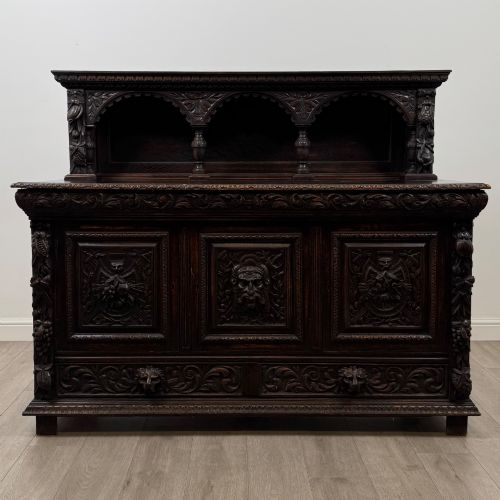
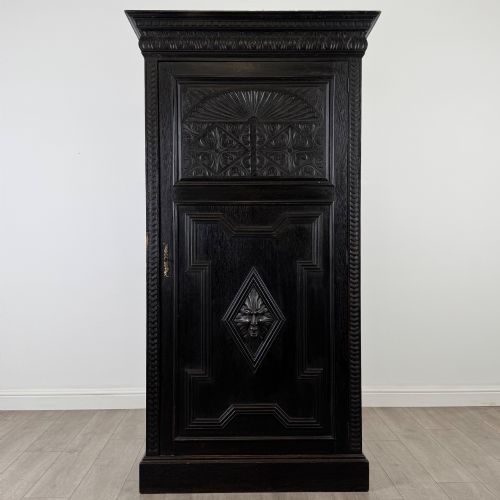

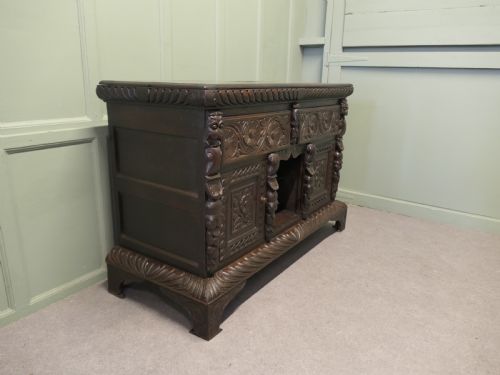


Green Man Carved Cabinet
These green man carved cabinet pieces bring forth the intense mythology of the Victorian era through heavy timber work.
Green Man Carved Cabinet
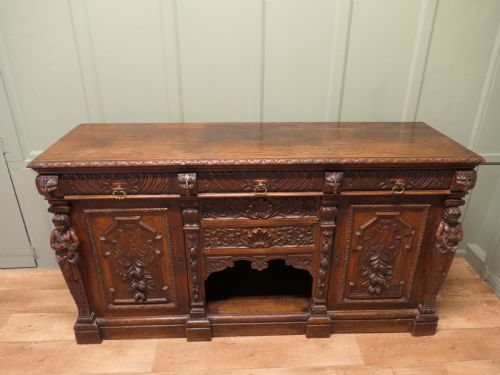
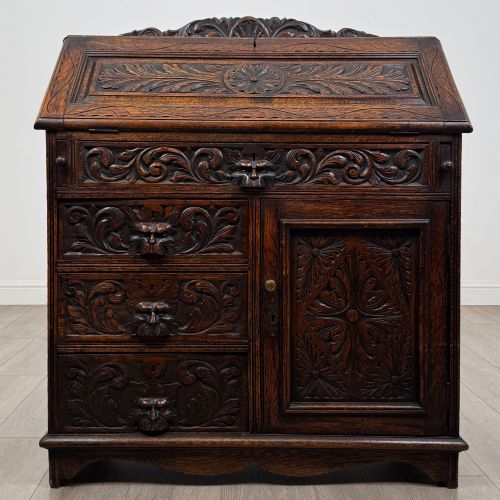
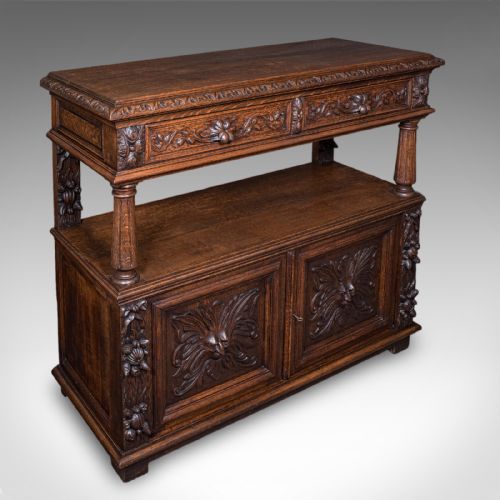
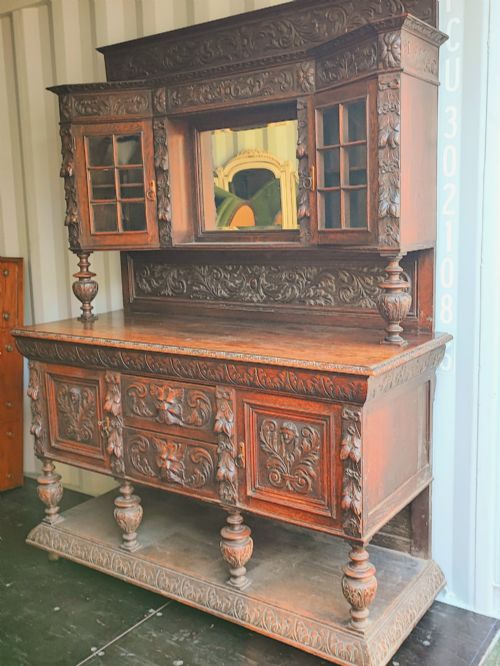
A green man carved cabinet combines domestic storage with the folkloric imagery of foliage spilling from a human mouth. These pieces emerge primarily from Victorian workshops, taking the form of sideboards, bookcases, dressers, and smaller cabinets.
Buyers will encounter substantial furniture forms dominated by dark wood and architectural proportions. The selection ranges from monumental library bookcases to compact drop-front desks and side cupboards.
Most surviving examples date from the nineteenth century, drawing heavily on Gothic and Renaissance revivals. The mythological motif anchors itself onto practical furniture designed for dining rooms, libraries, and halls.
How they were made
Makers relied on solid oak to construct these heavy frameworks, allowing carvers to execute deep, sculptural relief work. The timber is frequently paired with bevelled glass panels, brass hardware, and occasional mirror inserts.
The sculptural masks are hand-carved directly into the solid timber doors, drawer fronts, and pediments. Joinery methods of the period ensure the structural stability required to support dense ornamentation and large proportions.
Green Man Carved Cabinet Retail Price Guide 2026
Typical asking prices for green man carved cabinet among the pieces listed under this phrase on Sellingantiques today, from the lower quarter to the upper quarter. They describe what is for sale here now, not the wider market.
Several pieces conceal the mythical foliage motif inside modest drawer fronts rather than grand display doors.
What varies in quality
Proportion and scale also dictate worth, as monumental library bookcases and large sideboards demand architectural balance. The quality of the oak selection and the integration of secondary materials like bevelled glass further distinguish the pieces.
The Green Man Carved Cabinet Glossary
- Green Man
- An architectural and furniture motif depicting a human face surrounded by or spewing foliage. It symbolises rebirth and spring in European tradition.
- Gothic Revival
- An architectural and design movement drawing inspiration from medieval forms. It heavily influences Victorian pieces featuring pointed arches and tracery.
- Sideboard
- A large dining room furniture piece used for serving food and storing tableware. They frequently incorporate heavy cupboards and drawers.
- Davenport
- A compact small desk featuring a sloping writing surface above a pedestal of drawers. They often incorporate carved decorative elements.
- Bevelled Glass
- Glass panes with cut and polished angled edges around the perimeter. This technique adds refractive depth to cabinet doors.
Green Man Carved Cabinet: Frequently Asked Questions
Where were these cabinets placed in a Victorian home?
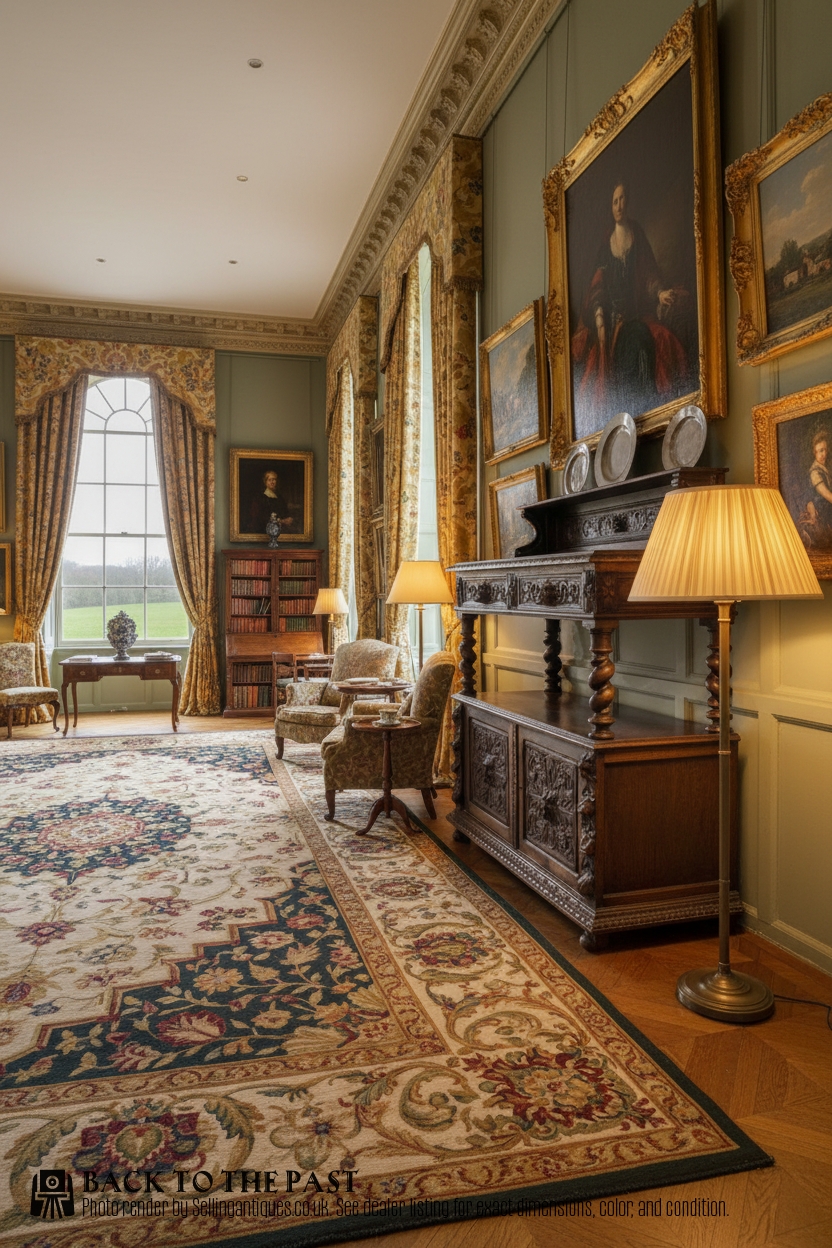
These pieces served practical functions in principal rooms such as dining spaces, libraries, and entrance halls. Large sideboards equipped dining rooms, while bookcases and bureaus anchored studies.
Their heavy construction suited rooms designated for formal entertaining and family life. The imposing imagery reflected the Victorian taste for historical revival in domestic interiors.
How do I care for solid oak furniture?
Maintain the timber by keeping the pieces away from direct heat sources and dramatic humidity fluctuations. Regular dusting with a dry, soft cloth preserves the carved surfaces.
Apply traditional beeswax occasionally to nourish the grain of the oak. Avoid modern silicone polishes that build up over time and dull the finish.
Are these pieces always Victorian?
The surviving examples date overwhelmingly from the nineteenth century, spanning the Victorian period and earlier decades of that era. The revival styles popular at the time heavily influenced the production of these carved motifs.
While the aesthetic draws on medieval folklore, the actual manufacture belongs to the industrial and craft workshops of the eighteen-hundreds.
What is the difference between a sideboard and a buffet?
Sideboards and buffets both function as dining room server furniture, yet buffets traditionally emphasise lower serving surfaces. Sideboards frequently incorporate more extensive cupboard space and superstructure.
Both forms provide substantial storage for dining ware and offer prominent surfaces for carved ornamentation.