
Victorian Carved Oak Dresser
A victorian carved oak dresser brings weight and dense decoration into a room, combining kitchen utility with the dark, heavy styles of the nineteenth century.

Victorian Carved Oak Dresser
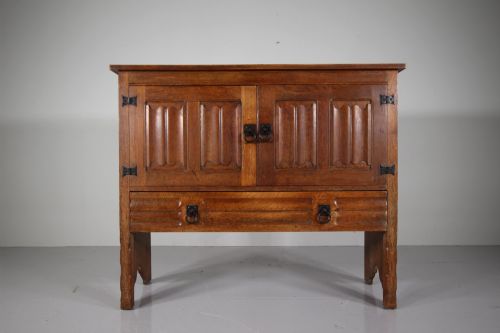
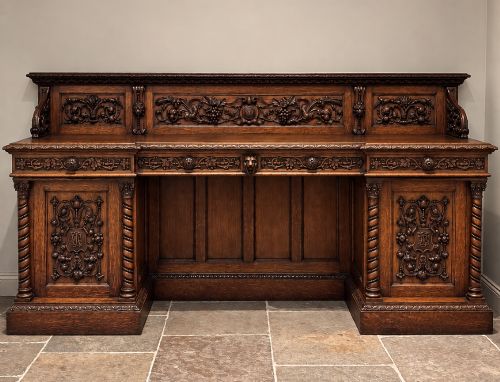
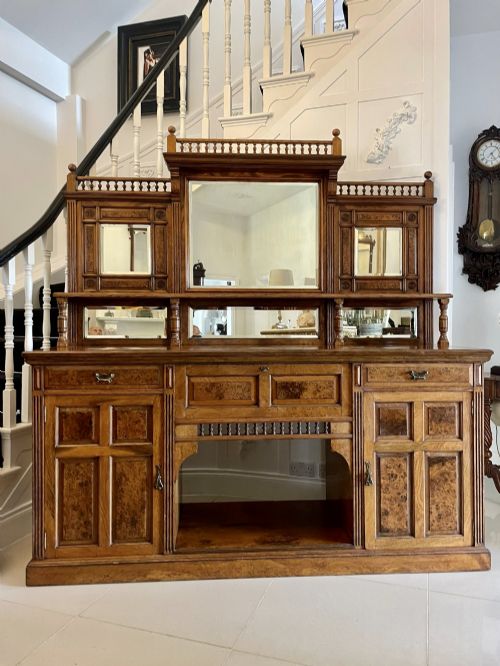
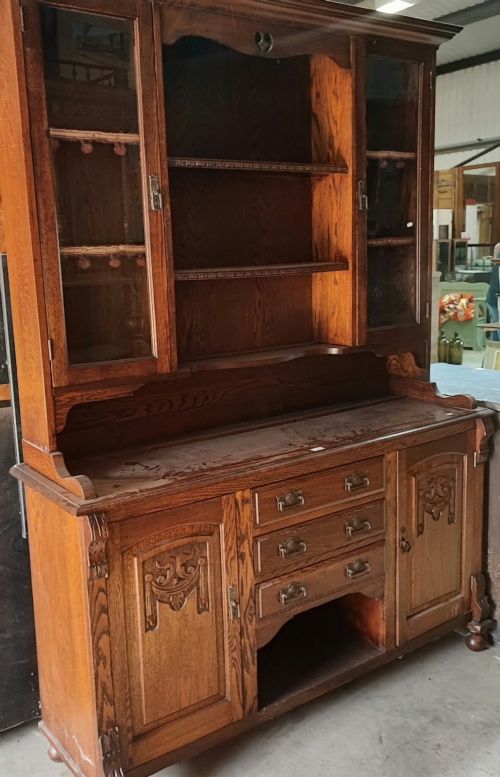
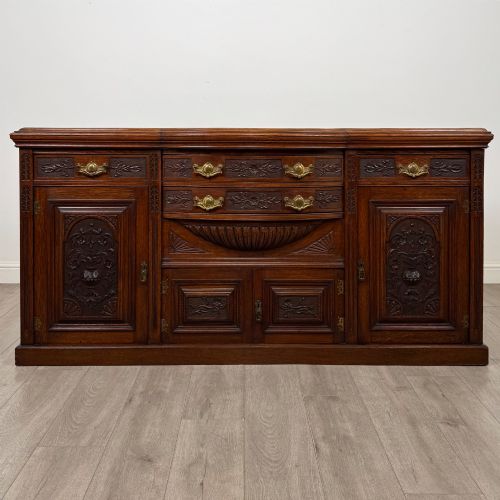
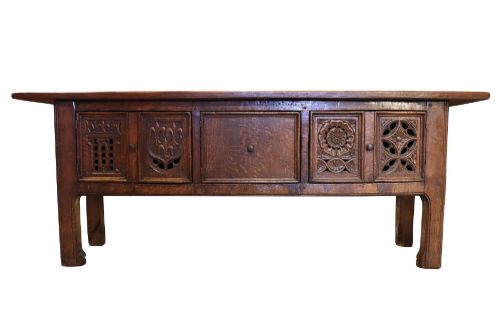
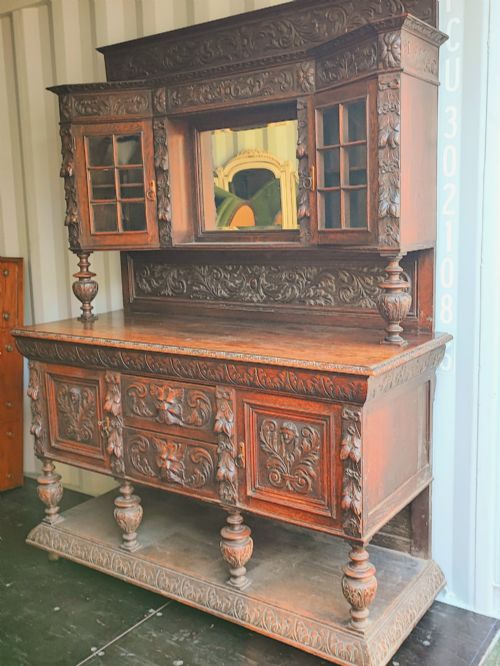
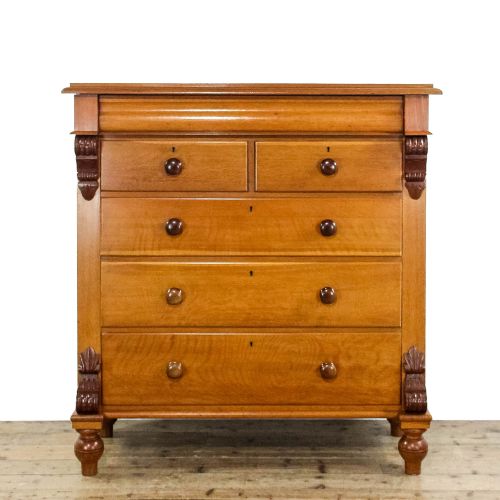
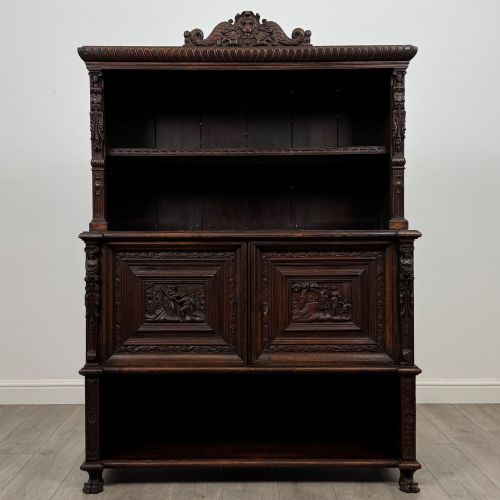
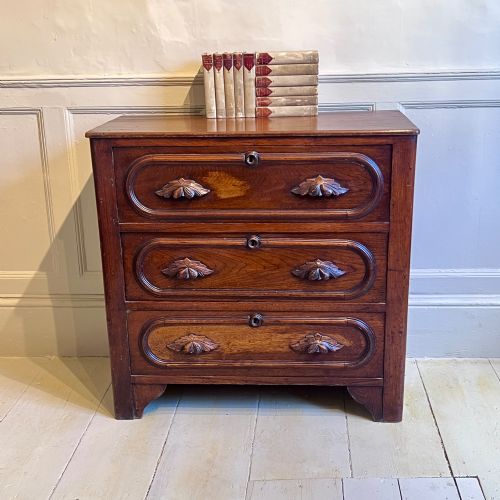
A victorian carved oak dresser covers a wide group of heavy storage furniture, appearing most frequently on this page as sideboard bases, dresser bases, and mirror-back sideboards rather than tall plate-rack dressers. These pieces originate primarily from the nineteenth century, with strong representation from the 1850s to the 1880s, alongside earlier oak examples from the eighteenth and seventeenth centuries.
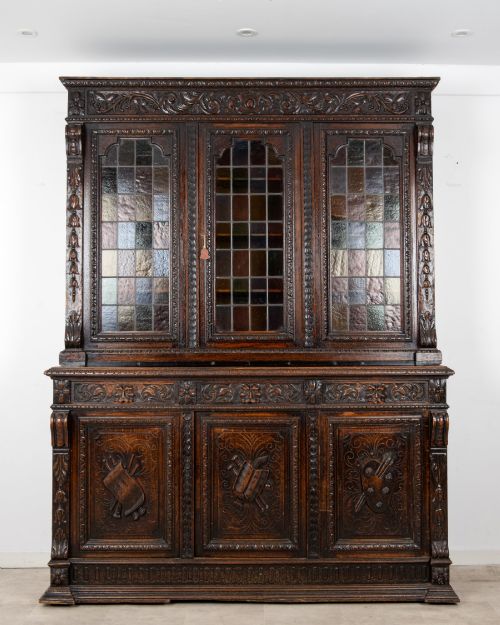
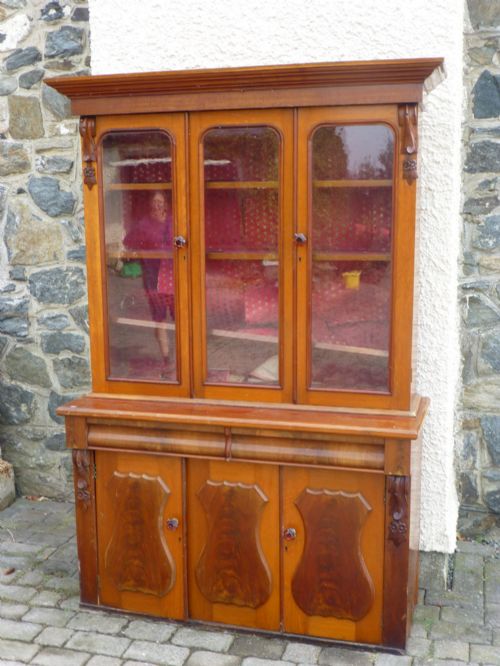
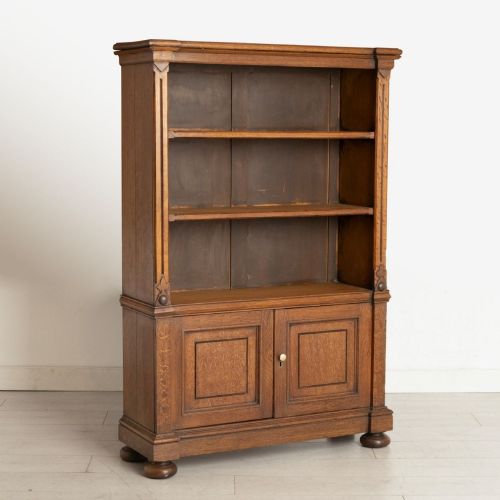
Makers and workshops blended utilitarian kitchen and dining furniture with decorative revival movements, producing forms that range from narrow dresser bases to monumental library bookcases and glazed cupboards. Sideboards and buffets dominate the forms recorded here, often incorporating breakfront drawers, cupboards, and tiered upper sections.
Regional variations span English country styles, Welsh formats featuring kitchen glazing or delft racks, and continental pieces such as French game cupboards. Oak serves as the primary timber, occasionally paired with mahogany, pollard oak, or brass and glass hardware.
Assessing Quality
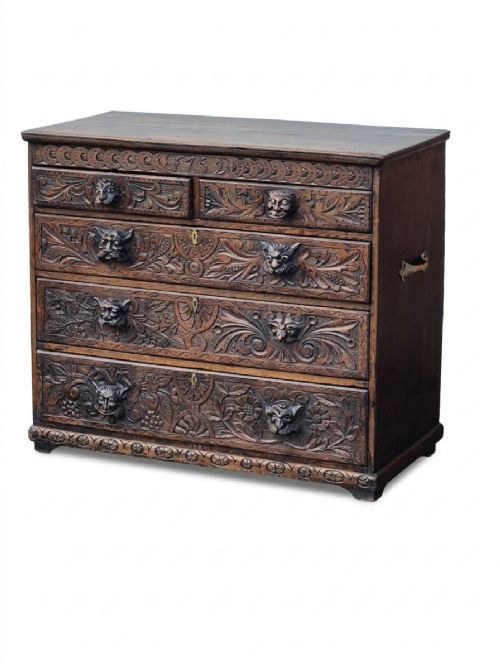
Quality rests on the depth, crispness, and artistic execution of the carving across the oak panels, doors, and pediments. Pieces featuring distinct Green Man masks, lion carvings, or figural work demand attention above those with repetitive or shallow machine-cut ornamentation.
Proportion and scale dictate the success of the piece, separating balanced narrow dresser bases and well-proportioned mirror-back sideboards from heavier, clumsy assemblies. The integration of secondary materials, such as original brass hardware, stained glass, and pollard oak veneers, marks the higher tier of production.
Attribution to documented designers or firms adds distinction, as seen in pieces associated with makers like James Schoolbred, John Moyr Smith, or Christopher Dresser. The integrity of the timber, the quality of the oak figure, and the preservation of original surfaces govern overall standing.
Victorian Carved Oak Dresser Retail Price Guide 2026
Typical asking prices for victorian carved oak dresser among the pieces listed under this phrase on Sellingantiques today, from the lower quarter to the upper quarter. They describe what is for sale here now, not the wider market.
Stare long enough into the foliage and a Green Man peers back from the sideboard.
John Moyr Smith·Christopher Dresser
The Victorian Carved Oak Dresser Glossary
- Green Man
- A sculptural architectural ornament depicting a human face disgorged from foliage or entirely made of leaves and vines. It appears frequently on nineteenth-century revival furniture.
- Dresser Base
- The lower, cupboard-and-drawer section of a traditional dresser, standing independently without an upper plate rack. These often function as sideboards in modern dining rooms.
- Gothic Revival
- An architectural and decorative style drawing inspiration from medieval design, characterised by pointed arches, tracery, and heavy carved details. This style heavily influenced Victorian cabinet making.
- Pollard Oak
- Timber taken from trees that have been pollarded, producing a dense, highly figured wood grain with clustered knots. It was utilised for decorative veneer on high-end Victorian sideboards.
- Dog Kennel
- A central recessed space flanked by cupboards or drawers beneath the counter surface of a dresser base. This architectural feature originally housed hunting dogs or served as a footman's warming space.
Victorian Carved Oak Dresser: Frequently Asked Questions
What is a Welsh dresser?
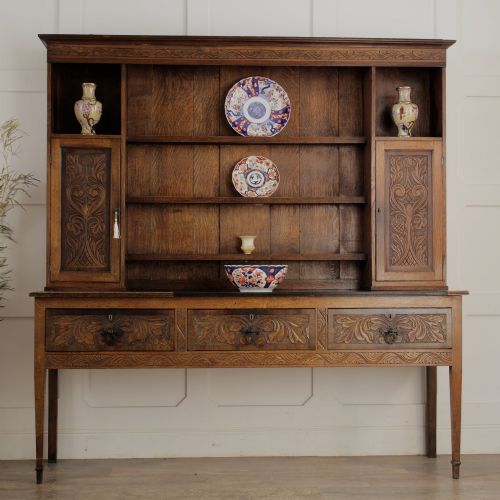
A Welsh dresser traditionally combines a lower storage base of drawers and cupboards with an upper plate rack for displaying ceramics and pewter.
In nineteenth-century examples, this form often merges with sideboard designs, incorporating glazed cabinets or mirror backs.
How do I care for carved oak?
Carved oak benefits from regular dusting with a soft brush to keep intricate relief work free from particle buildup.
Apply a microcrystalline wax sparingly once or twice a year to nourish the timber without attracting dust to the grain.
Are these pieces strictly Victorian?
While the majority date from the Victorian era and the broader nineteenth century, the category includes earlier pieces from the eighteenth and seventeenth centuries.
Revival styles of the 1870s and 1880s frequently referenced these earlier centuries, creating stylistic overlap.
How do mirror backs attach?
Mirror backs on Victorian sideboards attach securely to the rear of the dresser base using heavy structural uprights and concealed bolting.
This superstructure often incorporates carved frames, shelves, and crestings designed to hold decorative objects.