

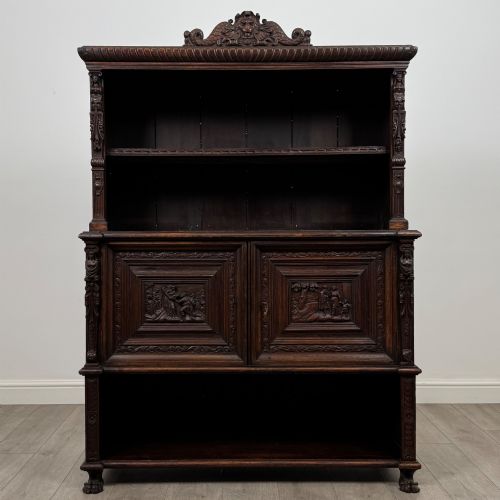
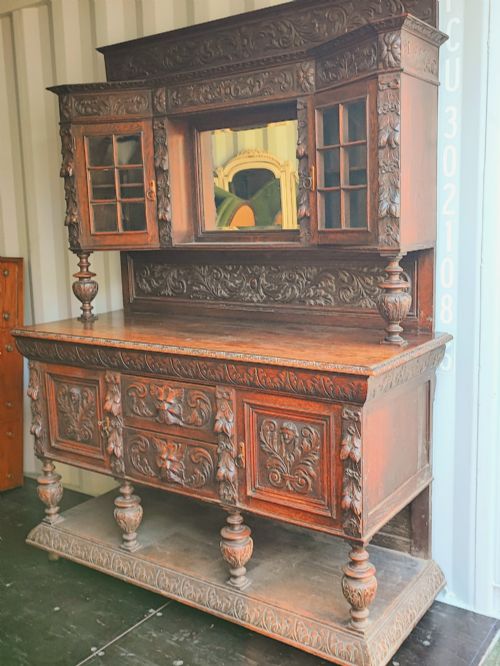


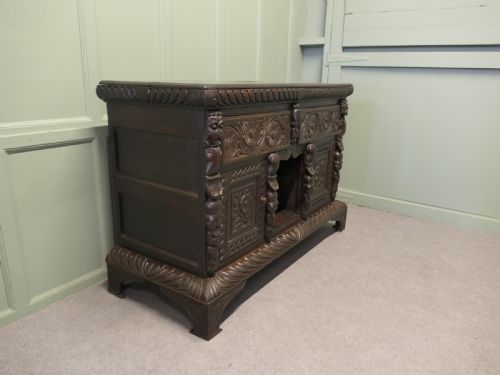


Heavy Carved Oak Cabinet
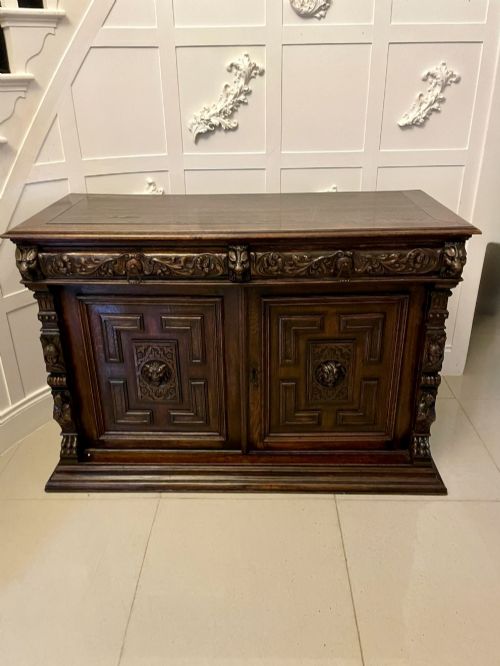
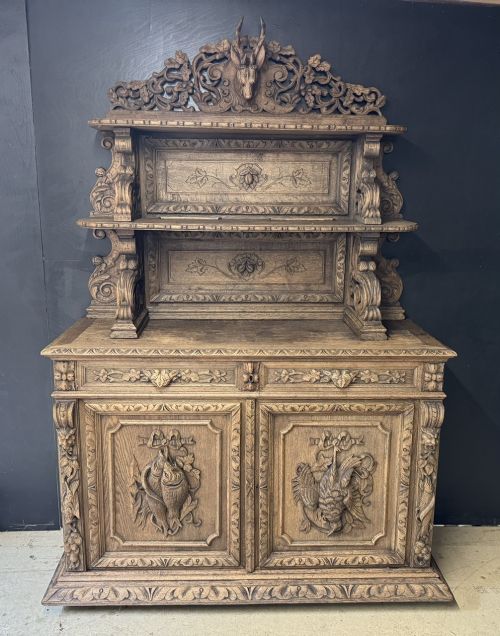
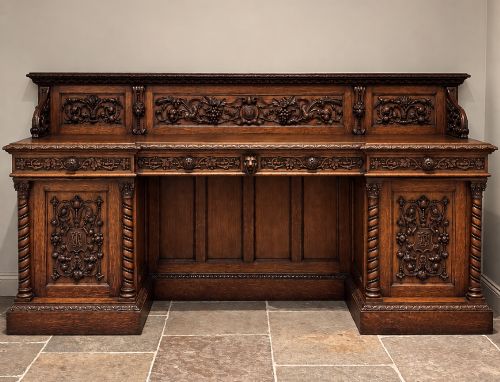
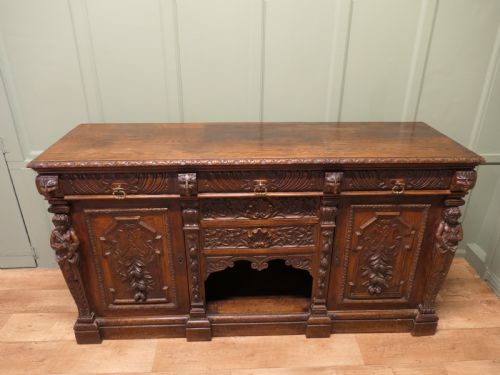
A heavy carved oak cabinet brings substantial presence to a room through deep timber relief and robust nineteenth-century joinery.
Heavy Carved Oak Cabinet
A heavy carved oak cabinet is a substantial storage piece built during the nineteenth century, most often seen in Victorian, Gothic Revival, and Renaissance Revival styles. These pieces combine utility with deep surface ornamentation.
The items found under the heavy carved oak cabinet description range from hall cupboards and sideboards to dresser bases and large buffets. These forms serve as central storage fixtures within domestic interiors.
Originating largely from the nineteenth century, including specific dates around eighteen-eighty and nineteen-hundred, these pieces reflect historical revivals that favour dark timber and figurative carving.
Construction and Material
These items are constructed from solid oak, a dense and durable timber selected for its strength and ability to hold crisp relief carving. Iron fittings such as hinges and handles frequently accompany the woodwork.
Maker techniques involve hand-carving directly into the oak substrate, creating three-dimensional motifs like the green man or Flemish panels. Panels are framed using traditional joinery to accommodate seasonal wood movement.
Heavy Carved Oak Cabinet Retail Price Guide 2026
Typical asking prices for heavy carved oak cabinet among the pieces listed under this phrase on Sellingantiques today, from the lower quarter to the upper quarter. They describe what is for sale here now, not the wider market.
Keep an eye out for the green man hiding in the foliage, watching silently from his carved wooden leaves.
Judging Quality
Quality separates simple production from master craftsmanship through the depth and articulation of the carved relief. Crisp, undercut details and well-balanced proportions distinguish superior examples from plain utility furniture.
The integrity of the timber and the retention of original iron hardware influence the standing of a piece. Finer cabinets display harmonious grain matching and stable joinery across heavy structural elements.
The Heavy Carved Oak Cabinet Glossary
- Oak
- A hard, heavy timber with a pronounced grain pattern, traditionally utilised for durable furniture construction throughout the nineteenth century.
- Renaissance Revival
- A nineteenth-century design style that revives classical motifs, architectural framing, and symmetrical relief carving.
- Green Man
- A sculptural motif depicting a human face emerging from or entwined with foliage, frequently found on nineteenth-century carved woodwork.
- Gothic Revival
- An architectural and decorative style inspired by medieval forms, characterised by pointed arches, tracery, and dark timber.
Heavy Carved Oak Cabinet: Frequently Asked Questions
What is a heavy carved oak cabinet used for?
These large pieces provide substantial storage space for household goods, table linens, and dining room paraphernalia. Their sturdy top surfaces also function well for displaying decorative objects.
Historically placed in dining rooms, halls, or large living spaces, they serve as both practical storage and focal architectural elements within a room.
How do I date a nineteenth-century oak cabinet?
Dating relies on examining the construction methods, tool marks, and stylistic indicators such as Gothic or Renaissance Revival motifs. Nineteenth-century pieces often combine machine-sawn backing boards with hand-finished carved facades.
Comparing the specific hardware, lock types, and timber patination against known period examples helps narrow the decade of manufacture.
How should I care for heavy oak furniture?
Maintain the timber by dusting regularly with a soft, dry cloth and avoiding silicone-based polishes that build up over time. Applying a traditional beeswax occasionally helps nourish the dry oak surface.
Keep the cabinet away from direct heat sources and dramatic humidity fluctuations to prevent the heavy solid wood panels from splitting.
What styles are common in these cabinets?
Victorian, Gothic Revival, and Renaissance Revival are the predominant stylistic influences seen across nineteenth-century oak furniture. Each style brings distinct architectural elements like columns, heavy mouldings, and figurative panels.
Flemish and continental influences also appear, often identified by exuberant scrollwork, high-relief figures, and deep panel recessing.