

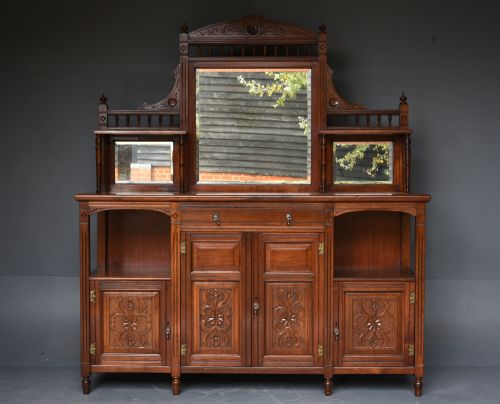
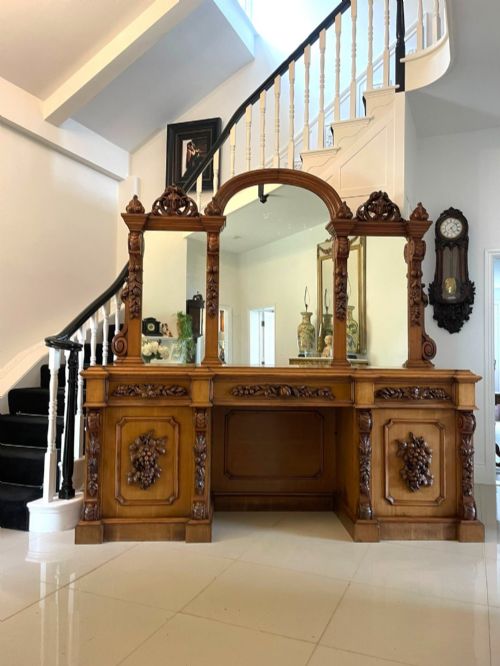
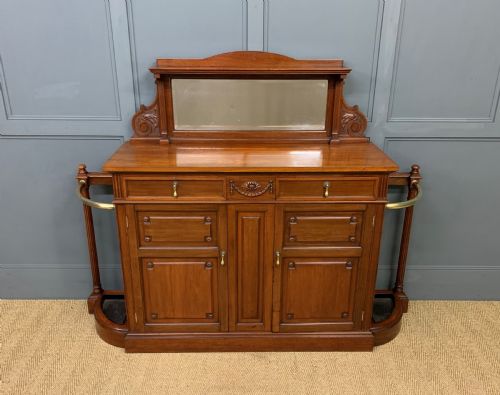
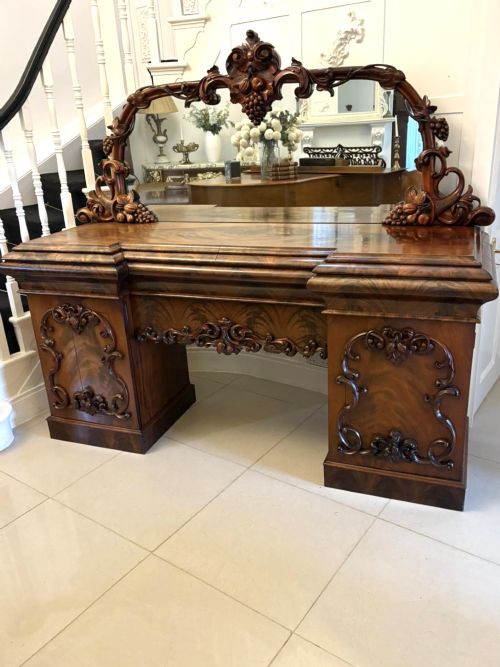
Mirrored Back Sideboard
These mirrored back sideboard pieces combine deep timber carcasses with glass plates to bounce light through a room, meeting a demand for practical storage.

Mirrored Back Sideboard
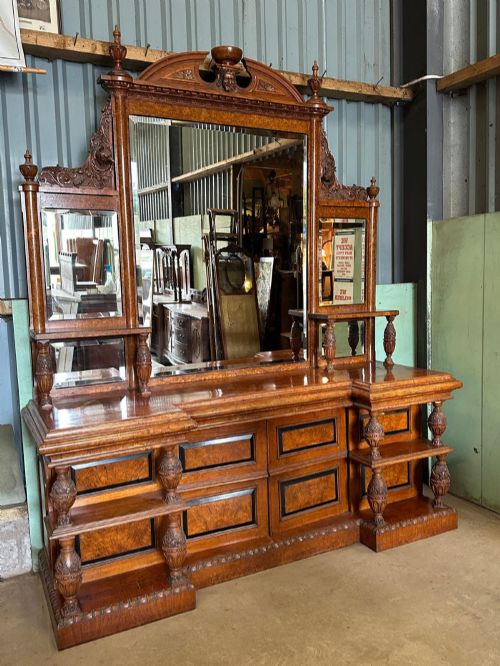
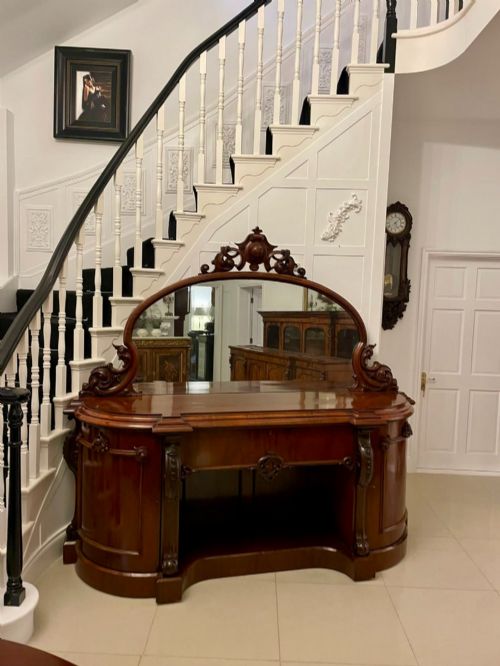
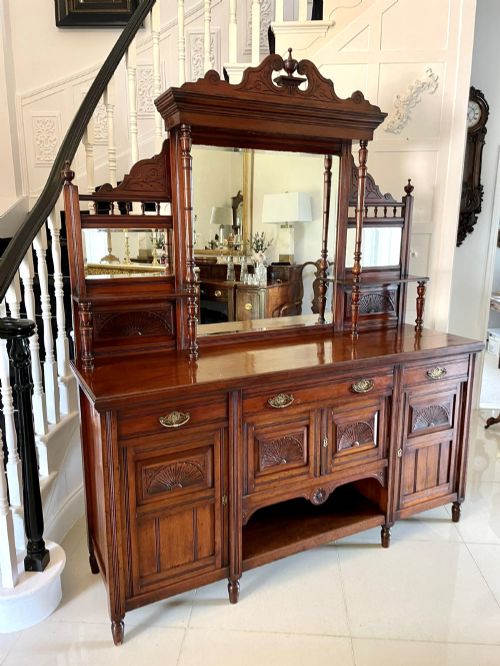
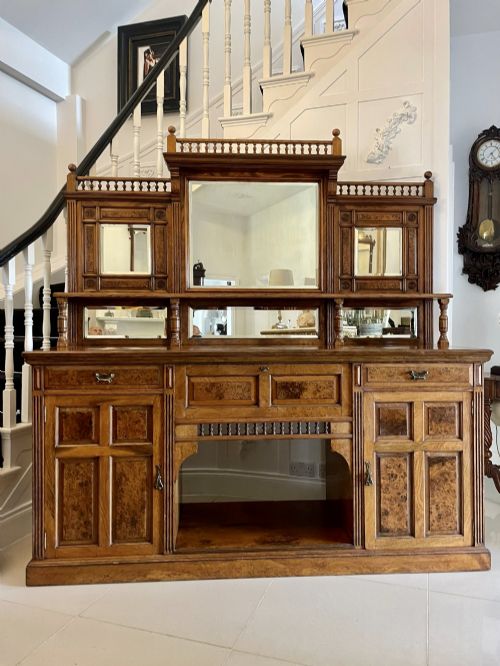
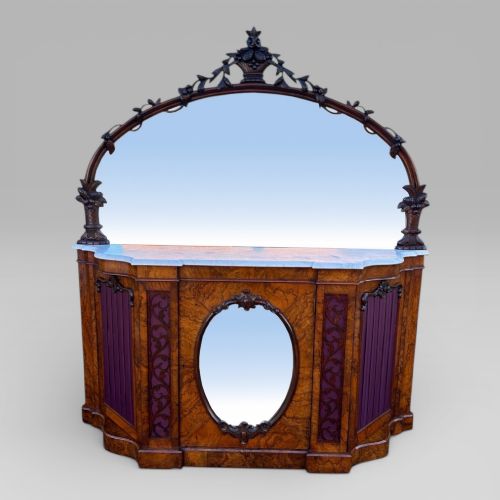
A mirrored back sideboard brings together a substantial timber base fitted with cupboards or drawers and an upright superstructure holding a glass plate. The form spans several decades of the nineteenth and early twentieth centuries, drawing on Victorian, Edwardian, and Aesthetic Movement design idioms.
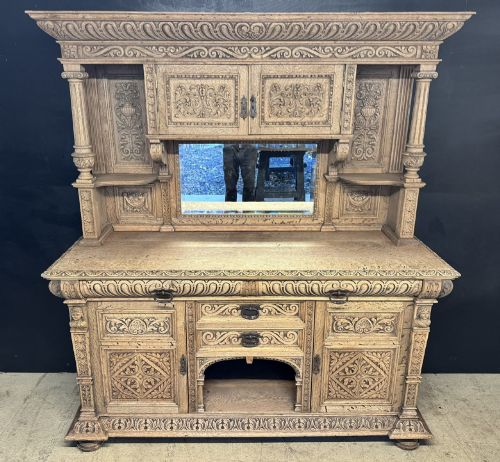
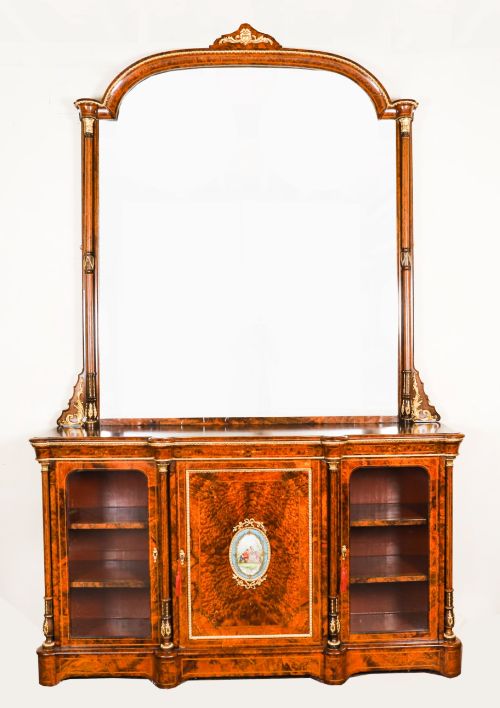
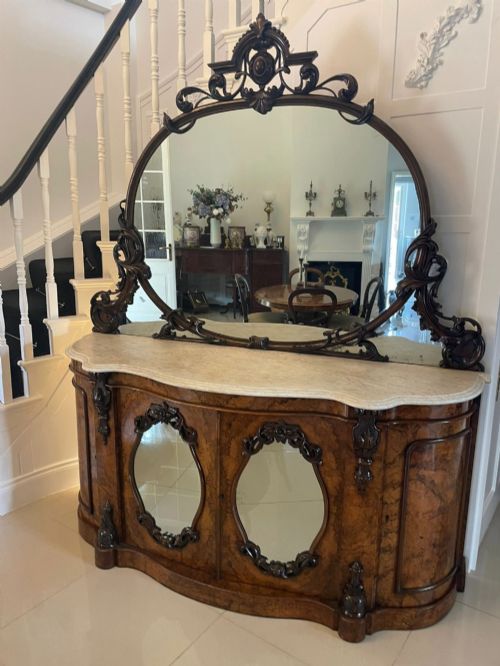
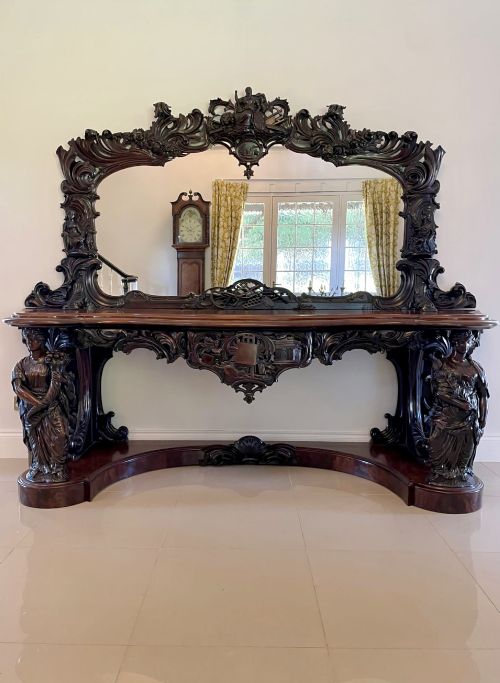
The version most commonly met on this page is the Victorian walnut or mahogany sideboard featuring carved details and a central glass mirror inset above the main surface. Pieces range from large exhibition quality exhibition items down to more restrained domestic examples produced in oak and pollard oak.
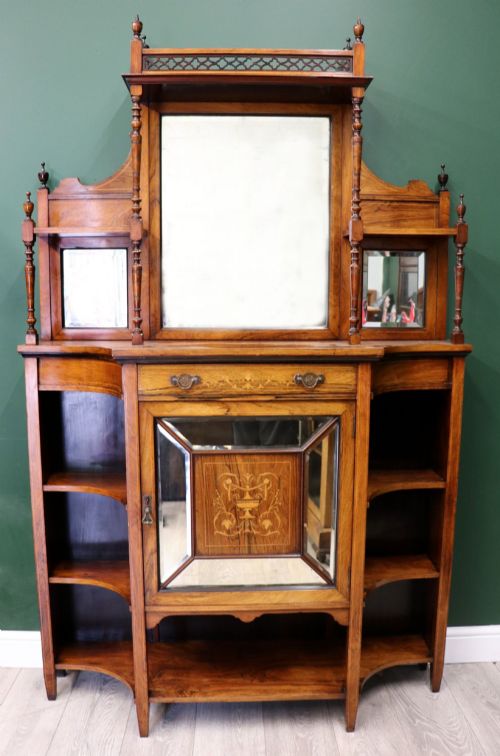
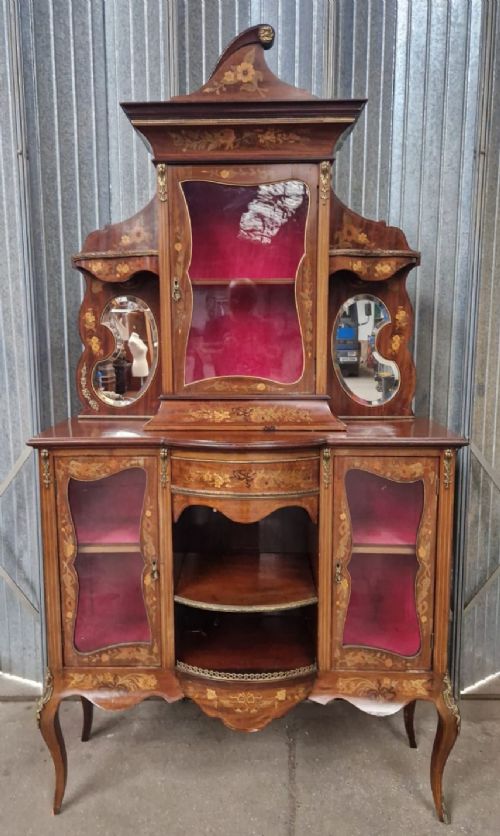
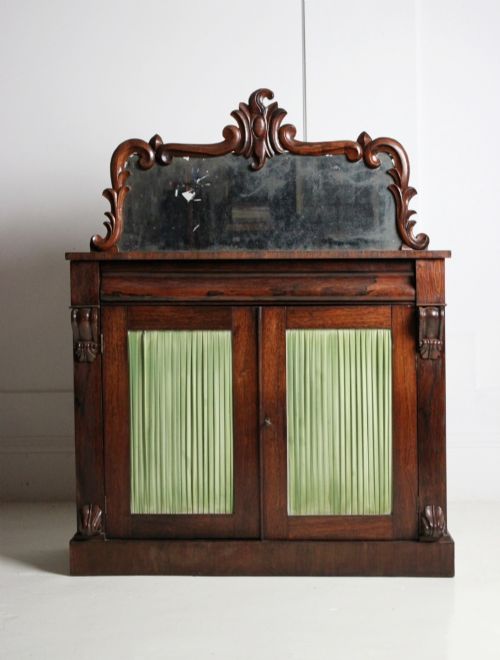
Makers and workshops of the period applied diverse stylistic treatments, including Regency revivals, Arts and Crafts plainness, and Aesthetic Movement motifs. Alongside standard sideboards, related forms such as chiffoniers, credenzas, and display cabinets appear within the selection.
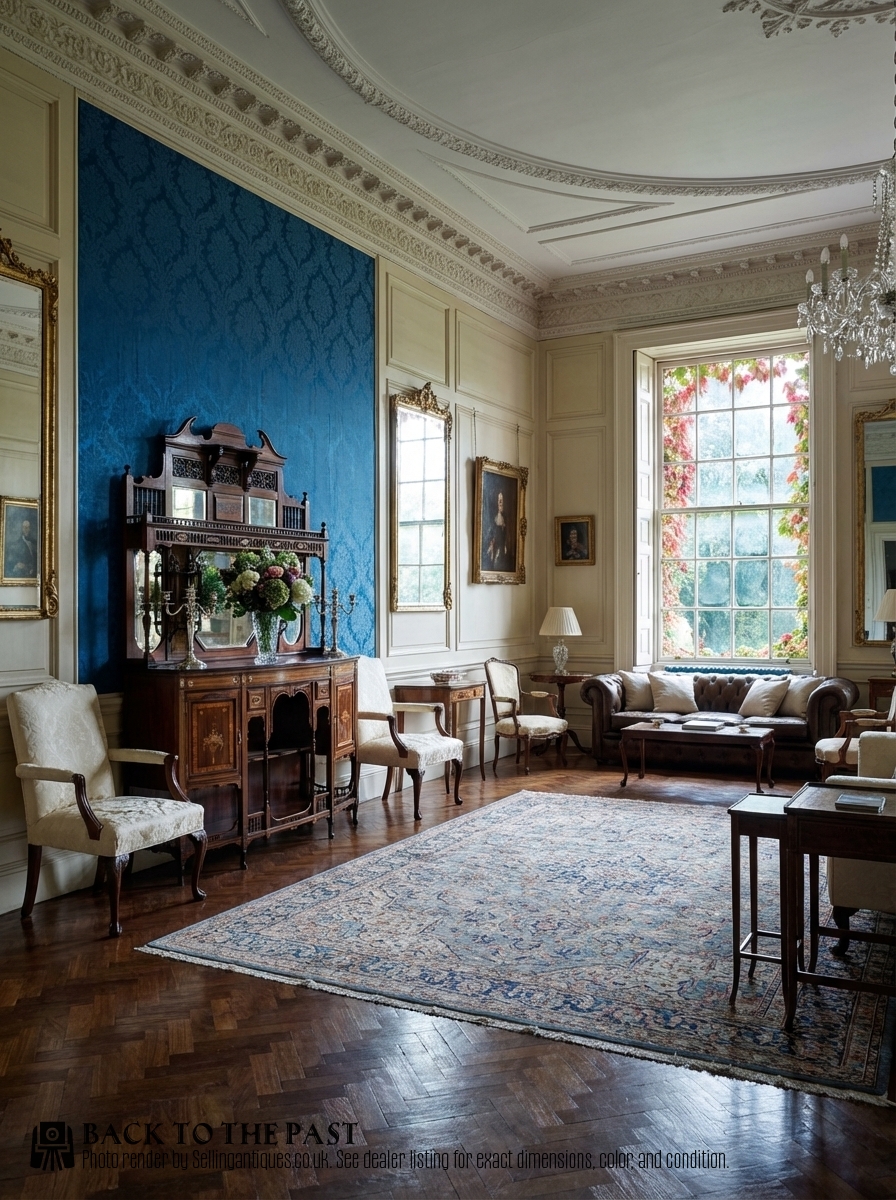
Timbers and glass integration
Cabinet makers utilised dense hardwoods such as mahogany, rosewood, walnut, and oak to construct the main carcasses and support the heavy superstructure. Burr walnut, pollard oak, and burr yew veneers frequently cover primary surfaces to introduce distinctive figuring and grain patterns.
Glass plates are integrated into carved wooden frames above the sideboard top, secured with wooden moulding beads. Brass handles, hinges, and occasional marble tops provide contrasting functional details across the structural joinery.
Mirrored Back Sideboard Retail Price Guide 2026
Typical asking prices for mirrored back sideboard among the pieces listed under this phrase on Sellingantiques today, from the lower quarter to the upper quarter. They describe what is for sale here now, not the wider market.
Listings feature 19th-century and Edwardian pieces constructed from mahogany, rosewood, oak, walnut, and mirror glass.
Distinctions in construction and carving
Quality rests in the selection of timbers, where highly figured burr veneers and solid mahogany planks outrank standard secondary woods. The depth and crispness of hand-carving across the doors and mirror frame also separate standard production items from exhibition grade works.
Internal joinery standards, such as hand-cut dovetail joints in drawers and the weight of the brass hardware, indicate workshop care. The thickness of the glass mirror and the stability of its silvering complete the technical hierarchy.

Shoolbred and Co·Collinson and Lock·Holland and Sons·Gillows
The Mirrored Back Sideboard Glossary
- Burr walnut
- A figured timber harvested from walnut tree growths, producing swirling patterns used as decorative veneer on cabinet fronts.
- Chiffonier
- A compact sideboard variant originating in the nineteenth century, typically featuring enclosed cupboards beneath a shelf or mirror back.
- Credenza
- A low cabinet form frequently incorporating glass doors or mirrored sections, placed against a wall for display and storage.
- Pollard oak
- Oak timber taken from trees that have been pollarded, resulting in clustered knots and distinct grain figures across furniture surfaces.
- Aesthetic Movement
- A late nineteenth-century design style focusing on visual beauty and artistic reform, often seen in simpler cabinet lines.
Mirrored Back Sideboard: Frequently Asked Questions
What is a mirrored back sideboard?
A mirrored back sideboard is a combination of a low storage cabinet and an upright wooden frame holding a glass mirror plate. It sits against a dining room or hall wall to store table linen or glassware while reflecting light.
Cabinet makers during the Victorian and Edwardian eras produced these pieces in mahogany, oak, and walnut, often embellishing them with carved foliage and panelled doors.
How do I date a mirrored back sideboard?
Dating relies on identifying the prevailing timber fashions and stylistic details recorded across the piece. Victorian examples often display heavy carved mahogany or burr walnut, while Edwardian items lean toward lighter inlaid rosewood or Arts and Crafts oak.
Examining the construction methods inside the drawers and cupboards helps confirm the period of manufacture, aligning with workshop practices from the mid-nineteenth to the early twentieth century.
Where should I place a mirrored back sideboard?
These sideboards suit dining rooms, large hallways, or living spaces where the surface can hold decorative items and the mirror can brighten the room. Their depth requires adequate wall space and a clear walkway in front of the doors.
Positioning them away from direct sunlight protects the timber finish and prevents the antique mirror glass from deteriorating further over time.
How do I care for the timber and mirror?
Maintenance involves applying appropriate wax polish to nourish hardwoods like mahogany, walnut, and oak without building up a heavy residue. Dusting the carved details regularly keeps grime from settling into the grain.
The mirror glass requires gentle cleaning with a cloth and mild solution, avoiding excessive moisture near the wooden frame and the vulnerable silvered back edge.