


Antique Bar Cabinet
When you search for an antique bar cabinet, you enter a world of fitted decanters, mirrored interiors and fold-down cocktail surfaces designed for formal hospitality.
Antique Bar Cabinet
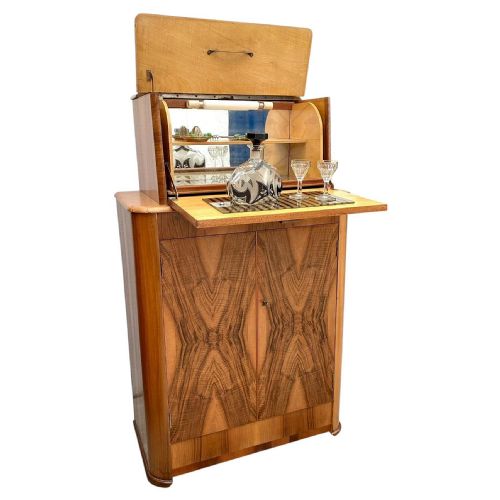
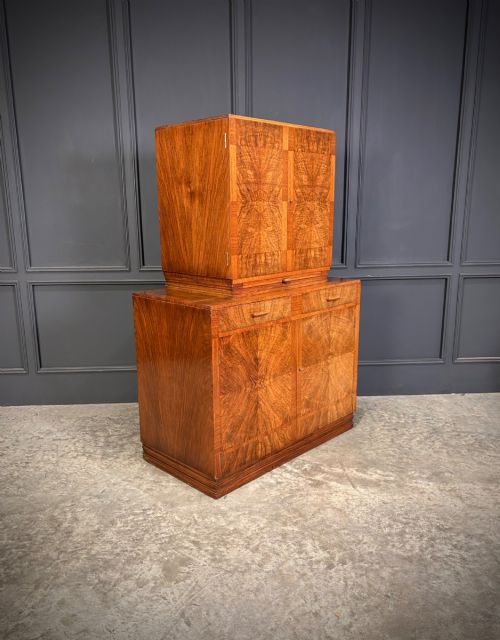
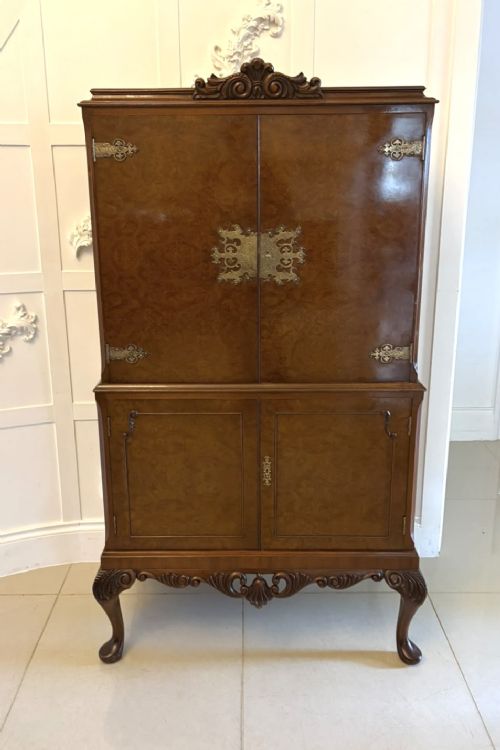
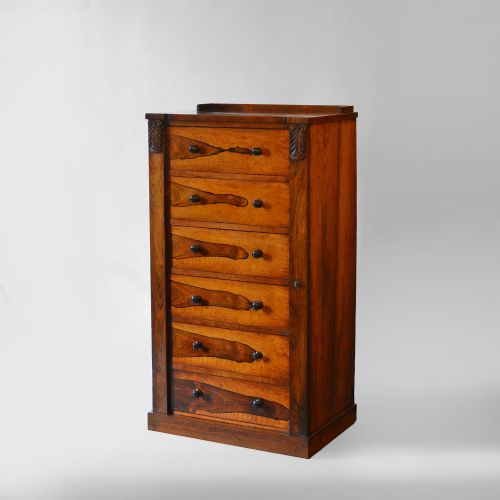
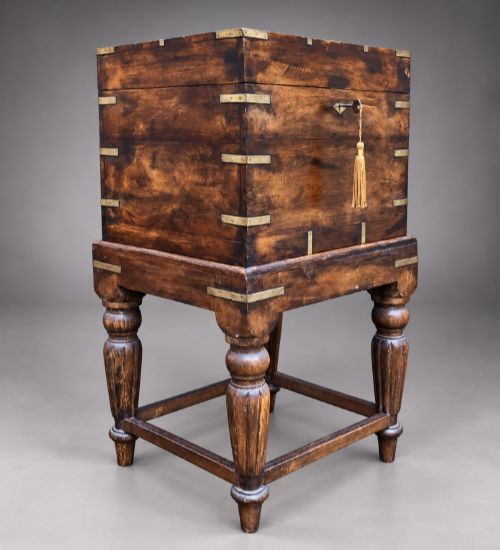
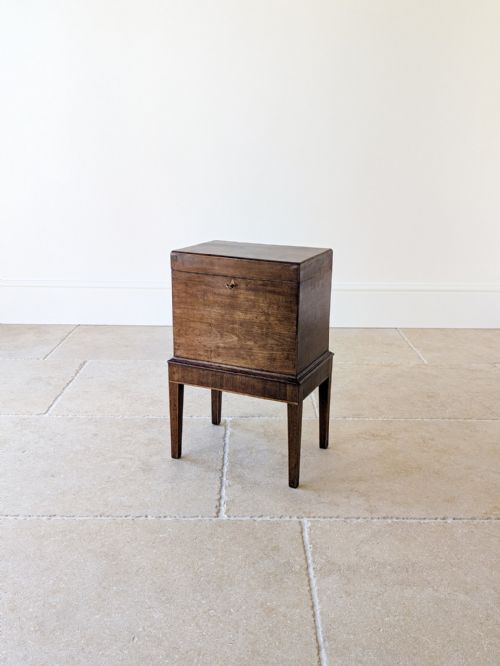
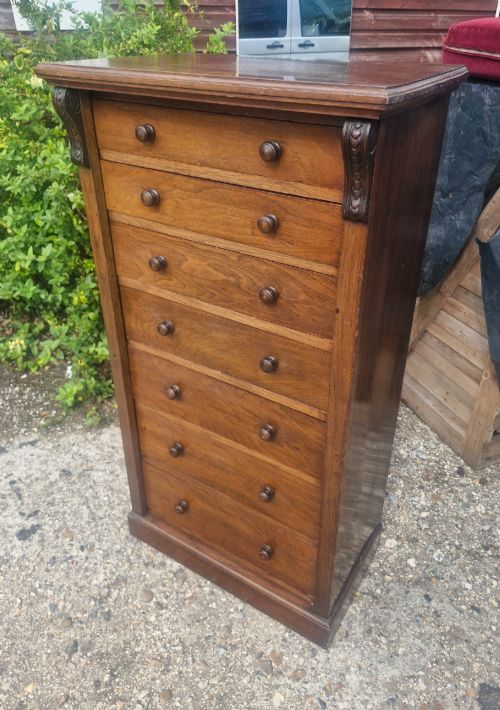
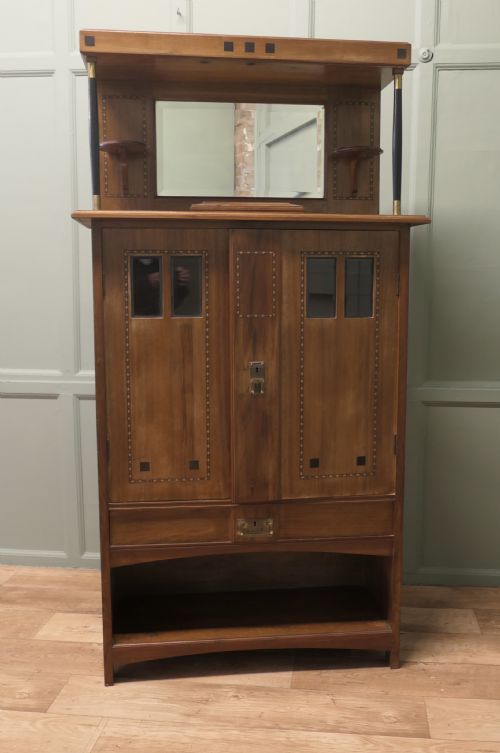
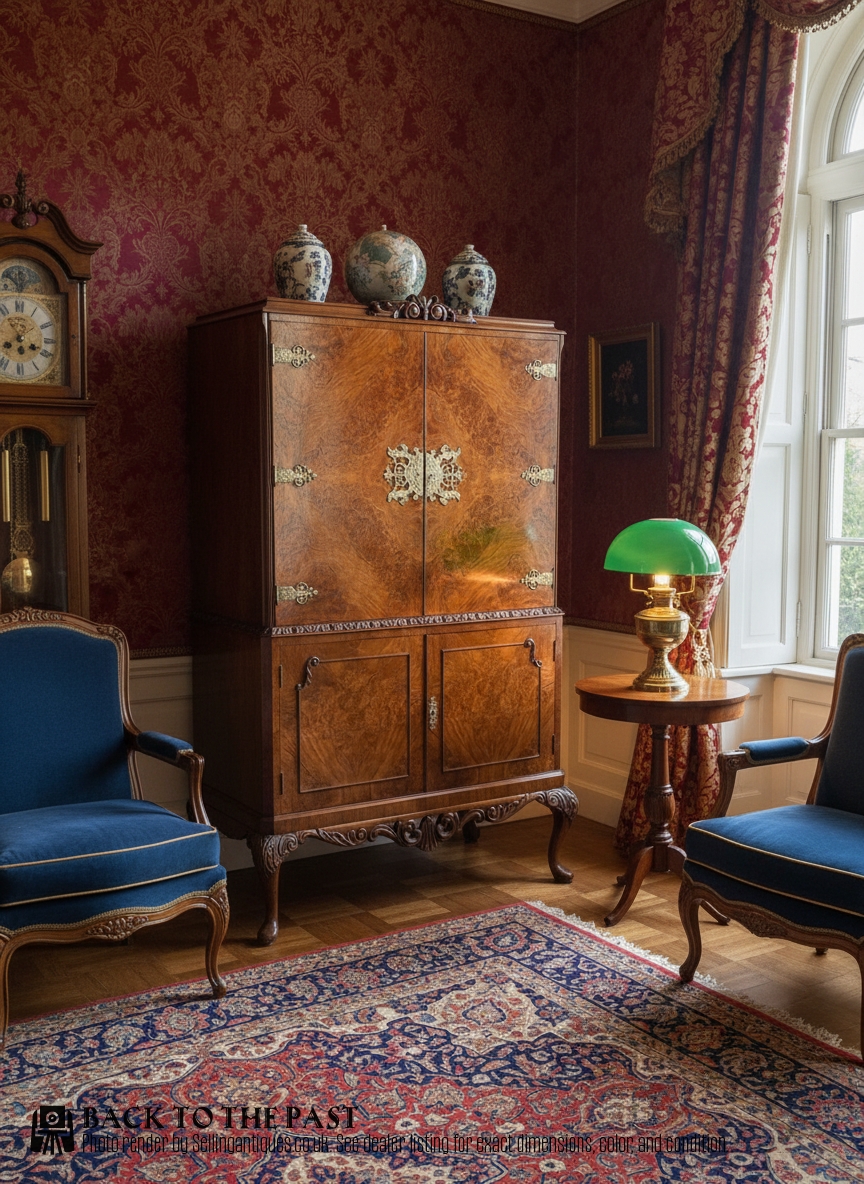
An antique bar cabinet encompasses specialised furniture designed to store and serve beverages, appearing in forms ranging from Georgian cellarettes and nineteenth-century Wellington chests to interwar cocktail cabinets.
The items most frequently encountered in this category date from the Art Deco period of the 1920s and 1930s, typically constructed in figured walnut or burr walnut with dedicated internal fittings for glassware.
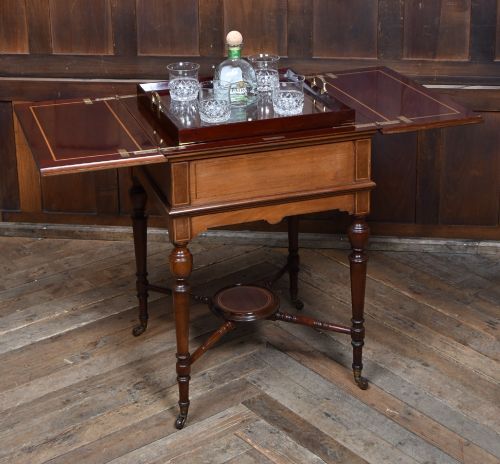
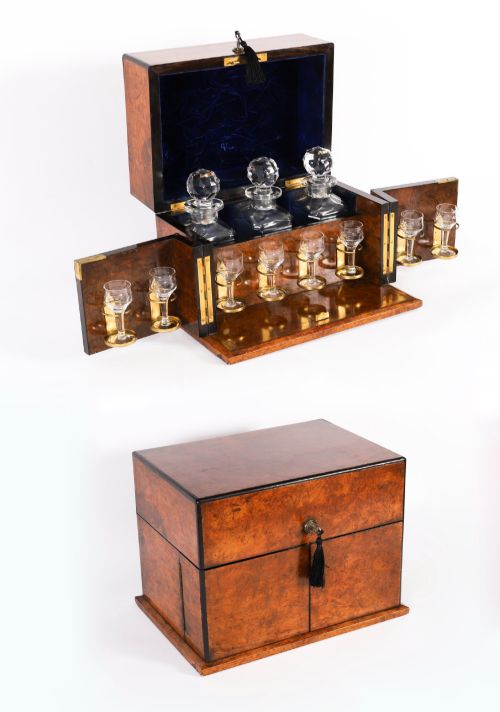
Earlier iterations include mahogany cellarettes from around 1800 and Edwardian surprise drinks cabinets, alongside secateurs, tantalus sets, and specialised display units.
How they were made
Cabinetmakers utilised rich timber veneers, notably burr walnut, figured mahogany, bird's-eye maple, and satinwood, applied over sturdy structural carcases to create striking exterior patterns.
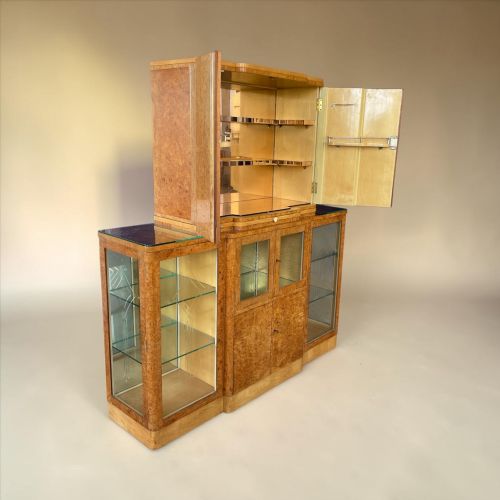
Interior engineering involved complex folding mechanisms, mirrored backplates, pull-out mixing slides, and integrated brass hardware, often paired with specialised glass storage and electric lighting by the 1930s.
Antique Bar Cabinet Retail Price Guide 2026
Typical asking prices for bar cabinet among the pieces listed under this phrase on Sellingantiques today, from the lower quarter to the upper quarter. They describe what is for sale here now, not the wider market.
This collection spans from 1800s Georgian mahogany cellarettes and Victorian Wellington chests to 1930s Art Deco burr walnut cocktail cabinets.
What varies in quality
Quality rests upon the selection of timber veneers and the precision of the cabinetmaker's joinery, where matched grain patterns across curved or bow-front doors distinguish master workshops from standard production.
The sophistication of internal mechanisms, such as counterweighted drop-fronts, revolving dry bars, and integrated lighting or original glassware sets, elevates the standing of individual pieces.
Gillows·Epstein·Maurice Adams·Albert Barker·Shapland and Petter·Harry and Lou Epstein·Harrods
The Antique Bar Cabinet Glossary
- Cellarette
- A lockable container or cabinet designed to hold bottles of wine and spirits, often mounted on a stand or fitted with brass bands for transport.
- Tantalus
- A locking drink stand that holds decanters securely in a wooden frame while keeping their contents visible yet physically restricted from unauthorized access.
- Wellington chest
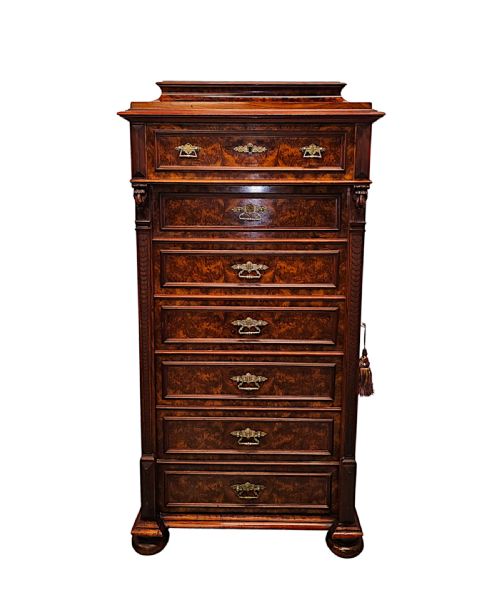
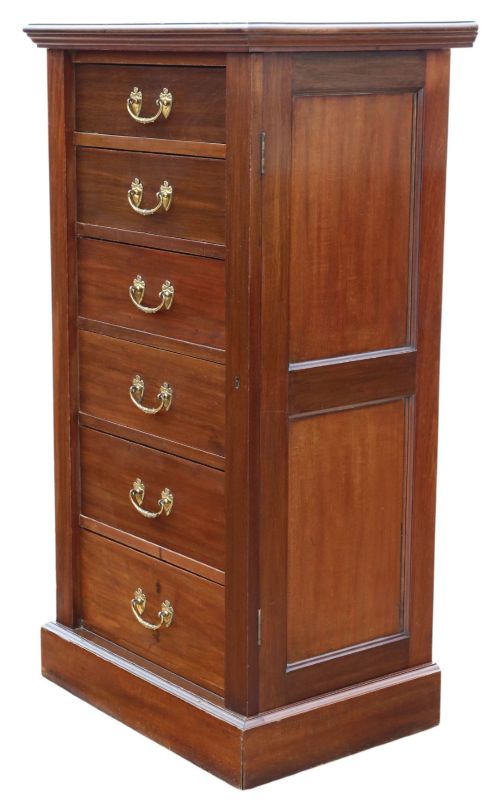
- A tall, narrow chest of drawers secured by a hinged locking stile on one side that fastens over the drawer edges with a padlock or key.
- Marquetry
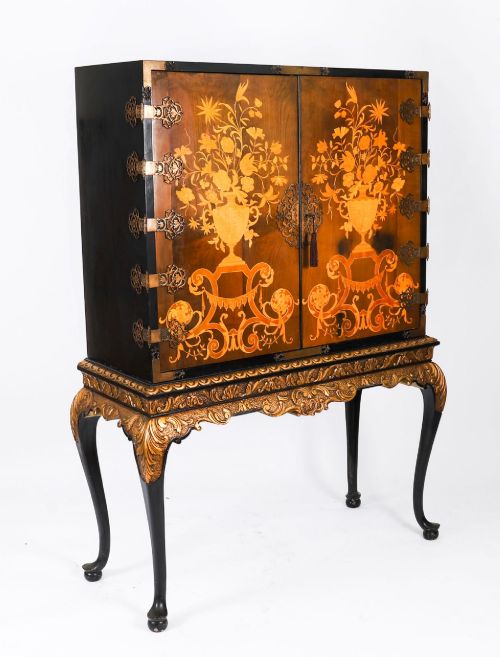
- Decorative inlay work where pieces of contrasting wood veneer are fitted together to form intricate pictorial or geometric patterns on the cabinet surface.
- Ormolu
- Gilded bronze mounts and appliqués utilised to accent the corners, legs, and handles of fine furniture, particularly common in Regency and French decorative pieces.
Antique Bar Cabinet: Frequently Asked Questions
What is the difference between a cellarette and a cocktail cabinet?
A cellarette is a traditional Georgian or Victorian storage box or chest specifically designed to hold upright wine bottles and spirits securely, often sitting on the floor or a low stand.
In contrast, a cocktail cabinet is a taller piece from the early twentieth century featuring specialised internal shelves for glassware, mixing slides, and mirrored compartments tailored for serving mixed drinks.
How do Art Deco bar cabinets differ from earlier designs?
Art Deco bar cabinets from the 1920s and 1930s lean into bold geometric shapes, curved bow-fronts, and dramatic veneers like burr walnut and bird's-eye maple, often incorporating electric lights and specialised cocktail accessories.
Earlier nineteenth-century and Georgian iterations focus on solid timber construction, brass banding, and discreet bottle storage rather than theatrical interior displays.
Where were these cabinets placed in a historic home?
Cellarettes and early portable drinks holders sat in dining rooms close to the dining table for convenient access by servants during meals.
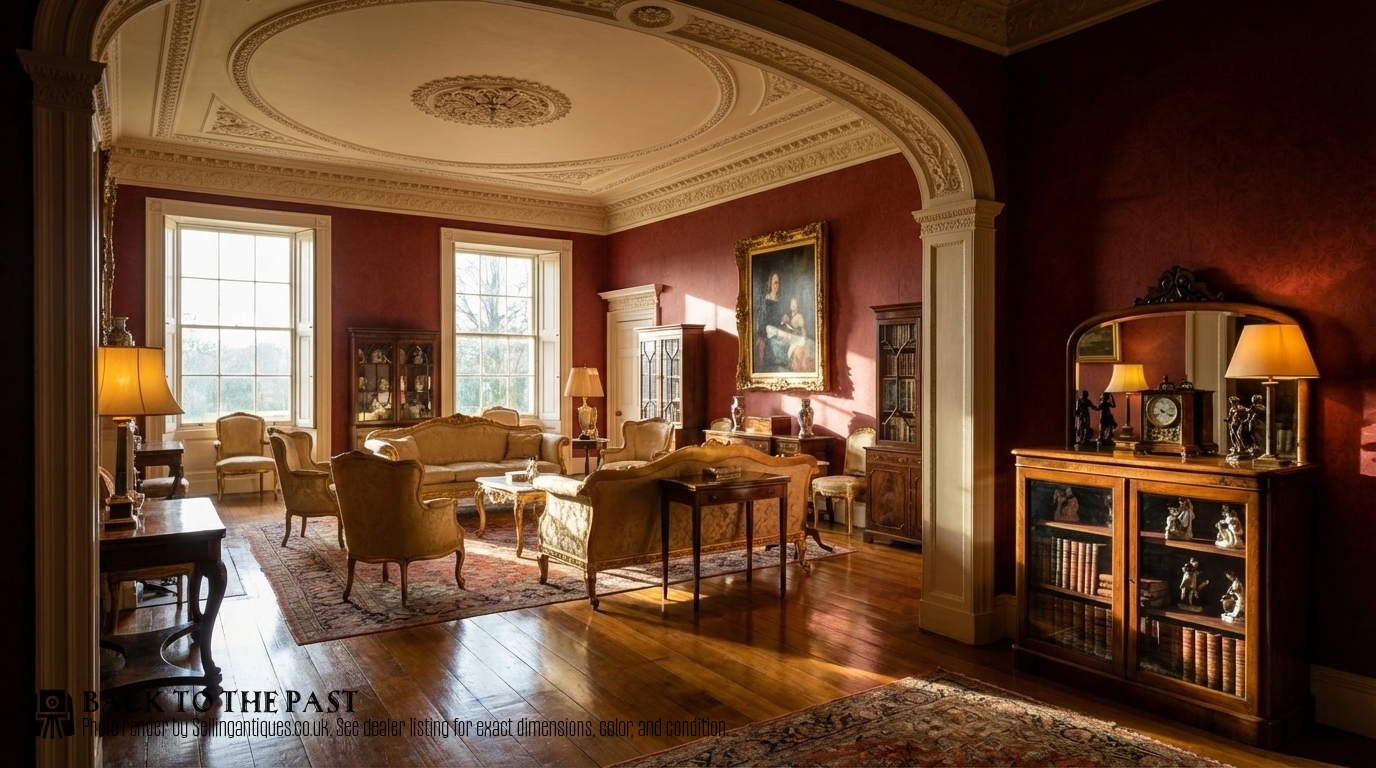
Later twentieth-century cocktail cabinets found their place in drawing rooms, reception spaces, or dedicated home bars as entertaining shifted to more informal gatherings.
What are folding or revolving cocktail cabinets?
Folding cocktail cabinets feature drop-front leaves or expanding side panels that open out to create an instant serving bar complete with a preparation surface.
Revolving versions incorporate a rotating mechanism that allows the user to spin the cabinet to access hidden bottle storage and glassware compartments from a single stationary position.