


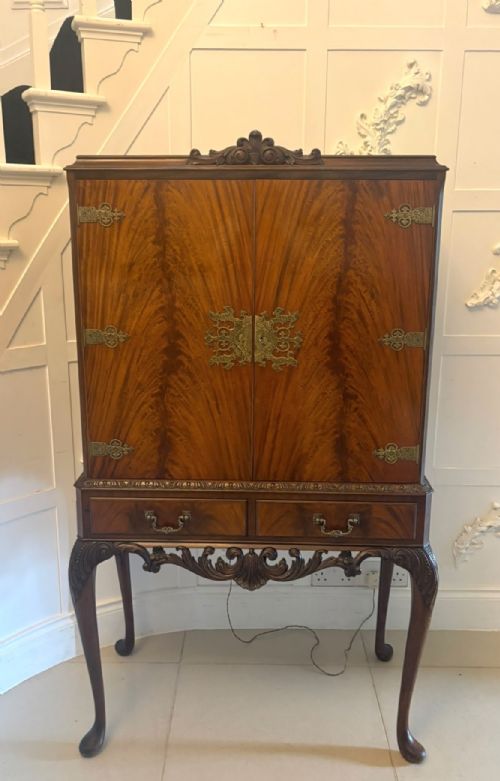
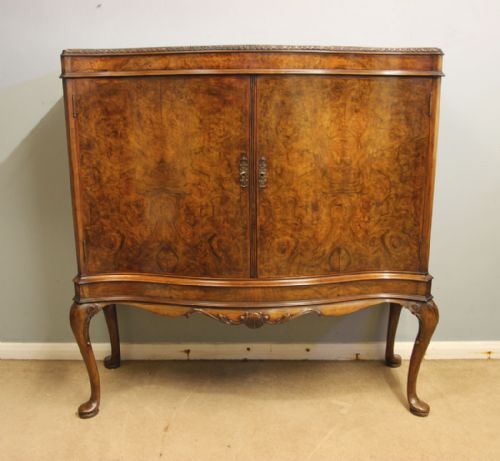
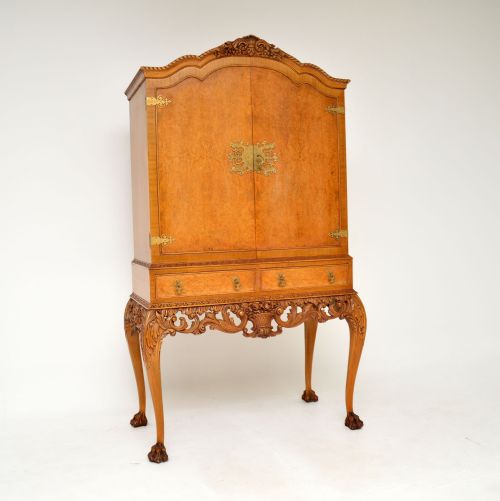


Queen Anne Drinks Cabinet
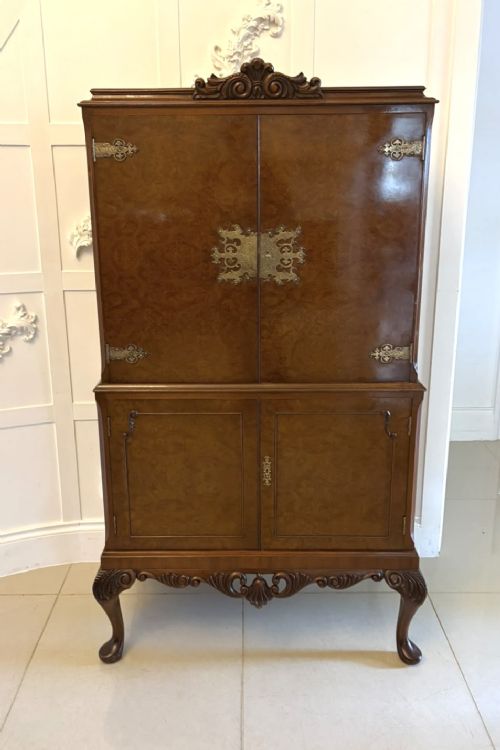
A queen anne drinks cabinet brings twentieth-century revival craftsmanship and figured timber into a room for entertaining guests.
Queen Anne Drinks Cabinet
When a buyer searches for a queen anne drinks cabinet, they encounter revival pieces produced mainly during the Edwardian period, the nineteen-twenties, and the nineteen-thirties. These forms encompass cocktail cabinets, dry bar cabinets, and cabinets on stands designed specifically for beverage storage.
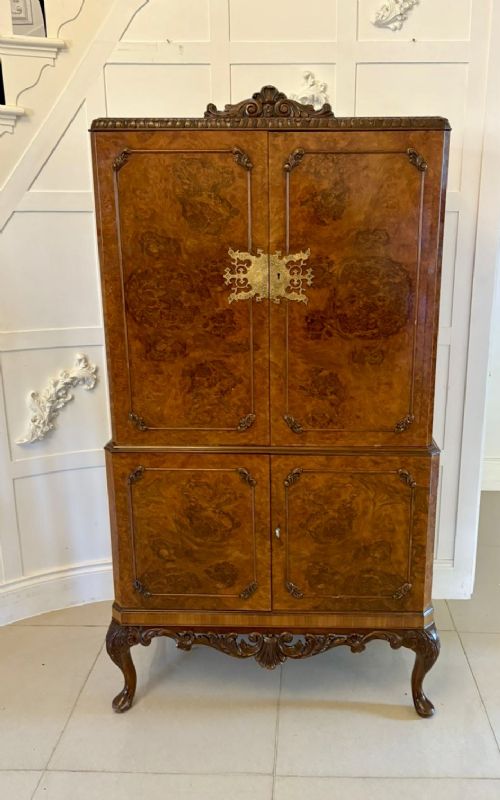
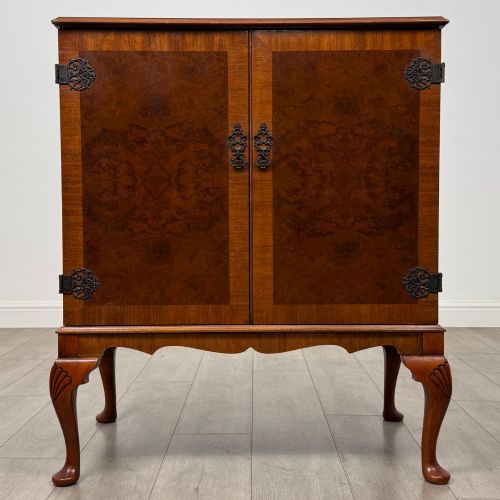
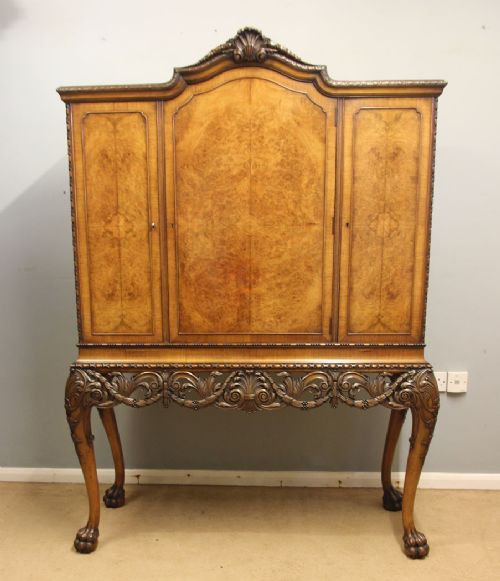
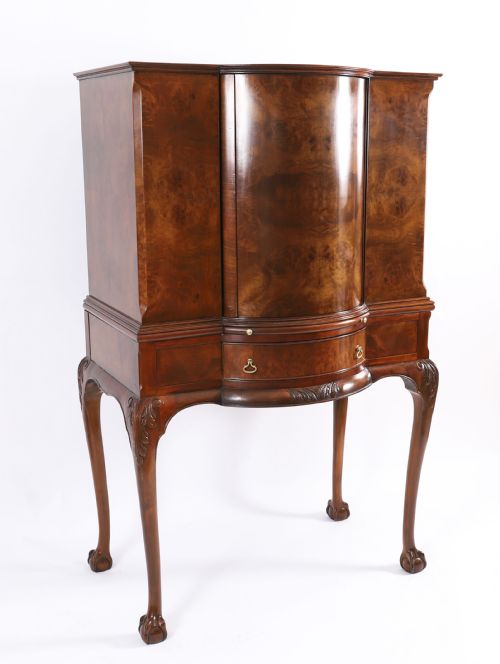
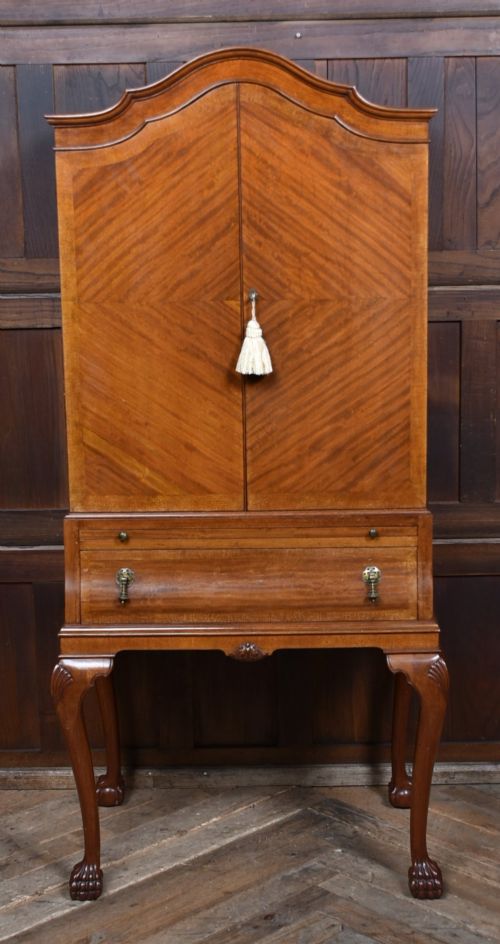
The version most frequently met on this page is the cocktail cabinet constructed in burr walnut or figured walnut. These storage pieces often appear in Queen Anne style alongside Art Deco and Edwardian variations, housing fitted interior spaces for bottles and glassware.
Materials and Construction
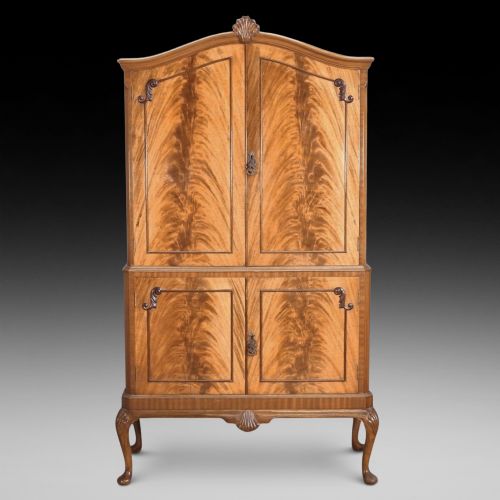
Makers utilised walnut, burr walnut veneer, mahogany, and oak as the foundational timbers for these storage pieces. Brass hardware provides functional hinges and pulls, while internal glass panels and mirror elements line the mixing surfaces.
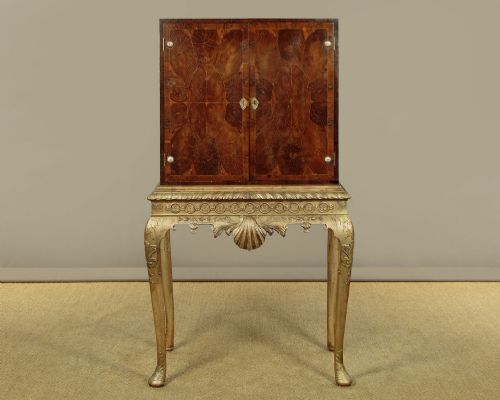
Techniques relied upon applying burr walnut veneer over solid carcases to create figured grain patterns across multiple doors. Stands and cabinetry incorporate specific period revival silhouettes, including double bow fronts, demi-lune shapes, and silver gilt supports.
Queen Anne Drinks Cabinet Retail Price Guide 2026
Typical asking prices for queen anne drinks cabinet among the pieces listed under this phrase on Sellingantiques today, from the lower quarter to the upper quarter. They describe what is for sale here now, not the wider market.
Some revolving dry bar designs ensure nobody has to walk around the furniture to reach the gin.
Distinctions in Standard
The primary distinction rests in the selection and matching of the burr walnut veneer across the primary doors and panels. Uniformity of grain pattern and careful book-matching elevate the visual harmony of the exterior surfaces.
Internal organisation and secondary fittings dictate the standard of execution. Well-arranged glass shelving, internal lighting provisions, and robust hinge construction distinguish finer examples from standard production.
The Queen Anne Drinks Cabinet Glossary
- Burr walnut
- A figured timber obtained from tree growths containing clustered bud traces, creating intricate patterns when sliced into veneer. This material defines the surface aesthetic of most revival cocktail furniture.
- Cocktail cabinet
- A specialised piece of furniture engineered to store potable spirits, mixers, and glassware behind fitted doors. These items frequently incorporate pull-down mixing slides and mirrored interiors.
- Cabinet on stand
- An elevated storage compartment raised upon a separate support structure or legs. This form derives from earlier historical precedents adapted by twentieth-century cabinetmakers.
- Queen Anne style
- A revival design vocabulary identified by cabriole legs, pad feet, and restrained walnut surfaces. Twentieth-century makers applied these decorative conventions to modern entertaining furniture.
- Demi-lune
- A half-moon shape utilised for the footprint of specific cabinet designs. This curved geometry allows the furniture to sit flush against interior walls.
Queen Anne Drinks Cabinet: Frequently Asked Questions
What is a queen anne drinks cabinet?
A queen anne drinks cabinet is a twentieth-century revival storage piece designed to hold bottles, glasses, and mixing equipment. These items draw upon earlier design motifs while serving the modern function of domestic entertaining.
Most examples employ burr walnut veneers and feature dedicated internal compartments for glassware storage. They operate as both decorative focal points and practical home bars.
How do I date a drinks cabinet?
Dating relies upon examining the timber selection, construction methods, and revival styling visible in the piece. Surviving examples originate from the Edwardian era through the nineteen-thirties.
Hardware styles, mirror types, and internal electric lighting provisions also assist in determining the exact manufacturing decade. Comparing the veneer application to documented period pieces confirms the timeline.
Are these pieces made of solid walnut?
These cabinets typically utilise secondary timbers such as oak or mahogany for the main carcase framework. Burr walnut veneer is then applied across the exterior visible surfaces.
This method displays the decorative grain patterns of the burr growth without subjecting the entire structure to warping. Solid timber elements appear primarily in the structural framing and legs.
Where should I place a drinks cabinet?
These cabinets suit dining rooms, living spaces, or reception areas where guests congregate for drinks. Their finished backs and detailed facades allow them to occupy prominent positions against interior walls.
Protection from direct sunlight preserves the burr walnut veneer and any internal mirrored glass panels. Adequate clearance around drop-down mixing leaves ensures comfortable access during use.