


1930s Walnut Drinks Cabinet
A 1930s walnut drinks cabinet brings striking grain patterns and clever internal fittings to entertaining.
1930s Walnut Drinks Cabinet
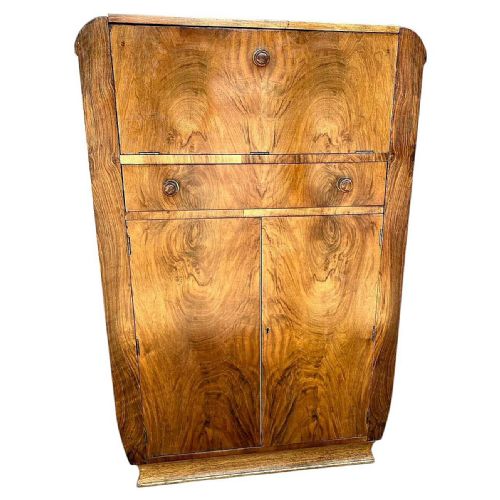
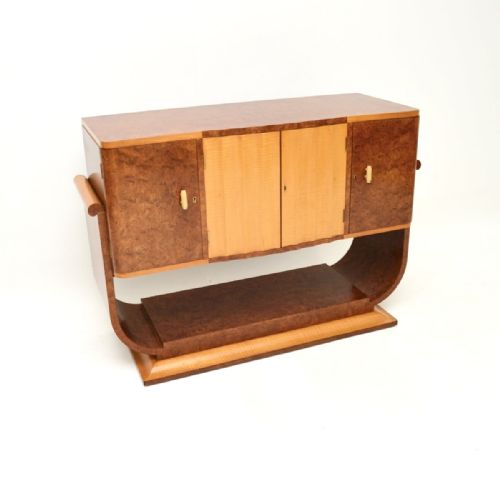
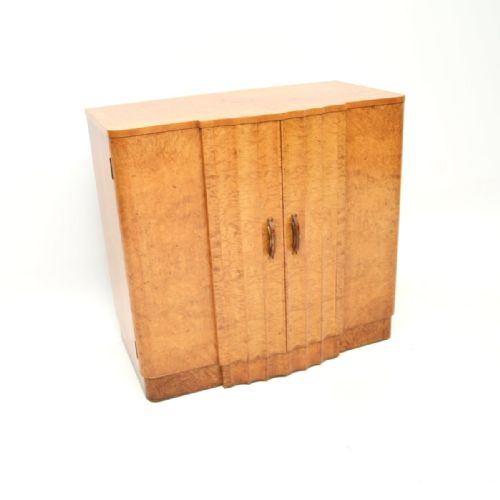
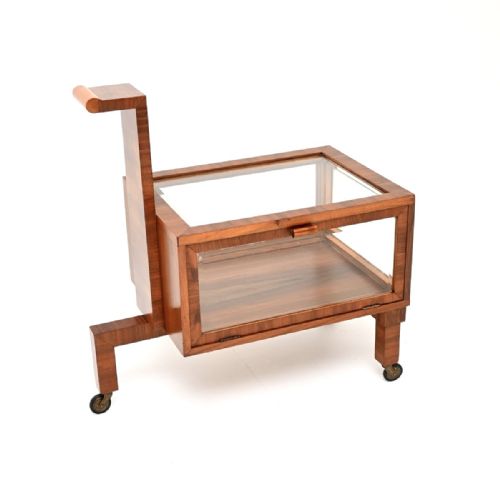
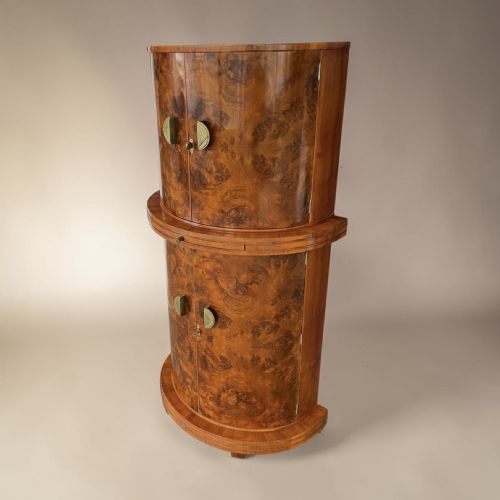
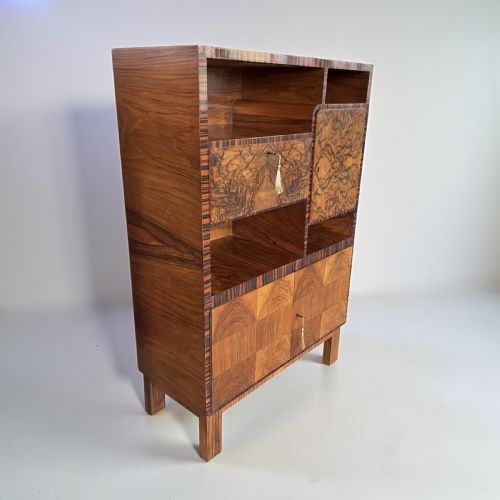
When you examine a 1930s walnut drinks cabinet, you find dedicated storage for bottles, glassware, and mixing equipment designed for interwar hospitality. The majority of these pieces belong to the Art Deco style, featuring bold geometric lines and streamlined silhouettes.
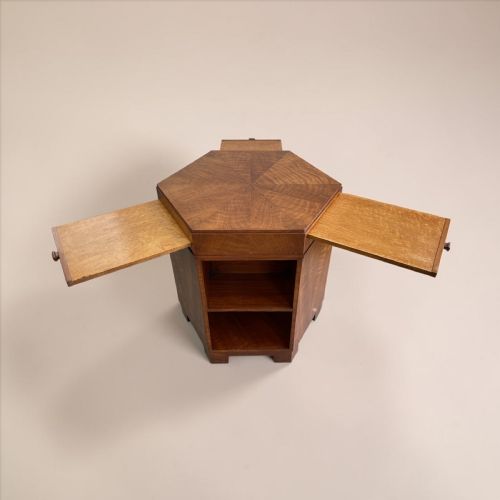
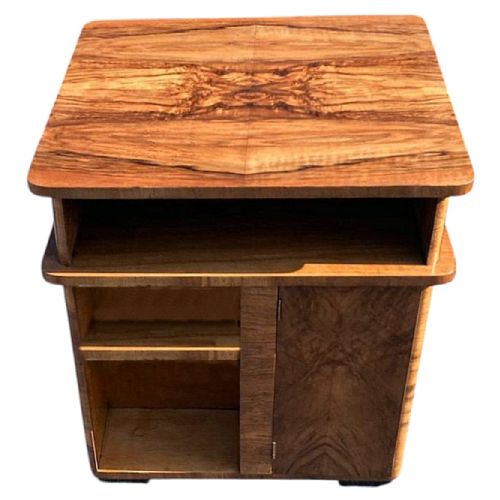
Beyond the standard cocktail cabinets, the selection includes related forms like dry bars, sideboards, and occasional tables with specialised serving functions. These pieces originate predominantly from the 1930 and 1920 periods, capturing an era of sophisticated home entertaining.
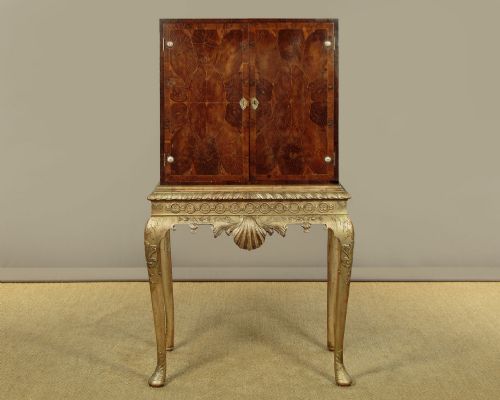
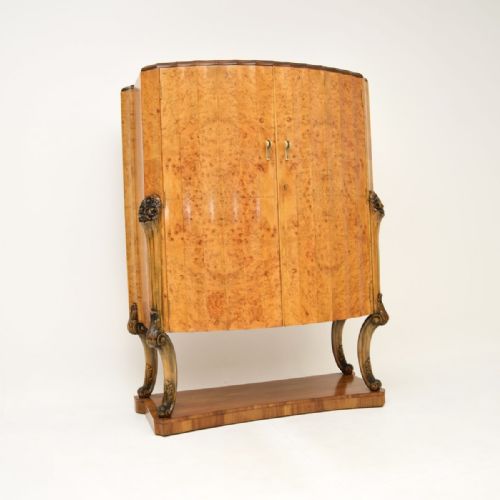
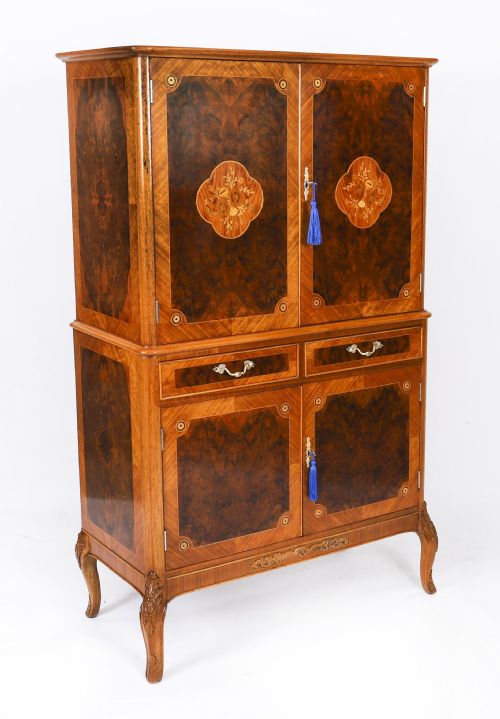
The most frequently encountered version on this page is the freestanding cocktail cabinet with fitted interior shelves and pull-down or opening doors. Makers also adapted Queen Anne Revival and Louis XVI Revival aesthetics during this decade, blending traditional motifs with modern social habits.
What varies in quality
The sophistication of the veneer layout dictates much of the visual merit, with book-matched burr walnut creating symmetrical patterns across double doors. Lesser examples rely on plain timber or repetitive grain matching that lacks the striking movement of top-tier work.
Interior complexity separates standard production items from masterworks produced by renowned workshops. Cabinets featuring electric lighting, metamorphic pull-up mechanisms, intricate mirror work, and pull-out mixing slides demonstrate superior execution.
The integrity of the hardware and the precision of the door alignment reveal the standard of original construction. Smoothly operating hinges, well-fitted locks, and substantial metal mounts indicate an uncompromising approach to manufacture.
1930s Walnut Drinks Cabinet Retail Price Guide 2026
Typical asking prices for 1930s walnut drinks cabinet among the pieces listed under this phrase on Sellingantiques today, from the lower quarter to the upper quarter. They describe what is for sale here now, not the wider market.
The furniture spans the 1920 and 1930 periods, incorporating Art Deco, Queen Anne Revival, and Louis XVI Revival styles.
Harry and Lou Epstein·Epstein·Hille·Incorporall
The 1930s Walnut Drinks Cabinet Glossary
- Burr walnut
- A prized timber harvested from tree growths that produces intricate, swirling grain patterns. Cabinet makers prized this wood for creating decorative front panels on high-status furniture.
- Art Deco
- A dominant design movement of the interwar period characterised by sleek geometric shapes, streamlined forms, and modern industrial materials. This style defines the vast majority of cocktail furniture from the era.
- Veneer
- A thin layer of superior wood applied over a stable secondary timber foundation. This technique allowed makers to display costly figured walnut across large surfaces without risking warping.
- Metamorphic
- Furniture that transforms its shape or function through clever mechanical devices such as folding leaves or rising tiers. These moving elements were especially popular in interwar cocktail trolleys and cabinets.
- Dry bar
- A dedicated piece of furniture designed to store and serve alcoholic beverages without running water facilities. They typically include glass racks, bottle storage, and a mirrored preparation shelf.
1930s Walnut Drinks Cabinet: Frequently Asked Questions
What is inside a typical cabinet?
A standard interior houses dedicated bottle racks, glass holders, and a mirrored preparation shelf for mixing drinks. Many feature pull-out slides for resting glasses and specialised compartments for cocktail accessories.
Makers often lined the back panels with mirror glass and fitted lemon squeezes or stirrers directly into the doors. Some sophisticated examples even include automatic electric lighting that activates when the doors open.
How do I care for walnut veneer?
Protect the polished surfaces by keeping the cabinet away from direct sunlight and steady heat sources that can dry out the timber. Regular dusting with a soft, dry cloth preserves the finish without building up heavy wax residues.
Avoid placing wet glassware directly on the wooden surfaces by utilising coasters or the built-in pull-out glass trays. Spills should be wiped away immediately to prevent moisture from penetrating the delicate veneer.
Are these cabinets purely Art Deco?
While the vast majority embrace the geometric lines of the Art Deco movement, traditional revivals also exist from the same decade. You will occasionally encounter pieces built in the Queen Anne Revival or Louis XVI Revival styles.
These traditional interpretations combine classic historical furniture silhouettes with the internal fittings required for modern interwar cocktail service. The exterior might feature carved cabriole legs while the interior remains entirely dedicated to hosting.
How do metamorphic drinks cabinets work?
Metamorphic models use clever internal linkages to raise shelves, expand tabletops, or reveal hidden bottle wells when opened. Operating the doors or lifting the top surface triggers the mechanical action automatically.
These mechanisms allowed designers to maximise storage space within compact footprints while providing theatrical flair during evening gatherings. Smooth operation depends on maintaining clean hardware and hinges without applying heavy lubricants.