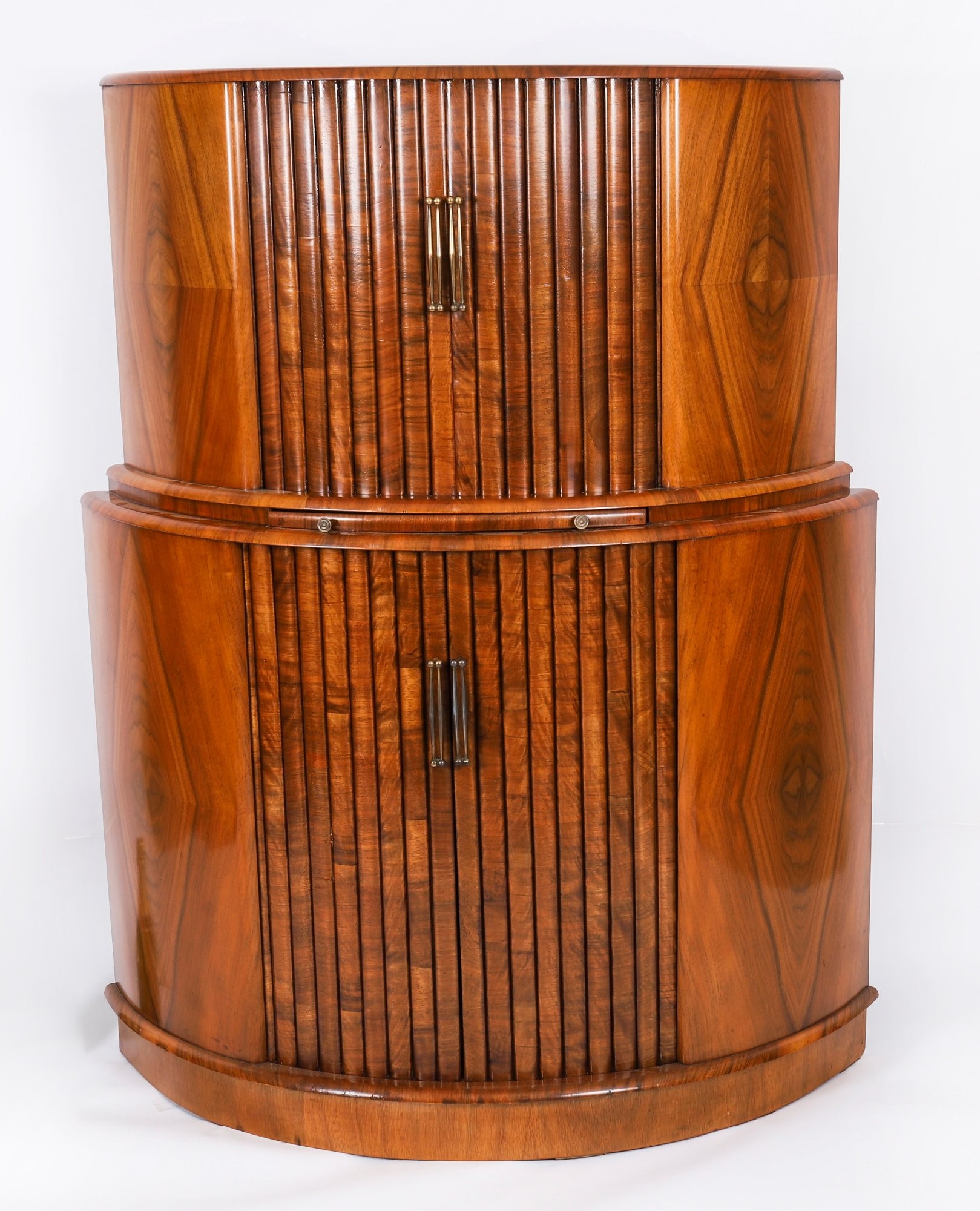
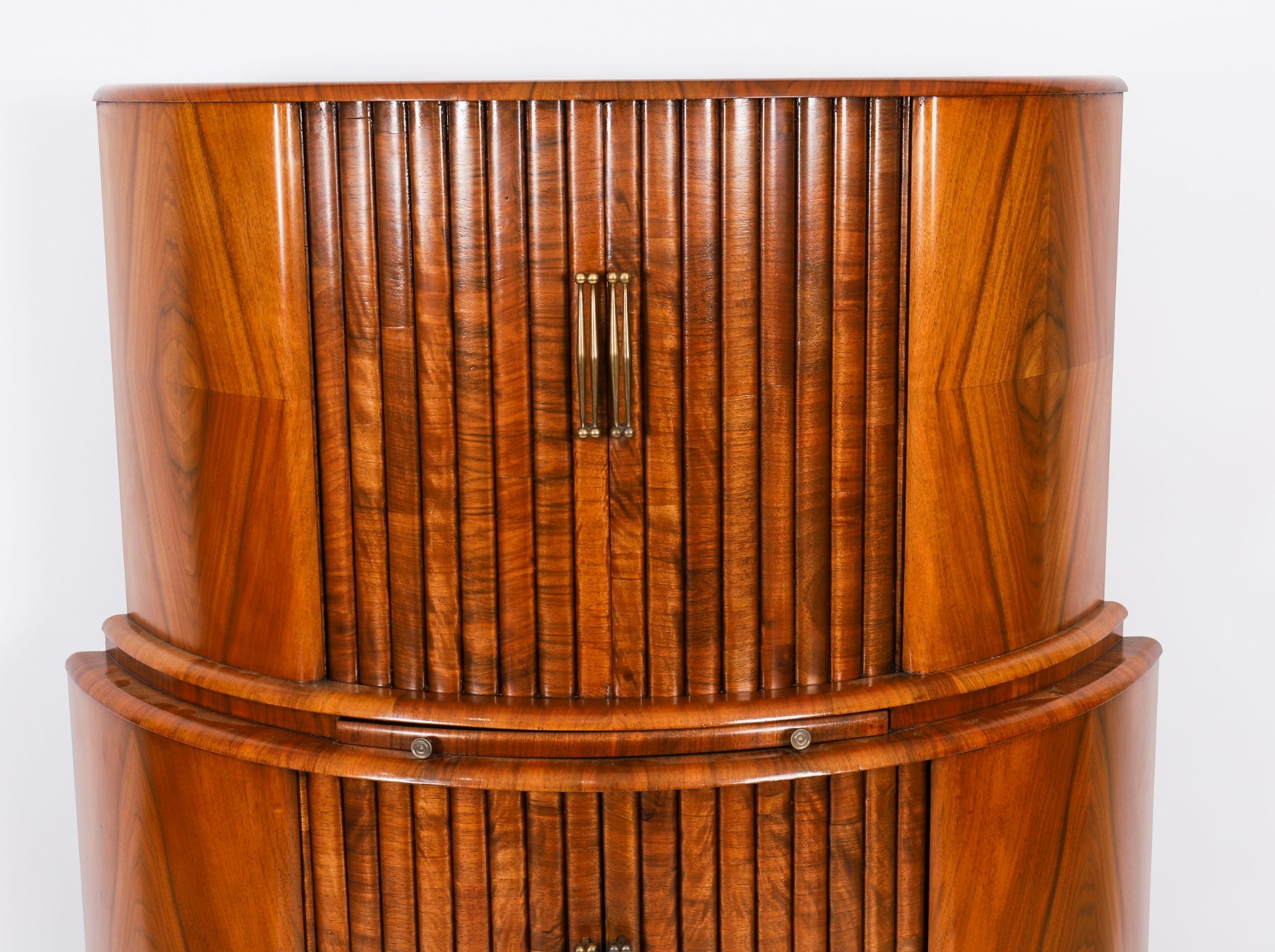
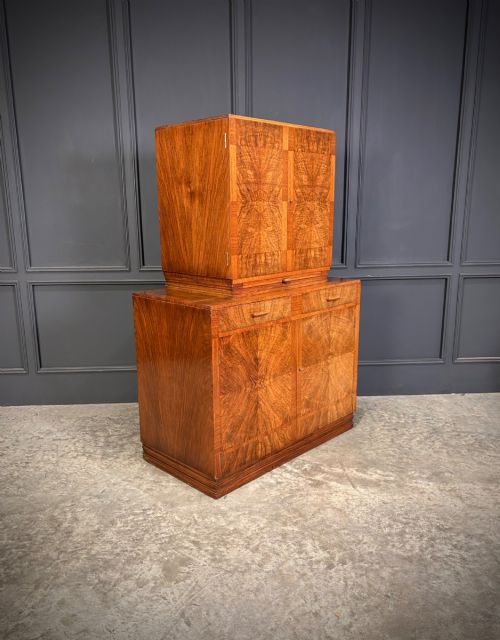
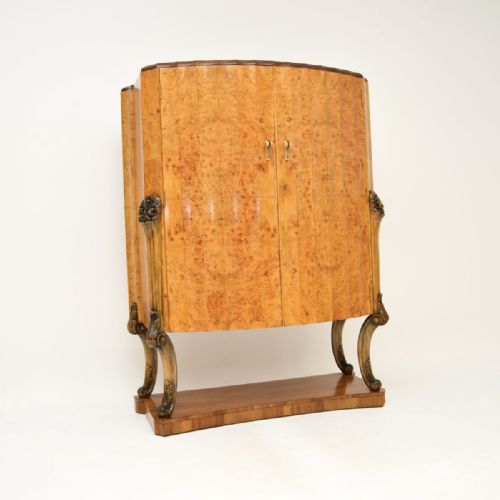
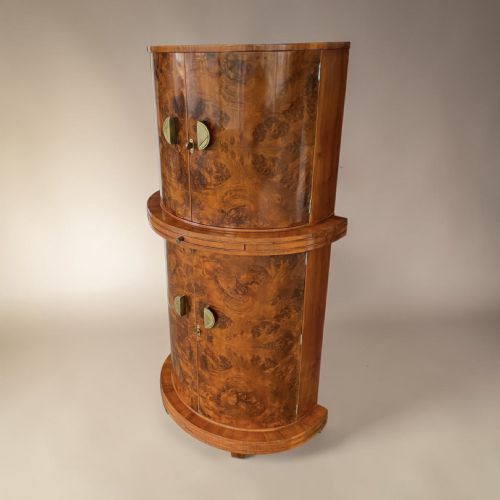
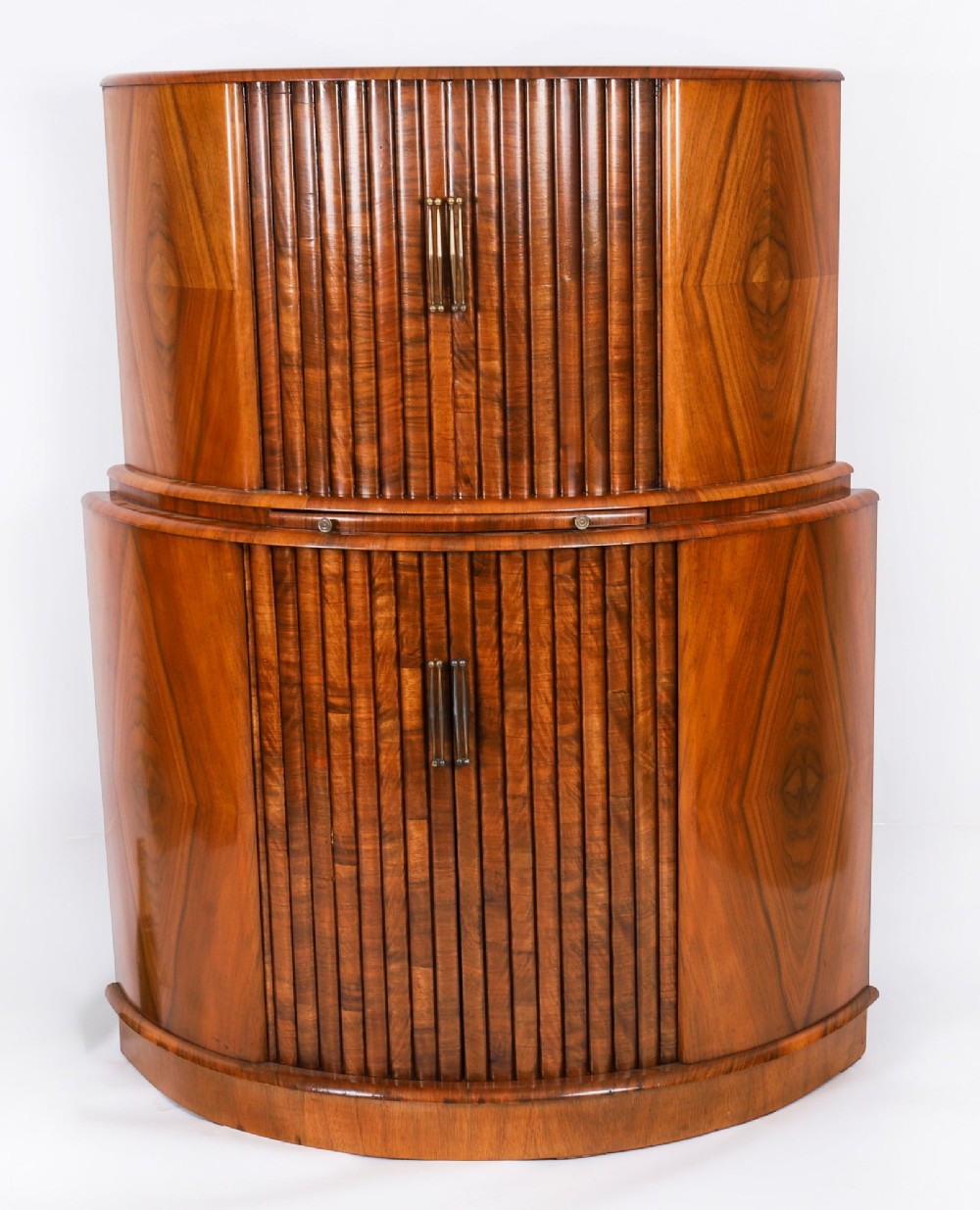
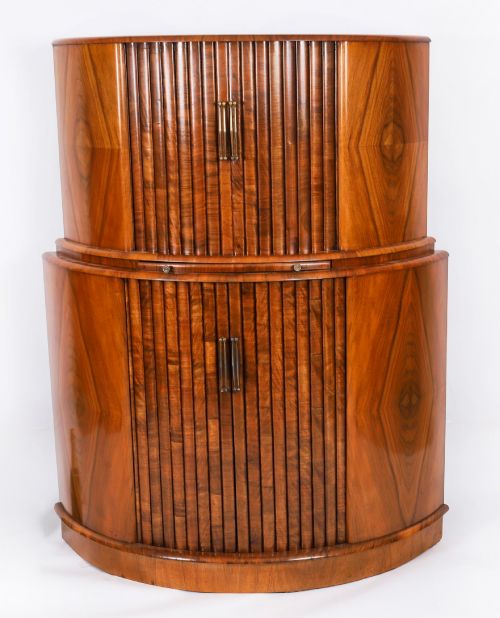
Regent Antiques has dated this Burr Walnut Cocktail Cabinet to the 1930s.
This is an independent date report produced by Sellingantiques using its own proprietary system. The process uses the photographs shown on this page. The system is never told the date the dealer has declared. This report shows that the two dates corroborate.
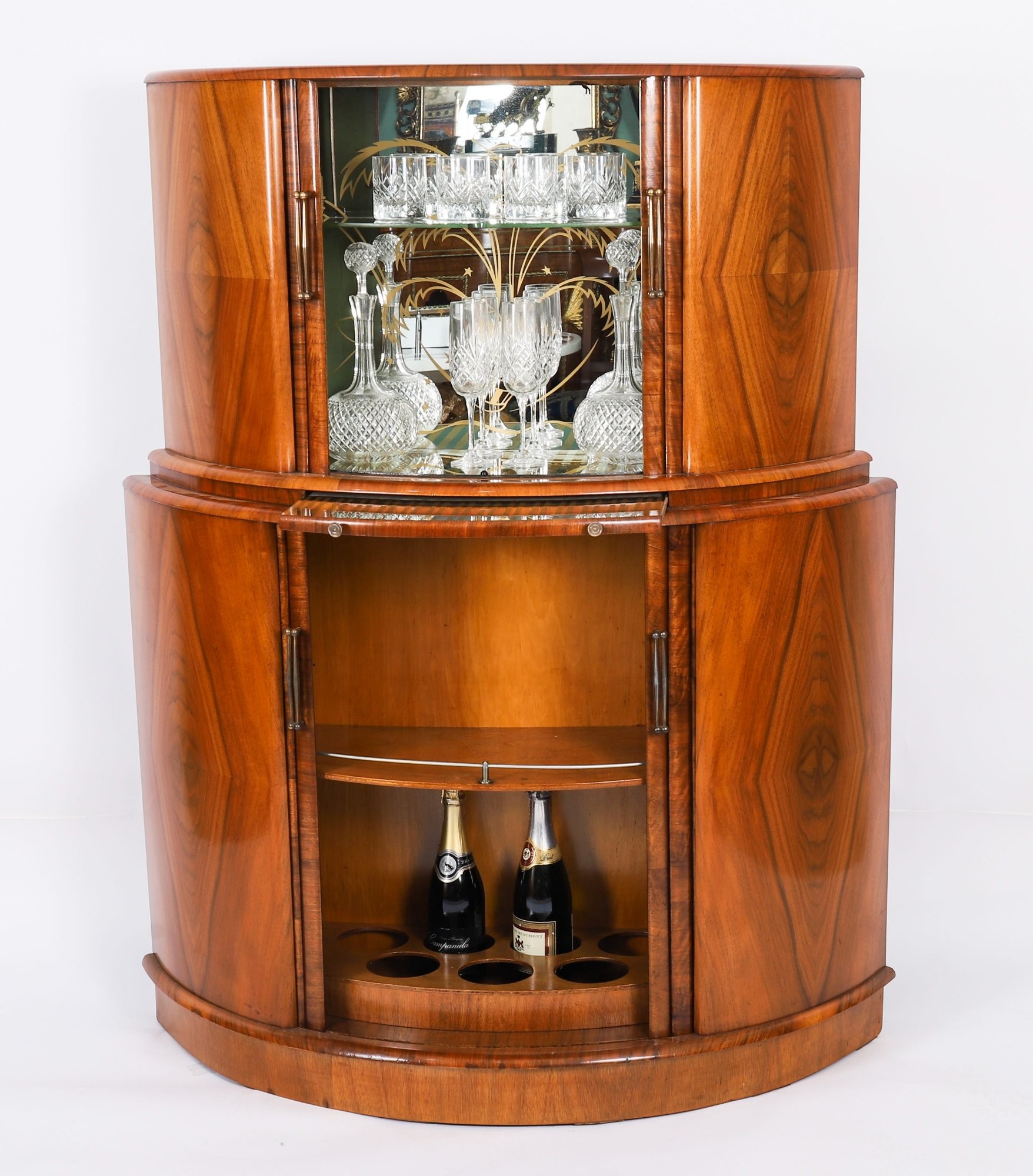
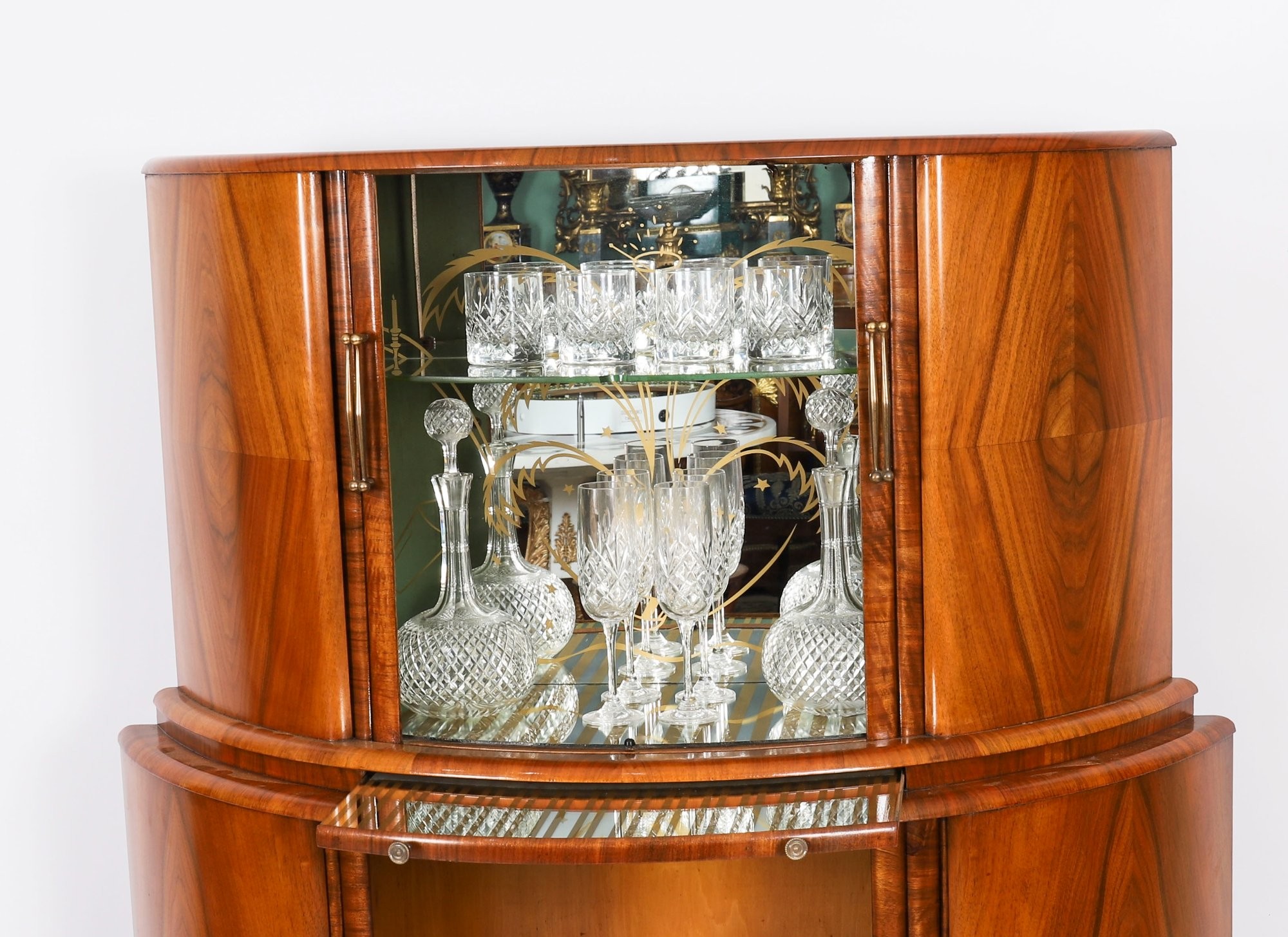
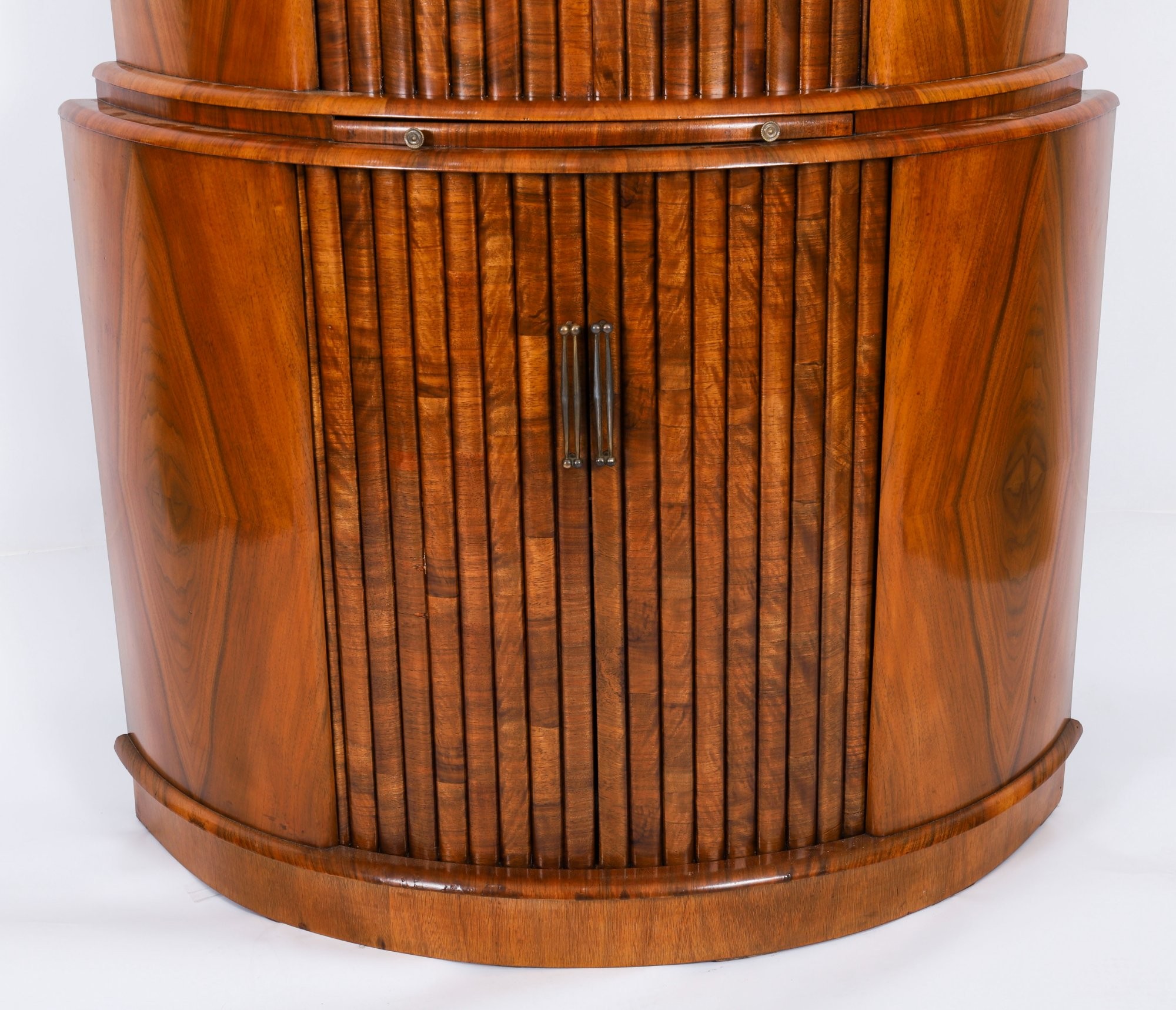
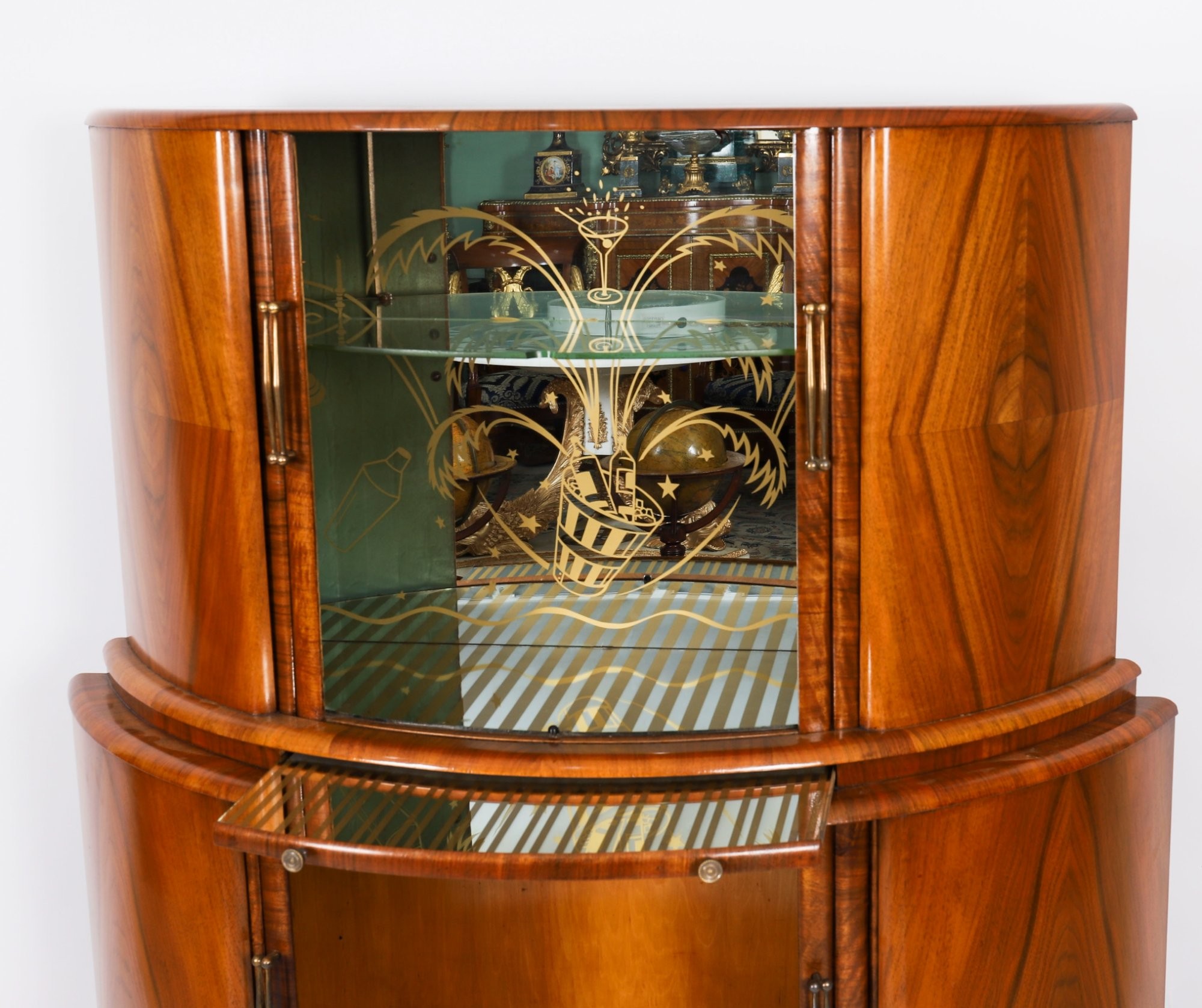
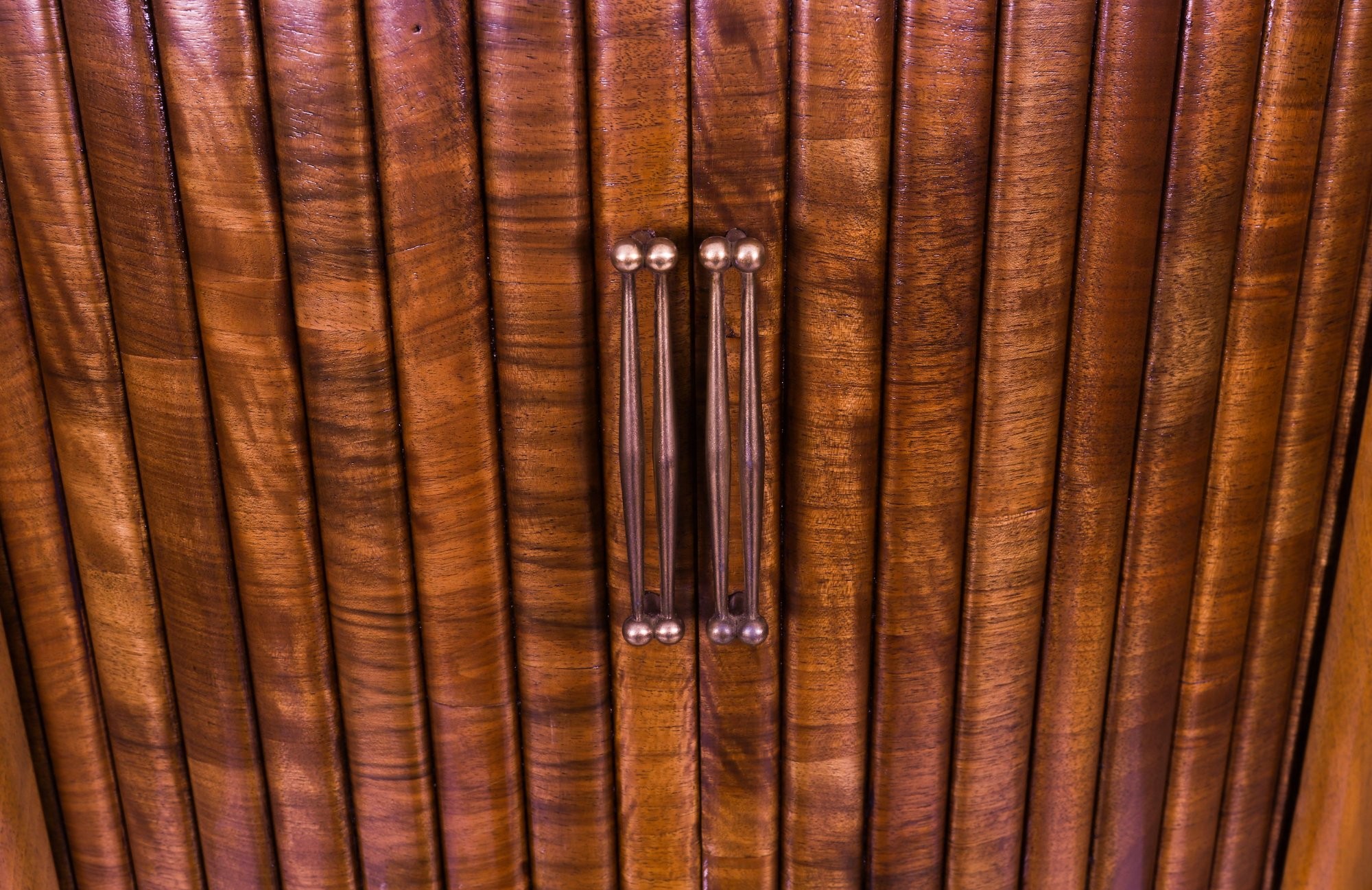
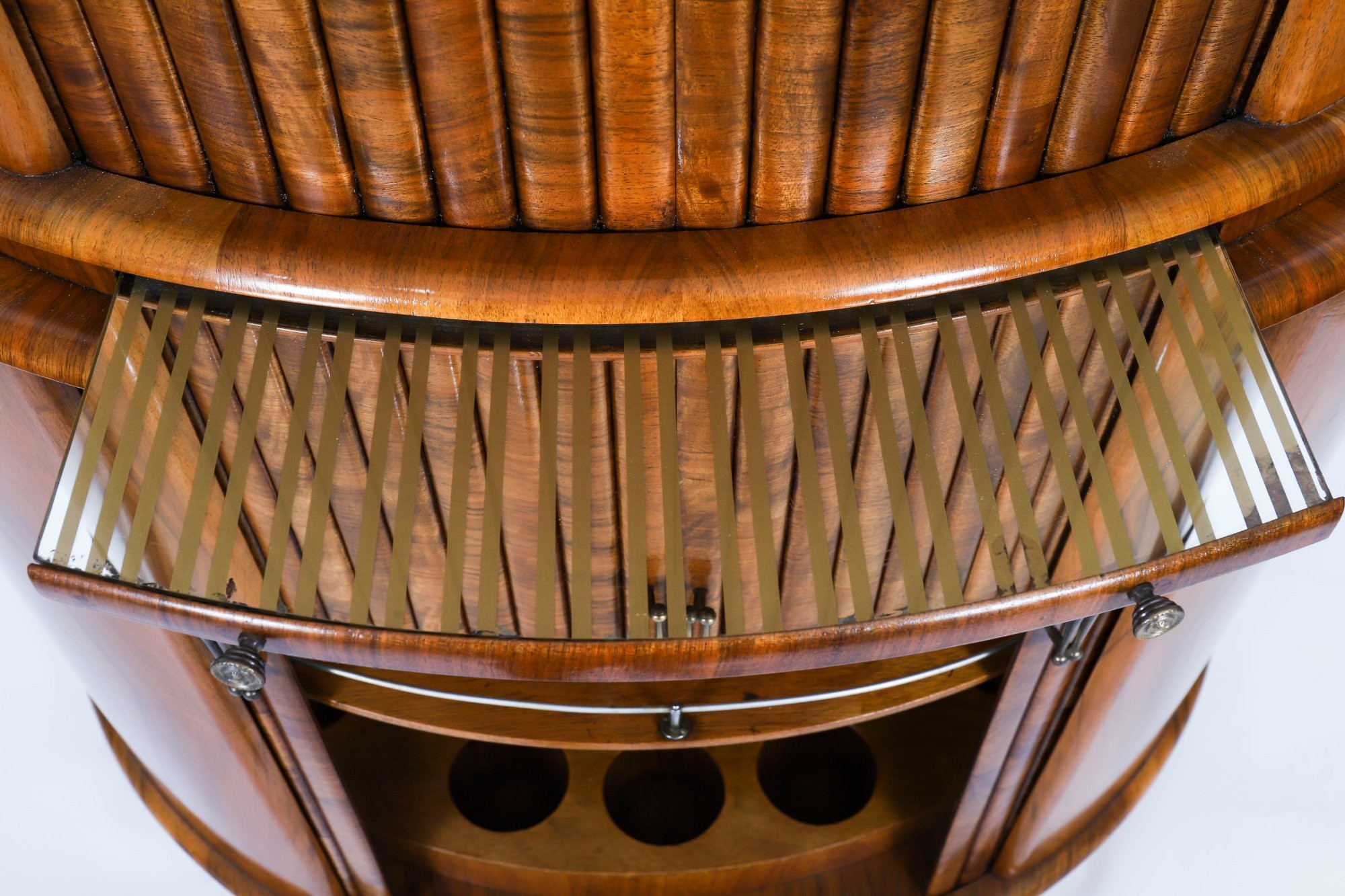
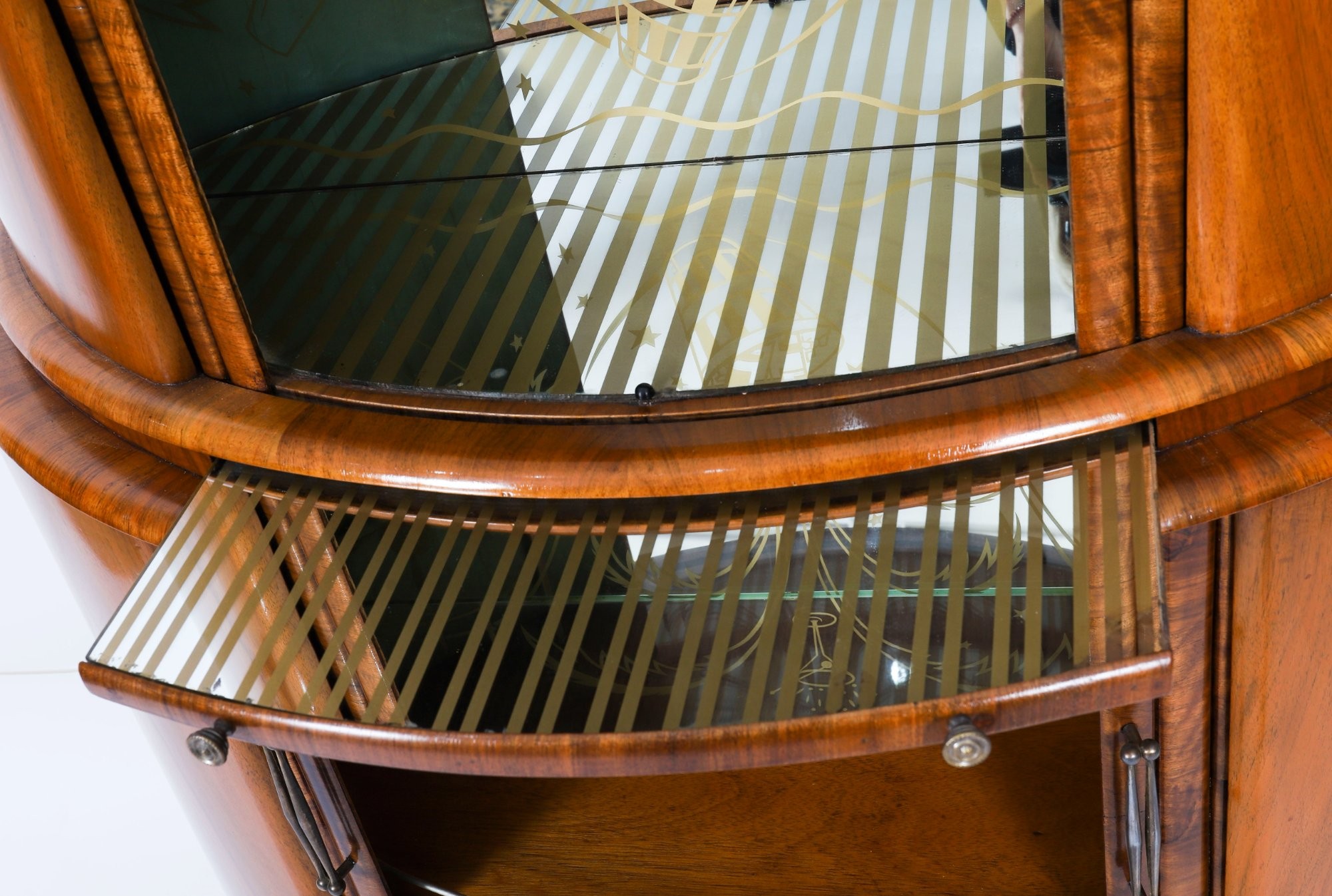
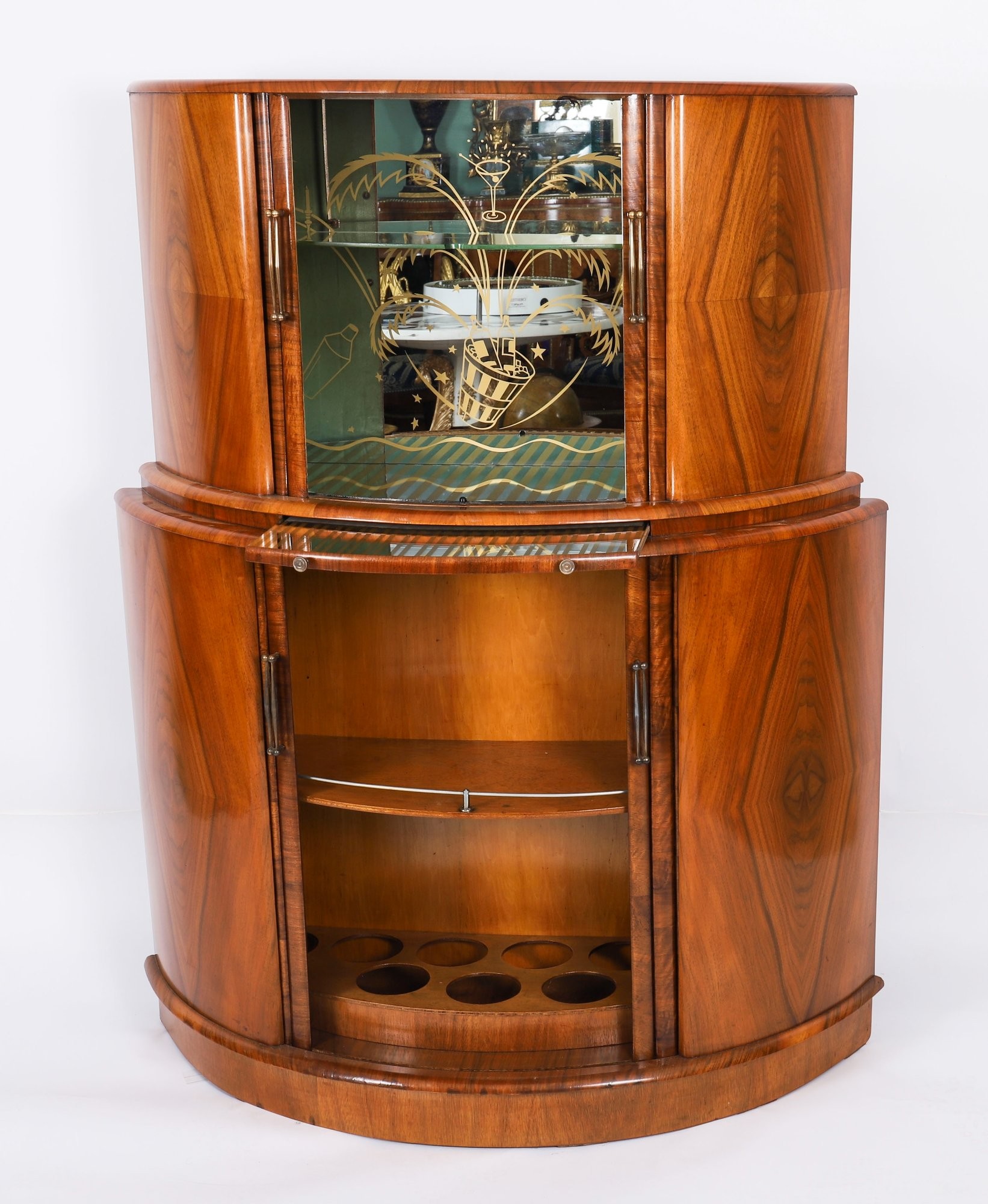
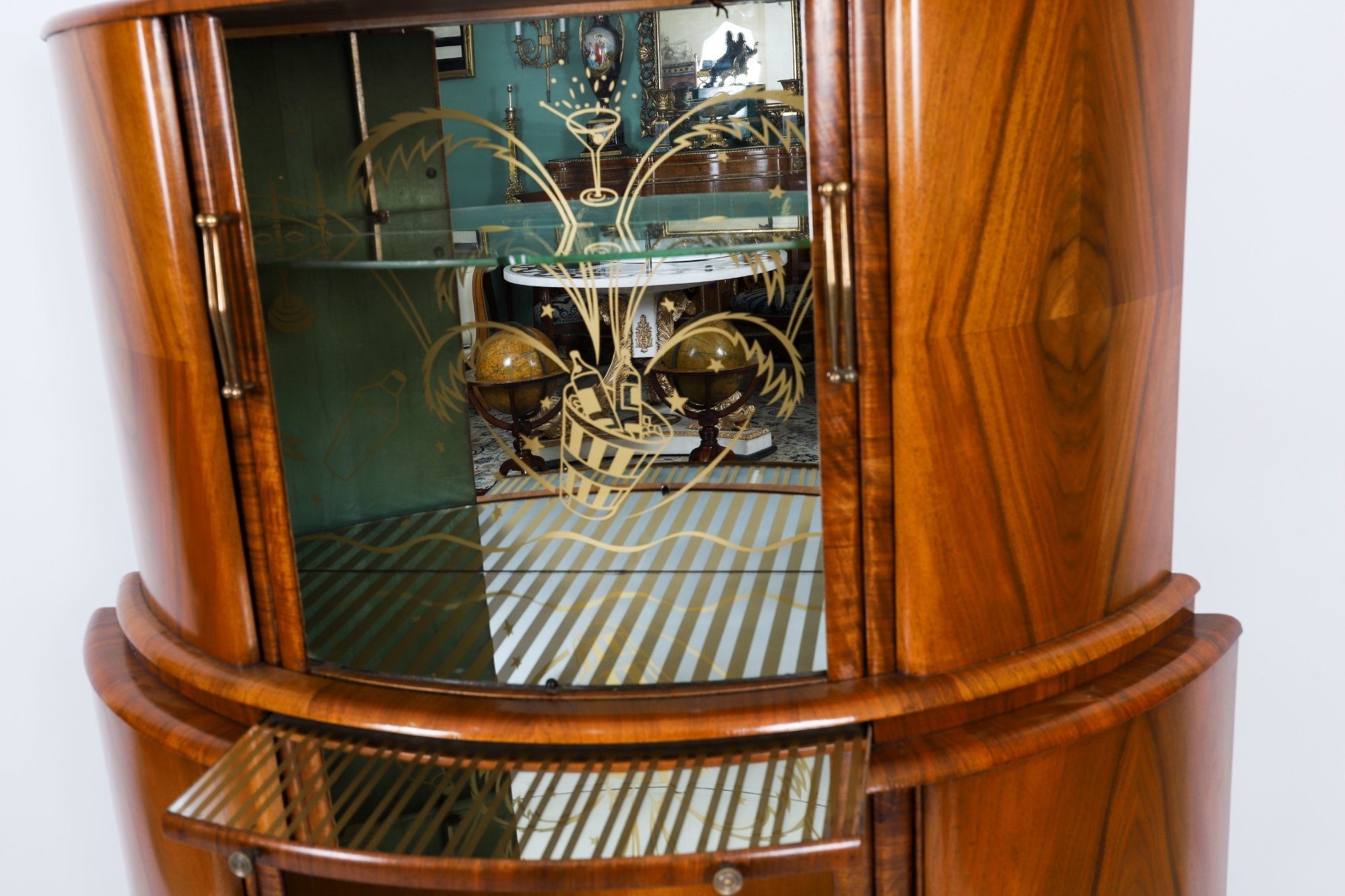
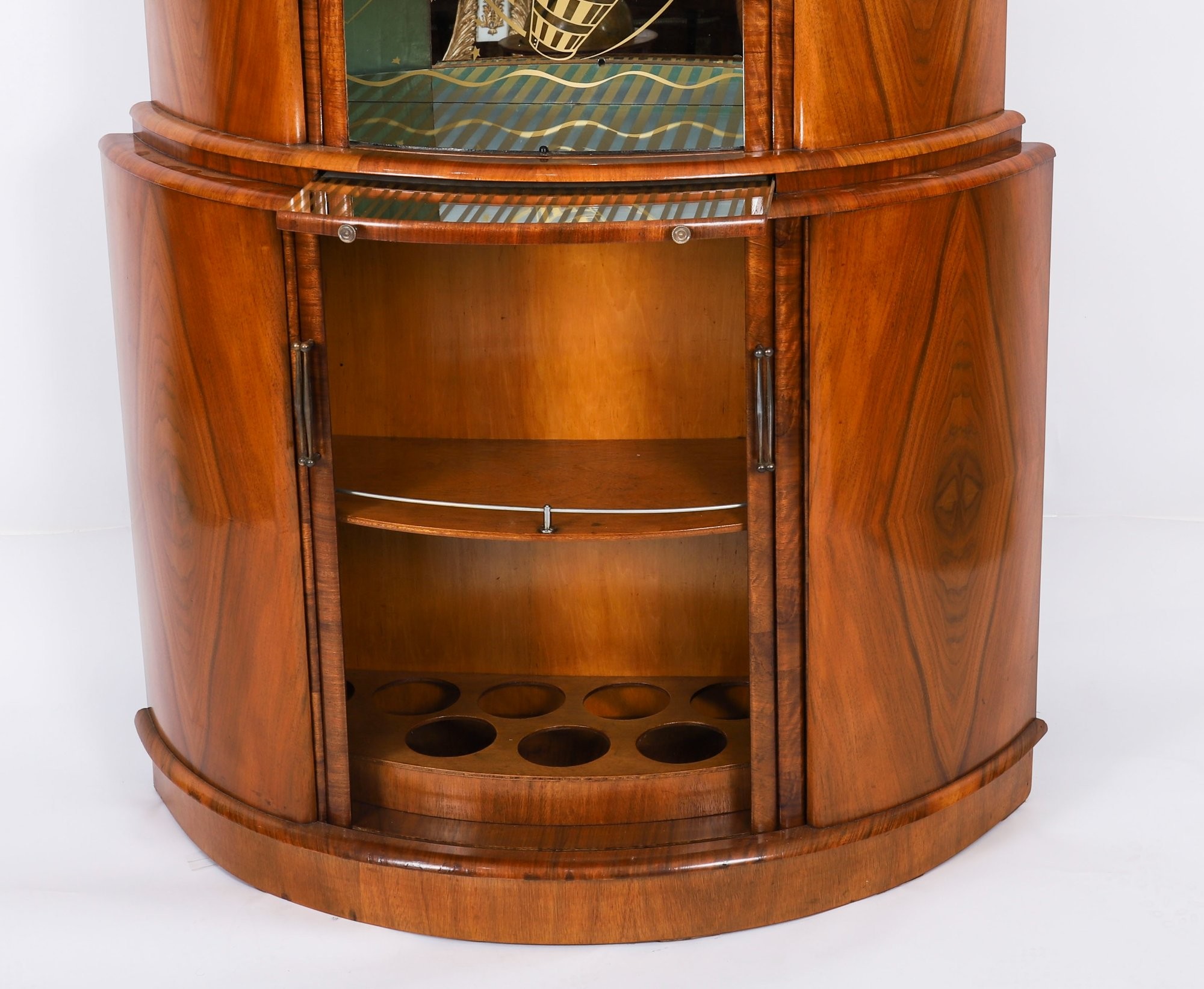
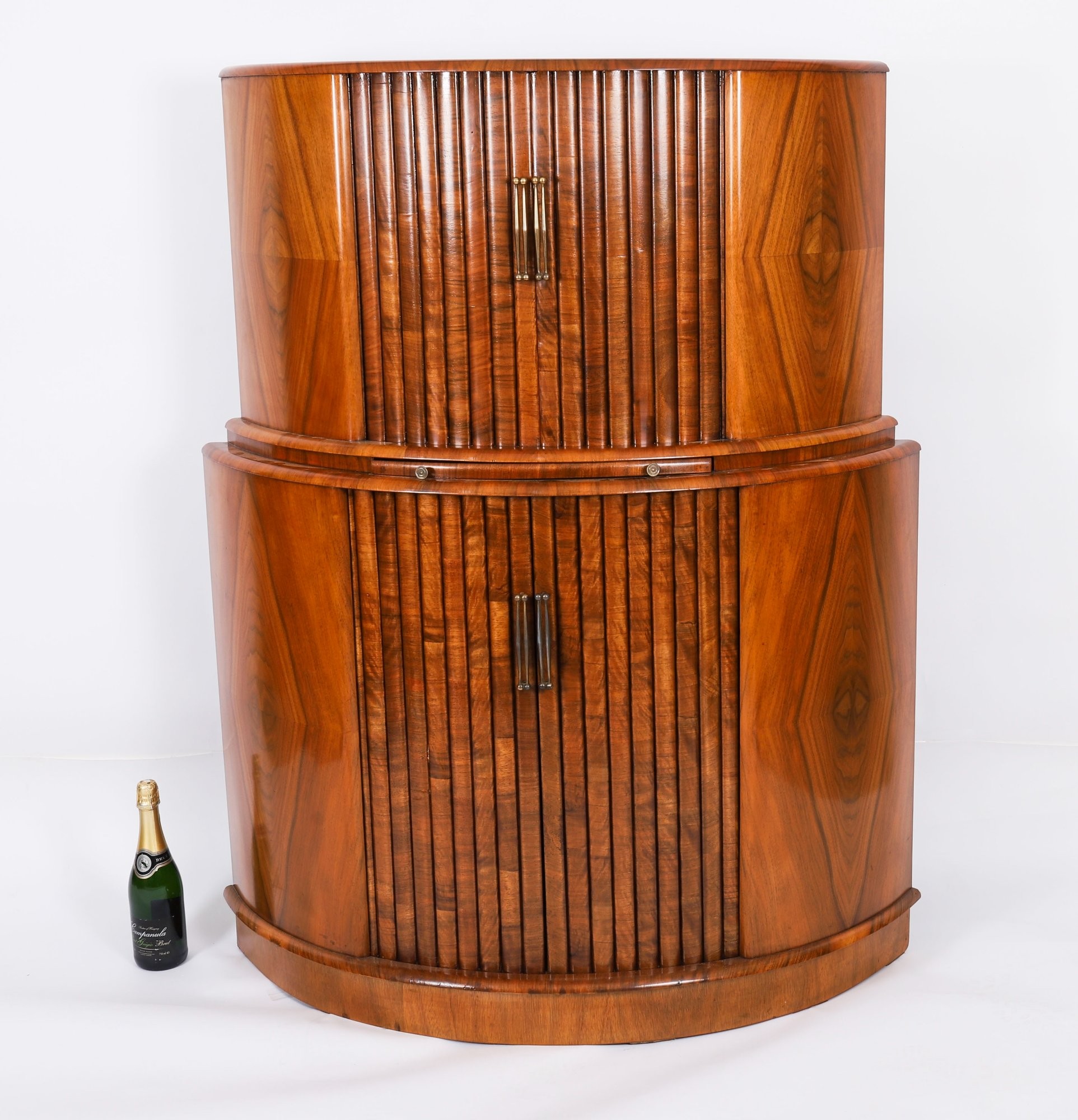
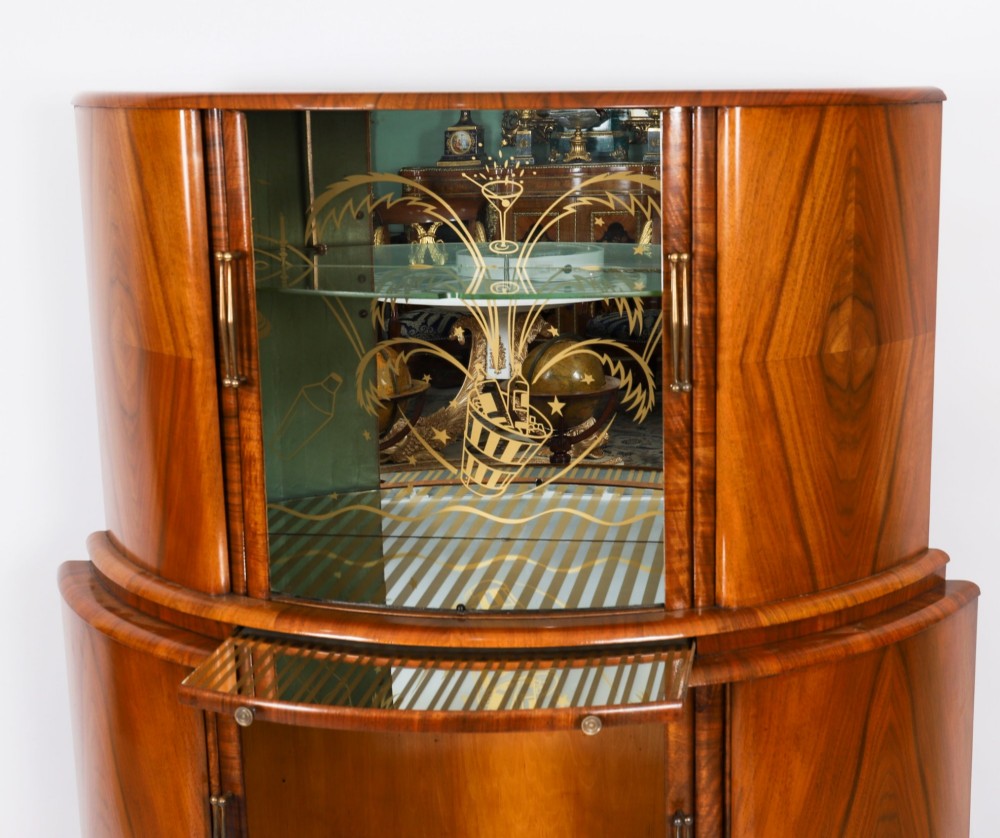
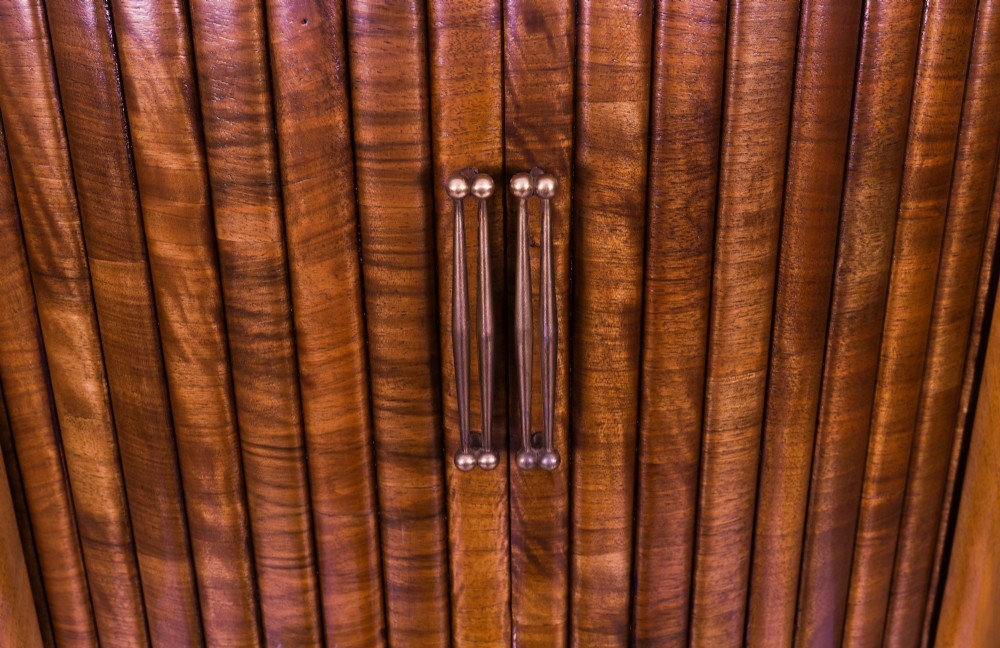
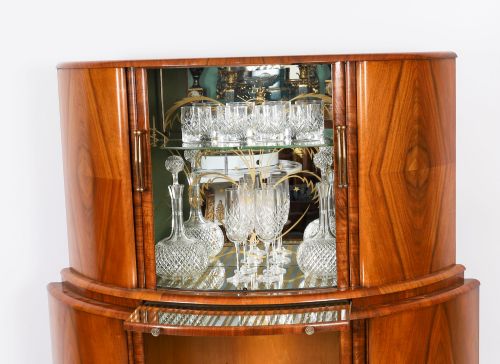
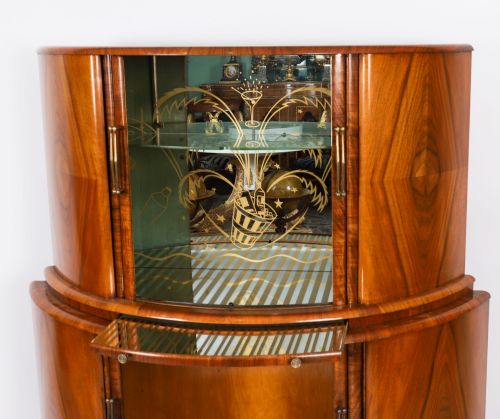
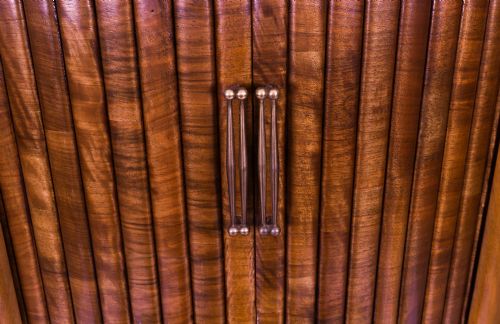
The upper part comprises a pair of concertina sliding doors, with their original handles, enclosing a mirrored interior with sandblasted decoration and a glass shelf.
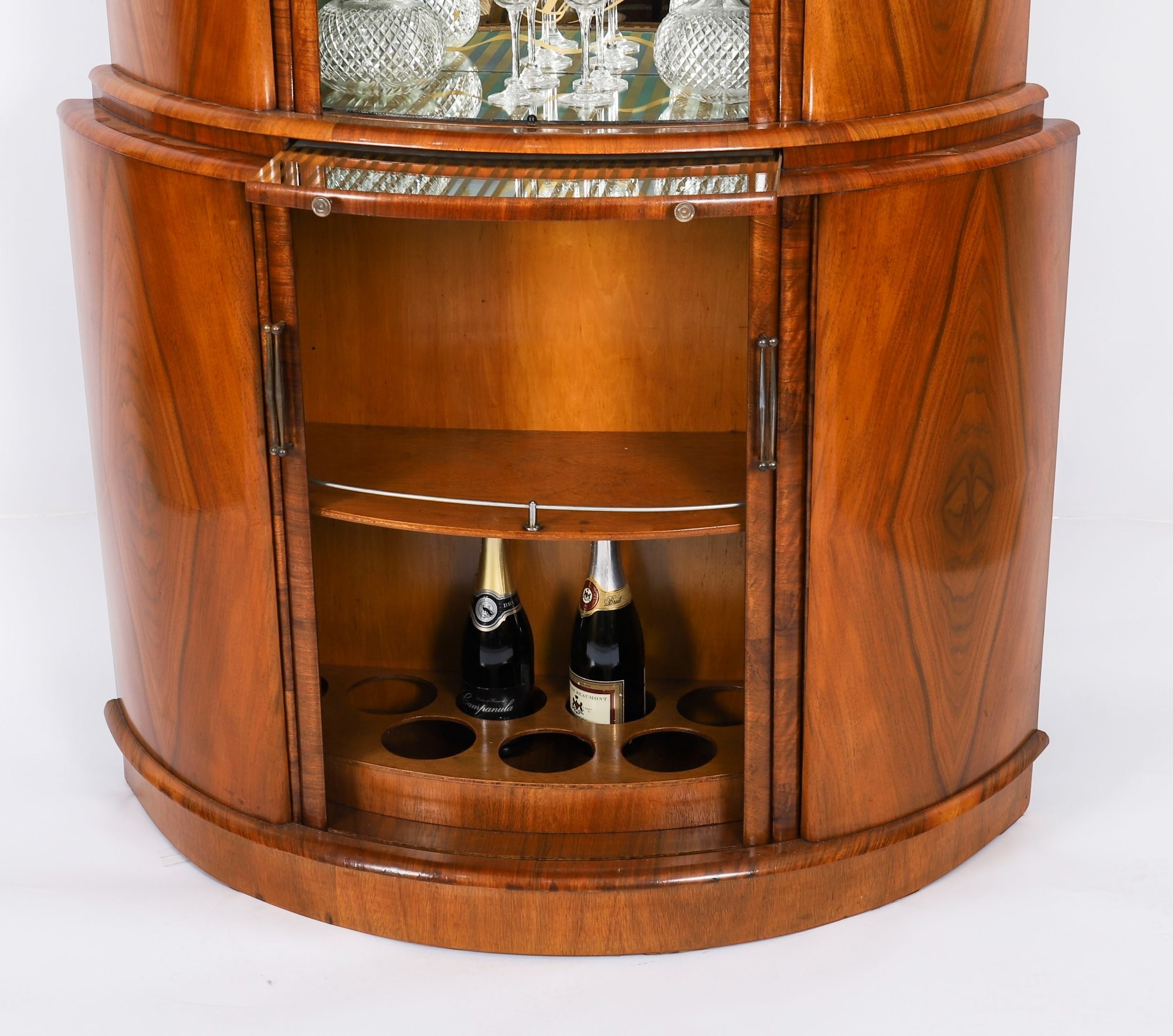
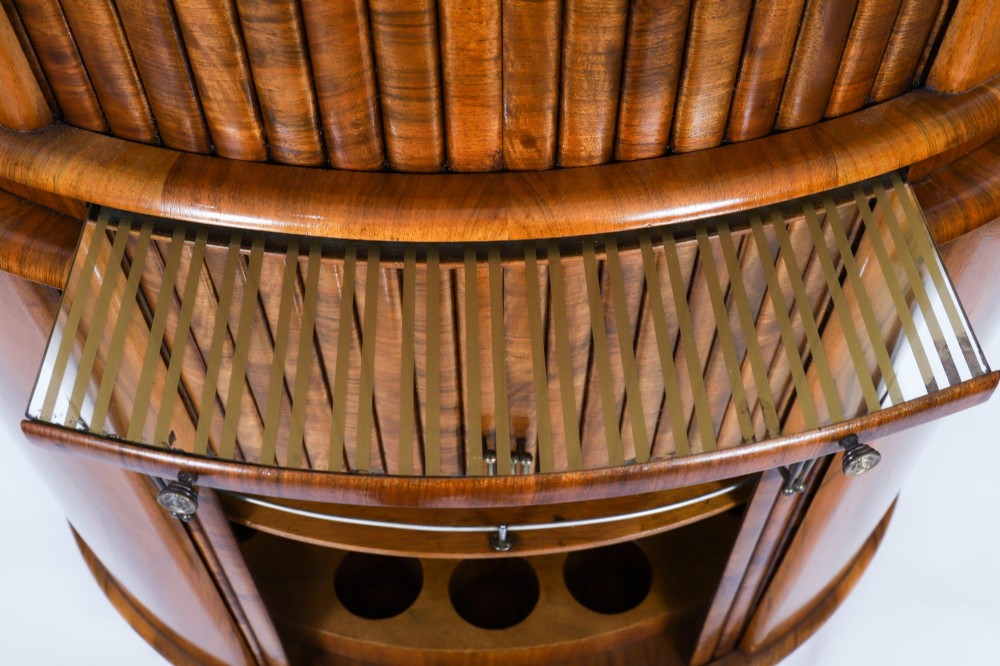
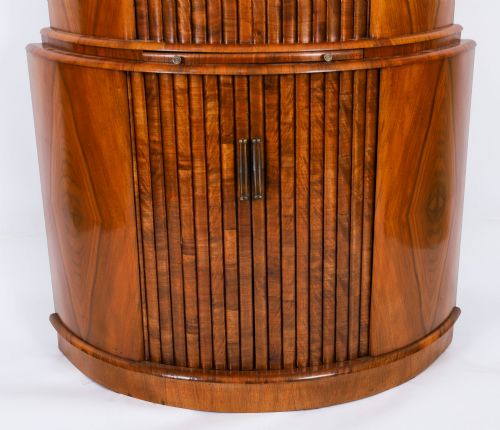
There is a mirrored slide that pulls out to serve your drinks. The lower part has two doors that open to reveal a shelf with a brass gallery above a section to house the bottles.
Please note that the glasses accessories are not included.
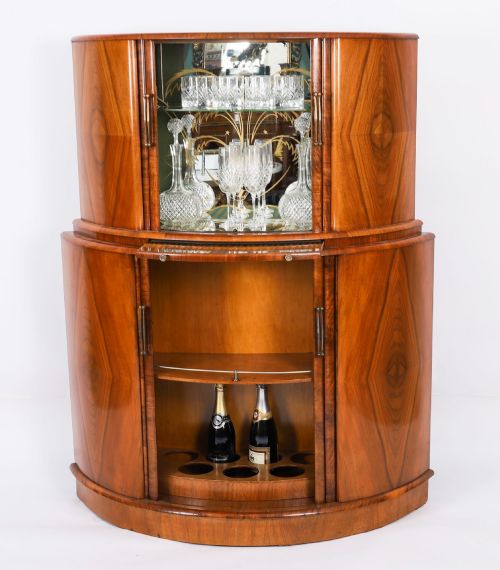
There is no mistaking the timeless appeal of this highly collectable item, it would be a wonderful addition to your lounge or family room and is sure to get noticed wherever it is placed.
Condition:
In really excellent condition having been beautifully cleaned, polished and waxed in our workshops, please see photos for confirmation.
Dimensions in cm:
Height 145 cm x Width 110 cm x Depth 38 cm
Dimensions in inches:
Height 57 inches x Width 43 inches x Depth 15 inches
George Serlin
was born Gershon, one of four Serlin brothers who came to London from Poland in the early 1900s (he arrived in 1910). The brothers each ran their own furniture firms. His firm, G. Serlin & Sons, made upholstery and general domestic cabinet furniture, and later became known as Lancelot Furniture in Mill Hill under his son Morris. The Furniture History Society's directory covers the family in more detail.
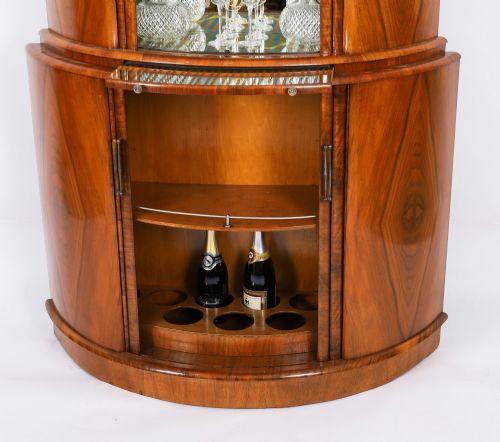
Sureline appears to have been the trade label for the firm's cocktail and drinks cabinets.
Art Deco or Deco,
is an influential visual arts design style which first appeared in France during the 1920s, flourished internationally during the 30s and 40s.
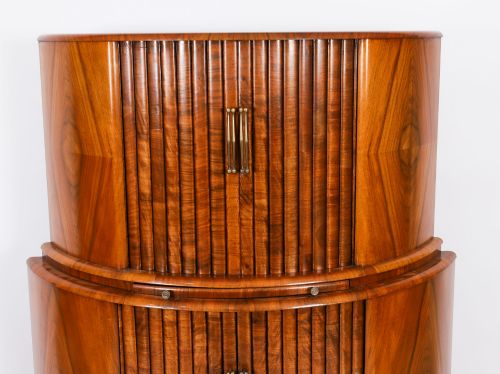
It is an eclectic style that combines traditional craft motifs with Machine Ageimagery and materials. The style is often characterized by rich colours, bold geometric shapes, and lavish ornamentation.
Deco emerged from the Interwar period when rapid industrialization was transforming culture. One of its major attributes is an embrace of technology. This distinguishes Deco from the organic motifs favored by its predecessor Art Nouveau.
Historian Bevis Hillier defined Art Deco as "an assertively modern style...[that] ran to symmetry rather than asymmetry, and to the rectilinear rather than the curvilinear; it responded to the demands of the machine and of new material...[and] the requirements of mass production".
During its heyday Art Deco represented luxury, glamour, exuberance, and faith in social and technological progress.
Burr Walnut
refers to the swirling figure present in nearly all walnut when cut and polished, and especially in the wood taken from the base of the tree where it joins the roots. However the true burr is a rare growth on the tree where hundreds of tiny branches have started to grow. Burr walnut produces some of the most complex and beautiful figuring you can find.
Our reference: A5392
Regent Antiques has dated this Burr Walnut Cocktail Cabinet to the 1930s.
This is an independent date report produced by Sellingantiques using its own proprietary system. The process uses the photographs shown on this page. The system is never told the date the dealer has declared. This report shows that the two dates corroborate.
We specialise in english and continental furniture, silver, porcelain and decorative items.
You can view the stock and full dealer information on the Regent Antiques Profile Page
Regent Antiques is a registered member of LAPADA CINOA
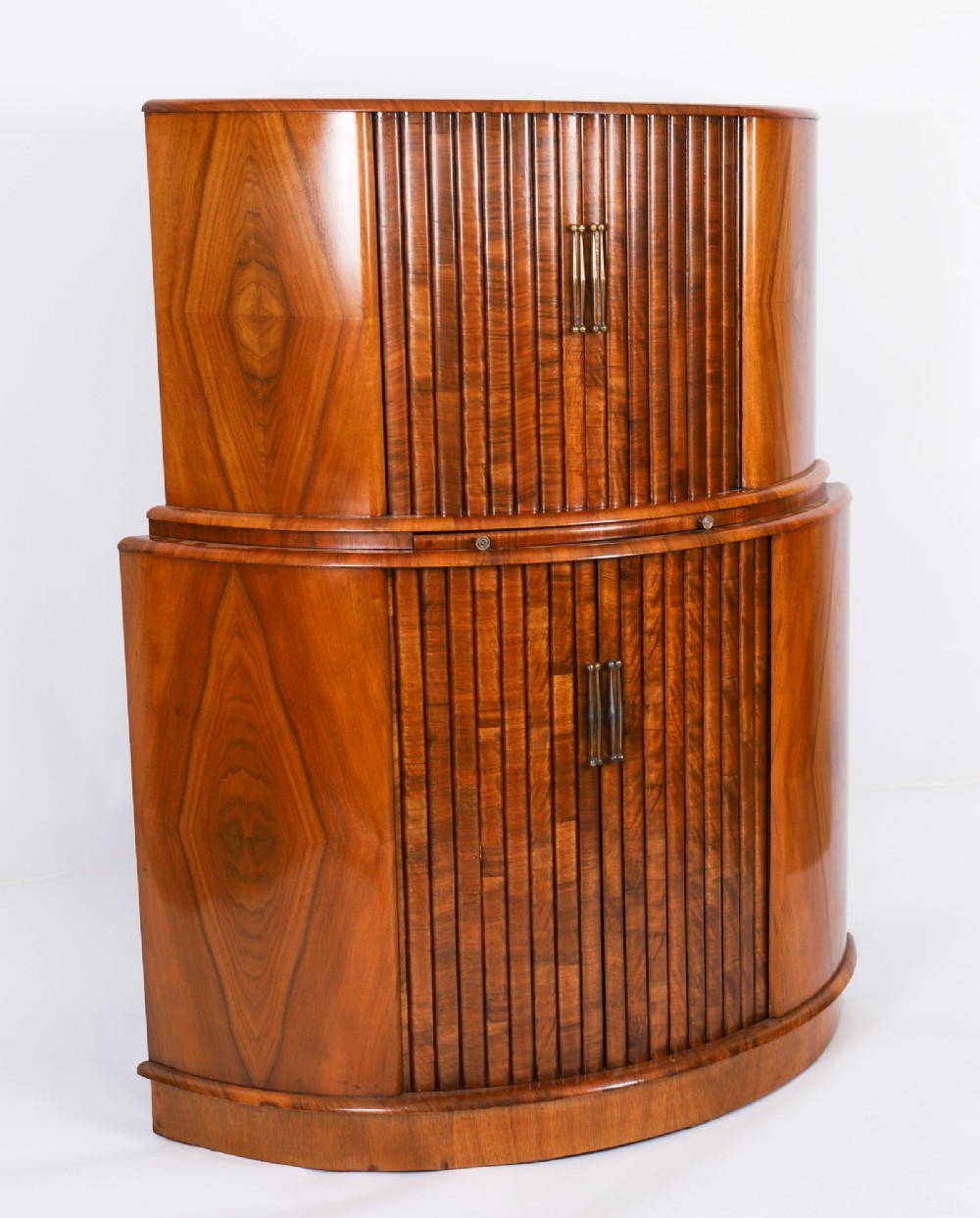
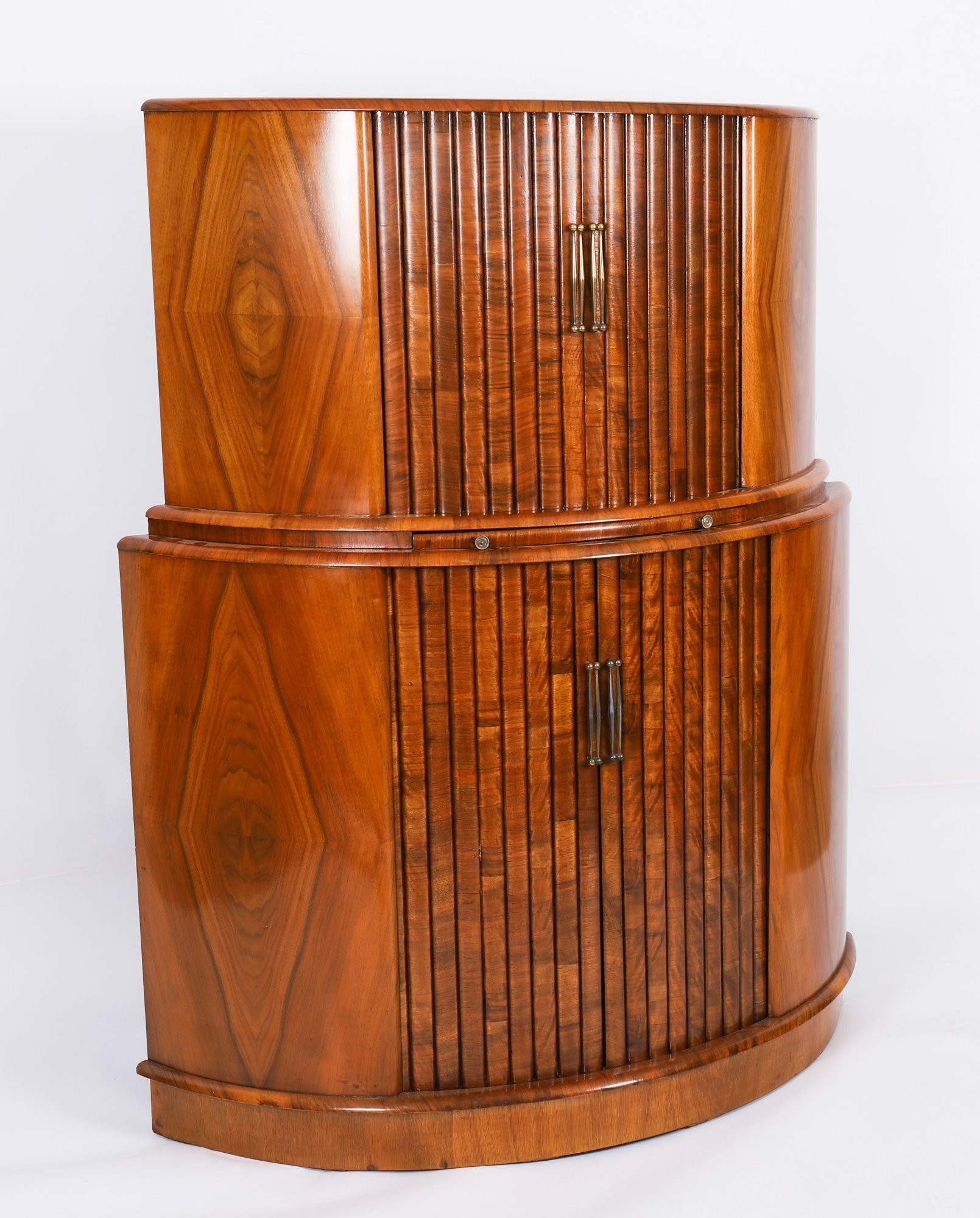
Antique Art Deco Burr Walnut Cocktail Cabinet Dry Bar George Serlin & Sons C1930