




Antique Wall Cabinets
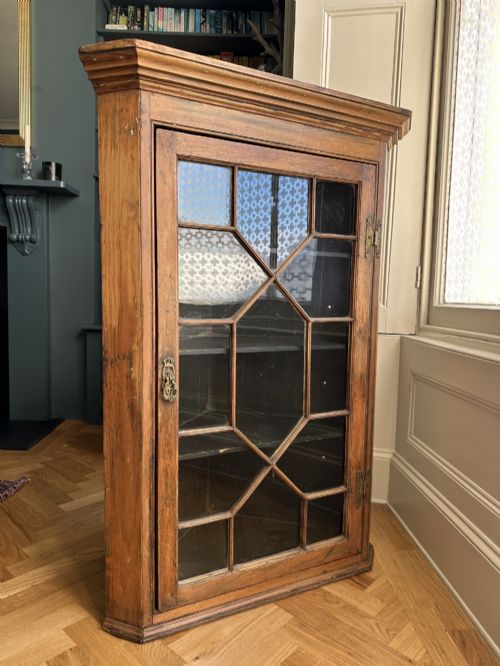
A small case made to hang on a wall rather than stand on the floor, with a glazed or panelled door, used for displaying china, storing household oddments or fitting out a shop.
Antique Wall Cabinets
Timber-framed cases built to be fixed to a wall. The archive on Sellingantiques runs from plain pine and oak kitchen and bathroom cupboards, through mahogany glazed corner cabinets, to apothecary, chemist and jeweller's cases. Sizes are generally modest, and "small" appears in titles far more often than "large".
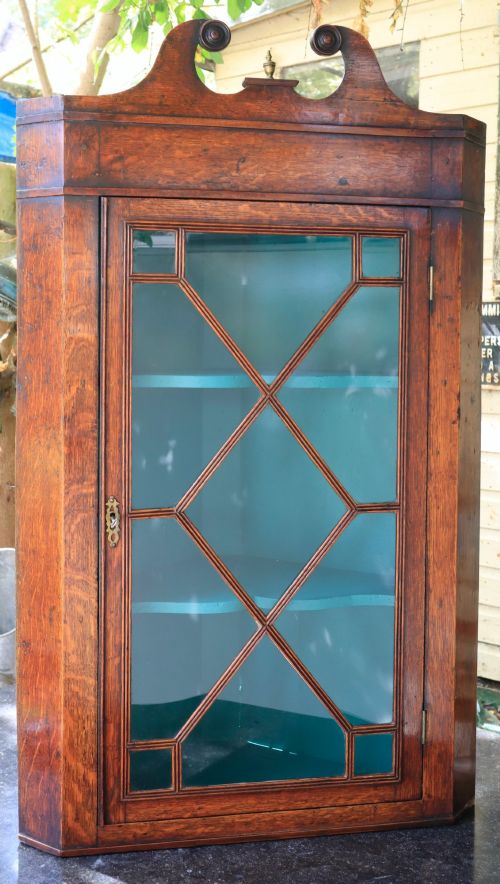
The form you'll meet most is a mahogany or oak cabinet with a glazed door. Mahogany leads the timbers, oak follows, and "hanging" and "glazed" both turn up throughout the titles. Within that, the hanging corner cupboard is the single most identifiable sub-type: triangular in plan, Georgian to Edwardian, made to display china in a room with no floor to spare.
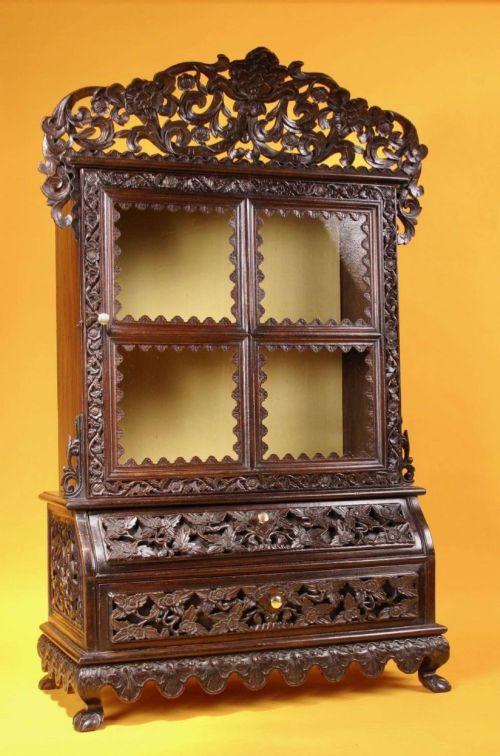
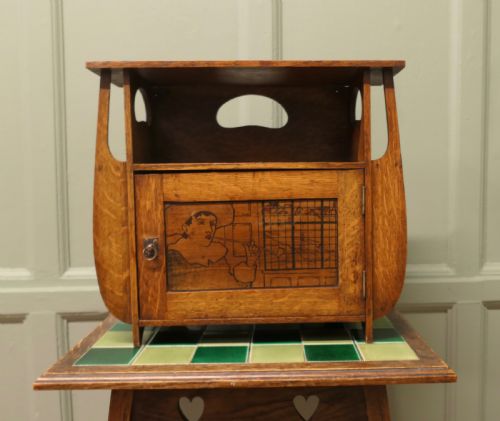
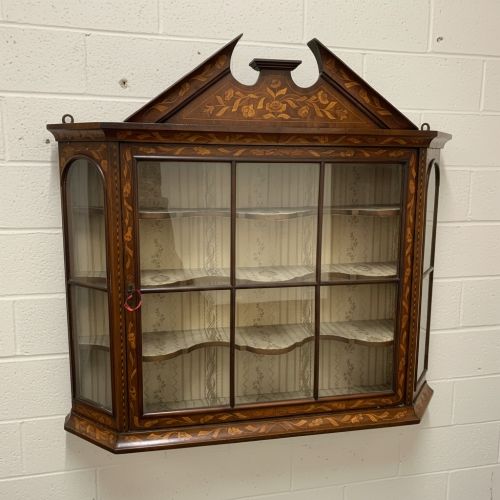
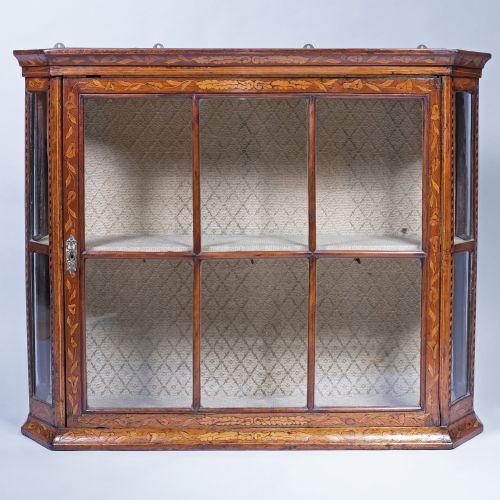
Beyond the corner cupboard sit glazed display cabinets and vitrines, Arts and Crafts and Aesthetic-period carved oak, painted country and pine cupboards, and trade cases from shops and dispensaries. Continental and export pieces account for roughly one in ten: Dutch marquetry, French kingwood, with single Italian, Anglo-Indian, Chinese export, Japanese and Syrian examples.
Dates run from 1750 to 1950, though fewer than half the listings pin down a clean year. "19th Century" is the largest single label, with Victorian, Edwardian and Georgian close behind. Where decades are given they cluster in the early twentieth century, so the Edwardian-to-1920s stretch is unusually well represented. Eighteenth-century pieces exist but are scarce.
The Range
Timber does most of the sorting. Pine and beech cabinets sit at the bottom of the range, while rosewood, satinwood, kingwood, burr walnut, amboyna, yew and pollard oak appear at the top. Metal follows the same logic: brass and bronze cases, and ormolu-mounted kingwood, all land in the upper half.
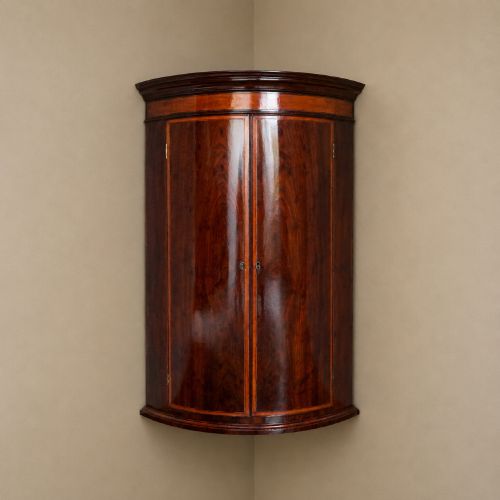
Among corner cupboards, the door decides a lot. Plain glazed corner cabinets appear from the bottom of the range upward, while astragal-glazed and bow-front Georgian examples recur near the top. The more the front is shaped and the glazing divided, the higher the piece tends to sit.
Two other things lift a cabinet. Trade provenance is one: jeweller's, haberdashery, drapers and shop display cases gather at the top, against anonymous domestic cupboards at the bottom. Pairs are the other. They make up a small share of titles and cluster noticeably in the upper half, as do labelled and attributed pieces.
Antique Wall Cabinets Retail Price Guide 2026
Typical UK retail prices for wall cabinets, calculated from the Sellingantiques database of over a million retail prices indexed since 2003. This retail price guide relies exclusively on Sellingantiques data; no external sources or auction records are used, so the figures do not describe the wider market.
The dates dealers give wall cabinets on Sellingantiques run from 1750 to 1950, a full two centuries.

The Antique Wall Cabinets Glossary
- Hanging or wall-mounted
- Made to be fixed to a wall rather than stand on the floor. "Hanging" appears in around sixty titles, "mounted" in a further sixteen.
- Corner cupboard
- A cabinet triangular in plan, made to fit the angle of a room. It's the commonest named sub-type in this category.
- Astragal glazed
- A glass door divided by slender moulded glazing bars. It turns up on Georgian corner cupboards in particular.
- Bow front and serpentine front
- A convex or wavy front rather than a flat one. Both terms occur in the titles, and both point upward in the range.
- Vitrine
- A glazed display case. Used in a handful of listings, once spelled "vitreen".
- Sign written
- Hand-lettered advertising on the glass or frame of a shop cabinet, chocolate advertising being the recurring theme.
Antique Wall Cabinets: Frequently Asked Questions
What is the most common type of wall cabinet?
A mahogany or oak cabinet with a glazed door. Mahogany accounts for a little over a quarter of titles and oak for close to a fifth.
Within that, the hanging corner cupboard is the most identifiable form, and it makes up a good deal more of current stock than of the archive as a whole.
How old are they usually?
The dealer-entered dates run from 1750 to 1950. Only about 126 of 307 listings give a clean year, so period labels do much of the work: "19th Century" is the largest bucket, then Victorian, Edwardian and Georgian.
Where decades are recorded, the 1900s, 1910s and 1920s outnumber the Victorian decades. Eighteenth-century pieces appear, but they're scarce, and nothing in the archive predates 1750.
Are shop and apothecary cabinets part of this category?
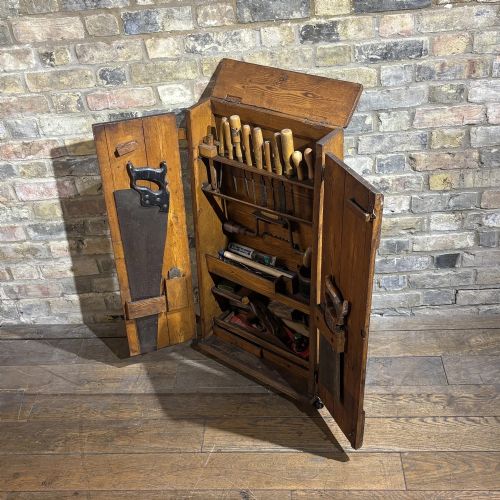
Yes, and they run across the whole range. Apothecary, chemist, pharmacy, jeweller, haberdashery, dentist, gun, tool and key cabinets all appear.
Cabinets sign-written for chocolate advertising recur often enough to form a small genre. Documented shop and dispensary cases sit toward the top of the range.
Do wall cabinets come in pairs?
Sometimes. "Pair" appears in a small number of titles, around one in thirty.
Pairs gather noticeably in the upper half of the range, and the highest-reaching entry in the samples is a nineteenth-century pair of English hanging wall cabinets.
Which timbers turn up besides mahogany and oak?
Pine and painted country cupboards make up a small branch of their own. Above them sit rosewood, satinwood, kingwood, burr walnut and amboyna.
Single appearances include yew, chestnut, pollard oak, burr elm, specimen wood and Florentine giltwood. Not everything is timber either: brass wall cabinets turn up several times, with one bronze and one steel example.
How many come to market each year?
Around thirty-four a year on Sellingantiques, spread across 111 different dealers over the run of the archive.
That works out at fewer than three each. It's a category most dealers meet occasionally rather than specialise in.