


Antique Spice Cabinets
A small wooden cabinet fitted with a bank of little drawers, made to hold spices when they were costly enough to keep behind a door.
What Are Antique Spice Cabinets?
Lockable cabinets of small drawers came into British domestic use in the 17th century, when imported spices were valuable enough to keep shut away. The form outlived that need and carried on as a general small-drawer cabinet, shading into shop, chemist's and collector's drawer banks.
The version you'll meet on Sellingantiques is a small oak or mahogany cabinet or cupboard of spice drawers, English, and dated to the 18th or 19th century. Of twenty sampled titles, six name oak or ash and four mahogany, and nine use the words spice cabinet, spice cupboard or spice drawers outright. Pine turns up too, and the drawers can be wall-hung or free-standing.
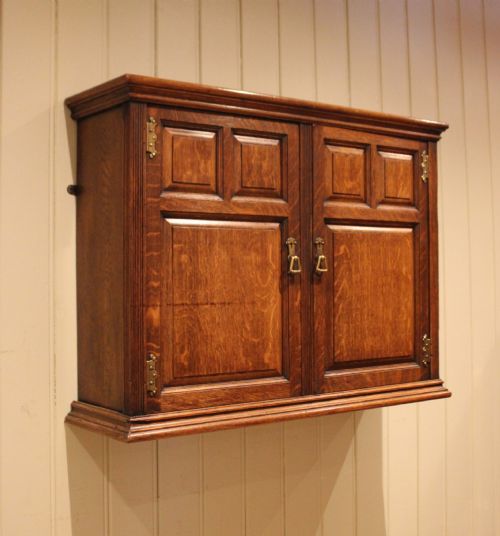
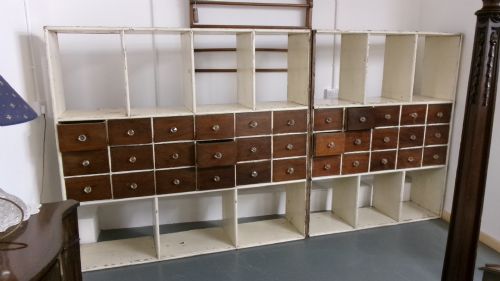
Roughly a third of the sample is the enclosed type, a tier of drawers behind a single hinged door, in oak and ash and dated 17th to 18th century. About a fifth is the open bank with no door at all. Another fifth is small hanging and wall cabinets grouped under the heading without any spice wording, running from around 1870 to Edwardian, including Art Nouveau and Art Deco design pieces. Two chemist's and shop-fitting drawer banks sit here as well, and two pieces from outside Britain: a brass-mounted Chinese hardwood spice or medicine cabinet of about 1920 and an ebony, abalone and bone inlaid Syrian cabinet.
Dates are usually a century rather than a year. The dealers' dated field spans 1735 to 1920, but only three listings in the whole archive carry a clean year; the rest give 19th Century, 18th Century, 17th Century, or a reign or style label such as Victorian, Edwardian or 1920s. Read those brackets as the dealer's placing rather than a researched date. It's a small corner of the market, about two listings a year, though seventeen different dealers have offered one, so almost nobody handles them twice.
Where The Range Splits
Age does most of the work. The 1735 oak cupboard and an 18th-century ash example are the two highest-priced spice-labelled pieces, while a 19th-century vernacular cabinet sits at the bottom. Timber follows the same line: oak, ash and mahogany above pine, with the one set of painted pine spice drawers low in the range.
Surface decoration lifts a piece. The ebony, abalone and bone inlaid Syrian cabinet and the inlaid mahogany examples sit above the plain oak and pine ones, where the interest is in the joinery rather than anything applied to it.
Size runs against expectation. Smallness is advertised, not apologised for, and the top of the sample is a miniature 18th-century ash spice cabinet. Explicit spice wording is the core of the heading, and the wall and hanging cabinets that don't claim it cluster in the middle; the chemist's and shop-fitting drawer banks occupy the upper half without using the word at all.
Retail Price Guide 2026
Typical UK retail prices for spice cabinets, calculated from the Sellingantiques database of over a million retail prices indexed since 2003. This retail price guide relies exclusively on Sellingantiques data; no external sources or auction records are used, so the figures do not describe the wider market.
Dated spice cabinets on Sellingantiques run from 1735 to 1920, though most dealers give a century rather than a year.
The Antique Spice Cabinets Glossary
- Spice cupboard
- A bank of small drawers sitting behind a single hinged door. The enclosed type, and the older shape of the two.
- Spice drawers
- The same tier of small drawers offered without an enclosing door, sometimes titled a bank of drawers.
- Hanging cabinet
- Made to be fixed to a wall rather than stand on a surface. Several titles say so outright.
- Shop fitting
- A drawer bank taken out of a trade interior, in this heading a Victorian chemist's shop.
- William and Mary
- A late 17th-century style label, used of one oak spice cupboard in the archive.
- Vernacular
- Made by a country or provincial hand rather than a workshop; one Scottish cabinet is titled that way, and folk art alongside it for its naive decoration.
Frequently Asked Questions
What were spice cabinets actually used for?
Storing costly imported spices in the house. They came into British domestic use in the 17th century, when the contents were worth keeping behind a door that locked.
Once spices stopped being a luxury the form carried on as a general cabinet of small drawers, which is why it shades into shop, chemist's and collector's drawer banks.
Which woods are these made from?
Oak, mahogany, pine and ash are the timbers named in the titles. Six of twenty sampled titles name oak or ash and four name mahogany.
Two pieces sit outside that: a Chinese hardwood cabinet with brass mounts, and one inlaid in ebony, abalone and bone.
Why do so many listings only give a century?
Because that's what the dealers' dated field carries. Six sampled listings say 19th Century, three 18th Century and two 17th Century.
Only three listings in the whole archive give a clean year, at 1735, 1900 and 1920. Elsewhere a style or reign label stands in, so Victorian, Edwardian, 1900s or 1920s.
Are chemist's drawers sold under this heading?
Yes. Two listings in the sample are chemist's drawers and a Victorian chemist's shop-fitting bank of drawers.
Neither uses any spice wording, and both sit in the upper half of the range.
Do all of them have a door?
No. Roughly a third of the sample is enclosed, with the drawers behind one hinged door, mostly in oak and ash and dated 17th to 18th century.
About a fifth is an open bank with no door, in pine and mahogany. A further group is plain wall and hanging cabinets filed here without the word spice.
How often do spice cabinets come up for sale?
About two listings a year on Sellingantiques, which makes this a very small corner of the market.
Seventeen different dealers have offered one at some point, so almost nobody carries them twice. Oddities appear once and never again: a Scottish vernacular folk-art cabinet, painted pine spice drawers combined with a plate rack, an Art Deco design two-door wall cabinet with a shelf.