

Antique Corner Cabinets
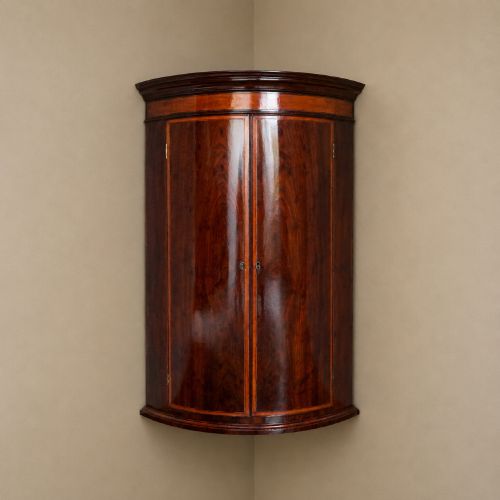
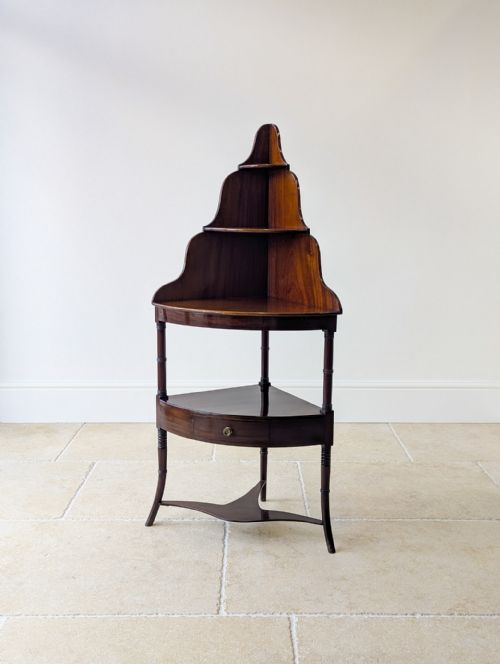
A triangular-plan cupboard or display cabinet built to sit into the corner of a room, either hung on the wall or standing on the floor.
Antique Corner Cabinets
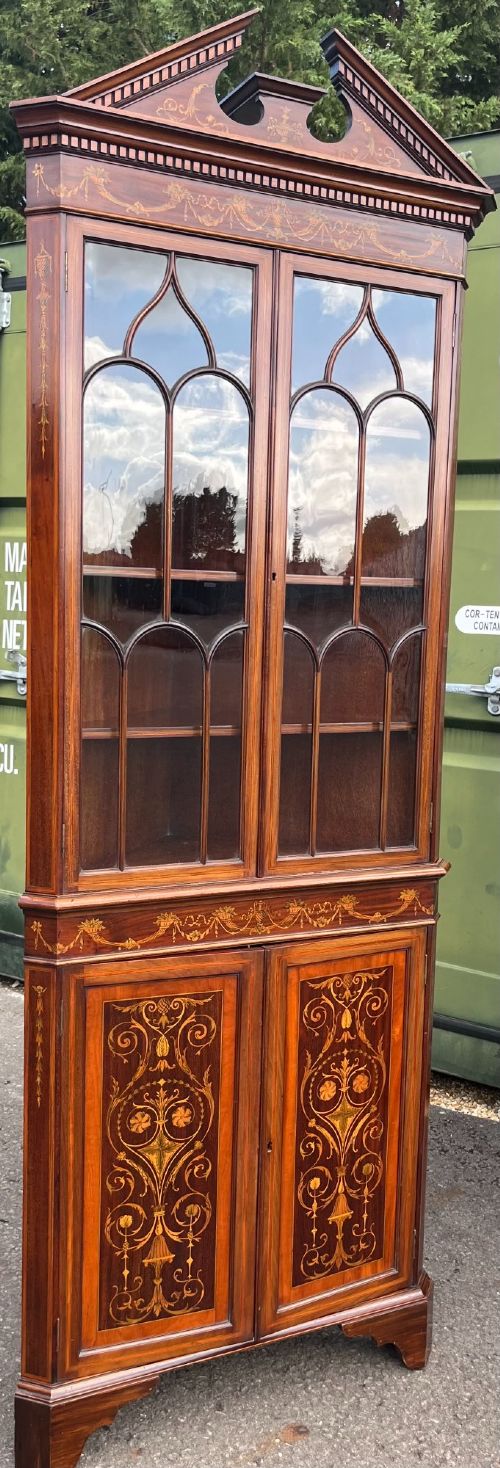
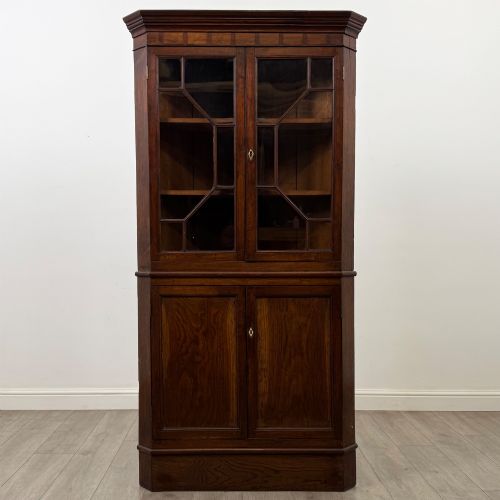
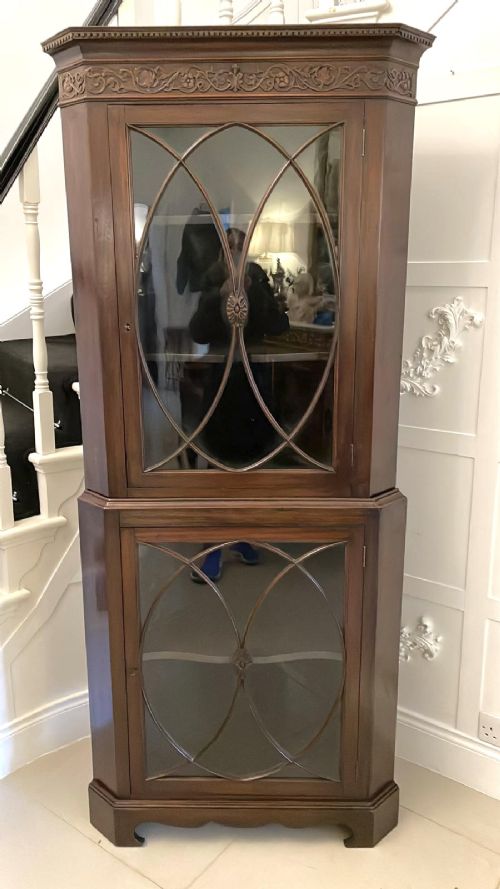
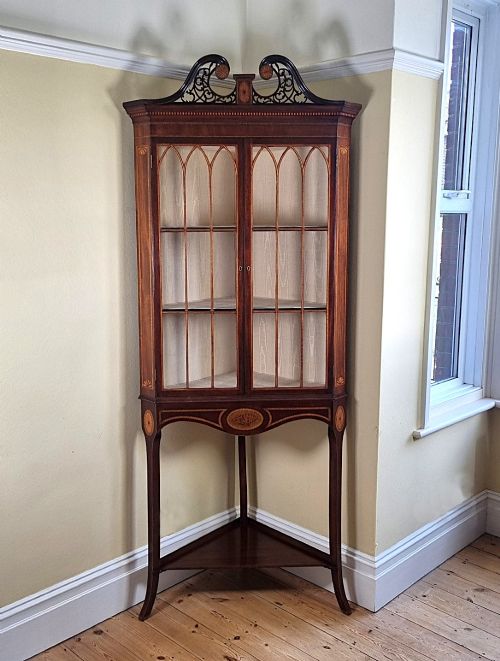
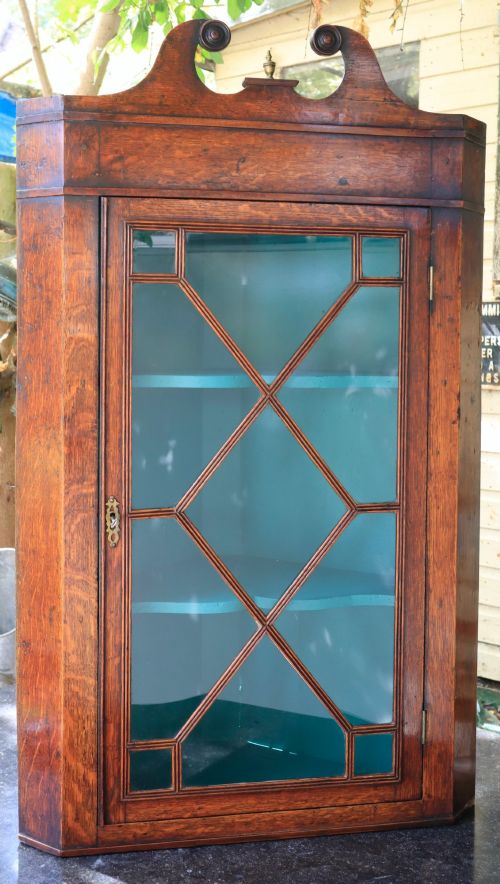
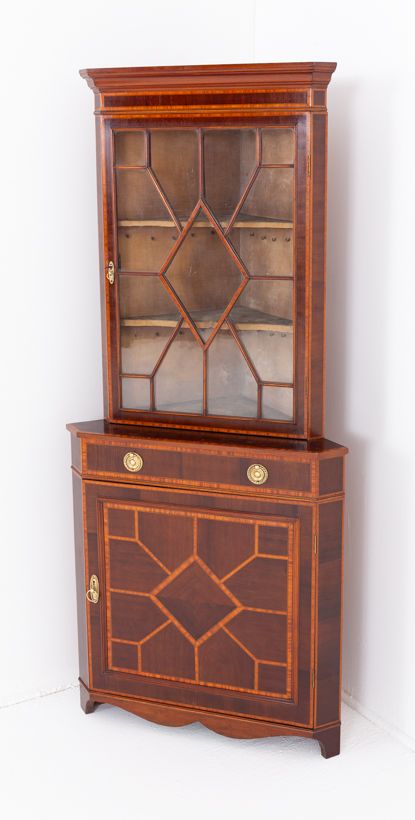
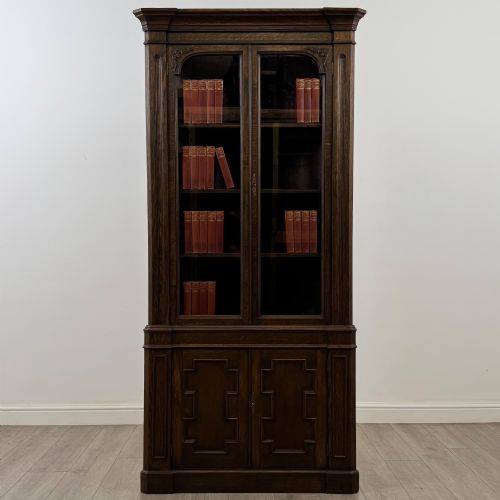
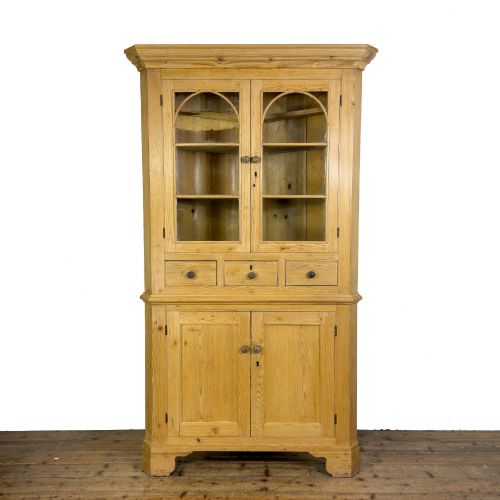
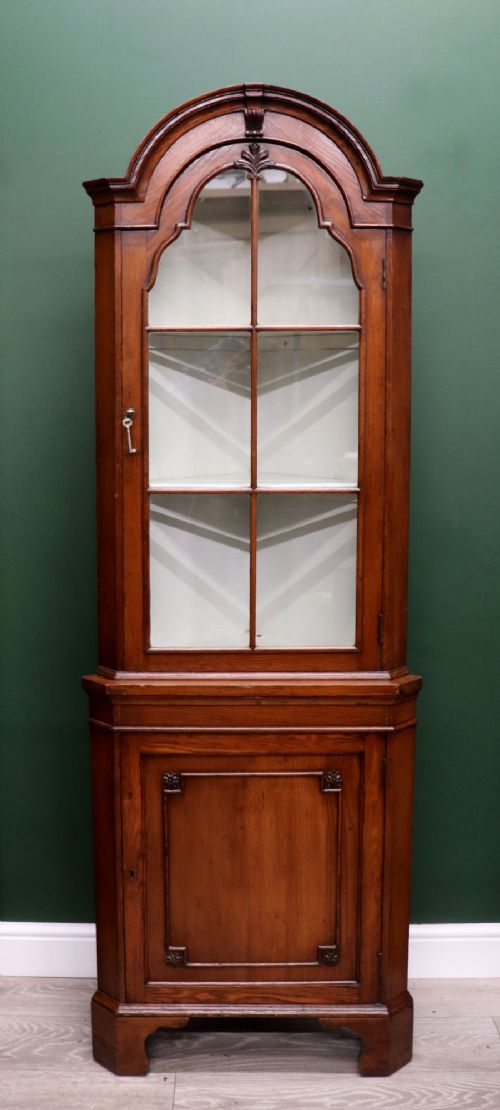
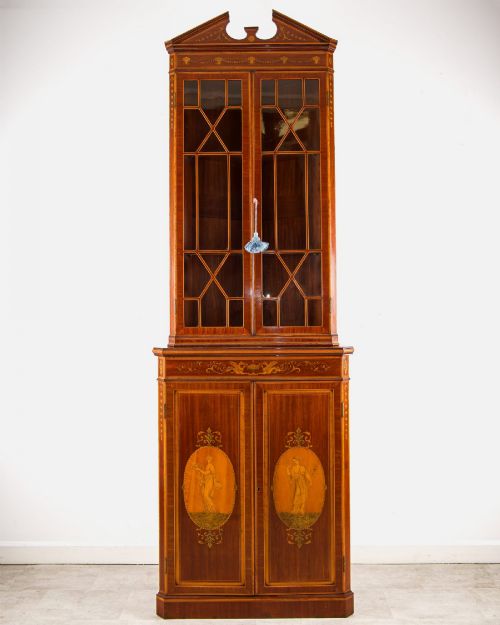
They come in two broad physical types. Small single-door cabinets made to hang on a wall, and taller floor-standing pieces, some of them in two parts with a cupboard base and a glazed upper stage. The shape answers the awkward angle of a panelled room, and the glazed form spread as china and glass moved into wider ownership from the 18th century.
Mahogany is named in more titles than any other timber, with oak second, then walnut, pine and rosewood. Inlay is the second commonest word in the category, and "inlaid mahogany" turns up as a set phrase. Doors are described as glazed or astragal glazed, fronts as bow or bow-fronted. "Cupboard" and "display" split the naming roughly evenly against plain "cabinet".
Edwardian is the most common single period word, ahead of Georgian and then Victorian. So the piece you're most likely to meet is an Edwardian inlaid mahogany corner display cabinet, glazed and often bow-fronted, with Georgian mahogany and oak examples the next-largest group. Dating runs 1700 to 1960, and 313 of 746 listings carry a clean year; the rest sit under a reign or a century label, so "Georgian" here stretches from around 1710 to Regency.
Alongside that centre sit the country cupboards in oak and pine, about a fifth of the record, including Welsh, elm and yew examples. A smaller group covers revival and marquetry work in satinwood and banded veneers. Around 72 corner cabinets are listed on Sellingantiques in a year, handled by 153 different dealers, so it's a form most furniture dealers touch rather than a specialism.
Where The Range Splits
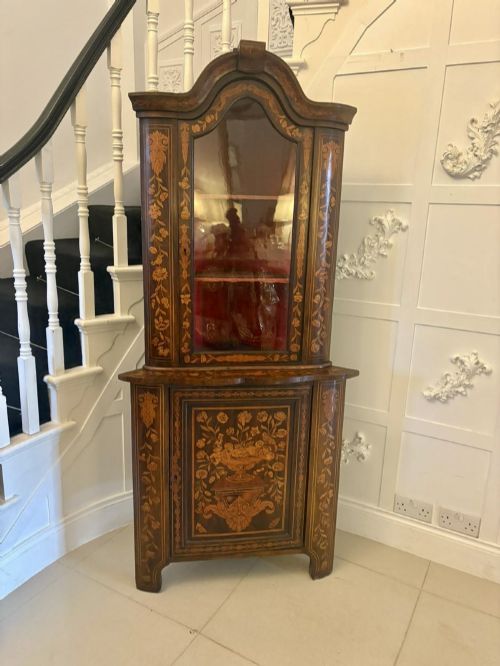
Surface decoration does most of the work. Plain fronts sit at the bottom, inlay runs through the category at every level, and marquetry, appearing in 24 titles, clusters in the highest-priced sampled entries, several of them serpentine-fronted. Timber pushes the same way: pine, elm and plain oak sit low, while satinwood, rosewood, burr walnut, kingwood and yew turn up further up.
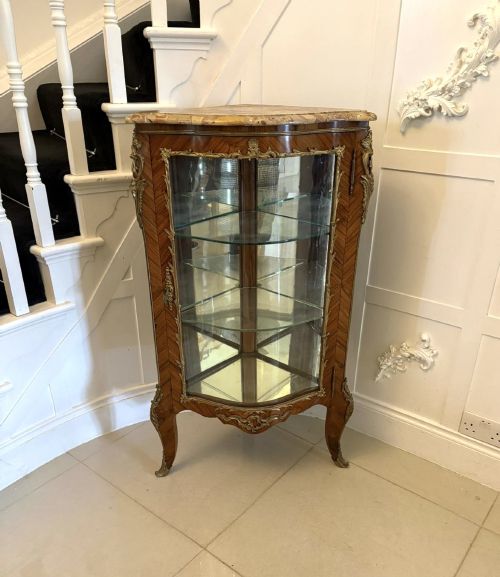
Shape and scale separate the rest. Flat-fronted cabinets fill the lower samples; bow fronts, the occasional serpentine and the barrel back appear disproportionately in the upper half. Small hanging cupboards concentrate at the bottom of the range, while floor-standing, full-height and two-part pieces sit high. The cheapest sampled examples are small hanging mahogany cupboards.
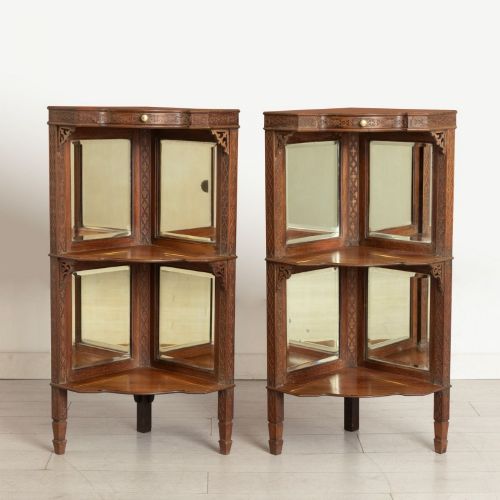
Pairs are the other lever. "Pair" appears in 21 titles, an uncommon sub-population, and pairs recur among the highest-priced sampled entries, the top of the range being a pair of Georgian carved pine open corner cabinets. Size can be considerable at that end: a six-foot Victorian Gothic oak unit and a Georgian pine cupboard recorded at 198cm.
Antique Corner Cabinets Retail Price Guide 2026
Typical UK retail prices for corner cabinets, calculated from the Sellingantiques database of over a million retail prices indexed since 2003. This retail price guide relies exclusively on Sellingantiques data; no external sources or auction records are used, so the figures do not describe the wider market.
Corner cabinets have been listed on Sellingantiques since 2009, with over six hundred recorded in that time.
The Antique Corner Cabinets Glossary
- Astragal glazed
- Glazing bars dividing the door into small panes. The phrase appears in around two dozen titles, sometimes spelled "astral".
- Bow front
- A curved front rather than a flat one. "Bow" runs through 54 titles, with "bow front" and "bow fronted" as the usual variants.
- Two-part
- A cupboard base with a separate upper stage, usually glazed. Also written as double height or full height; "double" appears in 20 titles.
- Inlaid
- Contrasting wood let into the surface. At 176 titles it's the second commonest word in the category, most often paired with mahogany.
- Barrel back
- A curved, coopered back to the cupboard interior, following the shape of the door. It shows up in a handful of titles.
- Encoignure
- The French term for a corner cabinet, used in three sampled titles. Whatnot or corner stand describes open tiered shelving rather than an enclosed cupboard.
Antique Corner Cabinets: Frequently Asked Questions
What wood are most corner cabinets made from?
Mahogany is named in more titles than anything else, with oak a clear second. Between them they cover a large part of the record, and walnut, pine and rosewood follow.
The wider list runs to burr walnut, satinwood, elm, beech, yew, kingwood, amboyna, satin birch and bamboo. Those turn up in smaller numbers, and the lighter, figured timbers sit toward the upper end.
Which period do they mostly date from?
Edwardian is the commonest single period word in the titles, then Georgian, then Victorian. The dated field spans 1700 to 1960.
Genuinely 18th-century pieces are a minority position. The bulk of the record sits either side of 1900, and a large slice carries only a reign or a century label rather than a year.
Are hanging corner cupboards different from floor-standing ones?
They're the two broad types. Hanging or wall cabinets are small single-door pieces fixed to the wall, named in around a tenth of titles and concentrated at the lower and middle of the range.
Floor-standing pieces are self-supporting and often full height, sometimes made in two parts with a glazed upper stage. Those cluster toward the upper end.
How common are glazed display corner cabinets?
Close to a fifth of the category. "Display" appears in 140 titles and "glazed" in 107, with astragal glazing named in another 23.
Samples also use vitrine, display case and bowed glass doors for the same idea. The glazed form grew with the wider ownership of china and glass from the 18th century onward.
Do corner cabinets come in pairs?
Yes, though uncommonly. "Pair" appears in 21 of 746 titles.
Pairs account for several of the highest-priced pieces in the range, including a pair of Georgian carved pine open corner cabinets.
Are continental corner cabinets found on Sellingantiques?
Occasionally, as single appearances across the whole archive rather than a steady supply. Danish, Italian, Flemish, Dutch and Irish examples all show up.
So do Japanese Meiji, Chinese lacquer, Moorish, Ottoman and Anglo-Indian pieces. The category is overwhelmingly English in character, with Welsh named in 16 titles plus scattered Scottish and Ipswich references.