
Antique Drinks Cabinets
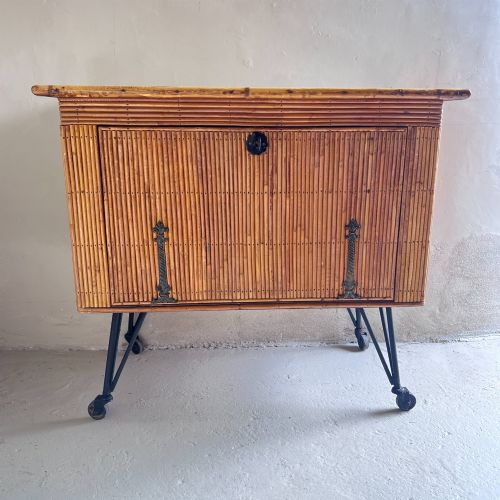
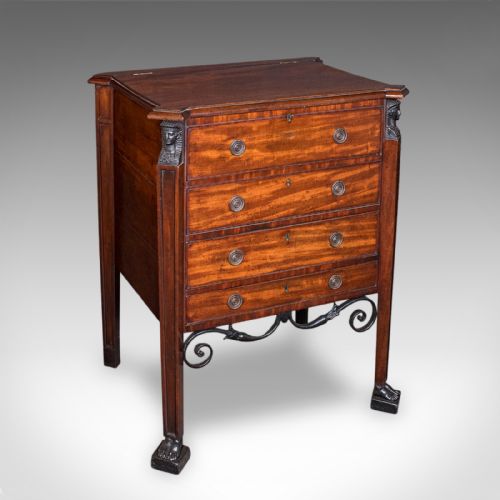
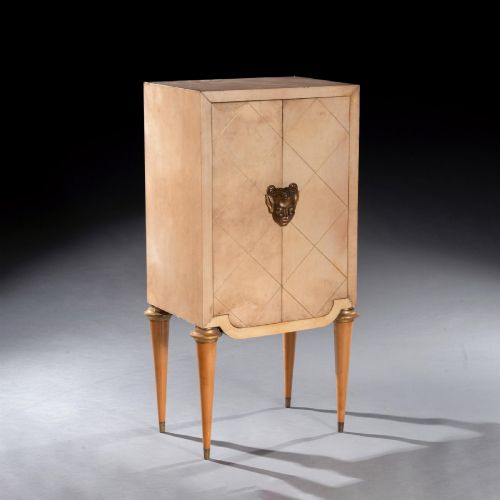
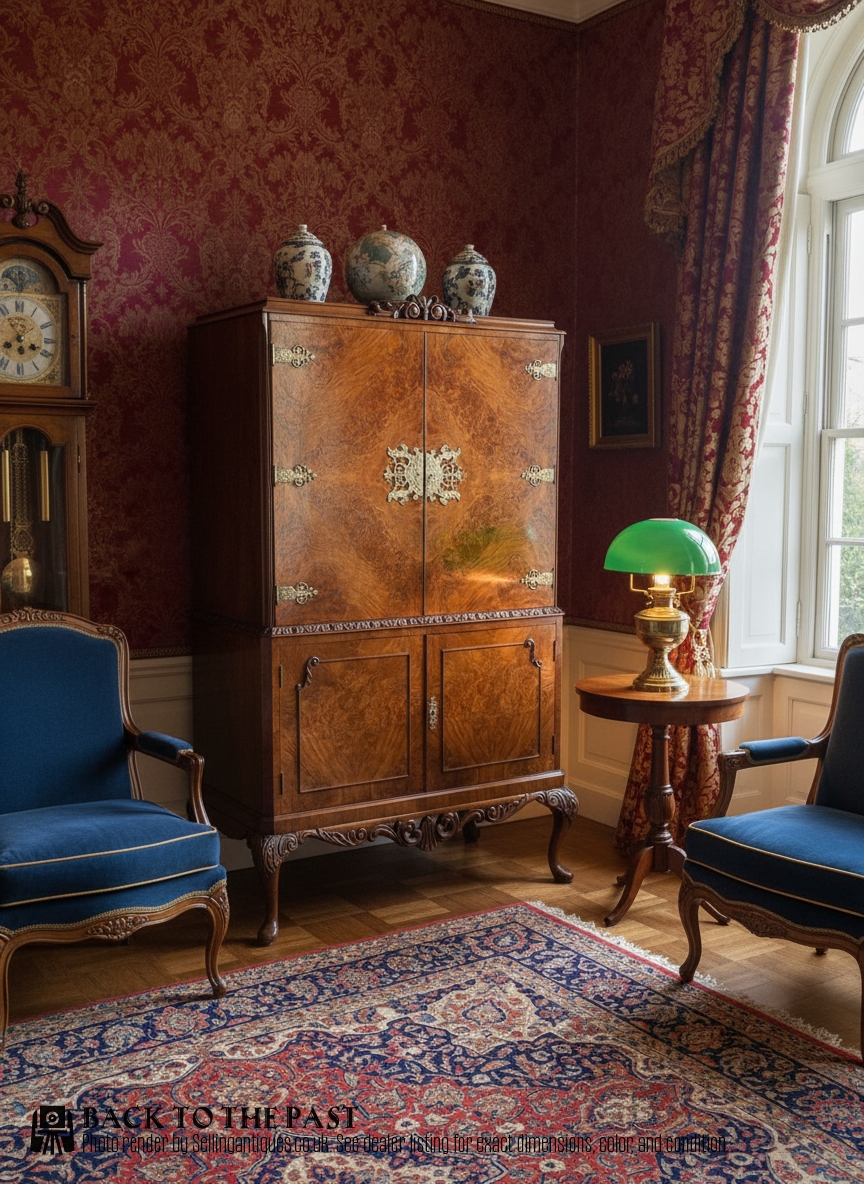
A cabinet made to hold bottles, decanters and glasses, usually opening by fall-front or double doors onto a fitted interior.
What They Are
The idea grew out of the eighteenth-century cellaret and the sideboard, but the purpose-built drinks cabinet, with its fitted interior for bottles and glassware, became a standard piece of domestic furniture between the wars, when cocktail drinking at home spread.
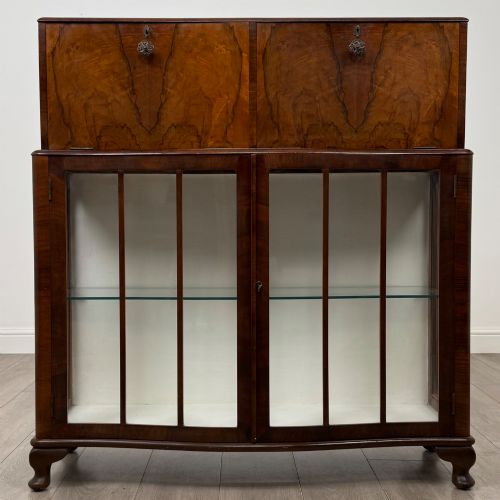
That is what dominates the category on Sellingantiques. Of the listings carrying a year, four fifths fall in the 1920s and 1930s. Walnut is named in half of all titles and burr walnut alone in more than a third, which makes it the defining timber by a wide margin.
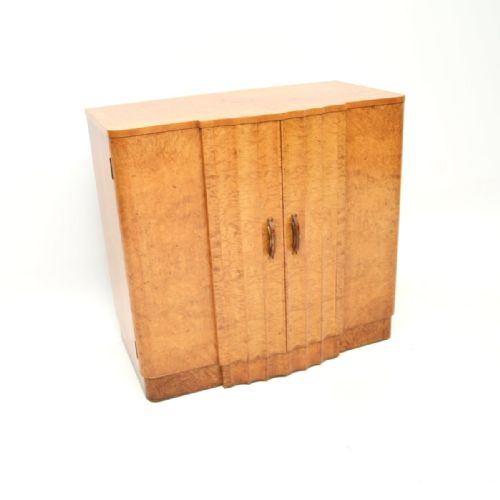
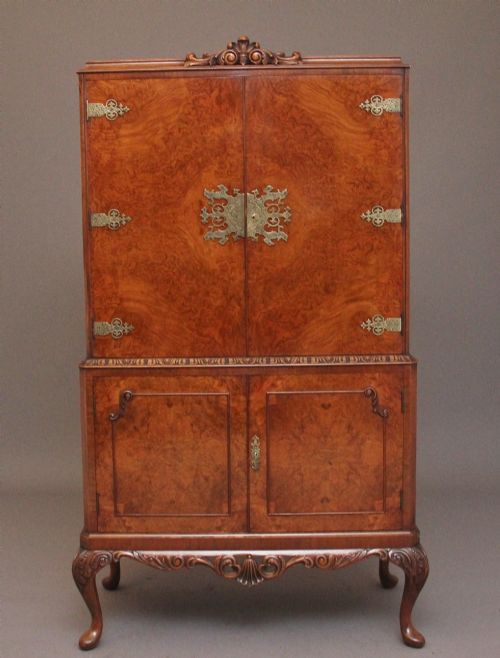
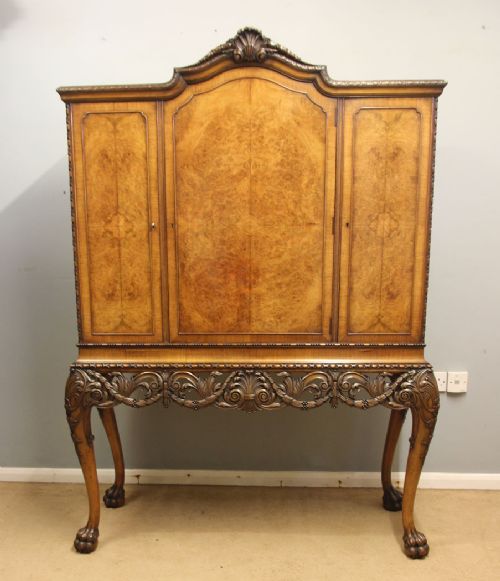
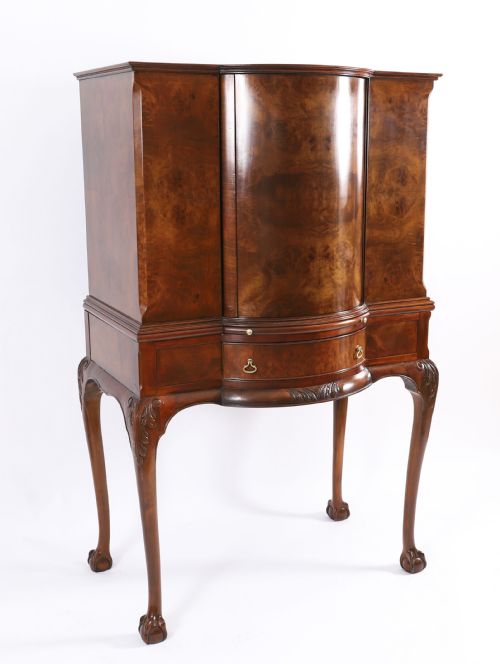
Within the interwar group, one form repeats almost word for word: the burr walnut Queen Anne style cocktail cabinet, bow- or dome-fronted, standing on cabriole legs. Twenty-five listings use that description, and they cluster tightly in the middle of the range. Art Deco is named in around a quarter of titles, taking in maple, lacquer and serpentine fronts.
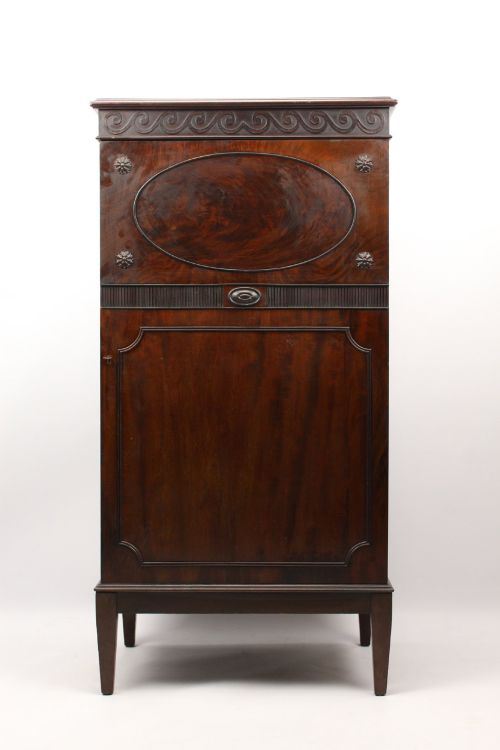
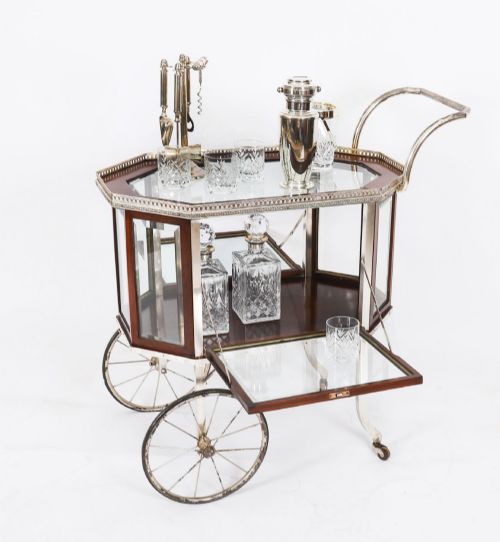
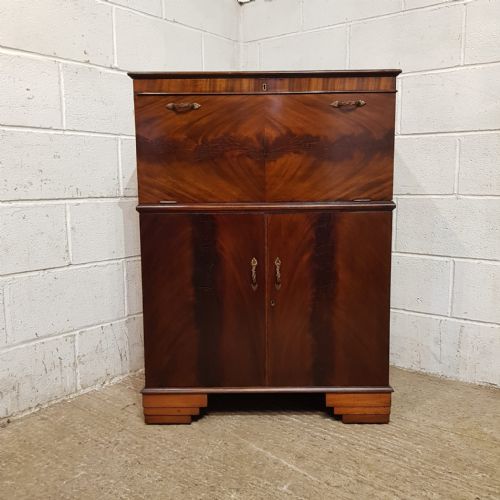
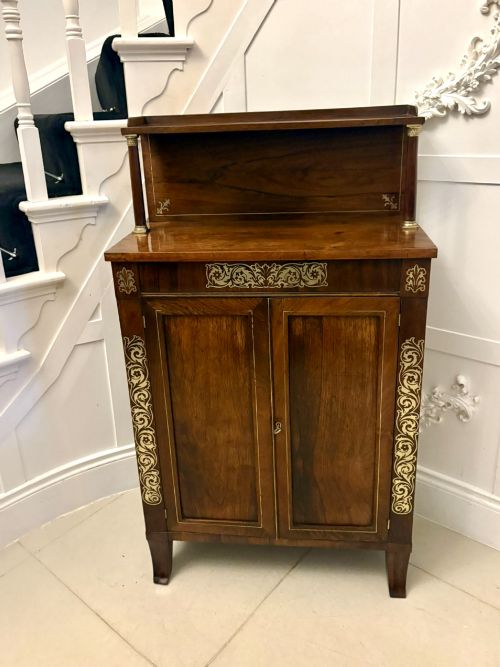
Around the edges sit the older and odder things. Mahogany drinks and side cabinets, Edwardian and earlier, run to about a sixth of the category, and chiffoniers, corner cupboards and trolleys turn up pressed into the same use. French pieces are a small steady thread, including kingwood, marquetry, Directoire and Empire examples. Roughly seventeen cabinets come to market in a year, listed by sixty-eight different dealers.
Where Value Sits
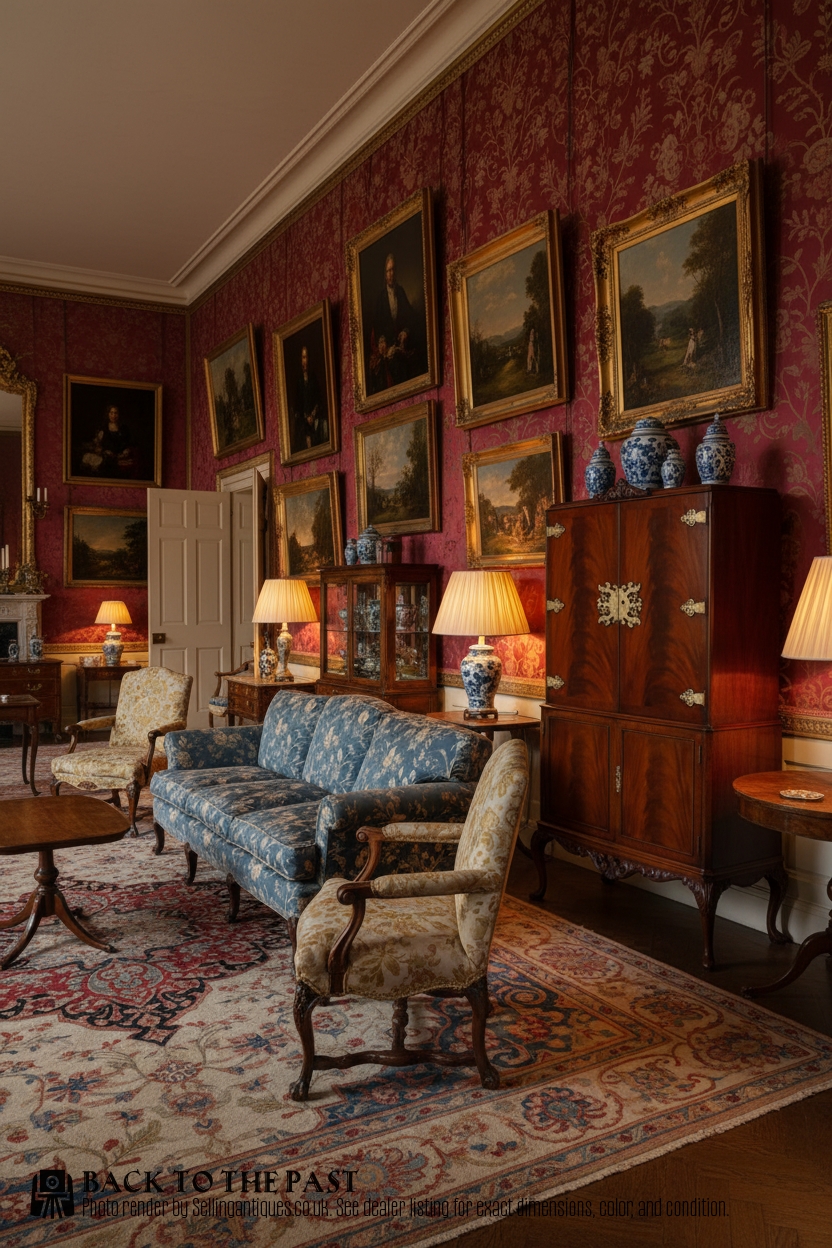
The top of the range is occupied almost entirely by two things: Art Deco cabinets carrying a designer or retailer attribution in the title, and the largest, most elaborately veneered burr walnut examples. The bulk of the category is anonymous, so a name in the heading separates a piece from its neighbours straight away.
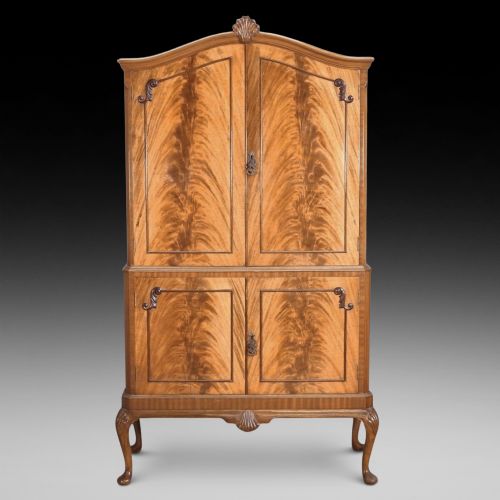
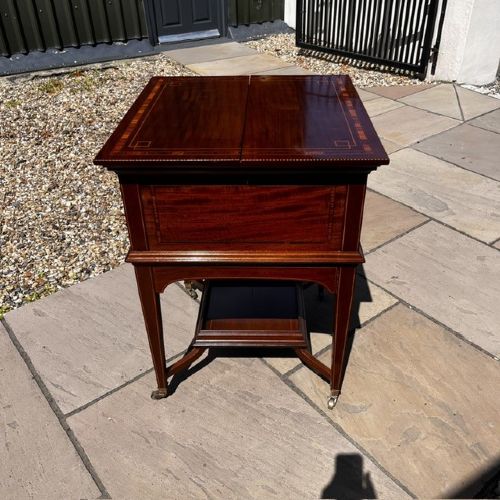
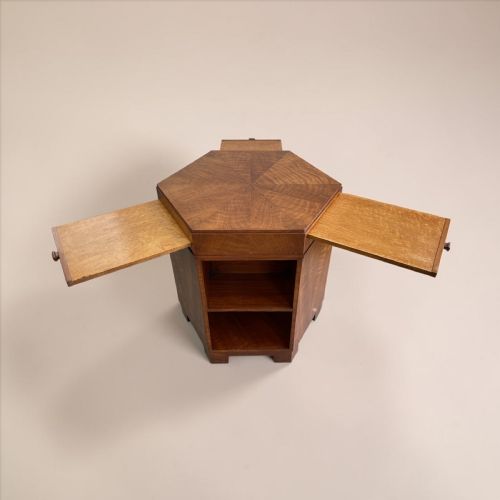
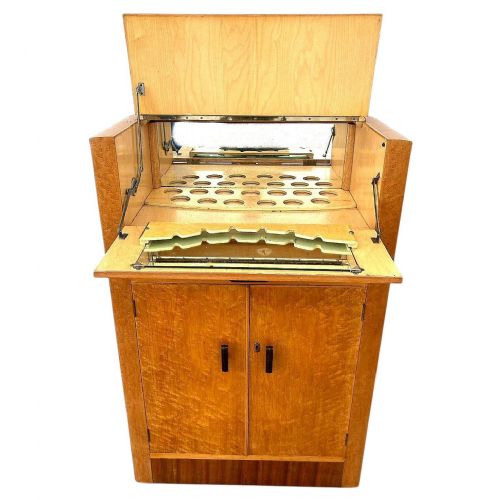
After that it is surface and mechanism. Burr and figured veneers, marquetry, inlay and lacquer sit above plain timber, and one-off materials such as papier mache, mother of pearl, parchment inlay and bird's-eye maple appear at the upper end. A working action counts too: surprise cabinets, metamorphic and rise-and-fall fittings, revolving doors and pop-up tops sit well above a plain two-door cabinet in the same wood.
Scale and completeness do the rest. Titles reaching for 'Large', 'Grand' or 'Impressive' belong to the biggest pieces, and those specifying a fitted interior, a dry bar with glassware or an original glass top sit near the top of the sample. Small corner cupboards, trolleys and plain mahogany cabinets sit at the bottom.
Retail Price Guide 2026
Typical UK retail prices for drinks cabinets, calculated from the Sellingantiques database of over a million retail prices indexed since 2003. This retail price guide relies exclusively on Sellingantiques data; no external sources or auction records are used, so the figures do not describe the wider market.
Drinks cabinets have been listed on Sellingantiques since 2010.
The Antique Drinks Cabinets Glossary
- Cocktail cabinet
- Interwar drinks cabinet with a fitted interior for bottles and glasses. After the timber, it's the commonest word in these titles.
- Burr walnut
- Veneer cut from a knotty growth on the tree, giving the swirled figure that defines a third of the category. Figured walnut is the same timber chosen for pronounced grain.
- Queen Anne style
- Revival form with cabriole legs and a bow or dome top. Applied here to 1920s and 1930s burr walnut cabinets, not to eighteenth-century furniture.
- Surprise cabinet
- A table or chest whose top or sides open or rise to reveal a fitted drinks interior. Metamorphic covers the same territory: rise-and-fall, pop-up or folding fittings.
- Demi-lune
- Half-moon shaped front or top, sometimes spelled 'demi line' in titles. Turns up on burr walnut and mahogany examples alike.
- Cellarette
- Older bottle case or lined compartment for wine. A tantalus is the locking decanter frame, and a dry bar is a cabinet fitted out for serving.
Frequently Asked Questions
What wood are most drinks cabinets made from?
Walnut, and by some distance. It is named in half of all titles on Sellingantiques, with burr walnut alone accounting for more than a third.
Mahogany is the next thread, running through the Edwardian and earlier side cabinets and chiffoniers. Bird's-eye maple, lacquer and kingwood appear in smaller numbers.
When were cocktail cabinets made?
The dated listings run from 1800 to 1960, but the weight sits in one narrow band. Four fifths of everything with a year falls in the 1920s and 1930s.
Before that the counts thin quickly through the 1910s, Edwardian and Victorian entries. Some listings carry a period label rather than a year, so those read as approximate.
Why do so many say Queen Anne style?
It's a revival form, not an eighteenth-century one. Cabinetmakers of the 1920s and 1930s used cabriole legs and a bow or dome front on burr walnut cocktail cabinets.
Twenty-five listings use that exact phrasing, which makes it the single most repeated description in the category.
What is a surprise drinks cabinet?
A piece that doesn't look like a drinks cabinet until it opens. A table or chest whose top or sides lift, swing or rise to reveal the fitted interior.
Nine titles use the word. Alongside them sit metamorphic, rise-and-fall, revolving-door and pop-up examples, which turn up steadily but never in numbers.
Are French drinks cabinets found in this category?
Yes, as a small consistent thread of around one title in twenty, and they have grown on the live shelf.
They take in kingwood, marquetry, and pieces described as Directoire and Empire.
Do older cabinets appear alongside the Deco ones?
They do, but in modest numbers. Mahogany drinks and side cabinets from the Edwardian period and earlier make up about a sixth of the category.
Chiffoniers, corner cupboards and trolleys also appear, listed for drinks use rather than built for it. A handful of Victorian, Regency and nineteenth-century entries sit among them.