
Antique Mahogany Cabinets
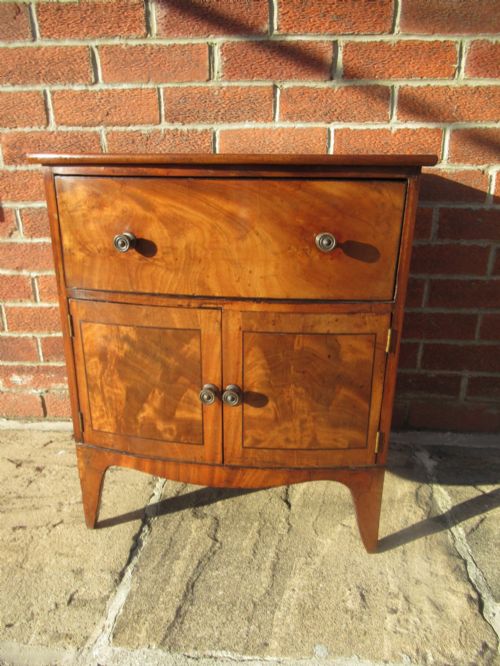
Mahogany case furniture made to hold and show things: china and curios behind glass, sheet music, specimens in shallow drawers, shop stock on a counter, or a candle and a jug beside a bed.
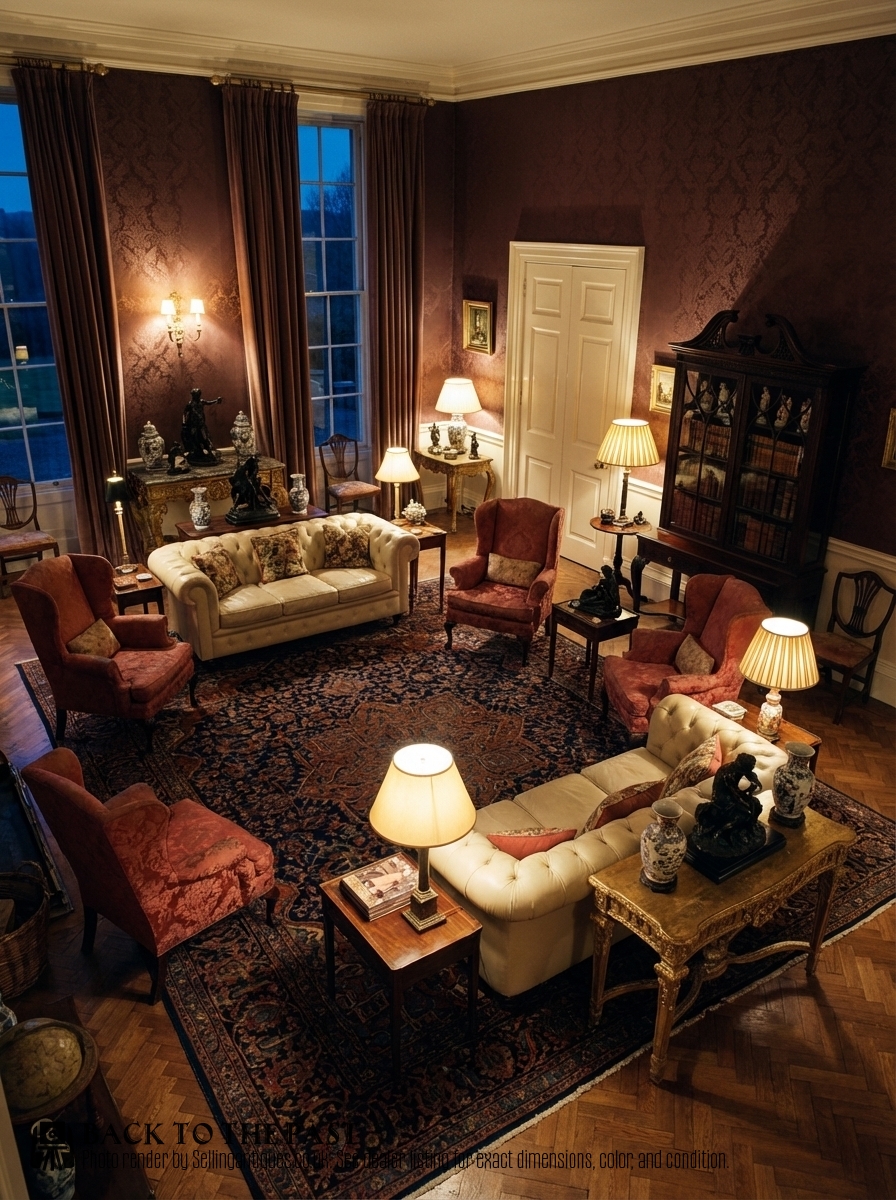
Antique Mahogany Cabinets
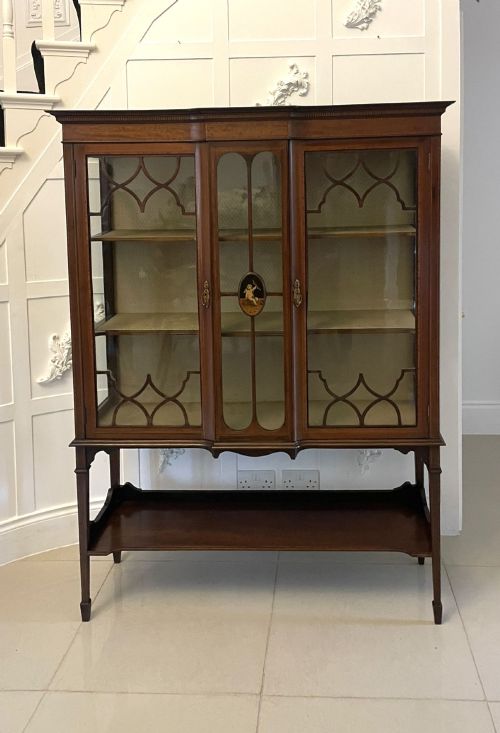
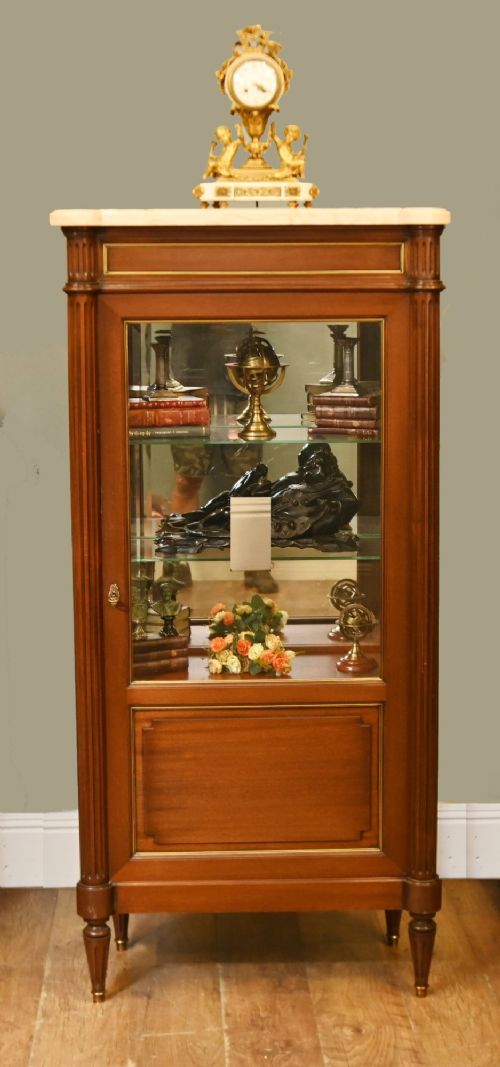
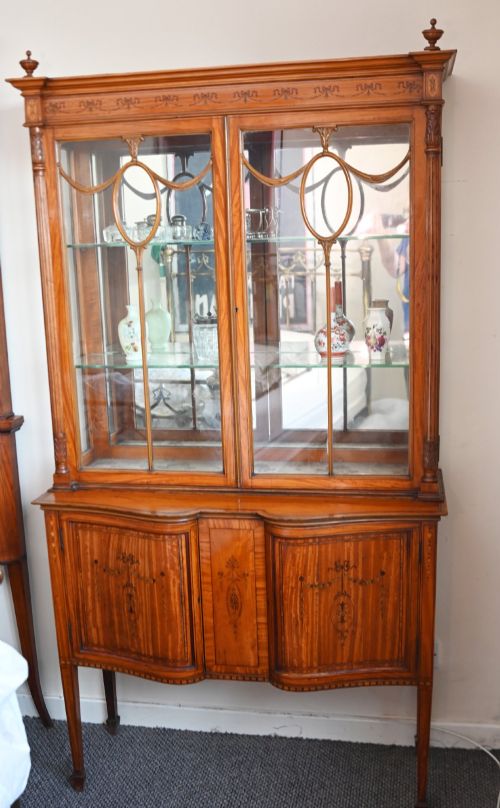
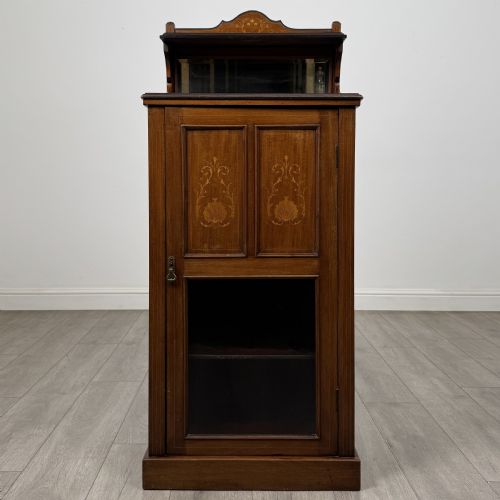
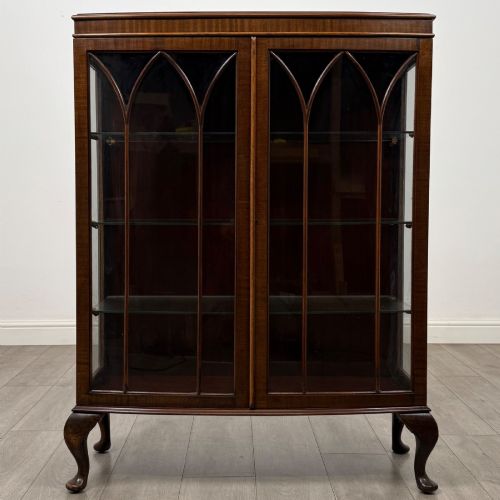
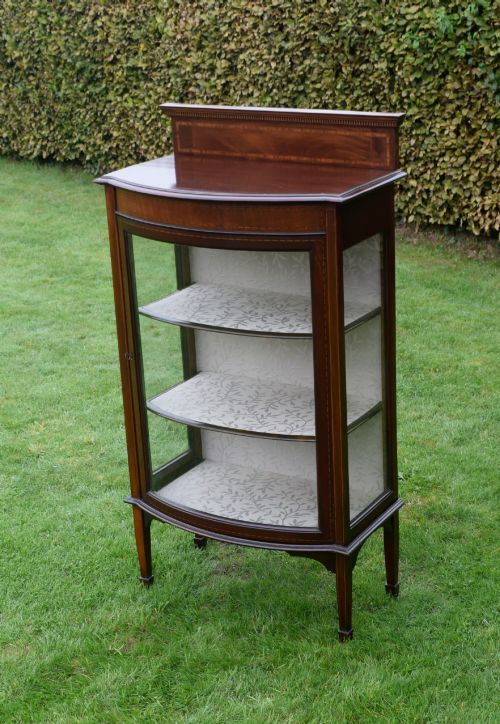
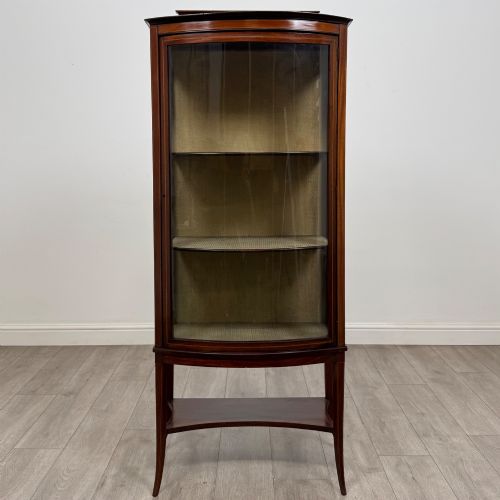
The heading covers a wide group, but one form dominates: the glazed display cabinet. A third of the roughly 3,700 titles on Sellingantiques say "display", with glazed, vitrine and bijouterie alongside. They are commonly Edwardian and inlaid, often bow-fronted or serpentine, and frequently mirror-backed.
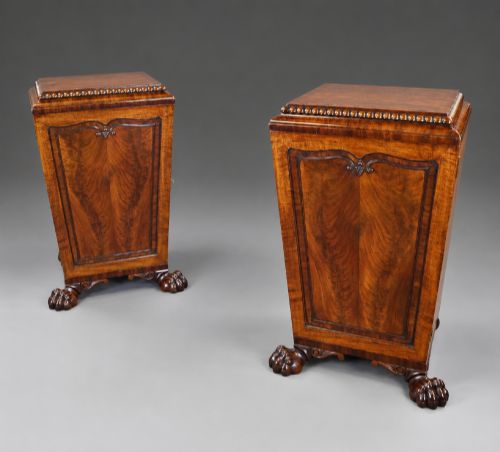
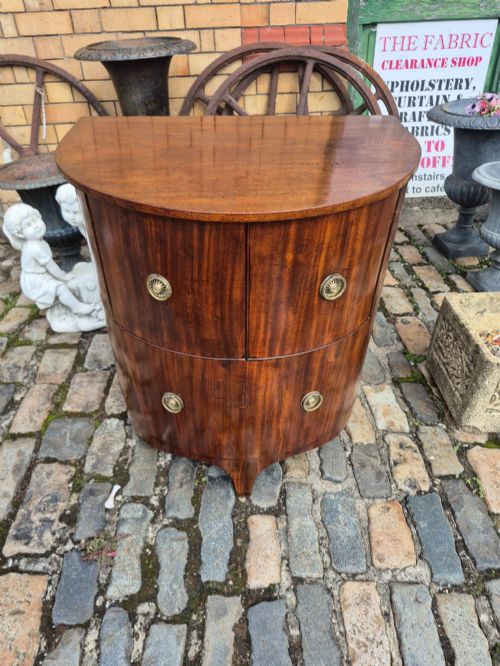
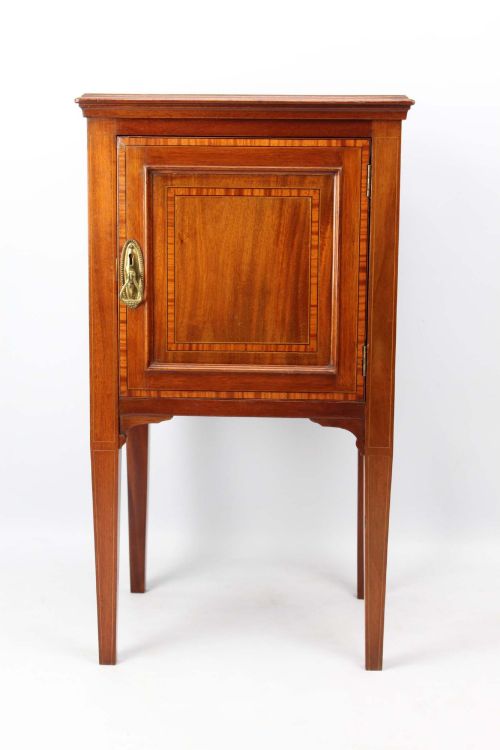
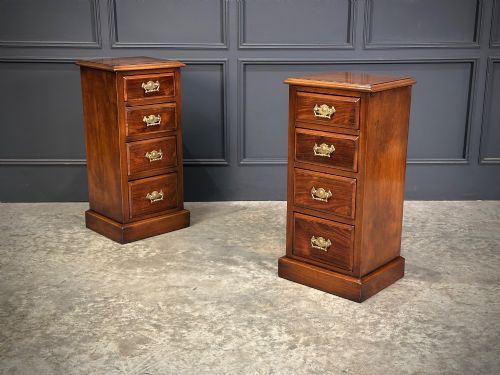
The second big population is the bedside cabinet, called a pot cupboard, night stand or night table depending on the dealer. Around a sixth of titles mention bedside, and this is the branch most often offered in twos. Corner cupboards follow, both astragal-glazed hanging examples and floor-standing double-height ones.
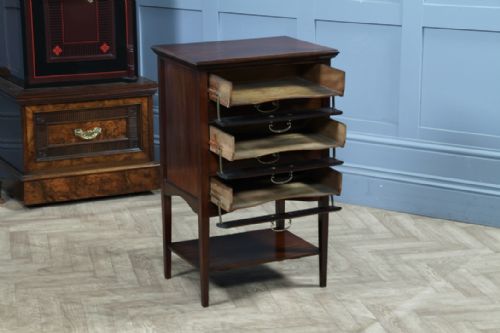
After that come the working cabinets. Collectors', specimen and apothecary banks of shallow graduated drawers, counted out in the title from four drawers up to forty. Shop and counter fittings turn up throughout without ever being numerous: haberdashery, chemist, dentist, gun, jeweller's and microscope-slide cabinets each appear only a handful of times across the whole archive.
Dates run from 1700 to 1960, with the weight of it late Victorian to Edwardian. Only about half the listings carry a clean year, and a period word in a title is often a style bracket rather than a date. "Revival" appears 85 times, Sheraton 76 and Chippendale 73, so those names commonly describe a piece made around 1890 to 1920 in an earlier manner. Genuine 18th-century entries exist, but they are a minority.
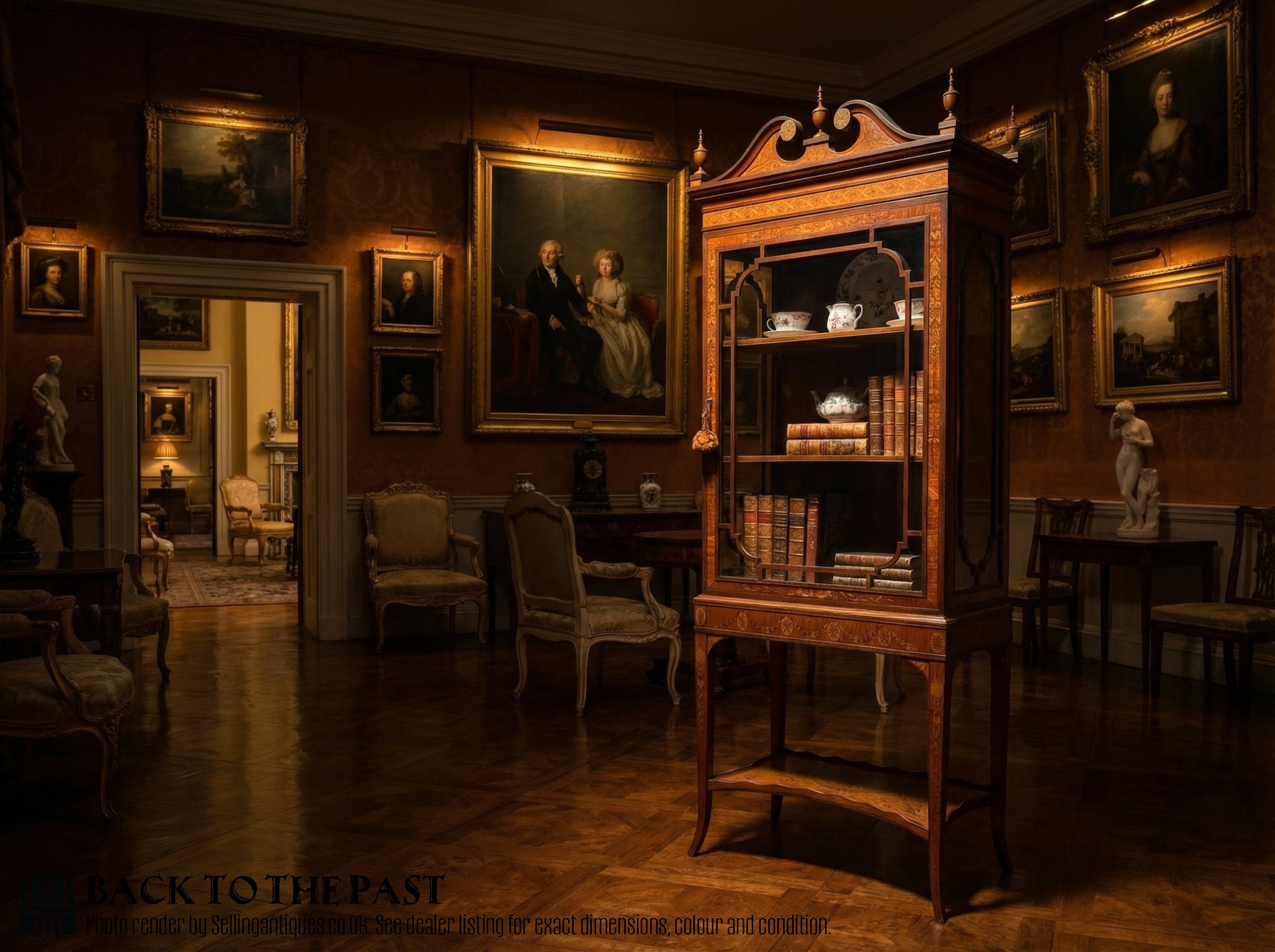
Top And Bottom
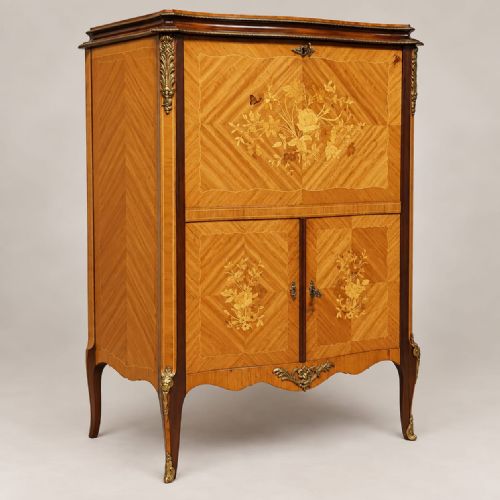
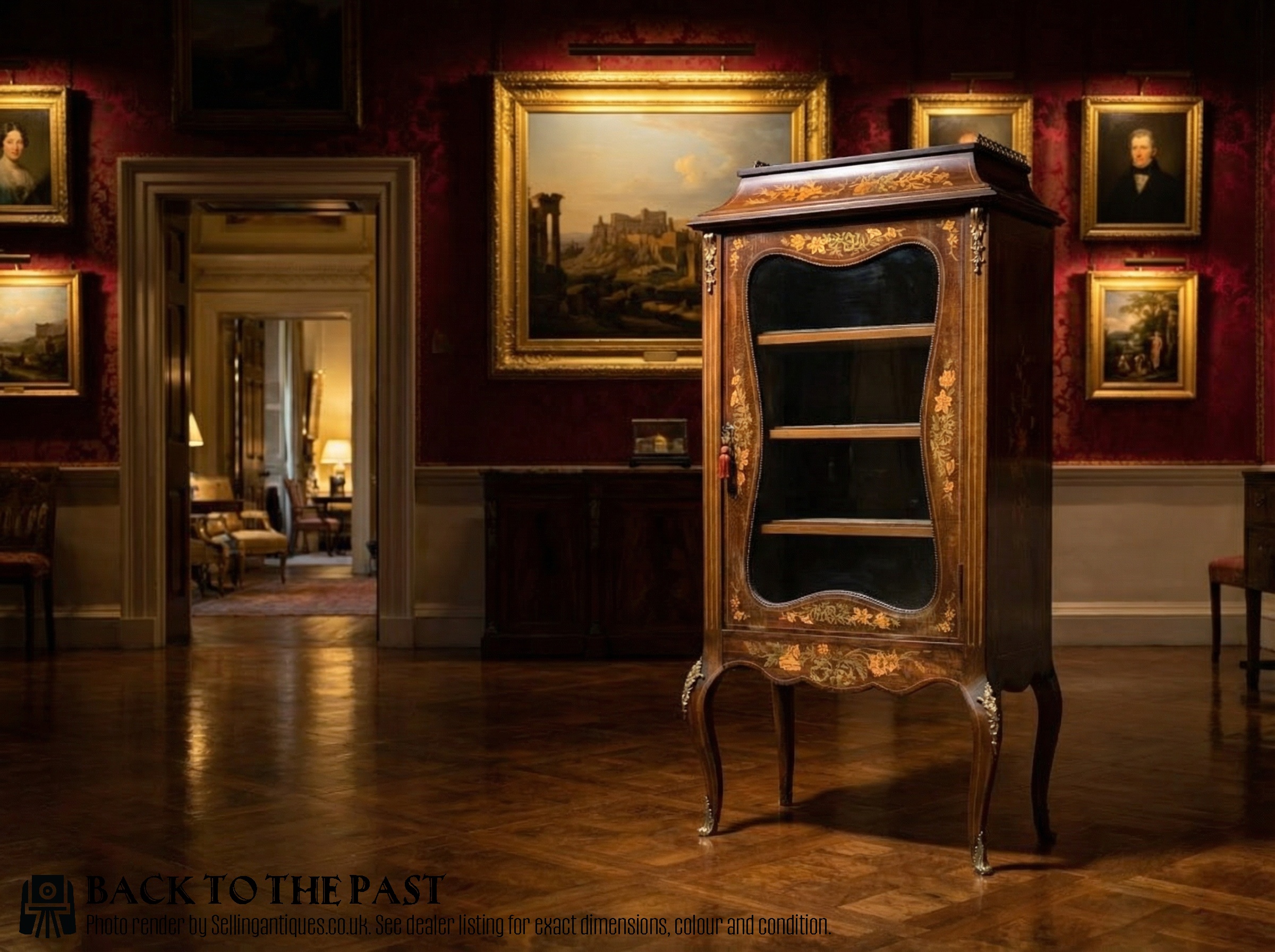
Decoration does most of the separating. Inlay appears in a fifth of titles and marquetry in 71, and the cabinets at the top of the range are the satinwood-inlaid, marquetry and ormolu-mounted ones. The plain end is plain corner cupboards, hanging wall cabinets and Edwardian music cabinets. Secondary materials pull the same way: marble tops, gilt-bronze mounts, amboyna, kingwood and tortoiseshell all sit high.
Shape matters nearly as much as surface. A straight front is the default; bow, serpentine, concave, bow-ended and demi-lune fronts cluster among the dearer pieces, because each curve is more work in the carcase and more work in the glass.
Then two things that have nothing to do with the cabinetmaking. A pair beats a single, and roughly one listing in eight says pair, concentrated among bedside cabinets, chests and corner cabinets. And on collectors' cabinets, drawer count tracks the range almost directly: four and five drawers at the bottom, 32, 36 and 40 graduated drawers, along with museum and named-entomologist examples, near the top. A named maker or retailer in the title does the rest.
Antique Mahogany Cabinets Retail Price Guide 2026
Typical UK retail prices for mahogany cabinets, calculated from the Sellingantiques database of over a million retail prices indexed since 2003. This retail price guide relies exclusively on Sellingantiques data; no external sources or auction records are used, so the figures do not describe the wider market.
Collectors' cabinets on Sellingantiques count their drawers in the title, running from four up to forty graduated drawers.
Edwards & Roberts·Shapland & Petter·Maple & Co·Gillows
The Antique Mahogany Cabinets Glossary
- Inlaid, stringing
- Decorative lines or panels of contrasting wood let into the surface. It appears in a fifth of the titles in this category, usually satinwood or boxwood on mahogany.
- Astragal glazing
- Slim moulded glazing bars dividing a glazed door into panes. Common on corner and hanging cabinets.
- Bow front, serpentine
- A convex front, or a double-curved one. Bow shows up 139 times in titles and serpentine runs throughout the samples.
- Pot cupboard, night stand
- Older names for the small bedside cabinet. Both are still used by dealers, along with night table and tray-top commode.
- Bijouterie
- A shallow glass-topped cabinet or table for jewellery and small curios, in 79 titles. Vitrine, used 91 times, is the wider term for a glazed display cabinet and tends to describe Continental work.
- Tambour front
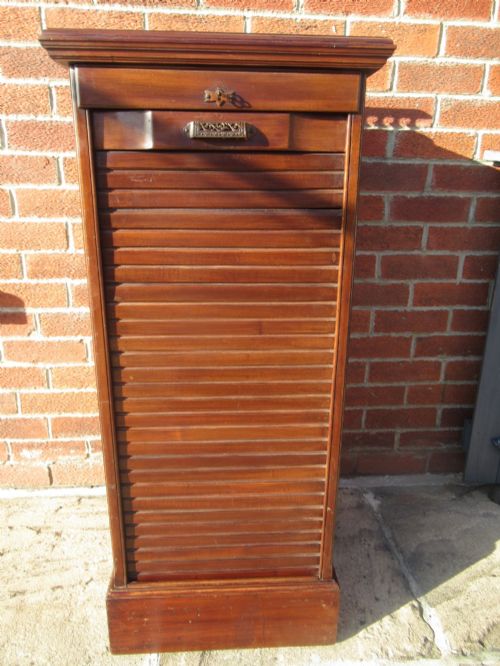
- A flexible slatted shutter that rolls back rather than swinging open. Seen on bedside and filing cabinets here.
Antique Mahogany Cabinets: Frequently Asked Questions
What kind of cabinet is most common?
The glazed display cabinet. A third of titles say "display", and the group takes in vitrines, bijouterie cabinets, china cabinets and showcases.
Within that, the recurring version is Edwardian, inlaid, bow-fronted or serpentine, and often mirror-backed.
Does Georgian in the title mean an 18th-century piece?
Not always. "Georgian" appears in 199 titles, but so does "revival" in 85, Sheraton in 76 and Chippendale in 73.
Those style names frequently sit on cabinets made around 1890 to 1920. Only about half the listings carry a clean year at all, so a period word often marks the style rather than the decade.
Why are so many bedside cabinets sold in pairs?
They were made for either side of a bed. Around one listing in eight says pair, and pairs concentrate among bedside cabinets, chests and corner cabinets.
Pairs sit above single equivalents right through the range.
How many drawers do collectors' cabinets have?
The titles count them out. The archive runs from four and five drawers up to 40 graduated ones, with 12, 16, 20, 24, 31, 32 and 36 all recorded.
Uses recorded include coins, medals, insects, microscope slides and pharmacy stock. Around 225 titles mention collectors.
Are shop and trade cabinets part of this category?
Yes, and they turn up regularly without ever being numerous. Shop appears in 139 titles and filing in 67.
Haberdashery, apothecary, chemist, dentist, gun, snooker-ball and countertop counters each appear only a handful of times across the whole archive.
Which cabinets sit at the top of the range?
Ormolu-mounted and marquetry French and English display cabinets, and exceptional Regency bedside pairs.
The other end is plain corner cupboards, hanging wall cabinets and Edwardian music cabinets.