
Antique Cabinet on Stand
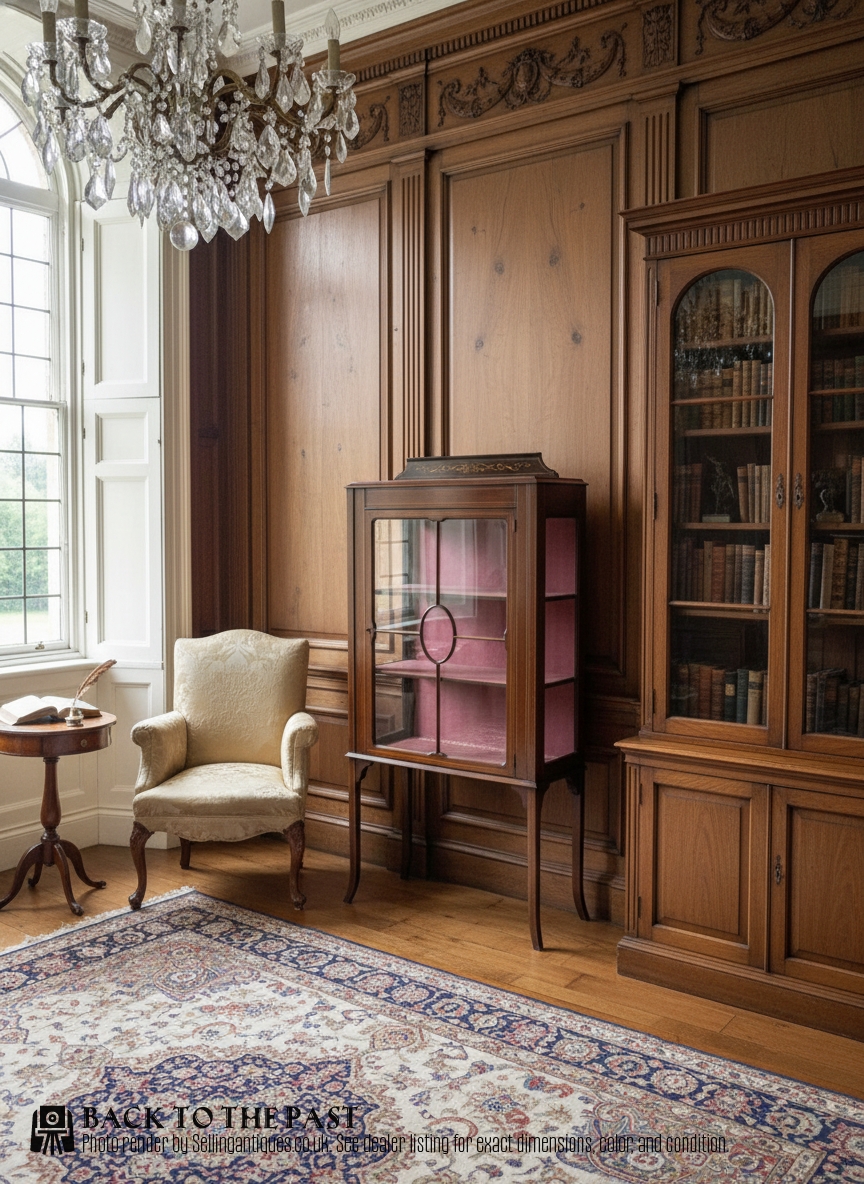
A case or cupboard raised off the floor on legs or its own base, made so its doors, drawers and veneers sat at eye level and could be looked at as much as used.
What Is A Cabinet On Stand?
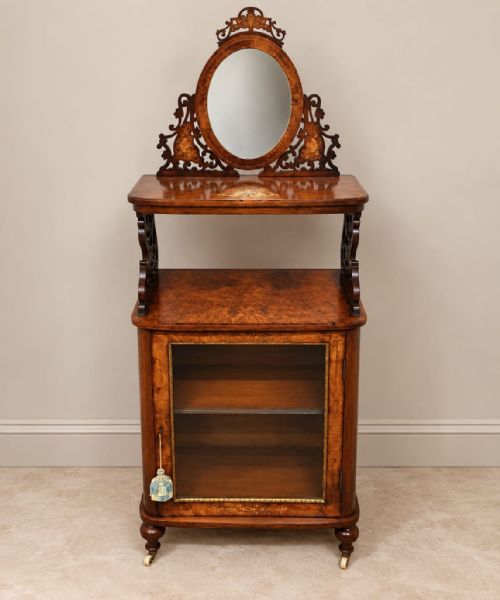
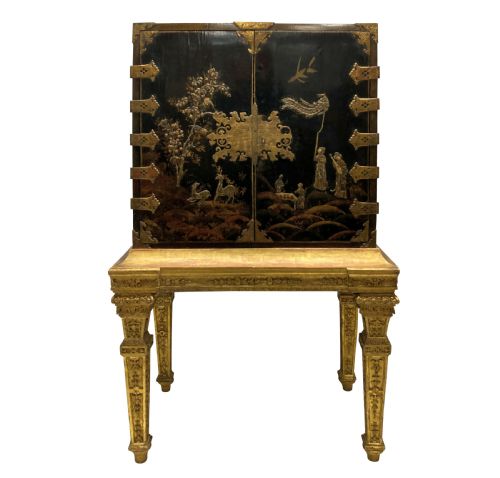
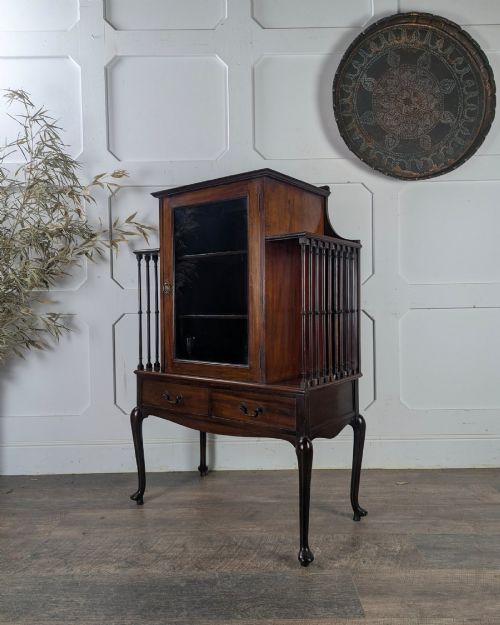
The form began in seventeenth-century Europe, where a decorated or fitted cabinet was lifted onto a separate legged base. The idea was recycled for centuries afterwards, for glazed china and curio display, for corner cupboards, and for small bedside and music cabinets, well into the twentieth century.
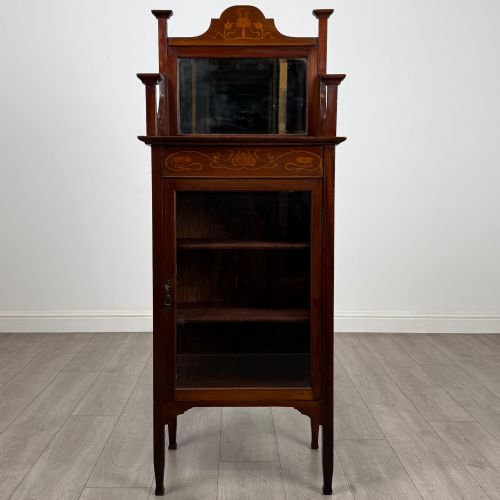
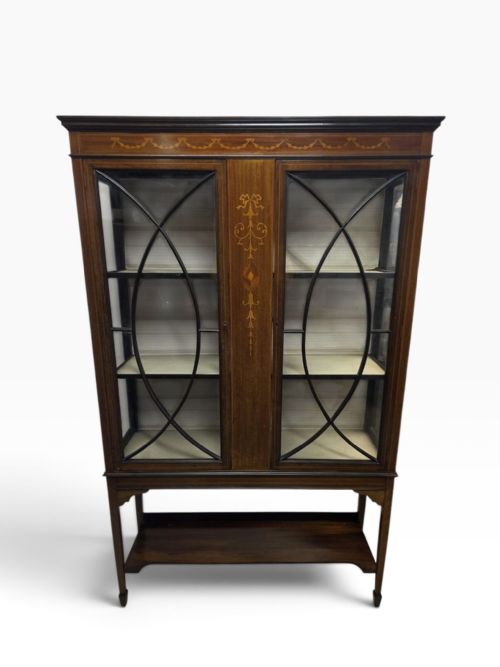
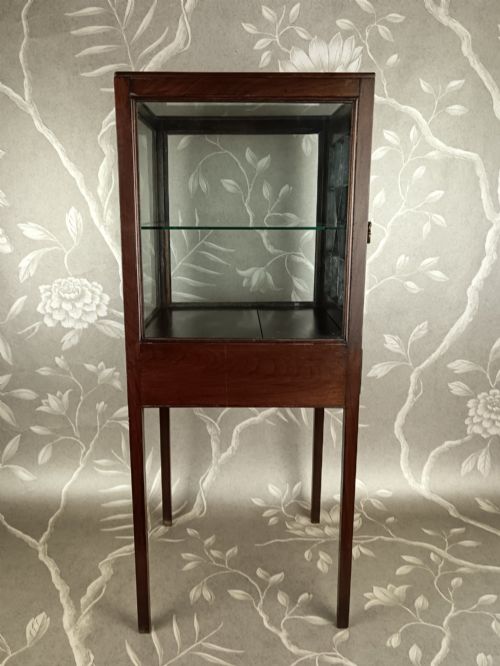
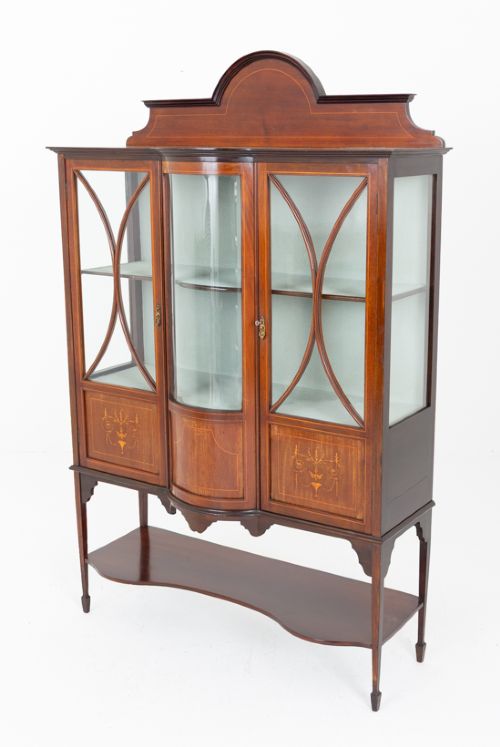
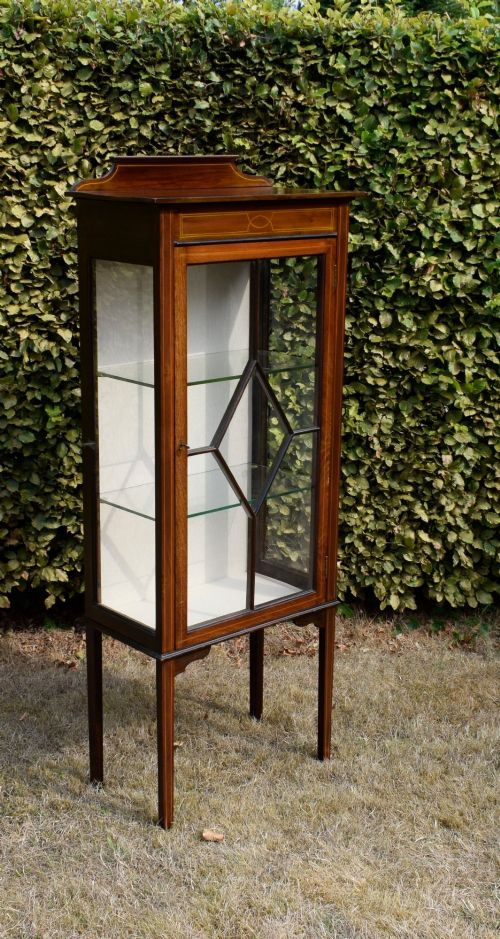
Under this heading on Sellingantiques, mahogany is close to a house style: it is named in 231 of 623 titles, with walnut a distant second and oak behind that. The piece you are most likely to meet is an Edwardian or late-Victorian inlaid mahogany display cabinet, glazed and standing on its own base. Display appears in 148 titles, inlaid in 97, Edwardian in 98.
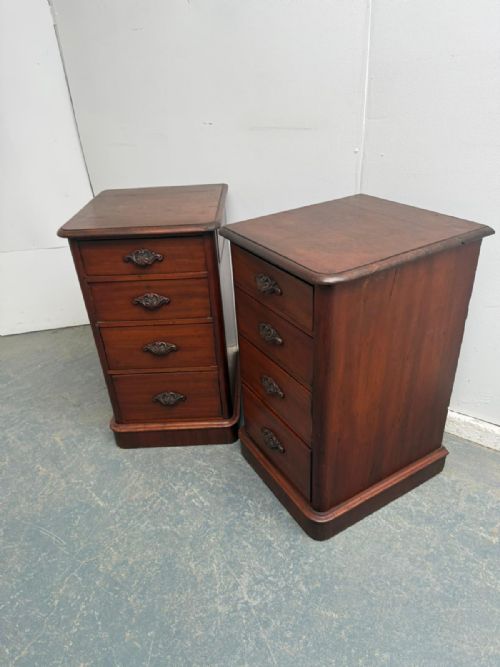
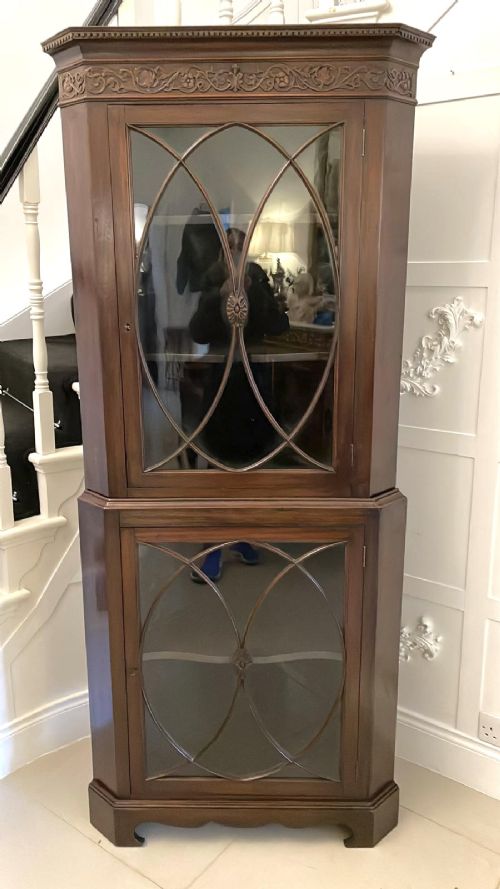
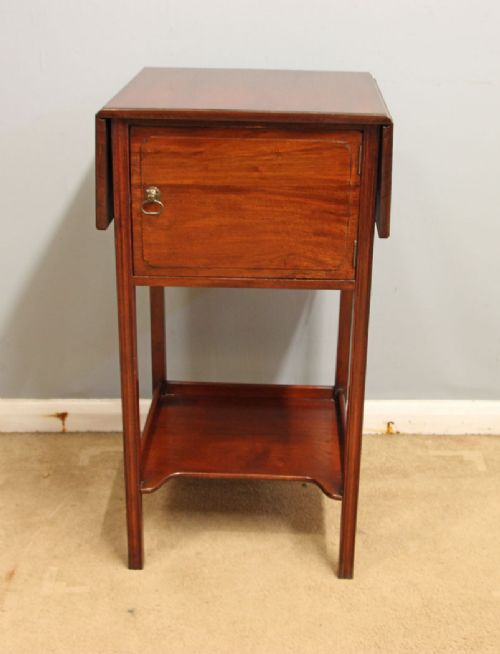
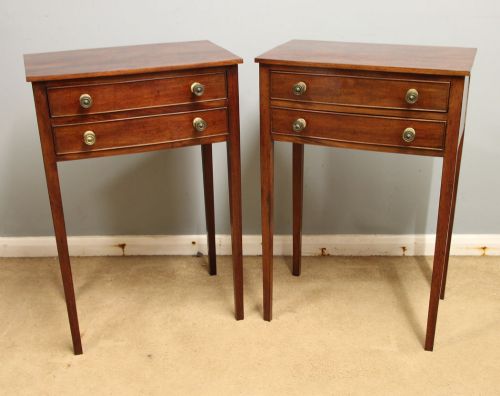
Corner-shaped pieces make a second large block, 107 titles saying corner, with 33 specifying floor standing rather than hanging, including two-part double-height cupboards glazed above and panelled below. Night stands, bedside cabinets and pot cupboards form another seam, and 64 titles offer a pair, most often of these.
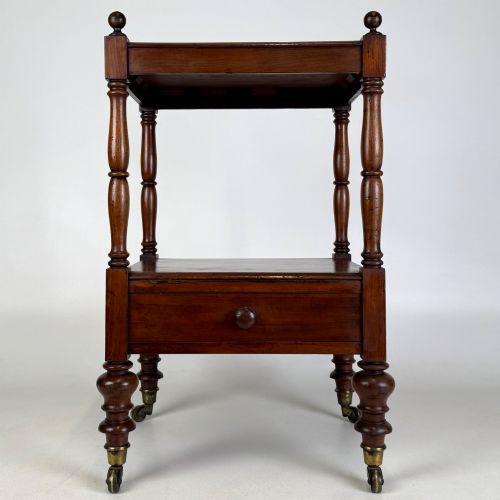
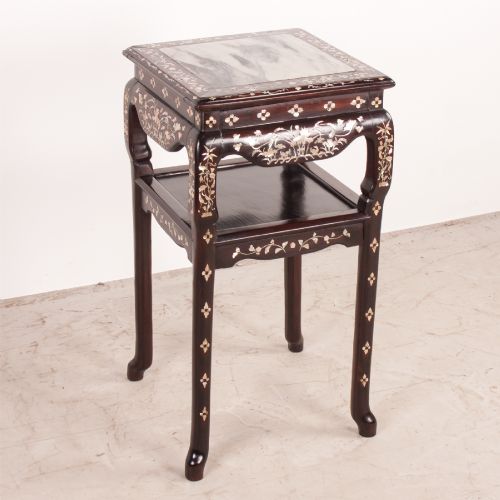
Beyond that, the heading gathers music and sheet-music cabinets, occasional and lamp tables, whatnots and open tiered stands, since "stand" does double duty for the base of a two-part cabinet and for small free-standing furniture. An East Asian seam runs through as well, with 27 titles saying Chinese and 23 chinoiserie, among them Japanese shodana display cabinets on stands.
Where The Range Splits
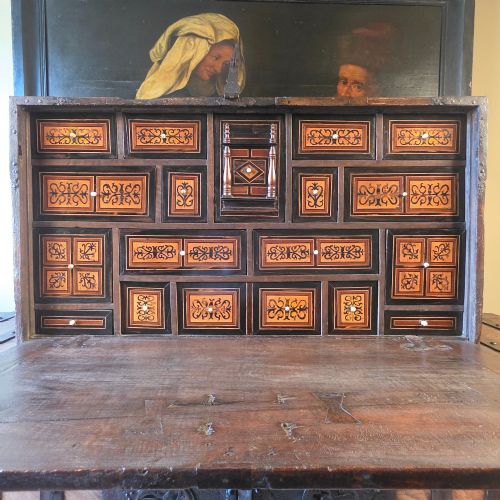
Surface work does most of the separating. Marquetry appears in 28 titles, satinwood in 24, carved in 25 and painted in 15, and these cluster in the upper reaches, with oyster-veneered, tortoiseshell and japanned decoration at the very top. Plain mahogany and oak span the whole range from end to end.
Timber follows the same pattern. Burr walnut, satinwood, kingwood, rosewood and amboyna titles sit noticeably higher than the mahogany and oak bulk. Age pulls the same way: seventeenth and early eighteenth-century labels appear almost only at the top, while the Edwardian and 1900s mass sits mid-range and below.
Form matters too. Titles that genuinely say "cabinet on stand" concentrate in the upper half, while plain "night stand" and "bedside" titles gather at the bottom. Within any one form, a pair beats a single: sampled pairs of night stands, bedside cabinets and corner cabinets sit well above their lone equivalents.
Retail Price Guide 2026
Typical UK retail prices for cabinet on stand, calculated from the Sellingantiques database of over a million retail prices indexed since 2003. This retail price guide relies exclusively on Sellingantiques data; no external sources or auction records are used, so the figures do not describe the wider market.
The most expensive cabinet on stand ever sold on Sellingantiques was a Charles II olive oyster-veneered and floral marquetry cabinet on stand, in May 2023.
The Antique Cabinet on Stand Glossary
- Cabinet on stand
- An upper case resting on a separate legged base, usually made as two parts rather than one.
- Floor standing
- Free-standing rather than made to hang on a wall, a phrase used here mainly of corner cupboards.
- Night stand
- A small bedside cabinet or cupboard, often originally a washstand or commode. Pot cupboard is the older name for the enclosed version.
- Astragal glazed
- Glazing divided into panes by slender moulded bars.
- Bijouterie cabinet
- A small glazed display cabinet, often with a glass top, made for jewellery or curios. Vitrine covers the same idea and is usually applied to Continental examples.
- Shodana
- A Japanese asymmetrical display cabinet, several of which turn up here raised on stands.
Frequently Asked Questions
How many come up for sale each year?
Around 52 pieces are listed a year under this heading on Sellingantiques, and 181 different dealers have listed one.
That spread tells you it is a category almost every general furniture dealer touches occasionally, rather than a specialism a handful of people work in.
What woods turn up most often?
Mahogany dominates, named in 231 of 623 titles. Walnut is a distant second at 66 and oak at 41.
Above that bulk sit the figured and exotic veneers: burr walnut, satinwood, kingwood, rosewood and amboyna. Titles that say only hardwood or oriental are not resolved further.
Which periods does the category cover?
The dated field runs from 1700 to 1960, with 301 listings carrying a clean year. That is a two-and-a-half-century sweep inside one heading.
Much of it is loose rather than precise. The single largest label is "19th Century" on 91 listings, with "18th Century" on a further 22, so a good deal of the archive is dated only to the hundred years.
The sharper decades cluster hard around 1890 to 1920, and reign labels add Edwardian, Victorian and Georgian.
Are corner cupboards part of this category?
Yes, and they form a category within the category. Corner appears in 107 titles.
The titles overwhelmingly say floor standing or free standing rather than hanging, 33 specifying it outright, and some are two-part double-height cupboards, glazed or panelled above with a cupboard below.
Do pairs come up?
Pairs are unusually common for case furniture: 64 titles offer one, most often night stands or bedside cabinets.
Within a given form, sampled pairs sit well above single equivalents. One sampled listing went further and offered a set of three shop stands.
What are the unusual pieces filed here?
The odd one-offs sit at both ends of the range. Among the samples are a folding oak cake stand, a butcher's display stand, a brass and iron shop display stand, a leather book-table with a silk-work top and a floor-standing gramophone.
At the top are the seventeenth-century Continental pieces: Flemish ebony and tortoiseshell, Dutch Baroque marquetry with pewter inlay, Spanish Baroque work and an Italian cabinet dated before 1700.
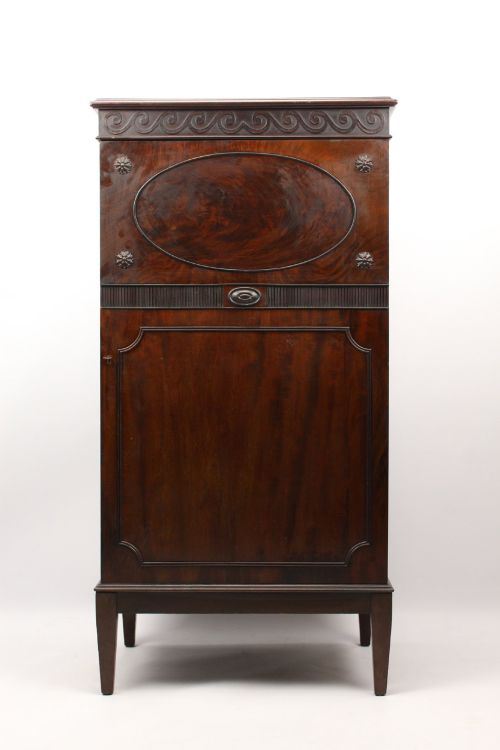
Music cabinets are a smaller but steady presence at 28 titles, from slim sheet-music cupboards to an LP cabinet.