
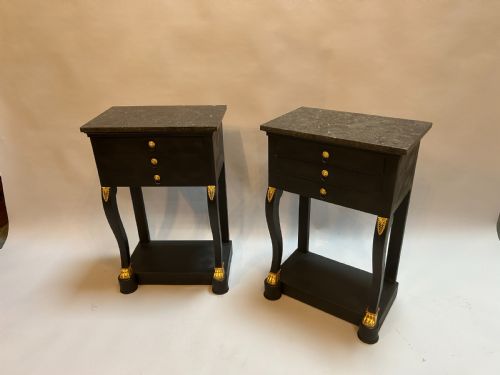
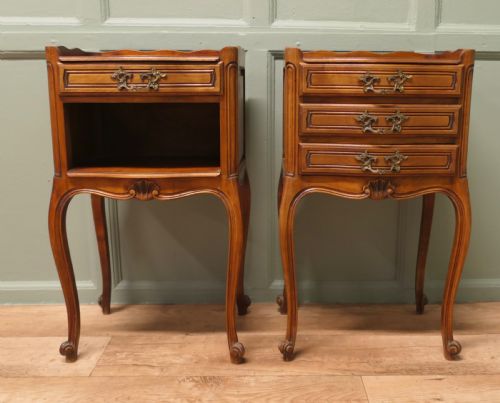
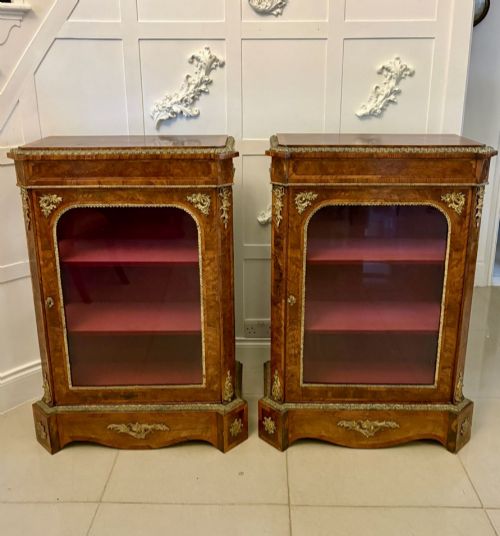
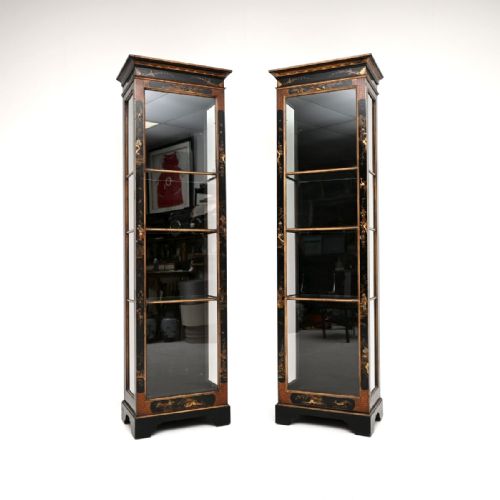
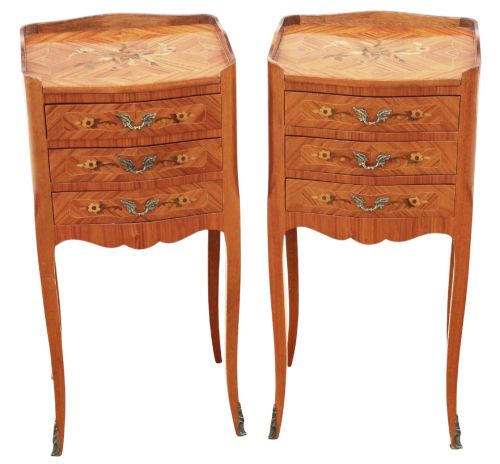
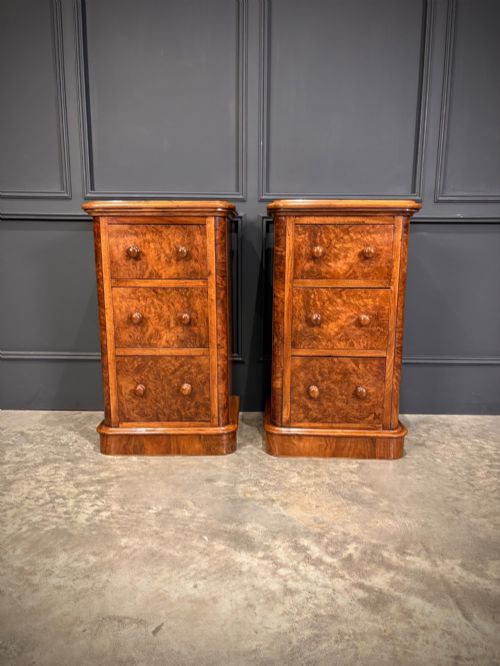
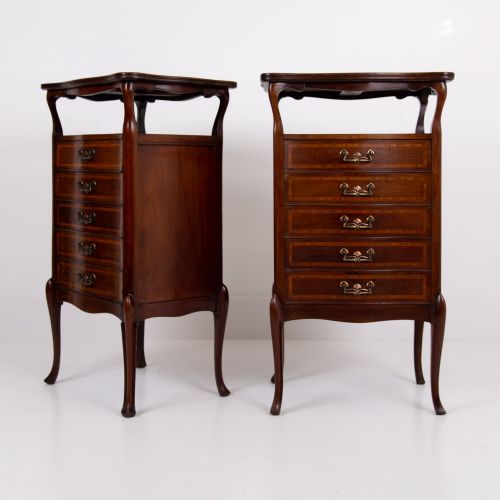

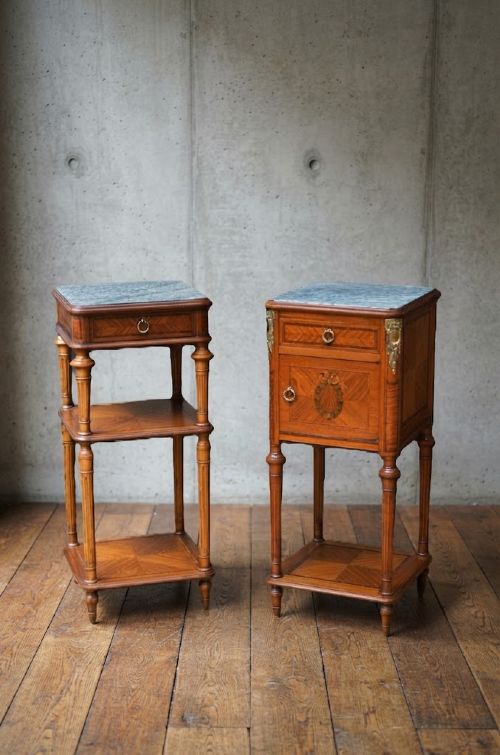
Antique Pair of Cabinets
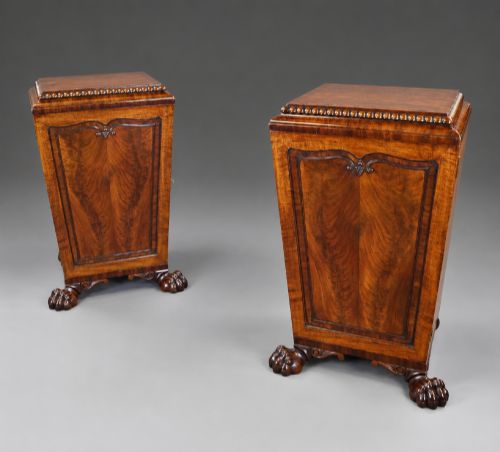
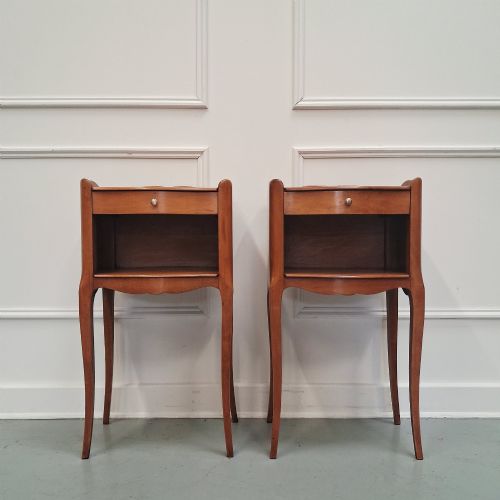
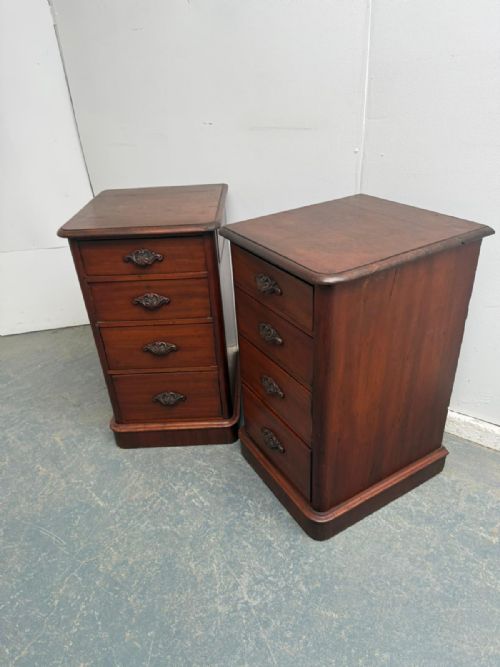
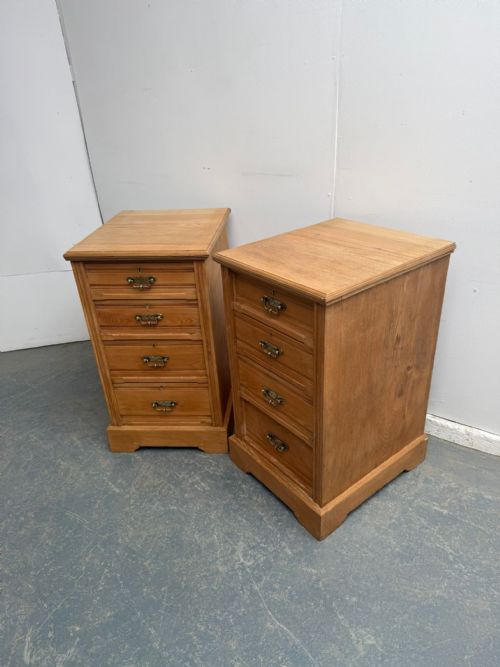
Two matching pieces of small case furniture sold together, most often bedside cupboards or small chests made to stand either side of a bed.

Antique Pair of Cabinets
This is a bedroom category seen from several angles. "Bedside" appears in nearly three quarters of the titles on Sellingantiques, and "cabinets" in a good half of them. The rest is made up of pier, display, side and corner cabinets, small chests and occasional tables that happen to be offered in twos.
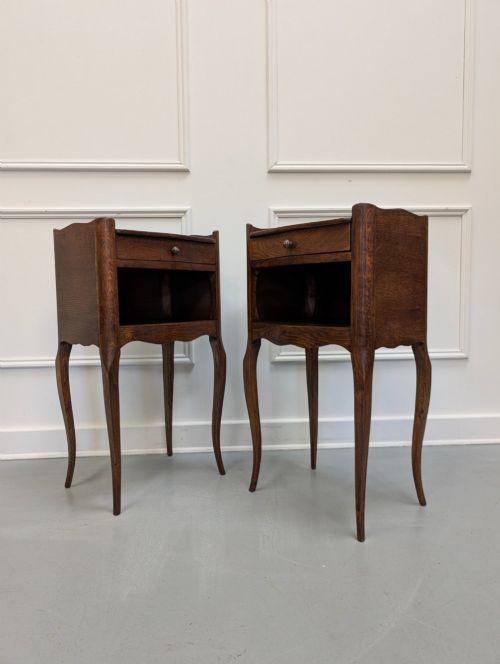
The form you'll meet most often is a pair of French-taste bedside cabinets in oak, walnut or mahogany, dated somewhere between the 1900s and the 1930s. France is the largest identifiable origin named in titles, and a plain "Pair Of French Oak Bedside Cabinets" of the 1920s repeats dozens of times through the middle of the range. Marble tops are called out in 104 titles, most often on the French cabinets.
Dates run from 1750 to 1960, and 1,669 listings carry a clean year rather than a period word. The 1920s and 1930s alone account for nearly half of those. Nineteenth-century pairs are present but often dated loosely: "Victorian" or "19th Century" stands in for a year, so a Victorian pair may sit anywhere across sixty years. Georgian and earlier pairs turn up, but only a handful.
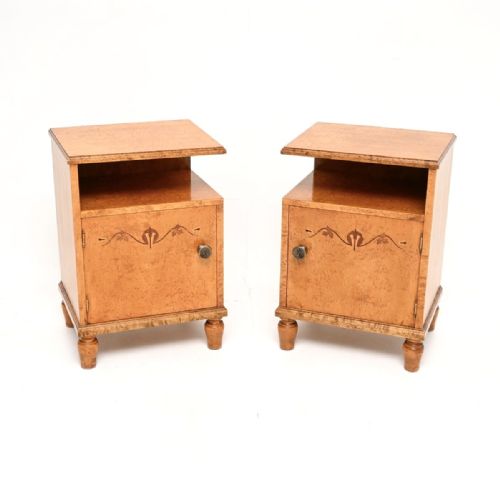
Alongside the bedroom material sits a smaller run of English bedside chests and cupboards, Art Deco burr walnut pairs, lamp and side tables sold in twos, and the occasional shop or collector's piece: jeweller's wall cabinets, pharmacy cabinets, haberdashery counters, a museum display cabinet on stands.

The Range
Timber does most of the work. Painted pine, beech and plain oak pairs sit at the bottom of the range; burr walnut, kingwood, tulipwood, amboyna, satinwood, birds-eye maple and parquetry cluster at the top. Burr walnut is named in 139 titles and kingwood in 53, which tells you how often a title bothers to mention the upgrade.
Decoration lifts a pair further. Marquetry appears in 95 titles and "inlaid" in another 114, and above those sit the ormolu-mounted, boulle, gilt-bronze and pietra dura pairs that occupy the very highest positions, several hundred times the level of a plain painted pine bedside pair.
Form and date pull in the same direction. Pier cabinets, vitrines, display and collectors' cabinets sit well above the bedside cluster, and eighteenth-century and Regency pairs sit above the 1920s and 1930s bulk. One more distinction runs through the titles: a true pair made together, against a "matched pair", "near pair" or "close pair" assembled later to look alike.
Antique Pair of Cabinets Retail Price Guide 2026
Typical UK retail prices for pair of cabinets, calculated from the Sellingantiques database of over a million retail prices indexed since 2003. This retail price guide relies exclusively on Sellingantiques data; no external sources or auction records are used, so the figures do not describe the wider market.
The most expensive pair of cabinets ever sold on Sellingantiques was a pair of large seven-foot high 19th century trophy display cabinets, in August 2019.
Hille
The Antique Pair of Cabinets Glossary
- Bedside cabinet
- The dominant form in this category. A small cupboard, sometimes with a drawer above, made to stand beside a bed.
- Bedside chest
- The drawer-fronted version rather than the cupboard. Used in 192 titles.
- Pair, near pair, matched pair
- A true pair was made together. "Near pair" and "matched pair" signal two pieces brought together later to look alike.
- Marble top
- An inset stone slab, named in 104 titles and most often found on the French cabinets.
- Pot cupboard
- Older name for a bedside cupboard with an enclosed interior. Turns up occasionally in titles.
- Pier cabinet
- A tall cabinet made to stand against the pier of wall between two windows. Named in 55 titles.
Antique Pair of Cabinets: Frequently Asked Questions
Why are pairs worth more than singles?
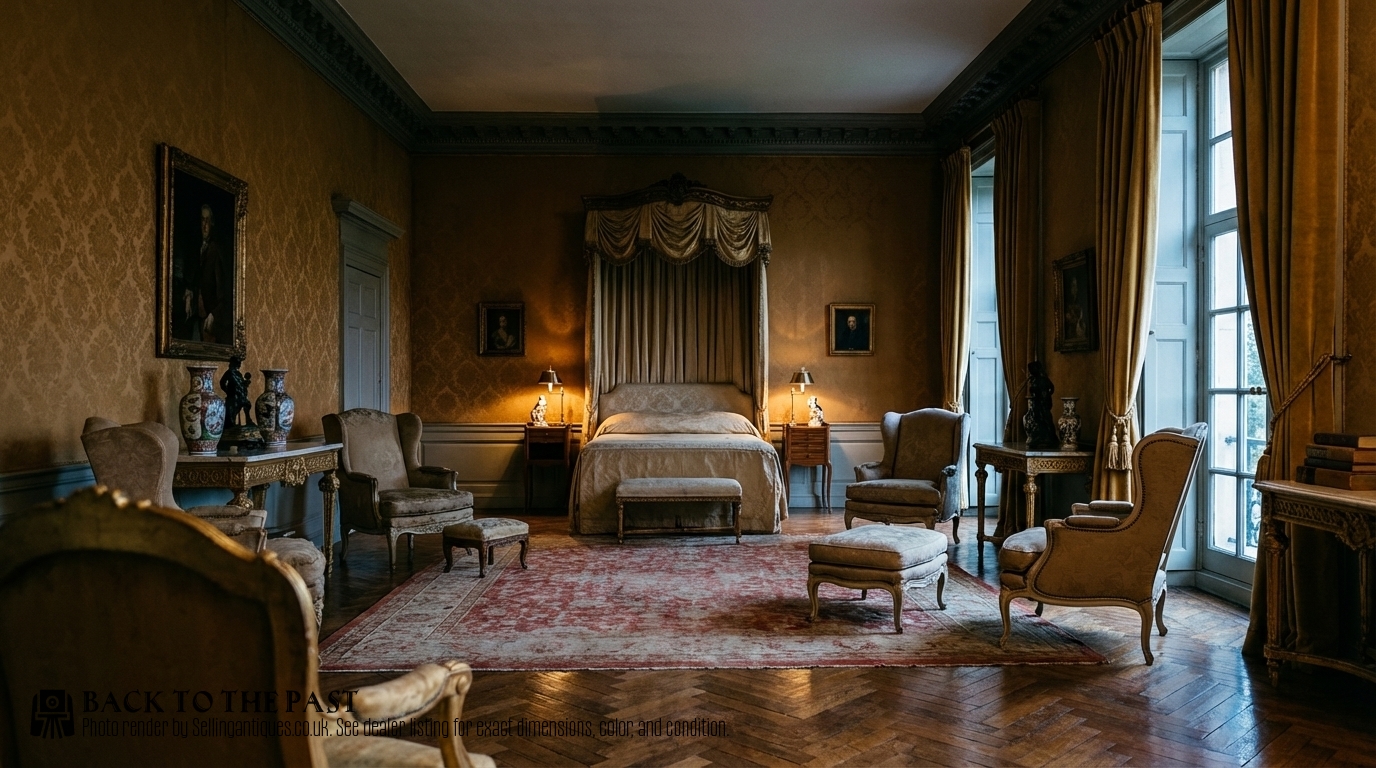
Symmetrical furnishing schemes made matched pairs a standard commercial product: a cupboard each side of the bed, cabinets flanking a chimneypiece.
Once a pair is split, it is hard to reunite, so pairs have always carried a premium over singles.
What period do most of these come from?
The dated listings run from 1750 to 1960, but the weight sits in the early twentieth century. The 1920s account for 613 listings and the 1930s for 335.
The 1900s and 1910s add a few hundred more. Georgian and earlier pairs exist in the archive but are a handful.
Are they mostly French?
France is the largest identifiable origin named in titles, with French oak alone in 148 of them. French walnut, cherrywood, beech, tulipwood and kingwood variants all appear.
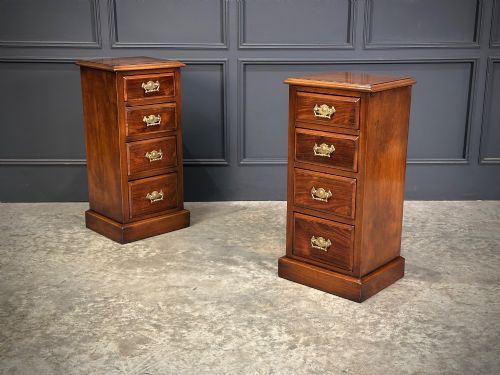
The rest is largely English: Victorian mahogany and walnut bedside chests, Edwardian pieces, and Art Deco burr walnut pairs of the 1920s and 1930s.
What does a near pair mean?
Titles distinguish "matched pair", "near pair", "very near pair", "close pair" and "almost matching" from a plain "pair".
A plain pair was made together as two. The other wordings describe two pieces assembled to look alike, and they sit below a true pair in the range.
Which types sit at the top of the range?
Pietra dura, boulle and gilt-bronze-mounted cabinet pairs occupy the highest positions, several hundred times the level of a plain painted pine bedside pair.
Below those come the pier, display, vitrine and collectors' cabinets, then the marquetry and inlaid work. Plain oak, beech and pine bedside pairs sit at the bottom.
How often do pairs come up for sale?
Around 153 pairs are listed in a year on Sellingantiques, and 223 different dealers have handled them.
That spread means almost every general furniture dealer touches the form at some point rather than it being a specialist corner.