




Antique Apothecary Cabinets
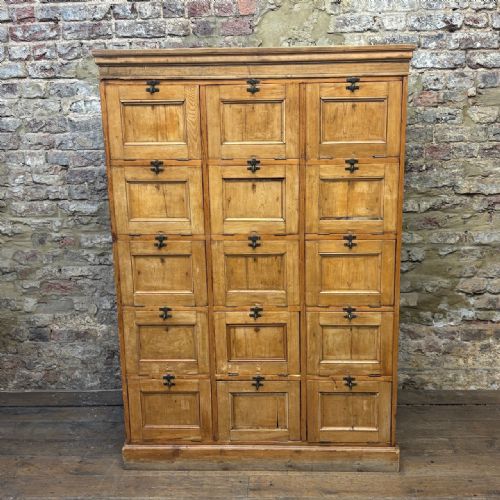
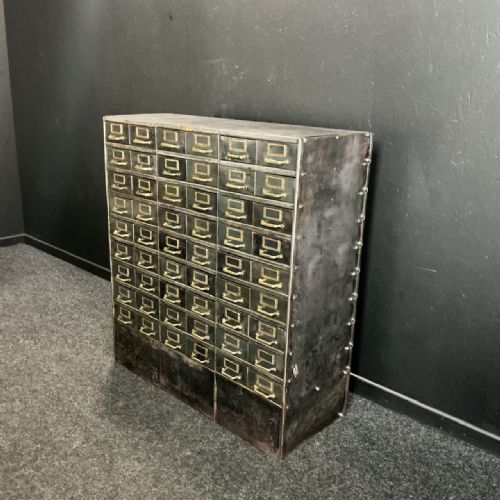
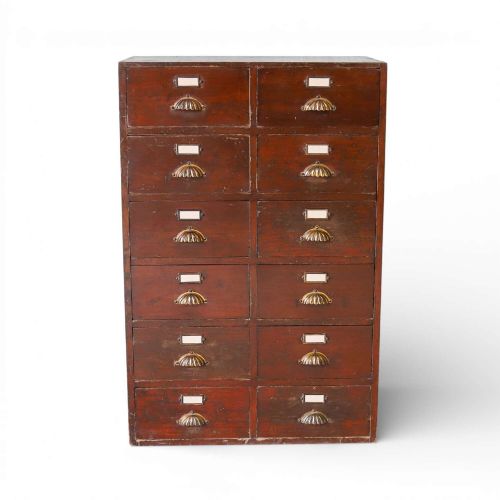
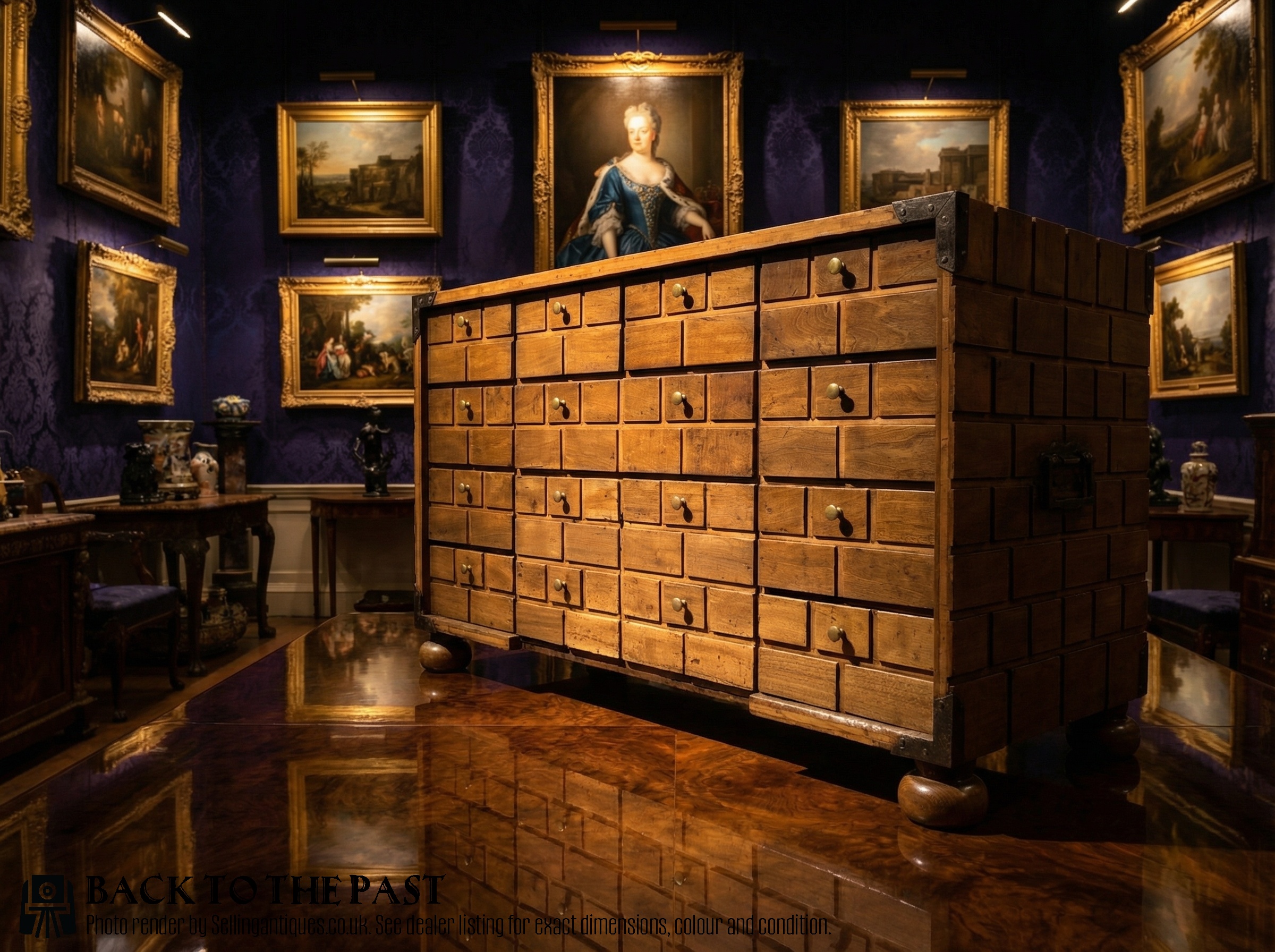
A bank of small wooden drawers built to hold and dispense drugs, herbs and chemicals, one ingredient to a drawer.
Antique Apothecary Cabinets
The apothecary heading covers multi-drawer wooden storage in several forms. Chemist's shop banks of drawers and drug runs sit at the centre of it, alongside small fitted domestic medicine cabinets and boxes, and glazed or countertop display cabinets made for a shop interior.
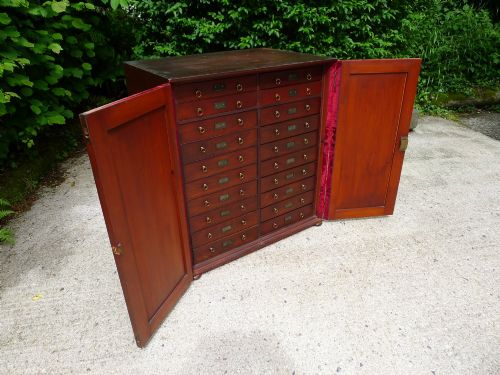
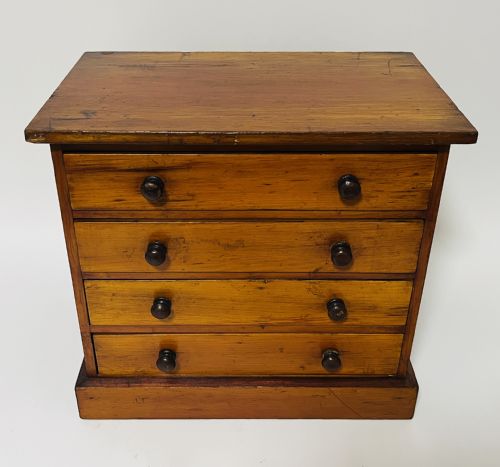
The piece you're most likely to meet is a Victorian mahogany multi-drawer cabinet or chest. Mahogany is named in 26 of 89 titles, Victorian in 20, and the two together in eight. Words like 'drawers' and 'chest' run through the titles; scale swings from a small pine bank to a very large fitted cabinet or a matched pair of wall cabinets.
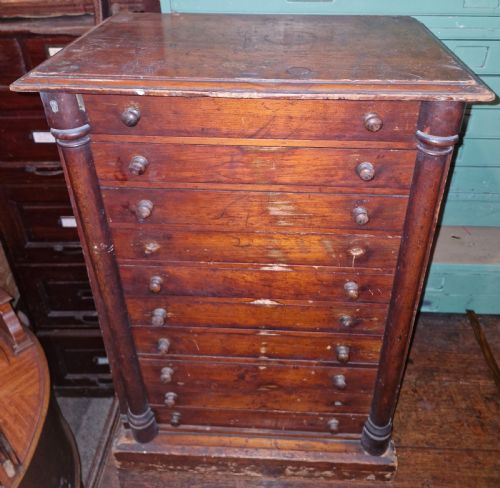
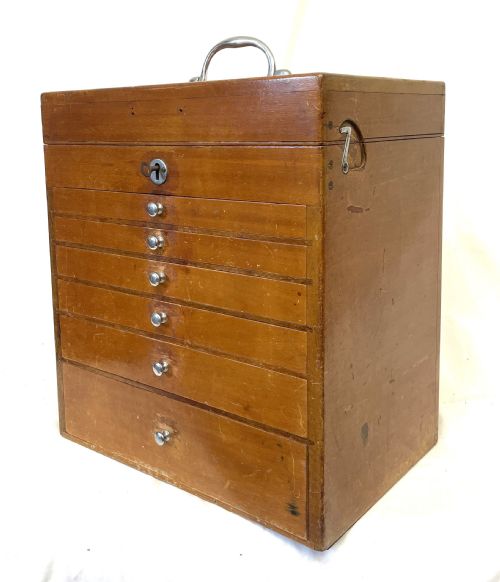
The same many-drawered form was borrowed by other trades and by collectors, so the heading also carries specimen and collectors' cabinets, dentist's and medical cabinets, and haberdashery and spice cabinets. Collectors' cabinets alone account for 12 titles and are well represented in current stock, from microscope slide cabinets to ornithological ones.
Dealer-entered dates run 1800 to 1930, with 44 of the 89 listings carrying a clean year. The rest come as era words: '19th Century' is the single commonest label, followed by Victorian, Regency, Edwardian and Georgian. Decade clusters fall in the 1880s-1890s and the 1920s, with a short 1930s tail. Chinese cabinets turn up three times in the samples, the only recurring non-European origin.
Where The Range Splits
Completeness does more work than anything else. Titles shouting 'fully fitted', 'fully fitted and complete' or listing drawers and equipment sit in the upper half of the sampled range, because a medicine chest that still holds its compartments, bottles and instruments is a different object from an empty box with the same outside.
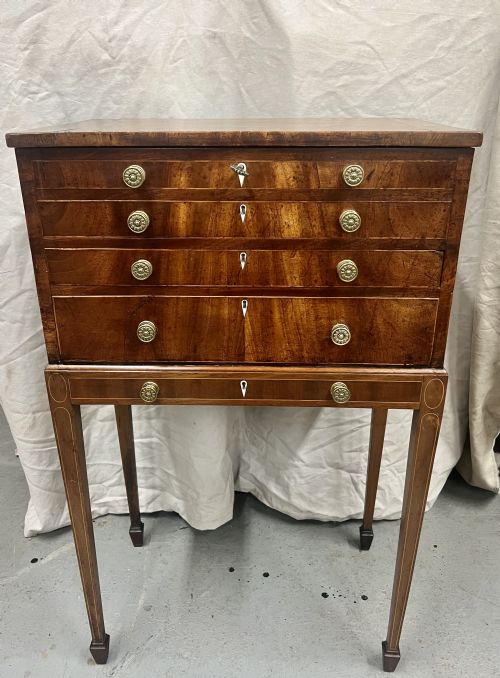
Timber and surface then sort the rest. Mahogany fills the middle and upper range, burr walnut and rosewood-strung pieces sit high, stained pine and deal sit at the bottom. Original paint, original paint and gilt, original shell pulls and label holders are all called out in titles across the middle and top. The highest-priced piece in the samples is a huge Georgian cabinet keeping its original paint and gilt.
Size and multiplicity push upward too. 'Large' appears in 11 titles, stated drawer counts run from six up to 45, and the biggest cabinets sit at the very top. Pairs are a recurring feature - wall cabinets, drug runs, countertop display cabinets, collectors' cabinets - and every matched two in the samples sits in the upper part of the range.
Antique Apothecary Cabinets Retail Price Guide 2026
Typical UK retail prices for apothecary cabinets, calculated from the Sellingantiques database of over a million retail prices indexed since 2003. This retail price guide relies exclusively on Sellingantiques data; no external sources or auction records are used, so the figures do not describe the wider market.
Apothecary comes from the Greek apotheke, a storehouse. The same root gives us the French boutique.
The Antique Apothecary Cabinets Glossary
- Bank of drawers
- A run of many small uniform drawers, usually a chemist's shop fitting rather than domestic furniture.
- Drug run
- The chemist's-shop term for a bank of dispensing drawers. It appears in two of the sampled titles.
- Fully fitted
- The cabinet or box still has its internal compartments, bottles and equipment. Used repeatedly in titles of medicine chests.
- Label holders
- Small brass or glass frames on the drawer fronts that held the written name of the contents.
- Countertop cabinet
- A display cabinet made to stand on a shop counter rather than on the floor.
- Strung
- Inlaid with fine contrasting lines, as in the phrase 'mahogany and rosewood strung'.
Antique Apothecary Cabinets: Frequently Asked Questions
How many come up for sale each year?
About six a year come to market on Sellingantiques, drawn from 89 listings in total.
Forty-eight different dealers have listed one, so a dealer generally handles a single example rather than a steady stream.
What wood are they usually made from?
Mahogany is far in front, named in 26 of 89 titles.
After that the spread is wide: pine, oak, teak, deal, rosewood, fruitwood, walnut and burr walnut all appear. Burr walnut turns up on two dentist's cabinets.
How many drawers do they have?
Stated counts in the samples run from six at the low end up to a Chinese cabinet of 45.
Twenty, 24, 28 and 32-drawer pieces sit in between. A 28-drawer cabinet made for microscope slides is one of the sampled collectors' pieces.
Are apothecary cabinets ever sold in pairs?
Yes, and more often than you'd expect. Wall cabinets, drug runs, countertop display cabinets and collectors' cabinets all appear as matched twos.
Five sampled titles are pairs, including an Italian pair and a pair of ornithological collectors' cabinets. All of them sit toward the top of the range.
Do any come from outside Britain?
Chinese apothecary cabinets appear three times in the samples, one of them described as Qing dynasty period. That's the only recurring non-European origin.
Single appearances include a French chest of drawers, a Spanish walnut low cabinet and an Italian pair.
A Welsh-attributed mahogany cabinet also turns up once.
Which are the oldest pieces listed?
The dealer-entered date field itself starts at 1800 and runs to 1930.
Two sampled titles reach further back with era words rather than years: a Georgian oak spice cabinet and a Spanish walnut low cabinet, both given as 18th century.