
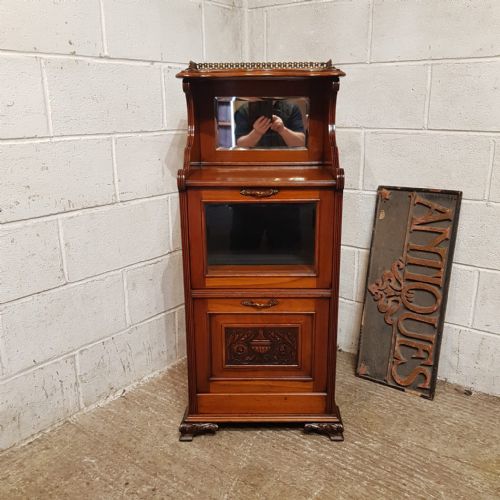
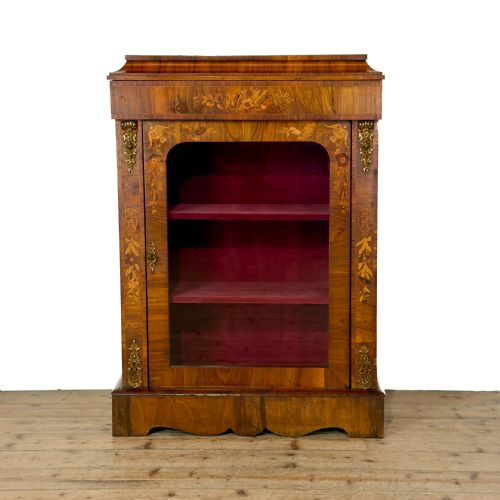
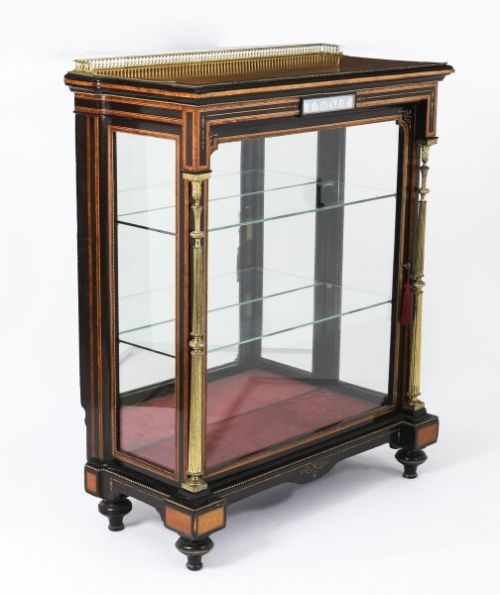

Antique Pier Cabinets
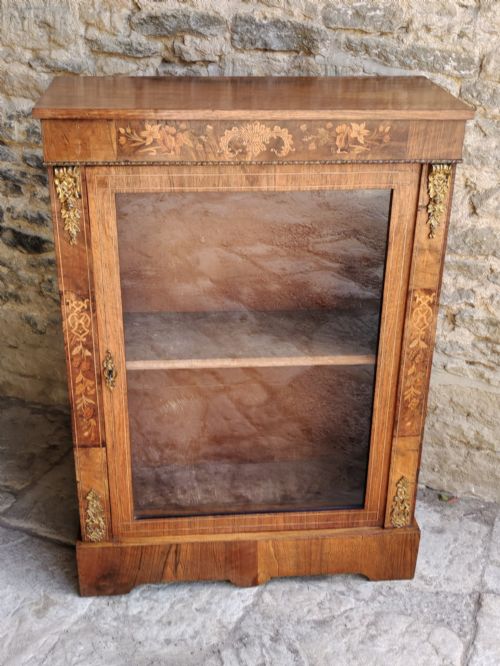
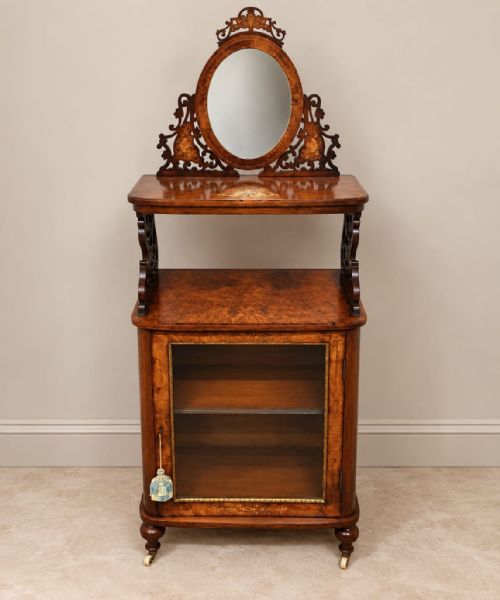
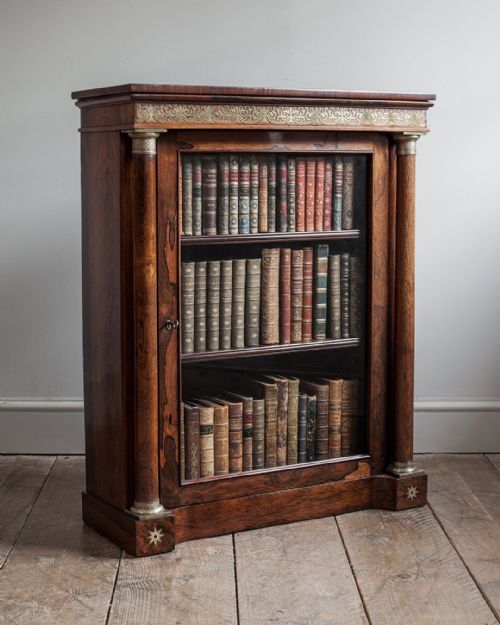
A pier cabinet is a tall, narrow cupboard built to stand against the pier of wall between two windows, used in the 19th-century drawing room for display and storage where a wider cabinet would not fit.
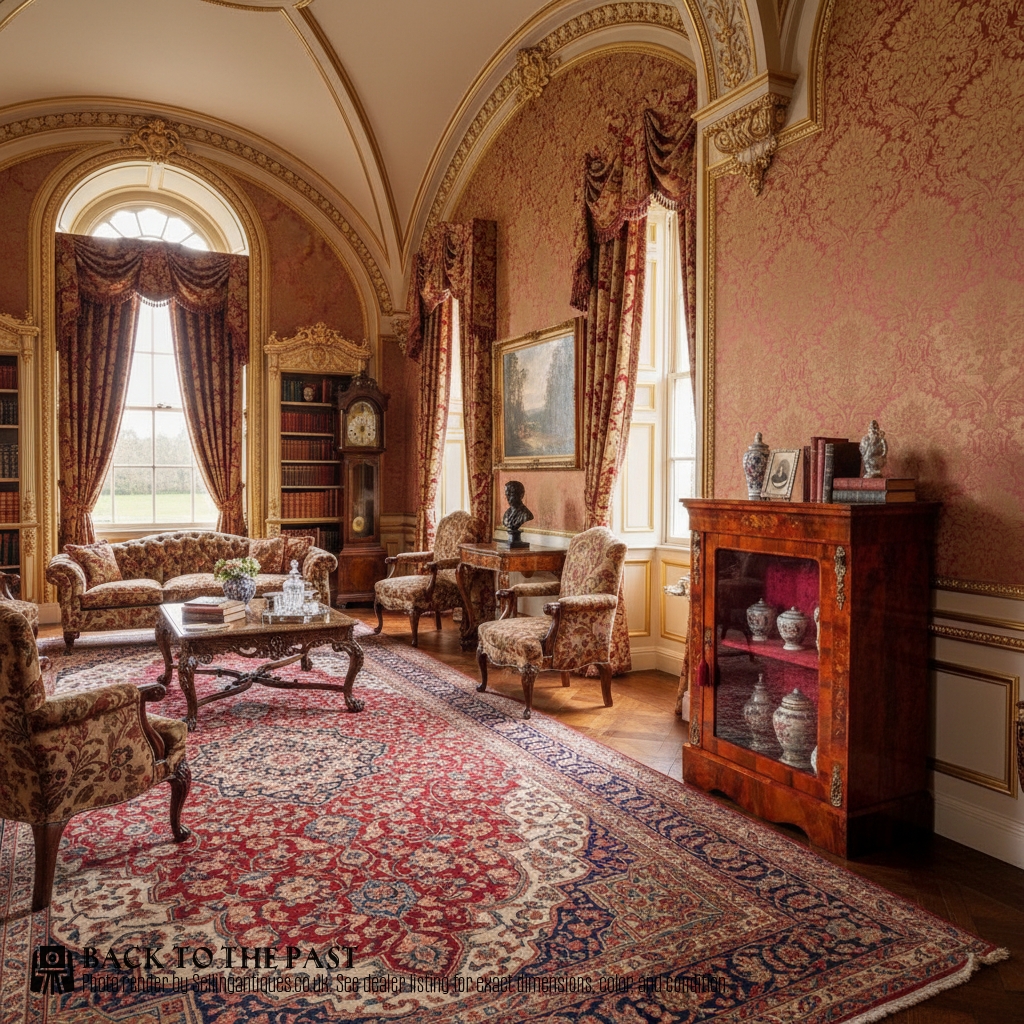
Antique Pier Cabinets
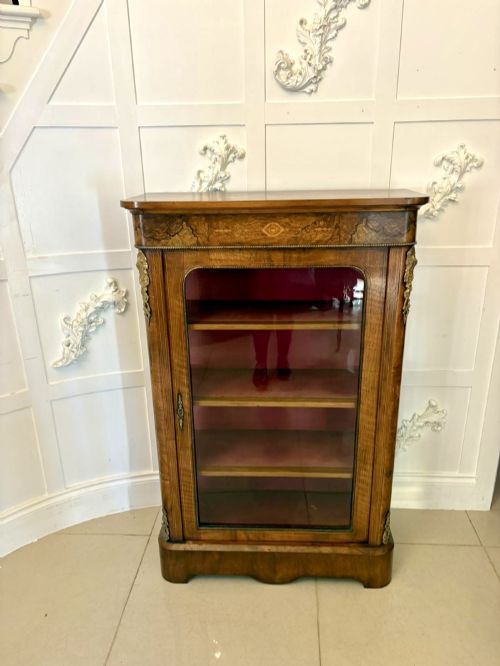
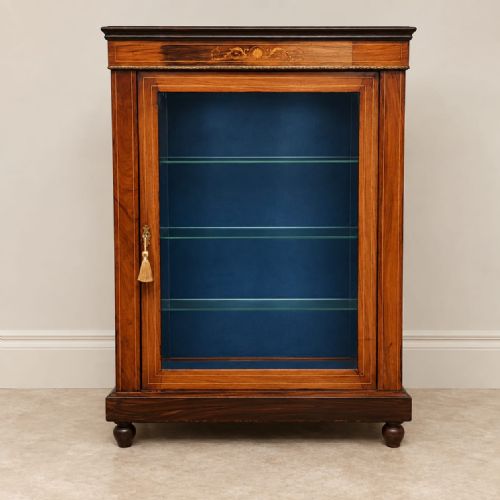
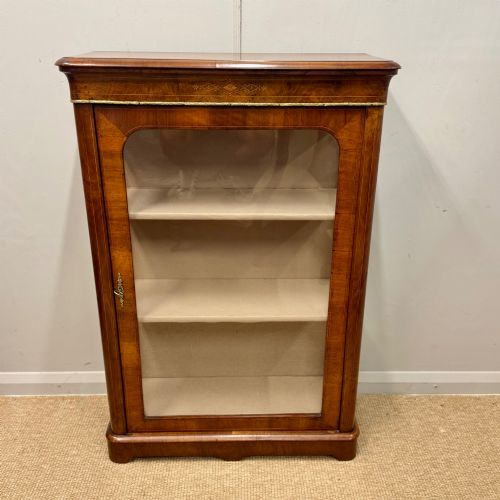
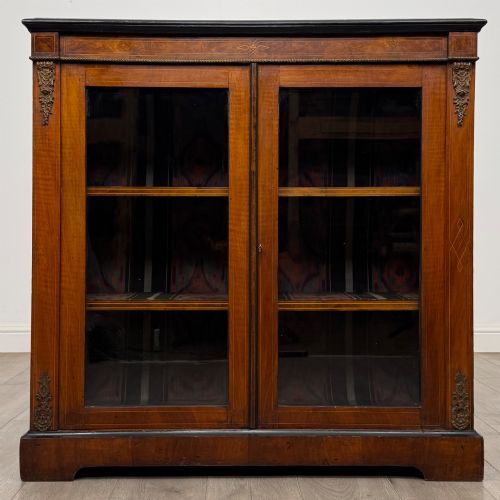
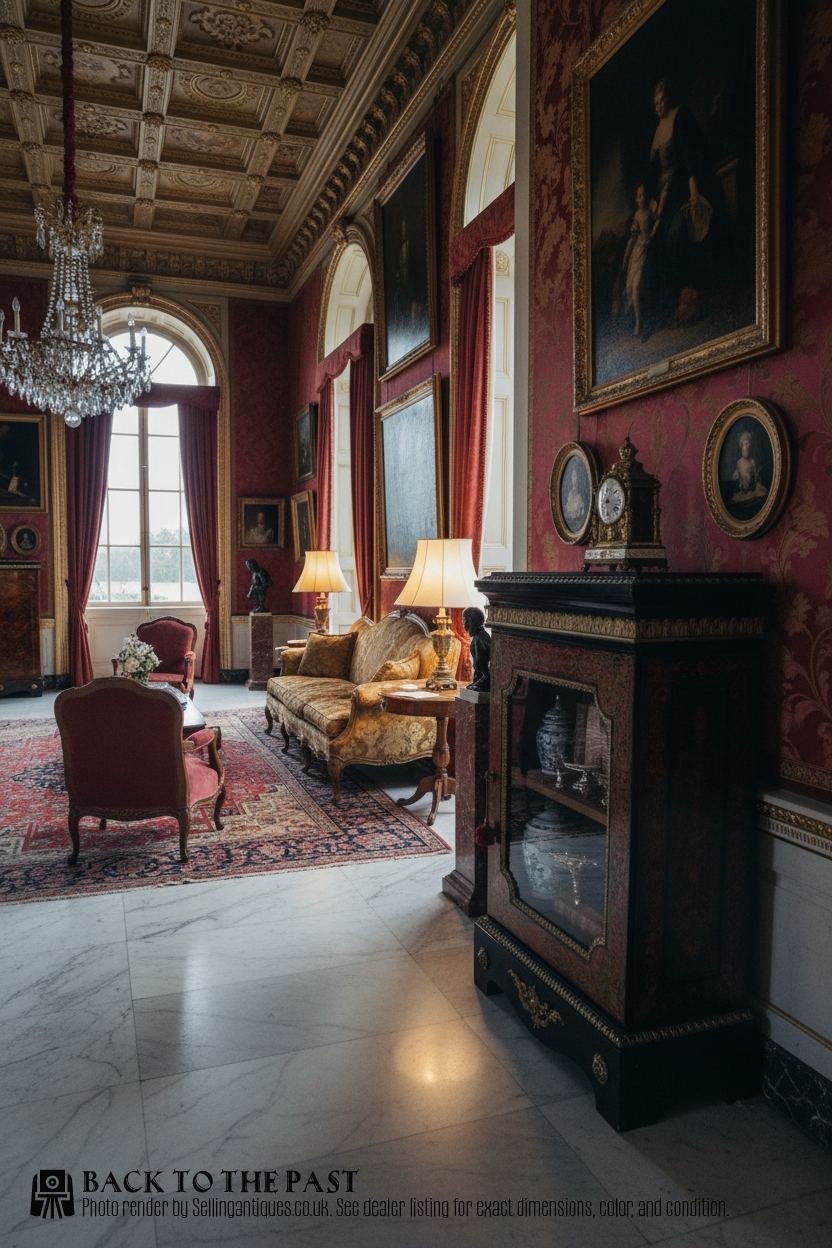
The form takes its name from the pier, the section of wall between two windows, often below a pier glass. That dictates the shape: a single- or two-door case, taller than it is wide, glazed or panelled, standing on the floor rather than hanging.
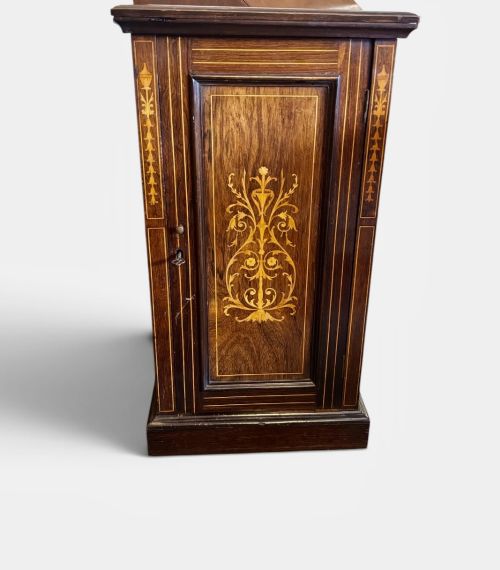
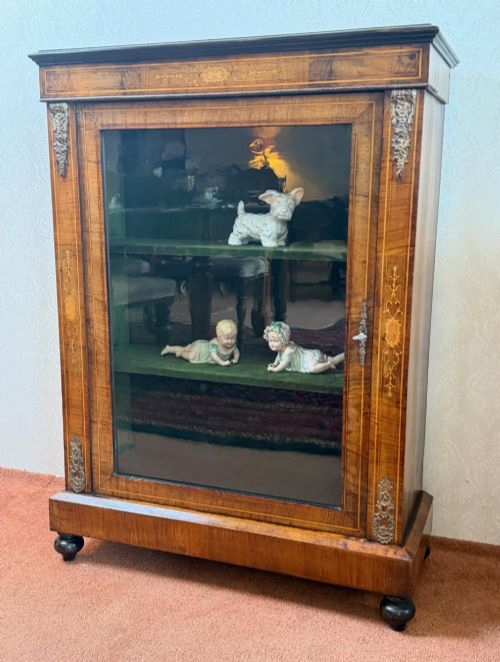
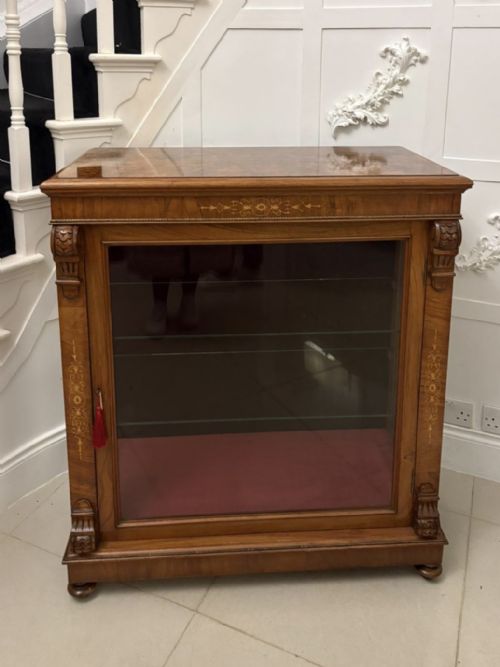
The version you are most likely to meet on Sellingantiques is Victorian and veneered in walnut. Walnut appears in 257 of 404 titles and 'Victorian' in 224, with burr walnut the favoured figure. Inlay is the usual decoration, from boxwood and brass lines to floral marquetry, and gilt-metal mounts turn up throughout.
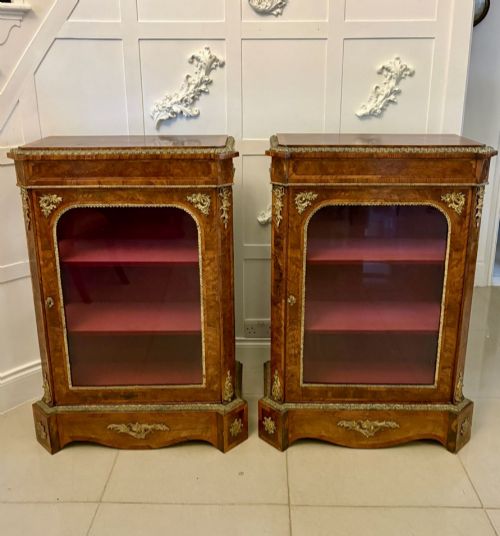
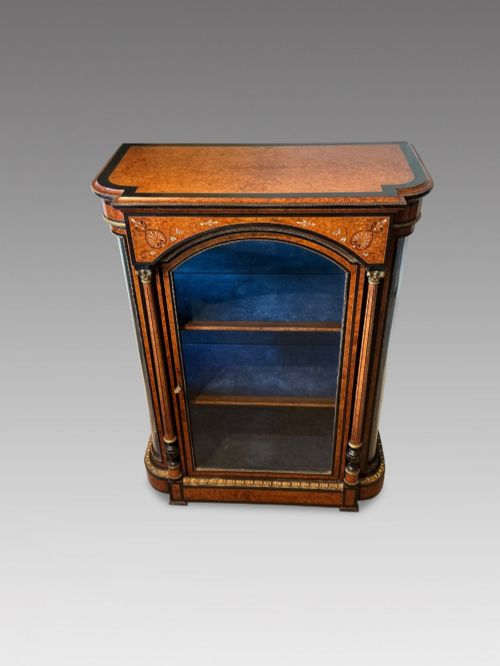
Behind that sits a smaller ebonised group, often carrying boulle work, porcelain plaques or amboyna banding, and a thinner seam of mahogany and rosewood cabinets described as Regency or as side cabinets. Glazed display and bookcase variants overlap the walnut group. One in six titles is for a pair rather than a single.
Dating is loose. Only 153 listings carry a clean year, the rest filed as 'Victorian' or '19th Century', so 'Victorian' in a title reads as a style label as much as a date. Where a decade is given, the 1860s leads, ahead of the 1880s and 1870s. Titles shade into neighbouring names too, and dealers often use two in one heading: pier or bookcase, pier and display cabinet, chiffonier, vitrine.
What Separates Them
Pairs sit at the top. Sixty-eight titles carry 'pair', and the trade splits them further into 'true pair' for cabinets made together and 'matched pair' for cabinets brought together later. Either way, two cabinets concentrate in the upper part of the range where singles do not.
Then it is veneer and decoration. A plain Victorian walnut pier cabinet runs through the lower and middle ground. Burr and figured walnut lift it; amboyna, kingwood, satinwood and coromandel appear only in the dearer samples. Marquetry over line inlay, and ormolu mounts over none, work the same way.
Applied work climbs highest. Boulle, porcelain plaques and pietra dura panels each turn up only occasionally, and when they do they land at the top. Scale and form matter alongside them: small, miniature and table-top cabinets sit below large, serpentine, two-door and cabinet-on-stand examples.
Antique Pier Cabinets Retail Price Guide 2026
Typical UK retail prices for pier cabinets, calculated from the Sellingantiques database of over a million retail prices indexed since 2003. This retail price guide relies exclusively on Sellingantiques data; no external sources or auction records are used, so the figures do not describe the wider market.
One title in six on Sellingantiques is for a pair. The trade writes both 'true pair' and 'matched pair', and means different things by them.
The Antique Pier Cabinets Glossary
- Pier
- The wall between two windows, and the space the cabinet was made to fill. The name describes a position in a room, not a construction.
- Burr walnut
- Veneer cut from a burr growth on the tree, giving a dense swirling figure. It is the favoured walnut here, in 70 titles.
- Inlaid
- Decoration set into the surface, covering line, boxwood, brass and floral work. It appears in 105 titles, more than any other decorative term.
- Marquetry
- Pictorial or floral decoration built up from shaped veneers, named in 50 titles and usually a step above plain line inlay.
- Ebonised
- A cheaper timber stained and polished black, in 34 titles, and the usual carcase for boulle work and applied plaques.
- Boulle
- Brass and tortoiseshell marquetry, in 18 titles, nearly always on an ebonised cabinet and nearly always at the top of the range.
Antique Pier Cabinets: Frequently Asked Questions
Why are they called pier cabinets?
The pier is the section of wall between two windows. The cabinet was made tall and narrow to fill it, commonly standing below a pier glass.
It became a standard drawing-room form in Britain through the 19th century, used where a wider cabinet would not go.
What wood are they usually made from?
Walnut dominates, in 257 of 404 titles, with burr walnut the favoured figure and figured walnut behind it.
Everything else is thin by comparison: mahogany in 19 titles, rosewood in 14, and amboyna, kingwood, satinwood, coromandel, burr maple and carved oak in single figures each. Ebonised cabinets form a separate group of 34.
Are pier cabinets English or French?
As the category appears on Sellingantiques, it is overwhelmingly British. Only 19 titles carry a French attribution, against 17 called English outright.
The rest are dated by period alone, and the forms and timbers follow the British 19th-century drawing-room pattern.
How often do pairs come up?
One in six titles is for a pair, 68 in all.
Dealers distinguish a 'true pair', made together, from a 'matched pair' assembled later. Both terms are used, and pairs cluster in the upper reaches of the range.
When were most of them made?
The mass of the category sits in the third quarter of the 19th century. The 1860s is the busiest decade in the archive with 48 listings, ahead of the 1880s and 1870s.
Nearly half the dated listings give no decade at all, filed as 'Victorian' or '19th Century'. Clean years run from 1800 to 1930.
Do listings call them something other than pier cabinets?
Often. Titles shade into display cabinet, side cabinet, bookcase, music cabinet, vitrine and chiffonier, and dealers frequently pair two names in one heading.
Glazed display and bookcase variants make up about a fifth of the category, overlapping the walnut group rather than sitting apart from it.