
Antique Cocktail Cabinets
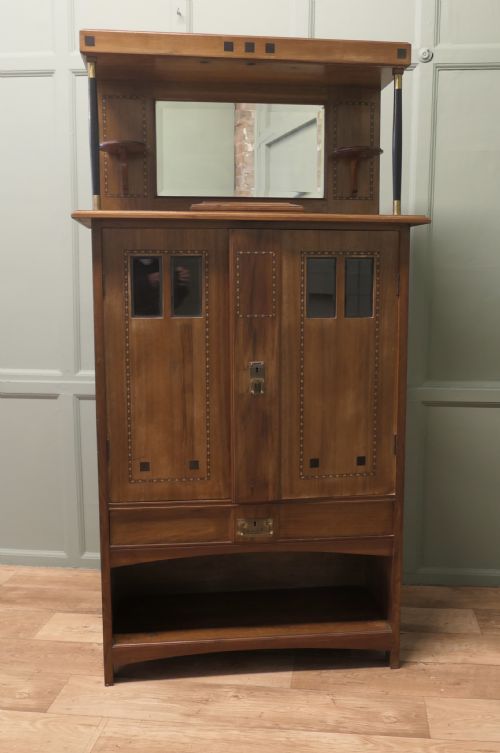
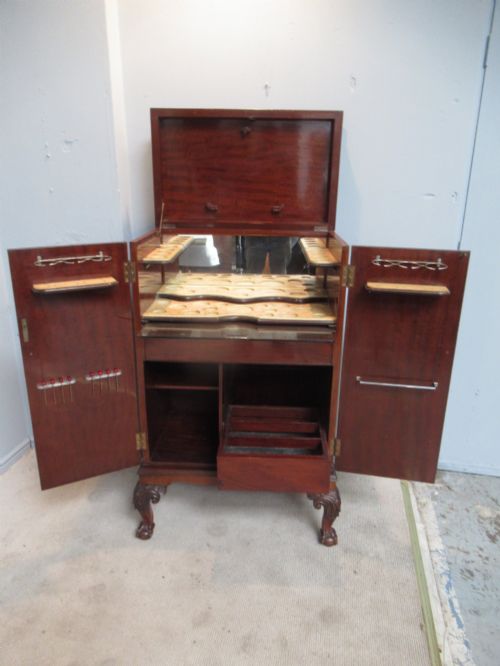
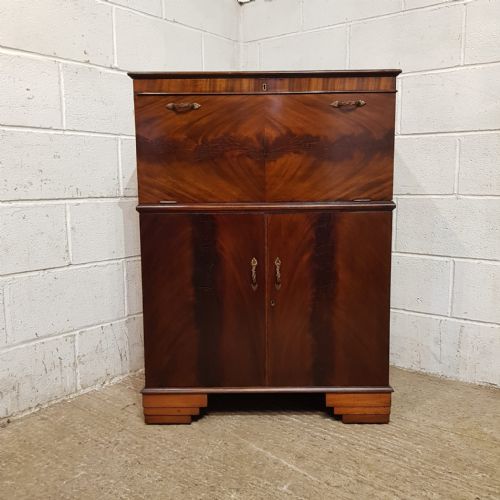
A cocktail cabinet is a free-standing drinks cupboard that opens to a fitted interior of shelves, bar recesses and racks, built to hold bottles, glasses and mixing kit rather than china.
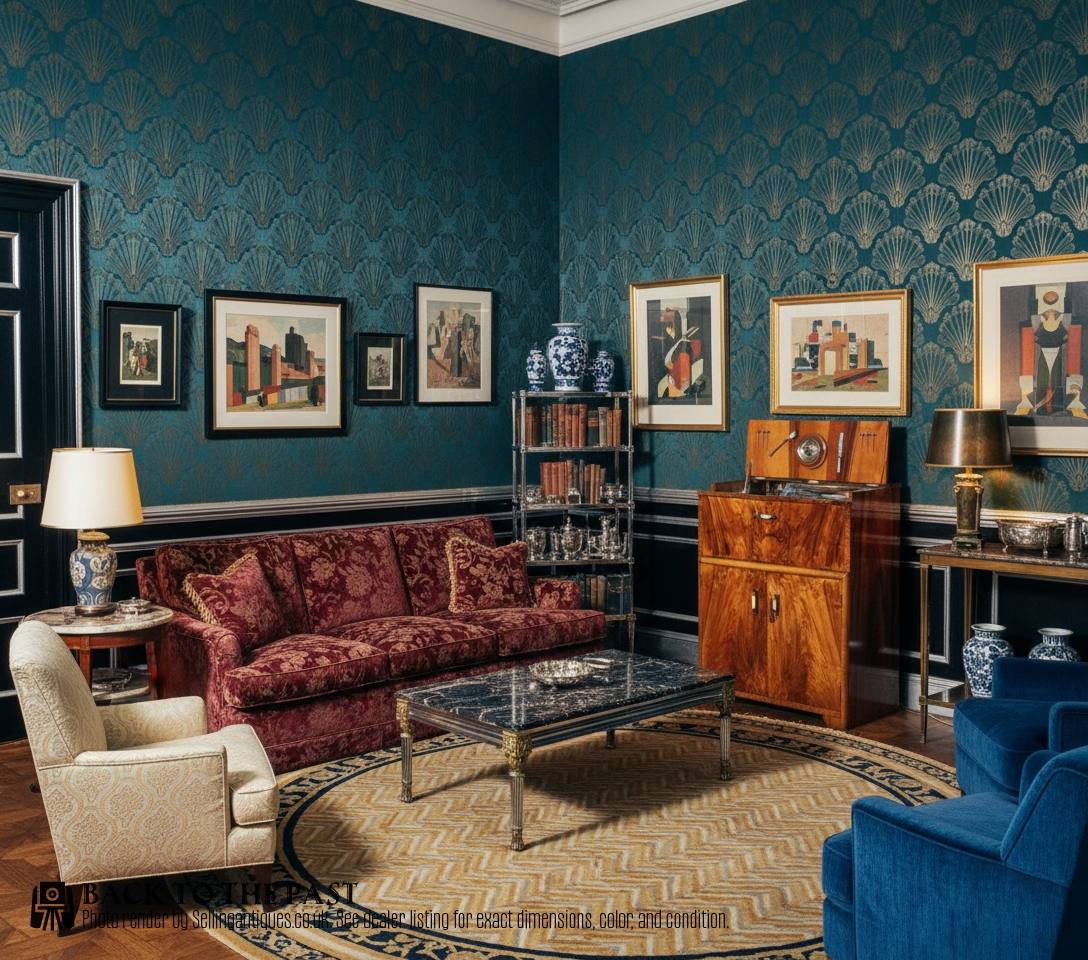
Antique Cocktail Cabinets
The cocktail cabinet arrived as its own piece of furniture in the 1920s and 1930s, when drinking at home meant a cupboard that kept bottles, glassware and mixing equipment together behind doors, often with a lined bar recess and a serving surface that folds or slides out.
On Sellingantiques the category is overwhelmingly inter-war and overwhelmingly walnut. Of 359 titles, 241 name walnut and 147 specify burr walnut. Of the 344 dated listings, 313 fall in the 1920s and 1930s, and 27 titles carry their own c1930 marker.
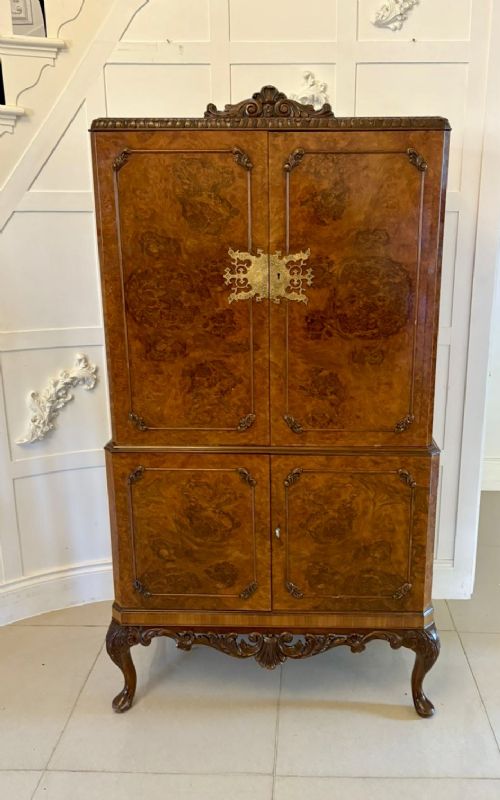
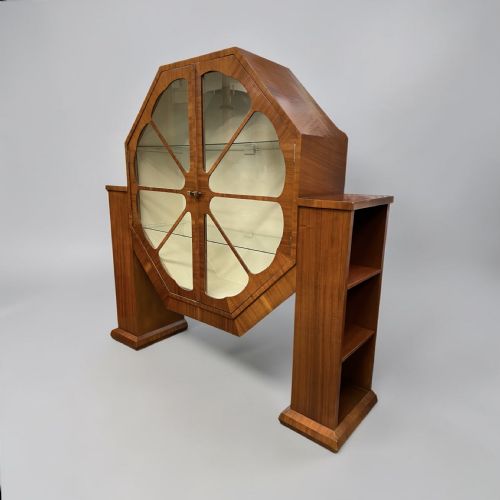
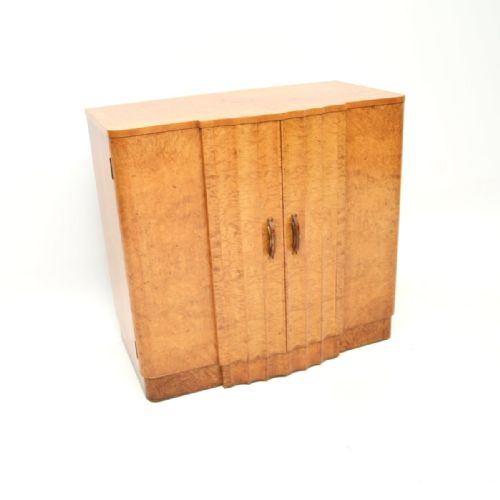
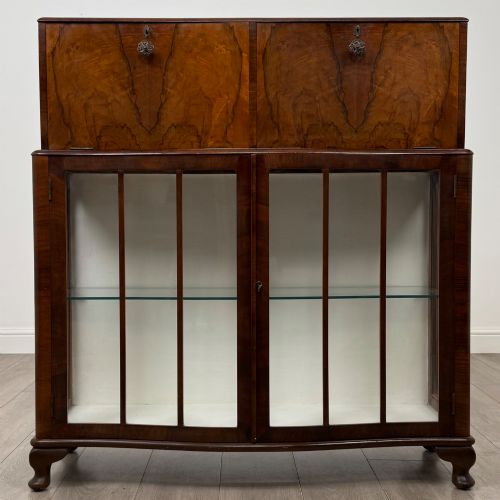
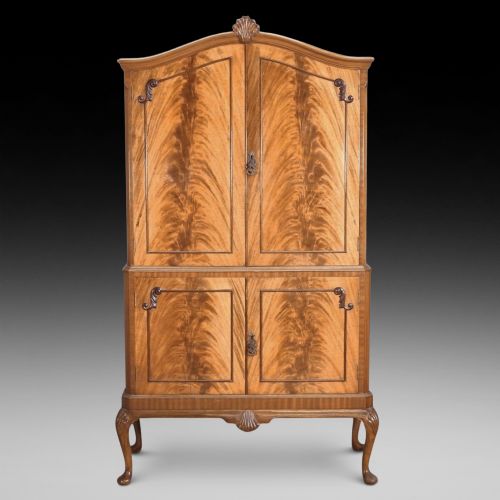
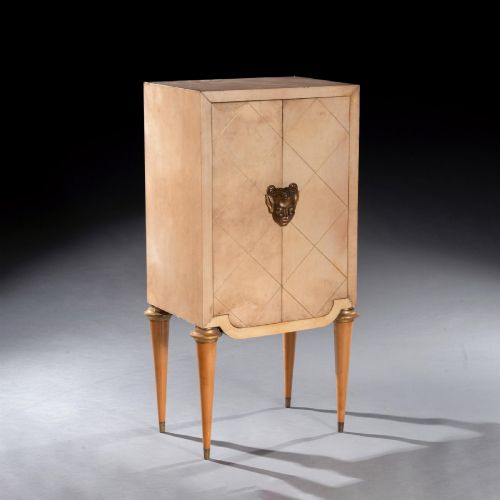
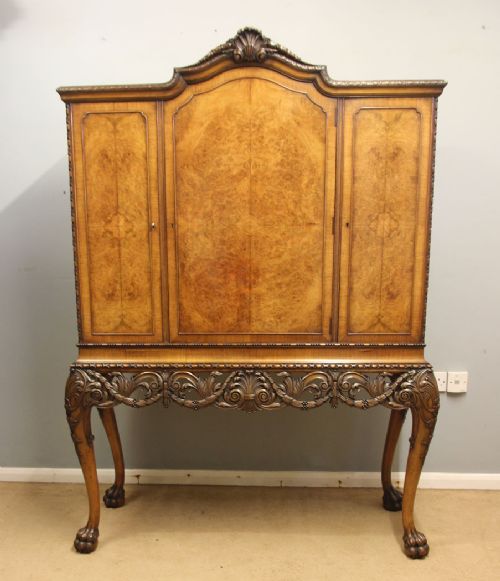
Two style vocabularies sit side by side in those same decades. Art Deco is the larger group at 159 titles, taking in upright cabinets and dry bars. Queen Anne style accounts for 42, meaning cabriole legs, a shaped apron and a bow or serpentine front on a low cupboard.
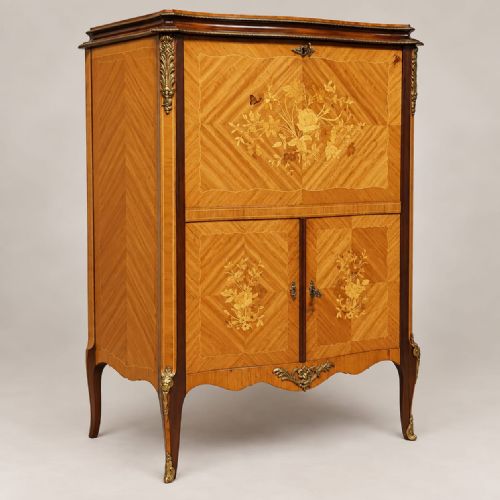
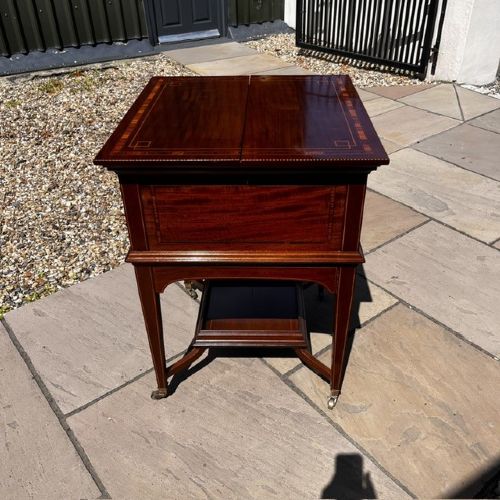
Smaller strands run alongside. Chinoiserie and lacquer decoration appears in 18 titles, including red lacquer with parcel gilt. Converting pieces turn up occasionally: pop-up and surprise cocktail tables, a revolving dry bar, metamorphic drinks bars. French and Continental descriptions cover 11 titles, and a handful of Victorian and Edwardian cupboards have been re-described as drinks cabinets.

Where The Range Splits
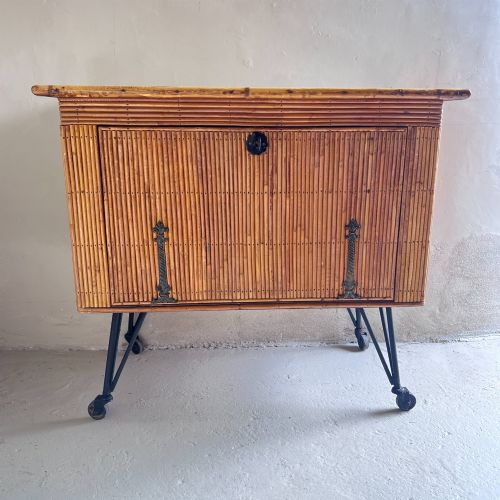
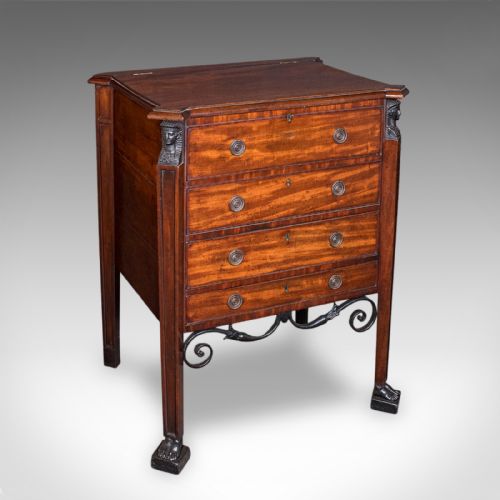
Timber does most of the sorting. Plain walnut, mahogany, oak and bamboo hold the bottom of the range. Above that sits burr and figured walnut, and above that the thinly spread exotics: satinwood, birds-eye and burr maple, sycamore, kingwood, amboyna, Macassar ebony, along with parquetry and tortoiseshell work.
A name lifts a cabinet further than anything else. The highest-priced titles in the archive are the attributed ones, and the great bulk of the middle names nobody at all. After that it is the shaping and the ornament: bow fronted, serpentine, breakfront, ormolu mounted, marquetry inlaid, a carved giltwood base.
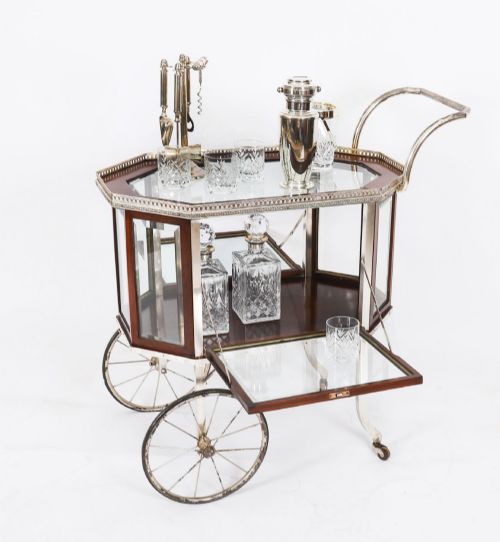
Then the interior and the scale. Titles that record a fitted interior, a dry bar, an illuminated, revolving, metamorphic or counterweighted fitting sit toward the top, as do large and upright forms at sideboard scale. An unqualified cocktail cabinet, a small side cupboard or a trolley sits lower.
Antique Cocktail Cabinets Retail Price Guide 2026
Typical UK retail prices for cocktail cabinets, calculated from the Sellingantiques database of over a million retail prices indexed since 2003. This retail price guide relies exclusively on Sellingantiques data; no external sources or auction records are used, so the figures do not describe the wider market.
Among the one-offs to pass through: pop-up and 'surprise' cocktail tables, a revolving dry bar and a counterweighted bar that swings up on its own.
Harry and Lou Epstein
The Antique Cocktail Cabinets Glossary
- Burr walnut
- Veneer cut from a burr or growth on the tree, giving dense swirling figure. It appears in 147 titles, the single commonest description in the category.
- Dry bar
- A fitted bar recess without plumbing, usually mirrored or lined. Fourteen titles use the term, and it clusters toward the upper end of the range.
- Fitted interior
- Purpose-built compartments for bottles and glasses, as against plain shelving. Eleven titles say fitted.
- Queen Anne style
- Revival treatment with cabriole legs and a shaped apron, used on 42 cabinets here, all of them inter-war rather than early.
- Metamorphic
- A piece that changes function, typically a table that opens or rises into a bar. Related titles use pop-up or surprise for an interior that lifts when the top is raised.
- Macassar ebony
- Strongly striped tropical ebony, used as a contrast veneer in Deco cabinetwork and one of the rarer timbers named in the archive.
Antique Cocktail Cabinets: Frequently Asked Questions
What wood are cocktail cabinets usually made from?
Walnut, by a long way. It is named in 241 of 359 titles on Sellingantiques, with 147 of those specifying burr walnut.
Everything else is thin on the ground. Mahogany appears in 15 titles, and satinwood, sycamore, kingwood, amboyna, birds-eye maple and Macassar ebony each turn up once or twice.
When were cocktail cabinets made?
The dated field runs from 1880 to 1950, but the mass is inter-war: 174 listings are given as 1930s and 139 as 1920s, together 313 of the 344 dated entries.
The scattered outliers are mostly period brackets rather than firm years, covering a few Victorian, Edwardian and 1900s pieces. One cabinet carries an inscribed date of 1952.
Why are some called Queen Anne style?
Because the maker used an earlier revival vocabulary on an inter-war piece: cabriole legs, a shaped apron, a bow or serpentine front.
Forty-two titles use the label, and they are dated to the same 1920s and 1930s as the Art Deco examples. Other revival tags in the archive include George I Revival and William and Mary style.
Are there cocktail cabinets that convert or fold away?
Yes, though they are a small handful. The archive holds pop-up and surprise cocktail tables, a revolving dry bar, a counterweighted bar and two metamorphic drinks bars.
Each turns up only once or twice, which makes them the odd bodies of the category rather than a standard type.
How many come up for sale each year?
Around 22 cocktail cabinets come to market on Sellingantiques in a year.
Sixty-four different dealers have listed one at some point, so no single dealer or stock holding shapes what the category looks like.
Do many cocktail cabinets carry a maker's name?
Most titles name nobody. Only one name clears three dealers in this archive, and the great bulk of the middle of the range is unattributed.
Where a name does appear, it shows up as an attribution in the title, and those pieces sit at the top of the range.