




Antique Jewellery Cabinets
A glazed, drawered cabinet made to keep and show jewellery, from small table-top cases and bijouterie tables up to the counters and fittings of a jeweller's shop.
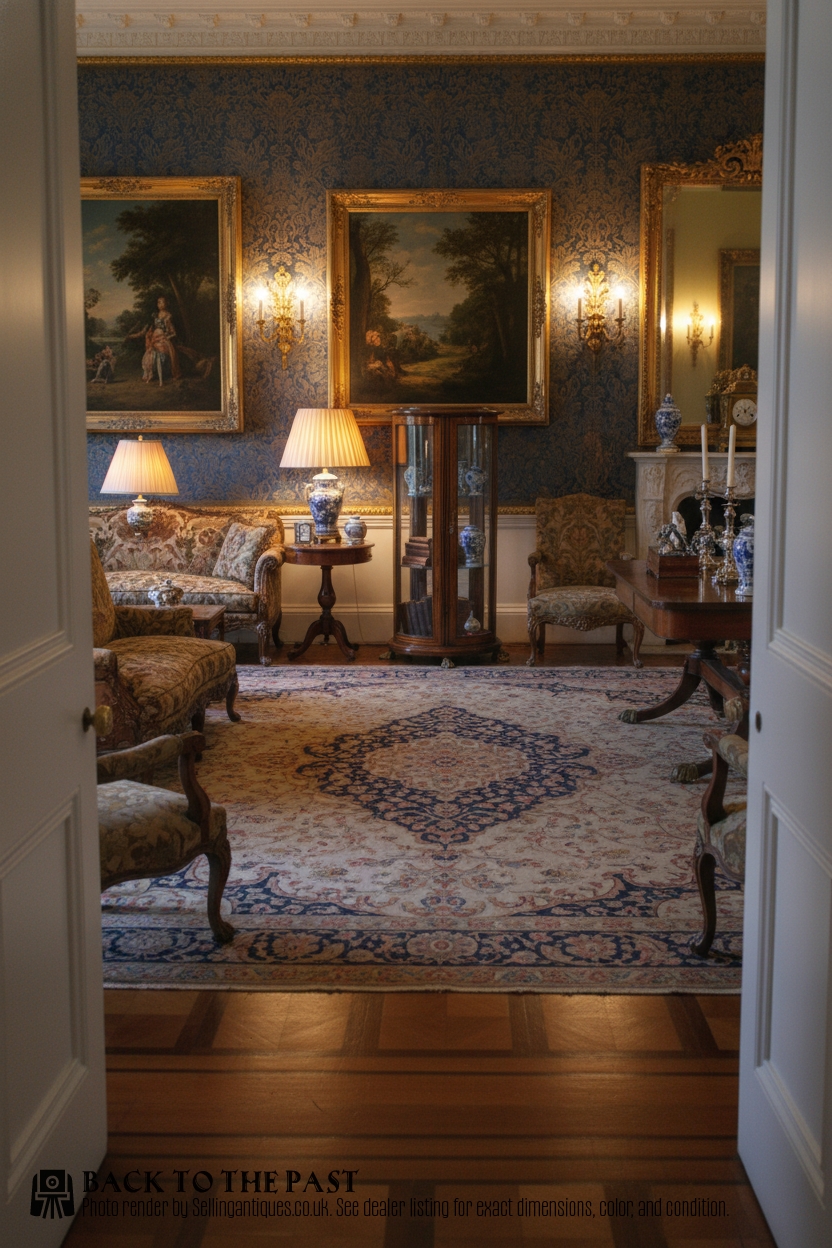
Antique Jewellery Cabinets
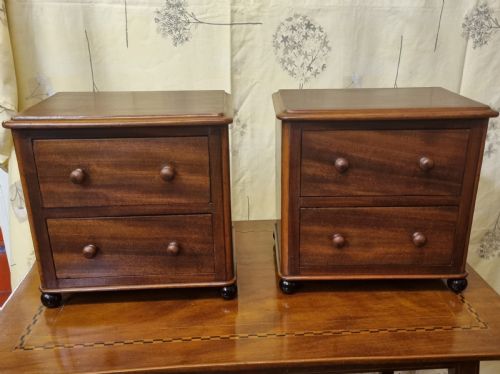
The word that dominates the listings is "display": it turns up in 56 of the 127 titles on Sellingantiques, and mahogany in 38. Put those together with "table", "top" and "counter" and the piece you are most likely to meet is a mahogany glazed case made to sit on a table or a shop counter rather than stand on the floor.
Small lockable, dust-free cases for keeping valuables grew out of the fitted cabinet trade of the 18th and 19th centuries. From the mid-19th century the same idea was built larger for retail, which is where the glazed jewellers' counter and shop display cabinet come from. Both readings sit in this category side by side.
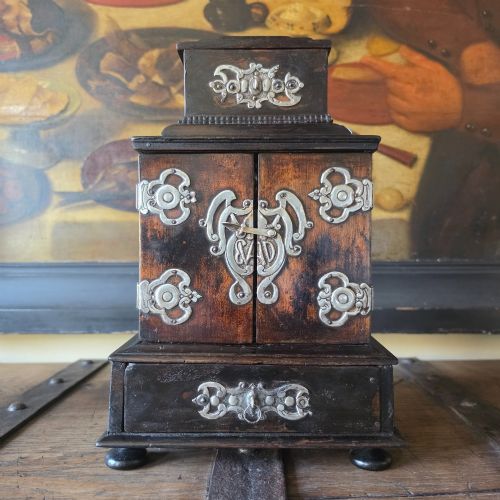
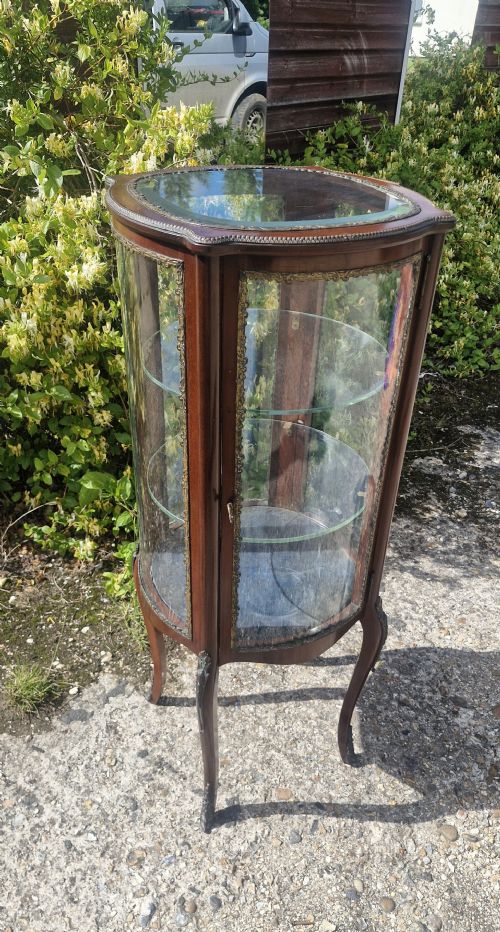
The domestic strand is the bijouterie table and vitrine, often inlaid, in mahogany, walnut, satinwood or rosewood, and it is the strongest thread in current stock. Alongside it run multi-drawer collectors' cabinets, quoted by drawer count from seven and eight up to a single 31-drawer mahogany one, usually offered for coins and medals as much as jewellery.
Dating is broad. Dealers' own dates run 1790 to 1960, with the 1920s the best-represented decade at 27 listings, ahead of the Victorian bracket at 22. A smaller late strand is metal-framed, in brass, bronze and chrome, and the latest pieces in the archive belong to it. Japanese and Chinese lacquer table cabinets appear as a recurring minority.
What Separates Them
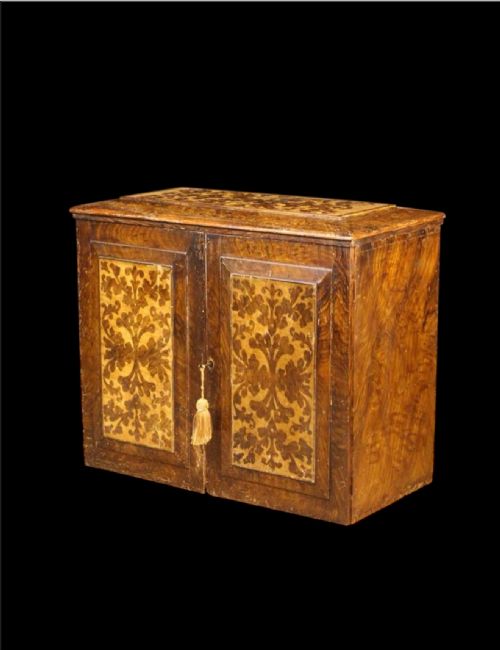
Surface does most of the work. Plain mahogany, teak, oak and pine cases sit at the bottom of the range; satinwood, burr and burl walnut, rosewood, kingwood, marquetry, penwork and hand-painted decoration sit in the upper half. Inlay and crossbanding pull hard in the same direction, and "inlaid" appears in 13 titles.
Then scale, and whether the thing stands up on its own. A counter-top or table-top case is the commonest and cheapest reading. Cabinets on legs, cabinets on stands, pier cabinets and the frankly large ones occupy the top end, and shop fittings concentrate there too.
Plan shape is a smaller but consistent divider. Bow-fronted, bow-ended, circular, oval, kidney-shaped and pentagonal cases sit almost entirely above the middle of the range, where rectangular is the default. Pairs behave oddly: a pair of Victorian table-top chests sits near the bottom, but paired bronze cabinets, paired pier vitrines and shop cabinets sold together sit at the very top.
Antique Jewellery Cabinets Retail Price Guide 2026
Typical UK retail prices for jewellery cabinets, calculated from the Sellingantiques database of over a million retail prices indexed since 2003. This retail price guide relies exclusively on Sellingantiques data; no external sources or auction records are used, so the figures do not describe the wider market.
Dealers' own dates for these cabinets on Sellingantiques run from 1790 to 1960 - a 170-year span for one nominal form.
The Antique Jewellery Cabinets Glossary
- Bijouterie
- A shallow glazed cabinet or table made to show small jewellery and trinkets. The word appears in 22 titles.
- Vitrine
- A glazed display case or cabinet, used in 13 titles and often interchangeably with bijouterie.
- Counter top
- Made to stand on a shop counter rather than on the floor. "Counter" appears in 18 titles, "top" in 13.
- Collectors cabinet
- A bank of shallow drawers for coins, medals or jewellery. Fifteen titles use it, and the drawer count is usually quoted.
- Crossbanded
- A contrasting veneer band laid across the grain as a border, as on the satinwood-crossbanded Edwardian cabinets.
- Kodansu
- A small Japanese lacquer table cabinet, with drawers or doors set behind an outer door.
Antique Jewellery Cabinets: Frequently Asked Questions
What is a bijouterie cabinet?
A shallow glazed cabinet or table made to display small jewellery and trinkets. The word turns up in 22 of the titles on Sellingantiques, commonly attached to a table form on legs.
It overlaps with vitrine, which appears in 13 titles. Dealers use the two words for much the same thing, and one title strings six such terms together at once.
Which wood is most common?
Mahogany, by a distance: it appears in 38 of 127 titles, with walnut in 8 and satinwood and rosewood behind that.
There is also a metal-framed strand in brass, bronze and chrome, small in number and clustered in the 1920s to 1950s.
How old are these cabinets?
The dealers' own dating runs from 1790 to 1960, with 70 of the listings carrying a clean year. That is a 170-year span for what is nominally one form.
The 1920s is the single largest bracket at 27 listings, ahead of Victorian at 22. Edwardian, 1900s and 1910s together make the turn of the century substantial.
Much of the dating is broad rather than precise. Thirteen listings say only "19th Century" and four only "Georgian".
Are shop counters part of this category?
Yes, and they are a fifth or so of it. "Shop" appears in 23 titles and "counter" in 18, covering Victorian jewellery shop counters through to 1930s shop display counter cabinets.
They sit at the upper end of the range, particularly where several are sold together.
What do the drawer counts mean?
On collectors' cabinets the number of drawers is quoted as a selling point. The listings run from seven and eight drawers up to a single 31-drawer mahogany cabinet.
These banks of shallow drawers are offered for coins and medals as often as for jewellery.
Do many of these come up for sale?
Around nine a year reach the market, and 57 different dealers have listed one.
So the category is spread thinly across a lot of stock rather than being any one dealer's speciality.