
Antique Filing Cabinets
Wooden office storage from around 1900 onwards, built to hold letters and index cards in standardised drawers, commonly behind a roll-up tambour shutter.
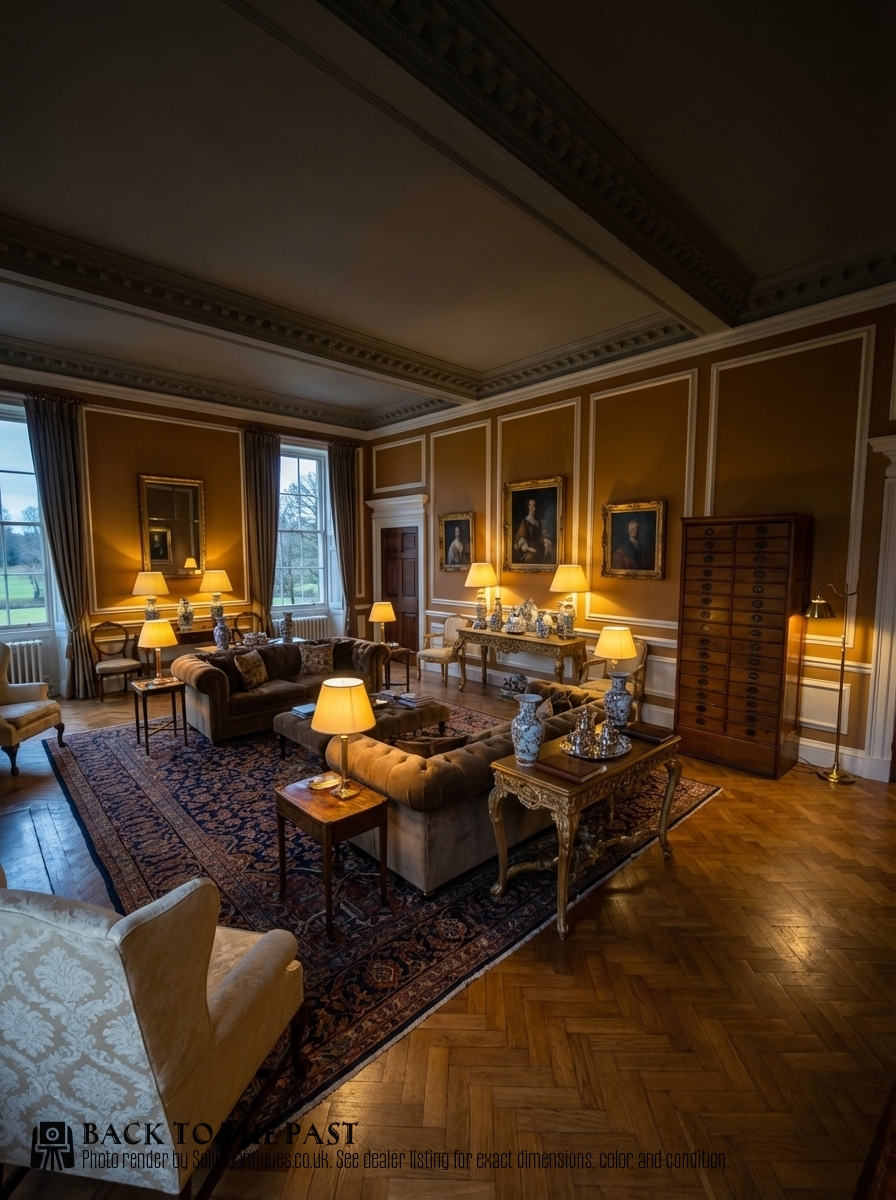
Antique Filing Cabinets
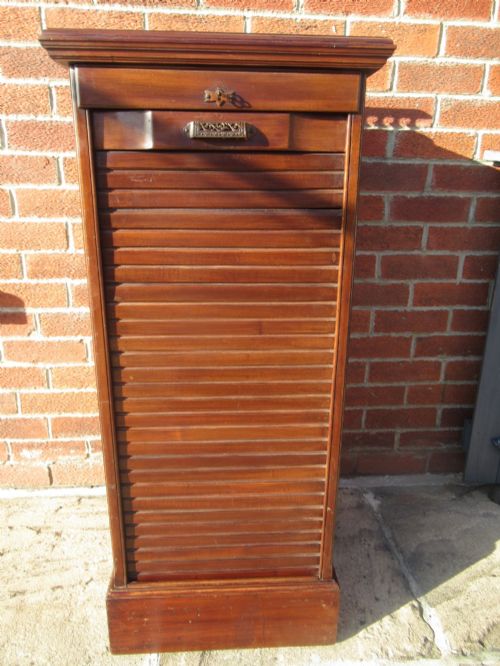
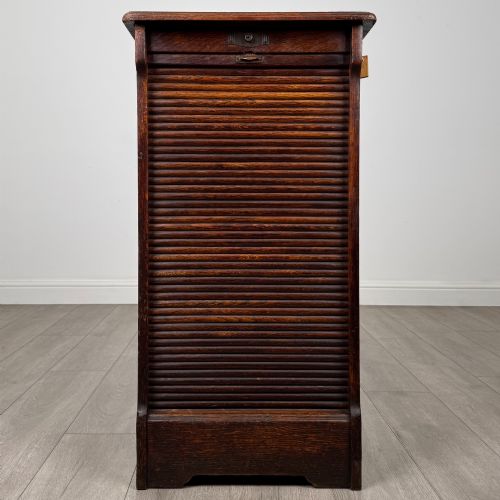
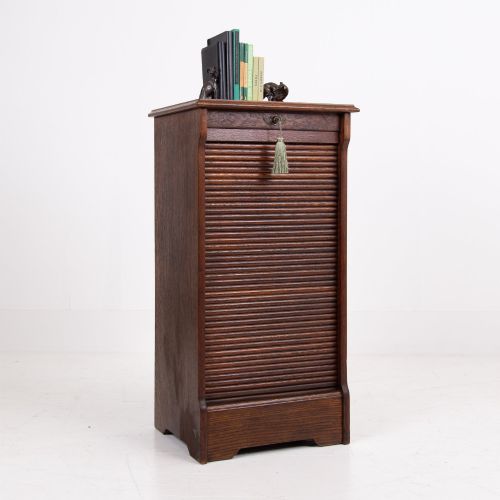
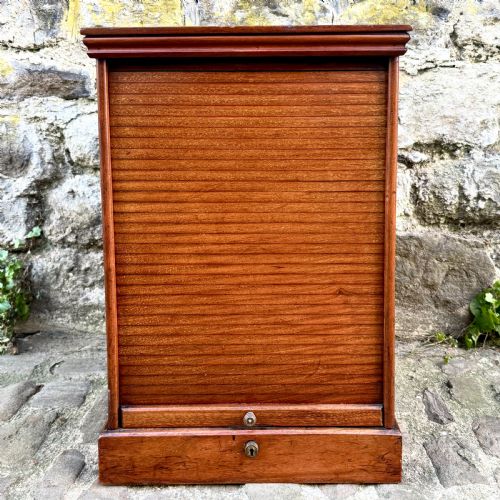
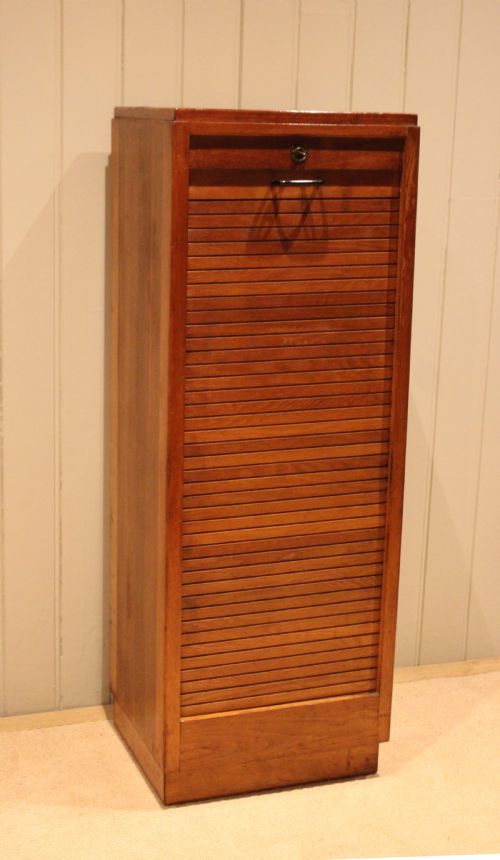
Purpose-made wooden filing furniture arrived with the growth of commercial correspondence and the vertical file in the late 19th century, replacing pigeon-holes and box files with drawers sized to letter and card stock. The tambour shutter came in so a cabinet could be shut and locked at the end of the day without needing room for a swing door.
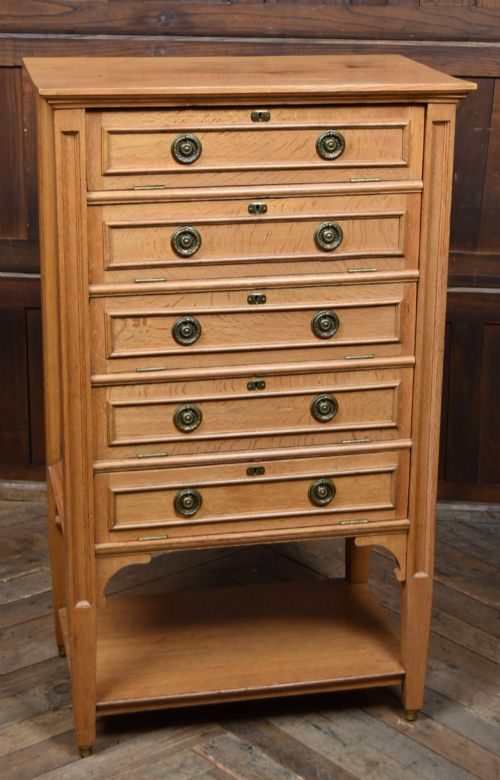
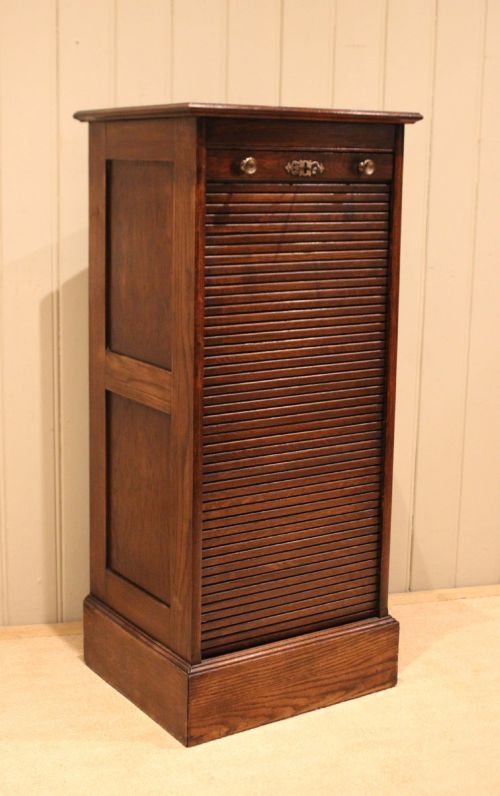
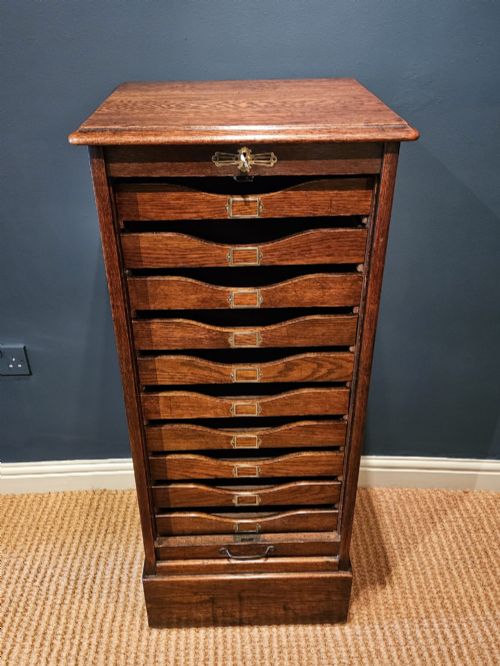
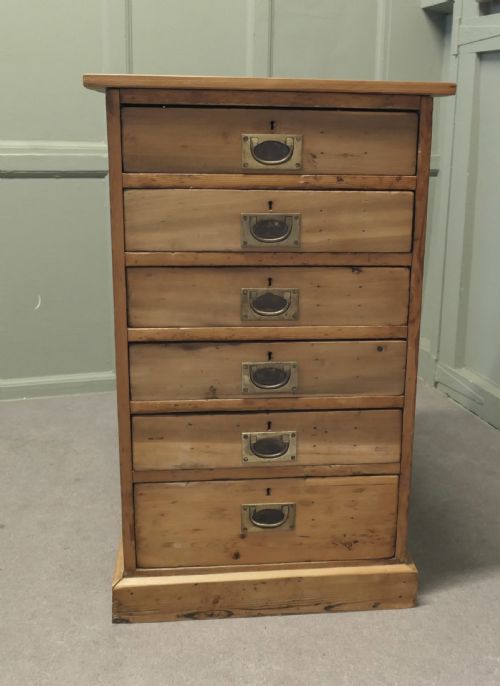
Oak is the default timber, named in over half the titles on Sellingantiques, with mahogany next and walnut well behind. The single most likely thing you'll meet is an oak cabinet with a tambour front, and dealers count the bays, single and double being usual and triple turning up once in a blue moon. After that comes the plain drawer bank, listed by its drawer count, three and four the most frequent.
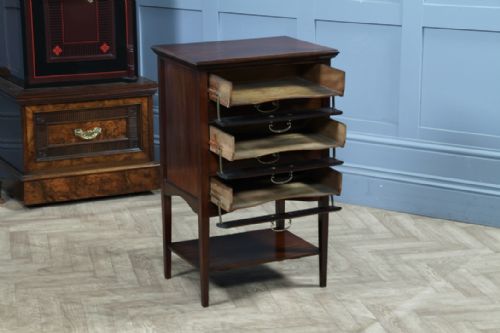
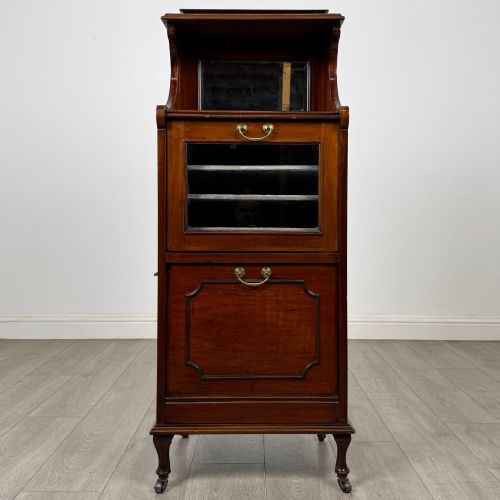
France supplies a striking share for an office form, with 90 titles saying French, including a notary's cartonniere and a post office filing shelf. Alongside the office pieces sit card-index and letter-file cabinets, Edwardian sheet-music and folio cabinets in mahogany or walnut, and a fringe of collectors', chemist's, haberdashery and museum drawer banks that dealers file here because of the drawer-bank form.
The dated field runs 1800 to 1960, but the mass sits in the first third of the 20th century. The 1920s alone account for 160 listings, with Edwardian, the 1910s and the 1900s close behind, and post-war examples nearly absent. Earlier tags such as "19th Century" and "Victorian" are era labels rather than years, and the handful of genuinely early dates attach to collectors', campaign or plan-chest forms.
The Range
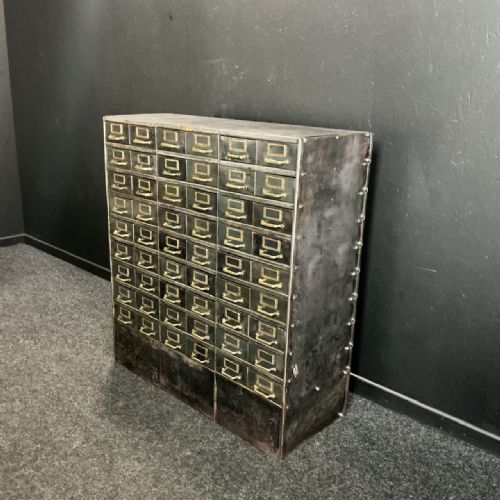
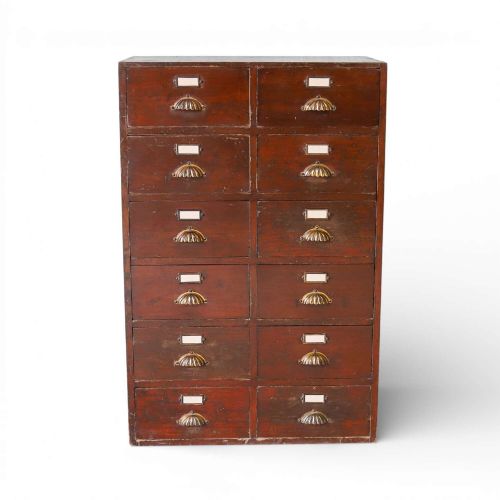
Scale does most of the work. Small desk-top and table-top units of two or three drawers anchor the bottom of the range, while the tall banks climb past eight, twelve and twenty-five drawers to forty, sixty-six and one cabinet of ninety-one. More drawers and greater height push a piece up.
Timber sorts the middle. Plain oak is the baseline; mahogany and walnut cluster in the upper half, and the highest-priced pieces are walnut or burr walnut rather than anything tambour-fronted. Among the shutter cabinets themselves, double and triple fronts sit consistently above the single tambour band.
Two other things lift a cabinet. A named or attributed manufacturer, whether stamped on the carcass or recorded on a label, puts a piece in the upper half. So does coming as more than one: pairs turn up in ten titles, and a set of six four-drawer cabinets sat at the top end.
Antique Filing Cabinets Retail Price Guide 2026
Typical UK retail prices for filing cabinets, calculated from the Sellingantiques database of over a million retail prices indexed since 2003. This retail price guide relies exclusively on Sellingantiques data; no external sources or auction records are used, so the figures do not describe the wider market.
The biggest run of drawers to pass through Sellingantiques was a bank of ninety-one oak filing drawers.
The Antique Filing Cabinets Glossary
- Tambour
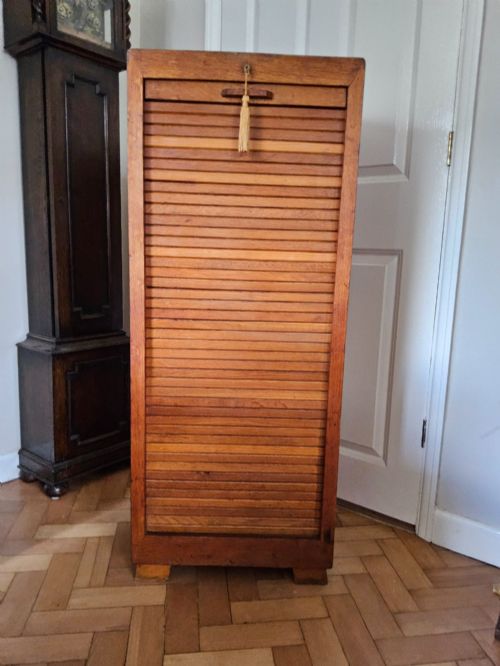
- A flexible shutter of slats that rolls up or sideways to close the cabinet. It defines more than a third of the category, and is often written as roll front or roller shutter instead.
- Single, double, triple tambour
- How many shutter-fronted bays sit side by side. Double is the commonest qualified form in titles, single is close behind, and triple is rare.
- Filing drawers
- A bank of drawers listed without much carcass description. Dealers use the wording interchangeably with filing cabinet, which is how collectors' and chemist's banks end up under this heading.
- Card index cabinet
- Shallow drawers sized for index cards rather than files. Sometimes fitted with a sloping or lectern top for working at standing height.
- Golden oak
- The warm-toned polished oak finish, named in sixteen titles. It describes the colour and polish rather than a different species of timber.
- Cartonnier
- A French upright stand of box files, appearing in a few titles as cartonniere. One belonged to a notary.
Antique Filing Cabinets: Frequently Asked Questions
What wood are they usually made from?
Oak dominates, named in over half of all titles on Sellingantiques. Mahogany follows at some distance, then walnut.
Everything else is scarce. Birch, beech, rosewood, ebonised pine and plain pine each turn up only once or twice across the whole category.
How old are most of them?
The bulk fall between 1900 and 1939. The 1920s account for 160 listings on their own, with Edwardian, the 1910s and the 1900s making up much of the rest.
Post-war pieces are nearly absent, with only a few 1940s entries and isolated examples dated 1950 and 1960. Anything tagged earlier tends to be a collectors', campaign or plan-chest form rather than office filing.
Why are so many of them French?
Ninety titles say French, which is a large share for an office form. French oak appears in most of them, and French tambour cabinets are a recognised sub-group.
The French entries also throw up things the English makers didn't supply, including a notary's cartonniere and a post office filing shelf.
What is a tambour front?
A shutter made of narrow slats, flexible enough to roll up or slide sideways into the carcass. It closes the cabinet without needing clearance for a swinging door.
It defines more than a third of this category. Dealers count the bays, so listings read single, double or, occasionally, triple tambour.
Do they come with unusual drawer counts?
Three and four are the common counts, but titles climb a long way past them: eight, eleven, twelve, twenty, twenty-five, thirty-two, forty, forty-eight, fifty and sixty-six.
The largest recorded is a bank of ninety-one oak filing drawers.
Are there odd or one-off examples?
A few. A Japanese filing cabinet, a metamorphic mahogany pedestal cabinet, a Cambridge college file chest and a mahogany campaign filing cabinet have each appeared once.
There was also a pair from the London and North Eastern Railway. Sign-written cabinets, with painted lettering across the front, turn up on several Edwardian pieces.